
1 Michelin Key
Officially recognised by the Guinness Book of World Records in 1984 as the world's smallest hotel, Hotel Puntagrande occupies a protected 1830 building on a lava rock promontory above the Atlantic on El Hierro. Its five rooms combine maritime antiques, driftwood detailing, and direct ocean views from around $239 per night, producing something closer to a curated nautical archive than a conventional hotel stay.

Pearl is the En Primeur Club membership app, where members save venues, book tables and use the concierge.
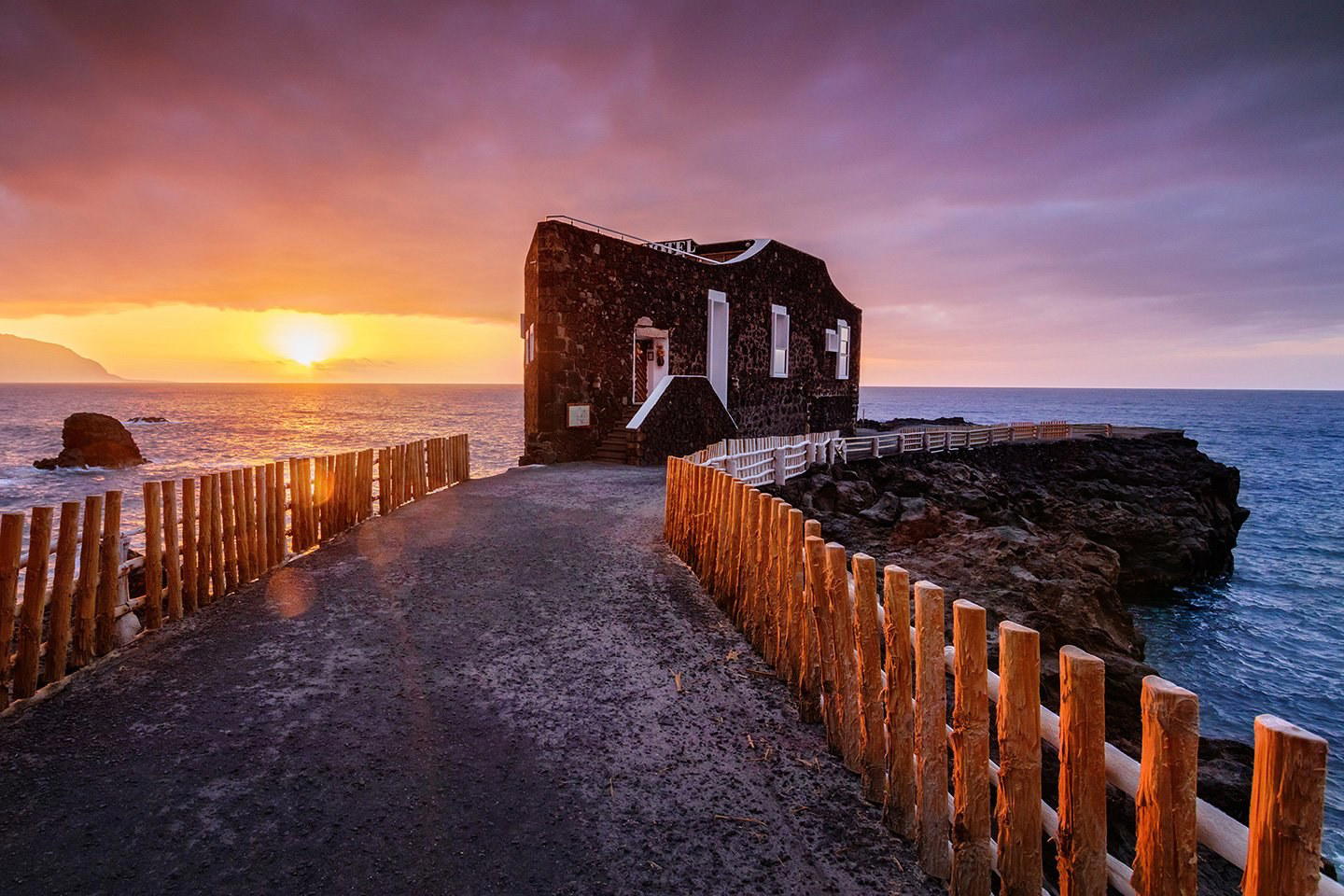
A Lava Rock Ledge at the Edge of the Atlantic
Approach Hotel Puntagrande from Frontera's shoreline road and the building reads as an extension of the geology beneath it: a rough-cut stone structure pressed against a lava promontory, the Atlantic breaking on three sides. There is no buffer here between architecture and ocean. The spray reaches the walls. On windier days, the sound carries through the stone itself. This is not a hotel designed to insulate guests from El Hierro's Atlantic exposure but one that has been shaped by it over nearly two centuries.
The Canary Islands' smallest and most remote inhabited island has never competed for mass tourism, and El Hierro's character reflects that. The island sits at the far western edge of the archipelago, a UNESCO Biosphere Reserve since 2000, with a population under eleven thousand and an economy historically oriented toward fishing and subsistence agriculture. Hotels here operate in a different register than the resort corridors of Tenerife or Gran Canaria. Puntagrande is the most concentrated expression of that difference. For a broader sense of the island's dining and accommodation options, see our full El Hierro restaurants guide.
Architecture as Accumulated History
The original structure dates to 1830, making it one of the older surviving built forms on an island that has always worn its age visibly. The Canary Islands government has designated it a protected cultural site, which shapes what any renovation can and cannot touch. That constraint has produced something interesting: the building's interventions read as additions rather than replacements. Local lava stone, rough-hewn and unsealed, forms the primary wall surface. Structural timbers are original where possible. The colour palette, blue and white repeated through every room, functions less as a design choice and more as a continuation of the Canarian coastal vernacular.
Interior operates somewhere between a working hotel and a nautical archive. Antique compasses line the walls alongside bronze-plated boat registrations and maritime maps. These are not curated props but accumulated objects, the kind of accumulation that happens in a building with a long connection to fishing communities and Atlantic trade routes. The effect is closer to a lived-in collection than a themed design scheme, which is precisely what separates it from boutique hotels that deploy maritime aesthetics as decoration. Contrast this approach with the deliberately contemporary sensibility of properties like Cap Rocat in Cala Blava or the polished heritage restoration at Hotel Can Cera in Palma: both work within historic structures but pursue a different relationship to their material past.
Five Rooms, No Redundancy
With only five rooms, the property holds a Guinness Book of World Records designation from 1984 as the world's smallest hotel. That figure has since been contested by various micro-properties globally, but the record stands as a fixed point of reference and shapes how the hotel positions itself. At five keys, there is no version of this property that accommodates groups or conferences. The scale is genuinely limiting and genuinely intimate in equal measure.
Room details reflect the same material logic as the public spaces. Bathroom mirrors are framed in driftwood. Bedside tables are constructed from porthole glass. Some rooms extend onto private wooden decks cantilevered over the water; others centre on four-poster beds. All five have direct ocean views, which at this elevation and proximity means the horizon line sits at eye level from bed. The ship analogy is not metaphorical overreach: the galley proportions, the porthole references, the constant acoustic presence of the water below produce something genuinely close to a maritime environment.
Rates begin at approximately $239 per night, which places Puntagrande in a mid-tier position relative to Spain's premium hotel market. Properties like Mandarin Oriental Ritz in Madrid, Abadía Retuerta LeDomaine in Teruel, or La Residencia, A Belmond Hotel in Mallorca operate at considerably higher price points and with considerably more infrastructure. What Puntagrande offers at its price is a specificity of place that most hotels at any price cannot engineer: a genuinely old building on genuinely wild coastline, with no resort apparatus surrounding it.
The Lounge Bar and the Wider Context
The wood-lined lounge bar carries the same galley proportions as the rooms: low-ceilinged, compact, warm against the Atlantic wind that defines El Hierro's western coastline. After walking the island's lava trails or along the cliff paths above Frontera, the bar functions as a practical recovery space rather than a destination in itself. El Hierro's food culture is rooted in local fish, Canarian papas arrugadas with mojo sauces, and goat cheese from the island's interior. The hotel's bar connects to that tradition contextually if not as a formal restaurant offering. For hotel-restaurants that integrate dining more formally into the property concept, the Atrio Restaurante Hotel in Cáceres or Pepe Vieira Restaurant and Hotel in Poio represent the Iberian Peninsula's most considered approaches to that format.
Spain's small hotel sector has expanded significantly over the past decade, with rural tourism and agritourism properties multiplying across the peninsula and islands. Properties like Mas de Torrent Hotel and Spa in Torrent, Terra Dominicata in Escaladei, and Casa Beatnik Hotel in A Coruña represent the range of that sector: historic buildings converted with varying degrees of design investment, all positioning around authenticity and place-specificity. Puntagrande predates that trend by decades and occupies a narrower category: a working heritage building that has hosted guests continuously rather than a barn or manor converted to tourism use.
Planning a Stay
El Hierro is accessible by ferry from Tenerife, with crossings operated by Naviera Armas and Fred Olsen, or by direct flight from Tenerife Norte and Gran Canaria via Binter Canarias. The island's airport is small and flight frequency is limited, so arrival logistics require planning, particularly in shoulder season when schedules reduce. With five rooms at Hotel Puntagrande, availability is tight year-round. Booking well in advance is not precautionary but necessary, especially for the rooms with private decks. The address at Calle las Puntas, 38911 Frontera places it in the municipality of Frontera on the island's northern coast, accessible by the island's single main road network. Given the lack of a hotel restaurant, guests planning extended stays should familiarise themselves with Frontera's local dining options in advance.
Comparable Spots, Quickly
| Venue | Price | Awards |
|---|---|---|
| Hotel PuntagrandeThis venue (the venue you are viewing) | $100–200 | 1 Michelin Key |
| Mandarin Oriental Ritz, Madrid | Not listed | 3 Michelin Keys · World's 50 Best #71 |
| Four Seasons Hotel Madrid | Not listed | 2 Michelin Keys · World's 50 Best #66 |
| La Residencia, A Belmond Hotel, Mallorca | Not listed | 2 Michelin Keys · La Liste Top Hotels |
| Mandarin Oriental Barcelona | Not listed | 2 Michelin Keys · La Liste Top Hotels |
| Rosewood Villa Magna | $300–500 | 2 Michelin Keys · La Liste Top Hotels |
Recognition history
Dated appearances from independent guides and award organizations, with the underlying list record or original source where available.
Michelin 1 Key
Michelin
Full recognition history (2 entries)
Michelin 1 Key
Michelin
Continue exploring
More in El Hierro
Restaurants in El Hierro
All restaurants in El Hierro →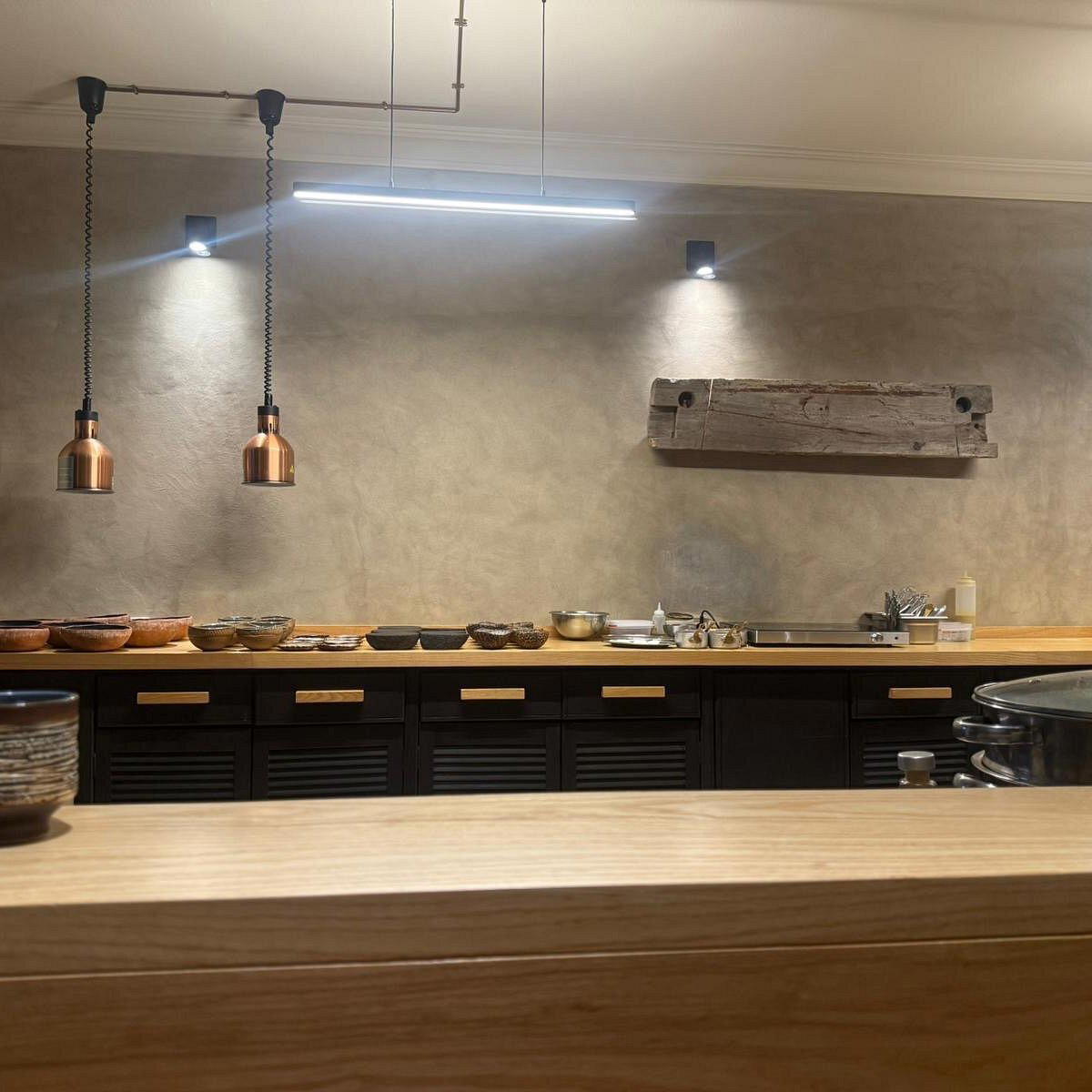
Details
- Romantic
- Quiet
- Scenic
- Intimate
- Rustic
- Romantic Getaway
- Anniversary
- Honeymoon
- Weekend Escape
- Waterfront
- Panoramic View
- Terrace
- Wi Fi
- Restaurant
- Free Parking
- Luggage Storage
- Elevator
- Laundry Service
- Waterfront
- Mountain
- Step Free Entrance
Cozy, ship-like interiors with local wood, lava stone, cheerful blue and white palette, and the sound of Atlantic waves; warm lighting in the wood-lined lounge bar.