← Guides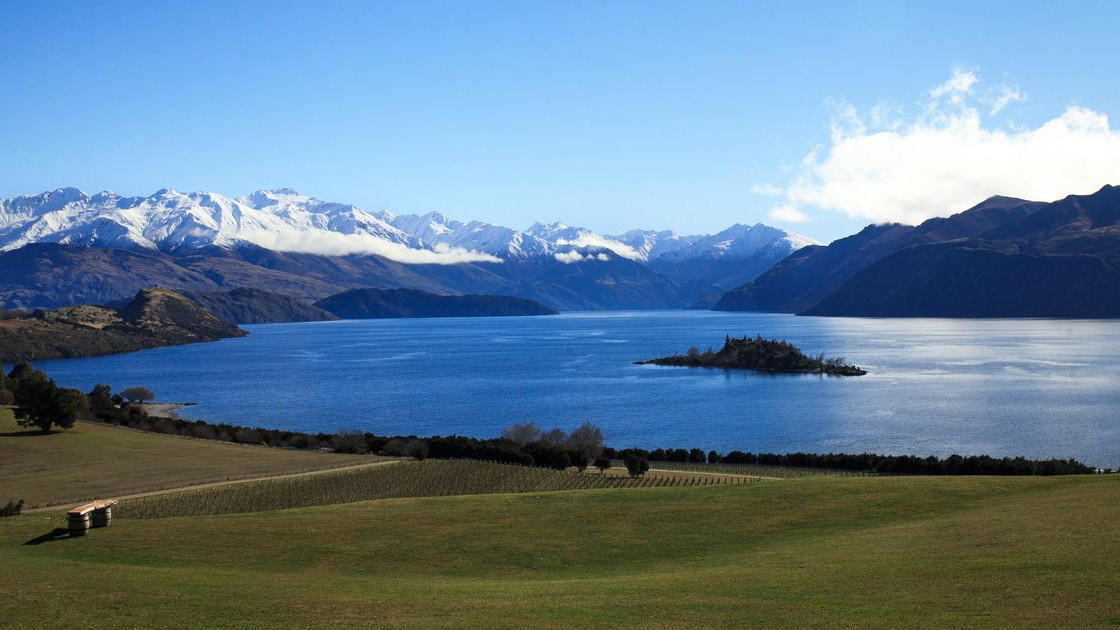
VinePair’s annual ranking points serious wine travelers toward Central Otago, Yerevan, Shenandoah Valley, Salta, Abruzzo, and Jerez.
VinePair’s annual ranking points serious wine travelers toward Central Otago, Yerevan, Shenandoah Valley, Salta, Abruzzo, and Jerez.
Turquoise river water beside Pinot Noir vineyards, still Palomino in sherry country, and Armenian varieties with one of wine’s oldest traditions behind them: the lower half of the 2026 wine-destination ranking is strongest when it steps beyond the expected grand tour.
The appeal is not novelty for its own sake. Each stop has a clear reason to travel now: a defining grape, a serious producer network, a major wine calendar moment, or a regional identity that is becoming easier to taste with precision.
Familiar prestige regions will always command attention, but the more rewarding 2026 itinerary listens for momentum elsewhere. These destinations are not interchangeable scenic backdrops; they ask specific questions in the glass.
Central Otago speaks through cool-climate Pinot Noir. Yerevan connects Armenia’s ancient wine culture with an international competition spotlight. Shenandoah Valley shows the energy of a developing American East Coast scene. Salta brings altitude into sharp focus. Abruzzo offers high-quality Italian wine without chasing the highest price points. Jerez de la Frontera remains sherry’s essential city while opening another conversation around Palomino.
Central Otago, New Zealand, is Pinot Noir country, shaped by a cool climate and soils fed by nearby glaciers, which lend the wines a saline, earthy elegance. Its six subregions are Alexandra, Bannockburn, Bendigo, Cromwell Basin, Gibbston, and Wānaka. Gibbston Valley is Central Otago’s first commercial estate, set within the Gibbston River Trail, where visitors can bike through vineyards and along bright blue water. Near Wānaka, Rippon Vineyard brings Lake Wānaka into view.
Yerevan, Armenia’s capital in the Caucasus mountains, becomes especially timely as the Concours Mondial de Bruxelles comes to the city from May 21 to 23. Armenia has five main wine regions: Vayots Dzor, Ararat, Armavir, Aragatsotn, and Tavush; Ararat, Armavir, and Aragatsotn sit closest to the capital. Areni Noir, associated with Vayots Dzor, is a thin-skinned, acidic red variety, while Voskehat from Aragatsotn is the country’s most popular white grape.
Shenandoah Valley, Virginia, suits a year when the United States marks its semiquincentennial. Charlottesville makes a practical base, with Waynesboro about a 30-minute drive to the west. Common Wealth Crush Co. operates there as an incubator for small, low-intervention producers, with a tasting room pouring labels including Grandassa, Trot Rock, and Party Kiwi. Lightwell Survey, also in Waynesboro, has worked with Virginian grapes since 2015.
Salta, in Argentina’s northwest, is defined by high-altitude viticulture, with some vineyards reaching 10,207 feet above sea level. Malbec, Tannat, Cabernet Sauvignon, and Syrah are among its celebrated red grapes. Torrontés, Argentina’s most popular white variety, is prized here for crisp acidity and tropical fruit flavors, and Cafayate remains a key winemaking zone for Torrontés and Cabernet.
Abruzzo sits east of Rome and remains one of Italy’s lesser-known wine regions, with a strong natural-wine current and many quiet towns along the Adriatic Sea. Pescara province offers coastal proximity, while Chieti holds most of the region’s vineyards. In the north, Emidio Pepe specializes in Trebbiano and Montepulciano and has renovated the house where the well-known winemaker was born. La Fabbrica del Vino in Pescara focuses on low-intervention Italian and European producers; UvaRara in Atessa serves natural and classic producers with small plates made from locally sourced ingredients.
Jerez de la Frontera is sherry country, yet still, unfortified Palomino is drawing fresh attention to the region’s prized grape. Hotel Bodega Tío Pepe overlooks the Bodegas Tío Pepe vineyard and centers hospitality around tasting experiences. Bodega Espinosa de los Monteros offers tours and tastings in the city, while Sandeman and Domecq remain historic bodegas. La Carboná, recognized by the Michelin Guide, occupies an old sherry bodega and gives the setting a modern gastronomic turn.
These three destinations work for different kinds of serious wine travel. Central Otago rewards comparative tasting across a compact regional structure. Yerevan places indigenous grapes within reach of a capital-city stay. Shenandoah Valley shows how shared infrastructure can help smaller producers reach an audience.
The pleasure lies in specificity. None of these trips depends on a single famous label; each offers a way to understand how a region is organizing itself around terroir, access, and momentum.
The Salta Wine Trail links wineries with geological formations such as Quebrada de las Conchas, as well as restaurants and hiking routes. By night, a Peña Folklorica brings dancing, music, and wine into the local rhythm.

Abruzzo is best approached with a car, allowing time for its separate corners and its blend of coastal addresses, natural-wine bars, Trebbiano, and Montepulciano. Jerez belongs especially to autumn: Fiestas de la Vendimia marks harvest season each September, and International Sherry Week arrives in early November as the world’s largest festival dedicated to the fortified wine.
Choose by the question you want answered in the glass. Pinot Noir points toward Central Otago; Armenian varieties toward Yerevan; low-intervention American production toward Shenandoah Valley. Altitude leads to Salta, Italy’s natural-wine energy to Abruzzo, and Palomino, fortified or still, to Jerez.
Particularly satisfying wine trips in 2026 will pair the bottle with the route: grape, place, and producer ecosystem in the same frame.
From No. 10 to No. 5, the destinations are Central Otago, Yerevan, Shenandoah Valley, Salta, Abruzzo, and Jerez de la Frontera.
Yerevan is especially timely from May 21 to 23, when the Concours Mondial de Bruxelles takes place in Armenia’s capital.
Central Otago gives Pinot Noir drinkers six subregions to compare: Alexandra, Bannockburn, Bendigo, Cromwell Basin, Gibbston, and Wānaka.
Salta is highlighted for vineyards reaching 10,207 feet above sea level.
Still, unfortified Palomino is gaining attention in Jerez, giving travelers another expression of the region’s prized grape alongside sherry.
Get the App
Take the shortlist into the En Primeur Club app for concierge access, saved places, and the next step after discovery.
Get Exclusive AccessMore from the editors