← Guides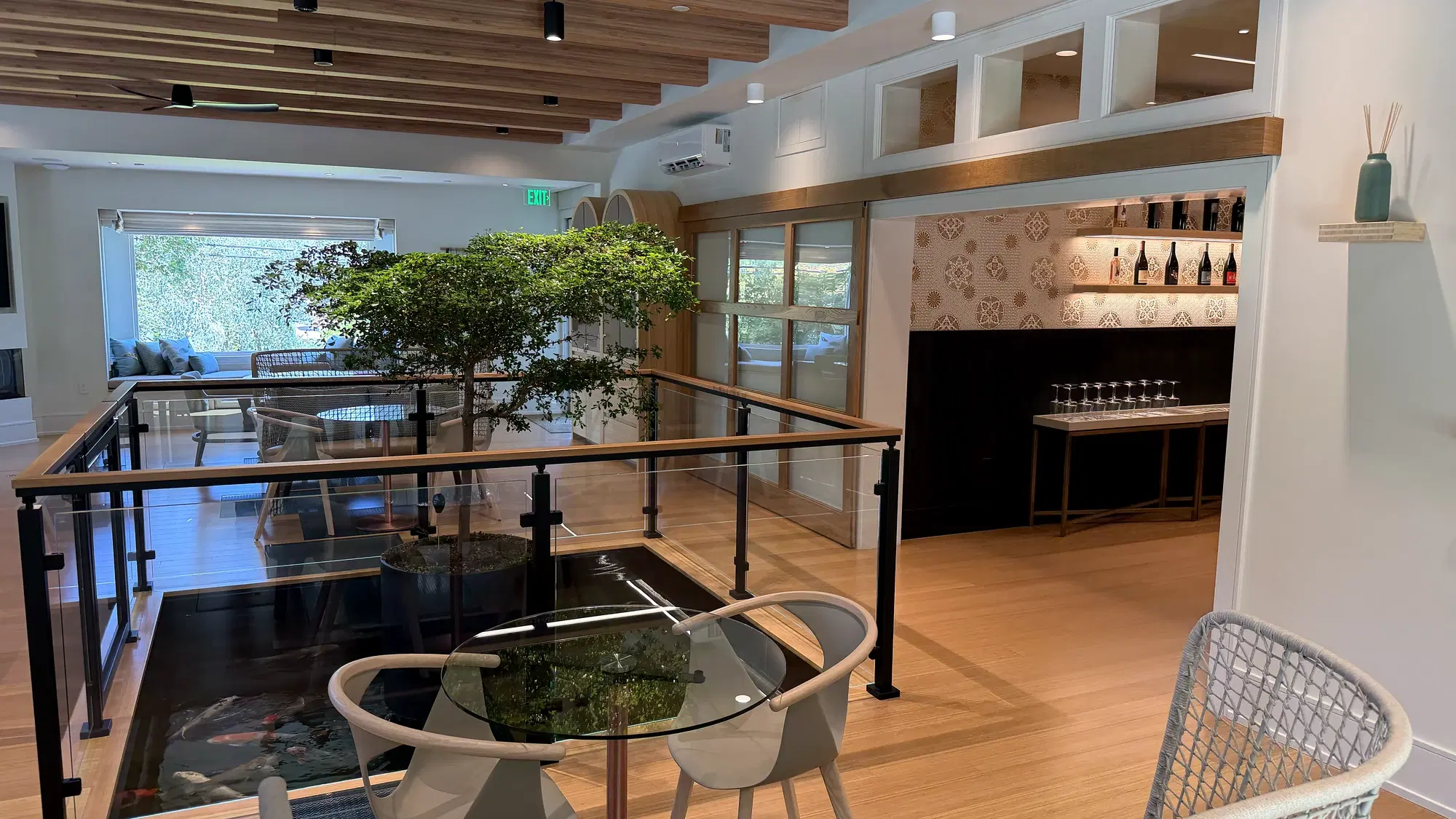
Over two nights at Okaeri Calistoga, koi beneath the dining room, Craig’s anticipatory hospitality and the 4 p.m. Kanpai pour made the seven-room inn feel deeply personal.
Over two nights at Okaeri Calistoga, koi beneath the dining room, Craig’s anticipatory hospitality and the 4 p.m. Kanpai pour made the seven-room inn feel deeply personal.
Two things made Okaeri Calistoga feel immediately unlike any other Napa stay: koi moving beneath the dining room and Craig welcoming us into Aozora as if we were coming home. Over two nights, the seven-room Japanese-inspired inn delivered exactly what its name promises, a deeply personal place where design, breakfast, Kanpai wines and hospitality feel like parts of one thoughtful idea.
Okaeri means “welcome home” or “welcome back.” The greeting became the organizing principle of the stay: Craig anticipated what we needed without hovering, breakfast arrived as a genuine event rather than a buffet obligation, and Kanpai wines connected the property to a part of Napa that was already personal to me.
I had been a Kanpai member and visited the family’s Meadowbrook Farm estate years before we discovered Okaeri. Now we were sleeping in a suite named for Aozora, Kanpai’s old-vine Zinfandel. That continuity made the experience feel less like checking into a new hotel and more like finding another expression of a story I already loved.
Book it if you want an intimate Napa stay where Japanese-inspired design, serious food, wine and deeply personal hospitality matter as much as the room. With only seven rooms, Okaeri feels calm and residential, yet we could walk into Calistoga for dinner. It is among the more distinctive places we have stayed in Napa Valley.

Yes. Okaeri is especially compelling for a couple who wants a small, design-forward inn rather than a sprawling resort. It offers the privacy of an exceptionally polished bed-and-breakfast, the food and wine intelligence of a hospitality project connected to a serious Napa producer, and a Japanese sense of ritual without turning the stay into a theme.
The strongest reason to book is the synthesis. Any one element would be attractive on its own: a large suite, a multi-course breakfast, a koi garden, a wine social hour, an attentive general manager, or a walkable Calistoga location. Okaeri makes those elements feel like parts of one thought. The room encourages you to slow down. The garden gives that stillness a physical center. Breakfast turns the morning into an experience. Craig's service makes the small property feel genuinely cared for rather than simply exclusive.
Okaeri interprets the bathing rituals, design language and anticipatory hospitality associated with a Japanese ryokan through the architecture, food and wine culture of Napa Valley. The founders’ formative experience in Hakone informs a confident property that feels rooted in Calistoga rather than themed.
| At a glance | Our experience |
|---|---|
| Location | 1415 Foothill Boulevard, Calistoga, within an easy walk of downtown |
| Scale | Seven individually designed rooms |
| Our room | Aozora, a 565-square-foot first-floor suite with separate sitting room and a two-person porcelain soaking tub |
| Best for | Couples, design lovers, Kanpai collectors, and travelers who value intimate service and breakfast |
| Included rituals | Multi-course breakfast and a 4 p.m. Kanpai wine social hour |
| Standout host | Craig DeGraff, general manager |
| Culinary lead | Chef Joshua “Josh” Garcia |
| Defining image | Breakfast over the koi pond with the mountains beyond |
| Our verdict | An emphatic yes, and a stay we would happily repeat |
My relationship with the family’s hospitality began before Okaeri existed. I used to visit Kanpai Wines at Meadowbrook Farm in Oak Knoll and joined the wine club. Those earlier visits introduced me to the family’s particular combination of Japanese heritage, Napa hospitality and wine made with food in mind.
Kanpai's story begins with Peter Chiang and Azumi Kubo. Peter trained in culinary school and approaches wine through the lens of the table; Azumi brings a Japanese cultural and artistic sensibility to the project. After the 2017 fires disrupted the family’s original plan to sell Meadowbrook fruit, Kanpai began. Together with winemaker Steve Matthiasson, Peter and Azumi built a food-minded wine program. Its labels and names have always carried narrative weight, and at Okaeri those names have become rooms.
Aozora means “blue sky.” The Kanpai wine of the same name is an old-vine Zinfandel sourced from Sonoma Valley's Armor Plate Vineyard, a dry-farmed site planted in the 1890s. That history gives the room name more substance than a decorative Japanese word selected for atmosphere. Each name forms a bridge back to a wine and, by extension, to the family behind the inn.
Returning to that world as a hotel guest added a layer of familiarity. I had known Kanpai as a place to taste and collect; Okaeri expanded it into a way of staying for both of us. We encountered the wines at social hour, saw them stored in the downstairs cellar, and found a chilled half bottle of Hi No Tori rosé among the room amenities. Wine was present, but never forced into every moment. It was a connective thread.
Okaeri opened in 2025, the 150th year of the Victorian house that once operated as the Pink Mansion. The transformation took seven years. That time is visible in the restraint of the finished property. Restoring an ornate American building and layering Japanese references onto it could easily have produced visual noise. Instead, the architecture keeps finding ways to simplify.
The approach begins outside. Japanese maples soften the arrival. Charred-wood references, warm paneling, screens, stone and precisely framed garden views gradually replace the visual vocabulary of the street. Inside, Meiji-era references coexist with contemporary Napa materials and art. The house is not erased; it is edited.
Interior designer Meredith Rebolledo, architect Bev More of More & Associates, Wargo Construction, landscape architect Sandra Devine and landscape contractor Rodney Rose of Autumn Skies shaped the property. Wood paneling imported from Japan adds warmth, but what impressed us was the degree of alignment. Doorways frame small views. Light changes across textured surfaces. Even circulation between the room, dining space, cellar and garden feels considered.
The origin story makes sense of that blend. A stay in Hakone inspired the founders to imagine a connection between two hot-spring towns: Hakone in Japan and Calistoga in Napa Valley. Okaeri does not claim they are interchangeable. It asks what might happen if the calm, bathing rituals and anticipatory hospitality associated with one place were interpreted through the food, wine, architecture and landscape of the other.

Aozora is one of Okaeri's largest rooms: 565 square feet on the first floor, with a king bedroom, a separate sitting room containing a sofa bed, two fireplaces, a private patio and space for as many as four guests. For a couple, it felt exceptionally spacious. The separation between sleeping and sitting areas made the suite feel residential, not merely oversized.

The design rewards attention. A hand-painted silk screen sits behind the bed. The fireplaces make both rooms usable rather than leaving the sitting room as a place to abandon luggage. Water, coffee and tea are presented as real amenities, not afterthoughts. Okaeri currently supplies Cento pour-over coffee and Five Mountains tea, along with an electric kettle and mini refrigerator. Bamboo sheets, robes, slippers and the overall quiet reinforce the sense that the room is meant for long mornings and early nights.
The window seat framed the mountains and made the room feel connected to Calistoga. It was easy to sit with coffee, look past the garden and forget that downtown was only a short walk away.

The bathroom is one of Aozora’s defining features when choosing among Okaeri’s rooms. Five of the inn’s seven rooms have wooden soaking tubs, Aozora has a deep porcelain tub for two, and the traditional Japanese room has a shower. A generous shower, double vanity and bath salts turn the bathroom into its own quiet ritual after a day in Napa.

If the visual romance of a wooden tub is essential, compare the other room categories before booking. If you want more square footage, a separate sitting room and an especially comfortable setup for a couple, Aozora is an excellent choice. We would choose it again.
The Japanese phrase okaeri is the response to tadaima, or “I'm home.” Depending on context, it translates as “welcome home” or “welcome back.” Naming a hotel after that exchange sets a high bar. It promises recognition, not merely politeness.
Craig DeGraff made the promise credible. He was wonderful throughout our stay, attentive without hovering and ready to meet every need. At a seven-room property, every interaction carries more weight, and Craig used that intimacy to make the stay feel genuinely personal.
The closest Japanese word for what we felt is omotenashi: wholehearted, anticipatory care for a guest. It is sometimes translated too casually as excellent service. The more useful meaning is care offered without making the guest manage it. At Okaeri, that showed up in the pacing of the stay, in small provisions, and in how naturally Craig connected the room, meals and property.
Carefully selected service can sound like a generic compliment. Here it meant that Okaeri felt easy. We knew when breakfast would begin. Social hour felt hosted rather than staged. Questions were answered quickly. The boundaries of a small inn expanded because Craig was willing to help customize the experience.
Particularly memorable design decision was also the radical: a former swimming pool became the koi pond at the center of Okaeri. Rather than filling the space and treating it as a courtyard, the designers turned water into the organizing element of the entire inn.

The pond changes every adjacent space. From the garden, it reflects the bridge and foliage. From the dining room, the fish move directly below the floor and windows. From a path, it makes a compact property feel layered and deep. The water is never just decoration; it supplies motion and sound to an otherwise still composition.
That centrality helps explain why the dining room is so powerful. Breakfast is not served in a conventional restaurant or a generic lobby. It happens over water, with the fish below and the mountains beyond. The view connects three scales at once: the detail of a koi turning beneath you, the intimacy of seven rooms, and the wider Calistoga landscape.
The property also handles sustainability in small, legible ways. Recyclable slippers and low-flow systems reduce waste. Downstairs, a striking tasting table made from recycled chopsticks converts an everyday object into a tactile design feature. Nothing about those choices is announced with self-congratulation. They sit naturally within the broader emphasis on material, reuse and care.
Many luxury hotels advertise breakfast as an amenity. Okaeri treats it as programming. It began at 9 a.m. during our stay, a civilized hour that discouraged rushing, and unfolded in courses. Chef Joshua “Josh” Garcia builds a seasonal, daily-changing breakfast influenced by Japan and the produce of Northern California. Our two mornings demonstrated how broad that framework can be.
The first breakfast leaned polished American. Fruit was presented with the same attention as a plated course: two kinds of figs, star fruit and dragon fruit with Greek yogurt, bee pollen, pepita brittle and lemon-ginger honey. The combination was colorful and refreshing, with crunch from the brittle and enough acidity to keep the yogurt from feeling heavy.
Then came a breakfast burrito that was far more composed than the name suggests. Ham, Point Reyes Toma, egg, onion and green pepper sat under a cheese sauce, micro arugula and a dusting of paprika. It had the satisfaction of a wine-country brunch dish without sacrificing the precision established by the fruit course.

The final pastry was a strawberry-rhubarb Danish with vanilla-bean cream and a reduction made from Kanpai dessert wine. That last detail pulled breakfast back into the property's larger story.

This was not a light continental spread expanded with one hot item. It was a three-to-four-course meal with pacing, progression and a point of view. Eating it while koi moved below the dining room made the morning feel almost ceremonial.
Our next breakfast turned more explicitly toward Japan. A fried mango-matcha mochi arrived as a playful opening: a crisp exterior giving way to chew, fruit and the slight bitterness of green tea. It was the kind of bite that could have been overly sweet but instead felt bright and energizing.

The main composition centered on miso-and-sake-marinated steelhead trout with pickled cabbage, miso soup and white rice. The steelhead was savory and clean, the pickles supplied acid and texture, and the soup and rice made the course feel complete rather than stylized. A pineapple-orange-ginger juice connected the two mornings.

What we appreciated most was the contrast. We did not receive a minor variation on the same luxury breakfast template. One morning moved through Northern California fruit, a polished burrito and a wine-inflected Danish. The next used mochi, miso, rice, pickles and sake-marinated fish. Together they made a two-night stay more interesting and gave us a reason to be at the dining table at nine sharp.
Menus change, so those exact dishes should be treated as a record of our stay rather than a permanent promise. The durable reason to book is the ambition: Okaeri wants breakfast to be one of the memories you take home.
At 4 p.m., the inn shifts from breakfast calm to a small social ritual built around Kanpai. During our stay, the team served tuna bites and pork shumai with the wine. The food was substantial enough to feel thoughtful but light enough to preserve dinner plans.

The timing works. Four o'clock is exactly when a day of tasting, spa appointments or exploring Calistoga begins to lose momentum. Returning to a glass of wine and a bite gives the afternoon a second act. Because the inn has only seven rooms, the gathering never feels like a lobby happy hour.
Aozora old-vine Zinfandel stood beside Mizu No Oto Pinot Noir, an especially fitting pair for a guest staying in the Aozora suite. Seeing the label that inspired our room created a pleasing loop between wine, language and place.

The wines also reveal why the Kanpai relationship matters. Okaeri is owned by the same family, not merely supplied by a nearby partner. The connection reaches into names, amenities, the cellar and the food. Yet the property does not require guests to be collectors. If you already know Kanpai, the references reward that familiarity. If you do not, social hour offers an effortless introduction.
Okaeri's lower level contains its most playful contrast. One room is a serious Kanpai cellar and tasting space. Another is a karaoke room washed in colored light, with a huge screen, microphones, turntable and vinyl. The same inn that asks you to contemplate koi over breakfast is perfectly happy to let you sing downstairs later.
The cellar is more than storage. Bottles line the walls around a long table made from recycled chopsticks. It is a beautiful object, warm and linear, with a surface that rewards close inspection. Kanpai tastings can bring guests deeper into the wine program without requiring a separate drive to the winery.

Next door, the karaoke room refuses excessive seriousness. Backlit bottles frame the television, neon color changes the mood, and microphones are ready on the console. For a full-property buyout, a small group of friends, or simply a couple willing to be ridiculous together, it is an excellent release valve after a polished day in Napa.

That combination captures Okaeri at its best. The cellar communicates craft and lineage. Karaoke communicates generosity and fun. Neither invalidates the other.
Breakfast is the meal included in the stay, but the food program can extend further. Okaeri offers private culinary experiences on request, and Chef Garcia can prepare a dinner on the property. The private dining room seats up to 32, making the inn interesting not only for couples but for an intimate celebration or a complete buyout.
The team also discussed tea ceremonies and customized access during harvest. Those experiences are seasonal and should be confirmed directly when booking, but they reveal what is possible at a property of this scale. A seven-room inn can respond to the people in front of it rather than forcing everyone through a fixed activity calendar.
For a wine-focused trip, we would ask the concierge about combining Kanpai with a harvest-related experience and a private dinner. For a quieter stay, a tea ceremony, long breakfast, soaking bath and walk into town could fill the day without a car. The point is not to pack the itinerary. It is to let Okaeri shape one or two experiences around why you came.
One of Okaeri's most practical advantages is its location. We walked into Calistoga for dinner. After wine, a multi-course breakfast and time in the room, not having to coordinate another drive felt liberating.
The inn sits on Foothill Boulevard, yet its garden creates separation from the street. Downtown is only a few minutes away on foot, and the free Calistoga shuttle offers another option for local movement. That balance is unusual. Many of Napa Valley's most atmospheric stays require a car for every meal. Okaeri provides the feeling of retreat without isolating you from town.
The walkability also makes social hour easier to enjoy. You can return from the day's tastings, have Kanpai and shumai at four, reset in the room, then walk to dinner. The next morning begins at nine over the koi pond. For a two-night visit, that rhythm felt nearly ideal.
All seven rooms have distinct names and layouts, so the choice is more meaningful than selecting a bed category. Aozora is the easy recommendation for travelers who want space. Its separate sitting room, two fireplaces, first-floor location and two-person porcelain tub create a true suite experience. It can sleep four, though it felt particularly generous for two.
Travelers who specifically want a Japanese wooden soaking tub should compare the other rooms. Six of the seven rooms have wooden tubs, while Aozora has porcelain. Some rooms add balconies or different garden relationships. Okaeri’s official rooms page has current descriptions and photographs, and the booking page shows live availability. Collectors seeking an Okaeri-focused stay should contact the hotel or email concierge@enprimeurclub.com.
For comparison, Hikari no Hana leans into a more theatrical four-poster bedroom, while Tsuchi No Koe, the inn’s largest suite, pairs a vaulted king bedroom with an antique wooden fireplace. Together, they show how much the room choice can change the character of the stay.


Aozora’s porcelain tub feels integral to the suite rather than a compromise. Its mountain view, sitting space and overall scale make it especially appealing for travelers who prioritize room to settle in. The useful question is which ritual matters most to you: the visual character of a wooden tub, the privacy of a balcony, or the flexibility of a larger suite.
According to Okaeri's current policies, the property is reserved for guests age 18 and older. Pets are not allowed. Each room includes one parking space, and EV charging is available for a fee. Check-in is currently between 3 and 7 p.m.; checkout is 11 a.m.; quiet hours run from 10 p.m. to 8 a.m.
The quiet-hours policy suits the property. Okaeri is intimate enough that every guest participates in the atmosphere. Karaoke belongs downstairs, while the rooms and garden remain restful.
Breakfast and the 4 p.m. wine social are included. Kanpai benefits currently include a winery discount for Okaeri guests and an Okaeri lodging discount for Kanpai club members, but offers can change. Confirm all rates, inclusions, club benefits, cancellation terms, breakfast timing and special experiences directly with the property. The current Okaeri policies are the authoritative source.
| Planning point | What to know |
|---|---|
| Length of stay | Two nights gave us both breakfast styles, two social hours and time to enjoy the room |
| Car use | Useful for Napa touring, unnecessary for dinner in central Calistoga |
| Breakfast | Served at 9 a.m. during our stay; menus change daily |
| Social hour | 4 p.m. |
| Bath choice | Aozora has a porcelain soaking tub; the other rooms generally have wooden tubs |
| Special requests | Ask in advance about private dinner, tea, wine tasting or seasonal harvest access |
Okaeri is a beautiful Japanese-inspired oasis, but beauty alone is not what made it memorable. The lasting impression is coherence. The phrase “welcome home” becomes Craig's style of service. The room name becomes a Kanpai wine poured at social hour. The koi pond becomes the view at breakfast. The breakfast becomes a reason to structure the morning around the inn. The walk into Calistoga makes the retreat feel connected rather than remote.
At night, the garden takes on another character. Path lights glow, reflections deepen, and the property feels even farther from Foothill Boulevard than it is.

After two nights in Aozora, we understood why the level of detail felt so unusual. Okaeri is not a large hotel executing a Japanese-inspired design package. It is a seven-room project where architecture, food, wine and hospitality can still be personal. My earlier memories of Kanpai made that personal connection even stronger, but no prior membership is necessary to feel it.
Would we return? Absolutely. We would book Aozora again, arrive in time for the 4 p.m. social hour, reserve one evening for a private dinner if available, and protect both mornings for breakfast. Okaeri has created something Napa Valley needed: a small, deeply considered place where checking in feels remarkably close to coming home.
For current room availability and booking terms, check Okaeri.
Okaeri means “welcome home” or “welcome back” in Japanese. The name captures the seven-room inn’s emphasis on personal, anticipatory hospitality.
Okaeri is a Japanese-inspired luxury inn and bed-and-breakfast in Calistoga. It interprets ryokan bathing rituals, design language and hospitality through the architecture, food and wine culture of Napa Valley.
Okaeri has seven individually named and designed rooms, giving the property an intimate, residential feeling.
Okaeri is reserved for guests age 18 and older. Confirm the current policy directly before booking.
We spent two nights in Aozora, a 565-square-foot first-floor suite with a king bedroom, separate sitting room, two fireplaces, private patio and two-person porcelain soaking tub.
No. Aozora has a large porcelain soaking tub for two. Five of the seven rooms have wooden tubs, Aozora has a porcelain tub, and the traditional Japanese room has a shower, so compare the current room details before booking.
Yes. Chef Joshua “Josh” Garcia serves a seasonal, multi-course breakfast. Our two mornings ranged from fruit, yogurt, a composed breakfast burrito and strawberry-rhubarb Danish to mango-matcha mochi and miso-and-sake-marinated steelhead with pickled cabbage, miso soup and rice. Check Okaeri’s current breakfast details because menus change.
During our stay, Okaeri poured Kanpai wines and served tuna bites and pork shumai. The precise wines and food can change.
Okaeri is owned by the family behind Kanpai Wines. The rooms are named after Kanpai wines, the cellar holds the producer’s bottles, and Kanpai is poured during social hour. Ask in advance about deeper tasting options.
Yes. Chef Josh Garcia can create private culinary experiences on request, and the dining room can host groups of up to 32. Ask well before arrival about availability, menus and pricing.
Yes. We walked into Calistoga for dinner, and the center of town is only a few minutes away.
Two nights worked well for us. It allowed time for two distinct breakfasts, social hour, the soaking tub, the garden, downtown dinner and a relaxed morning in the room.
We stayed for two nights in August 2026. Room features, staff, menus, hours, policies, benefits and special experiences were checked against Okaeri Calistoga, Kanpai Wines and official property sources on August 23, 2026, but can change. Firsthand observations, meals and photographs are from that stay. Confirm current details directly before booking.
Get the App
Take the shortlist into the En Primeur Club app for concierge access, saved places, and the next step after discovery.
Get Exclusive AccessMore from the editors