← Guides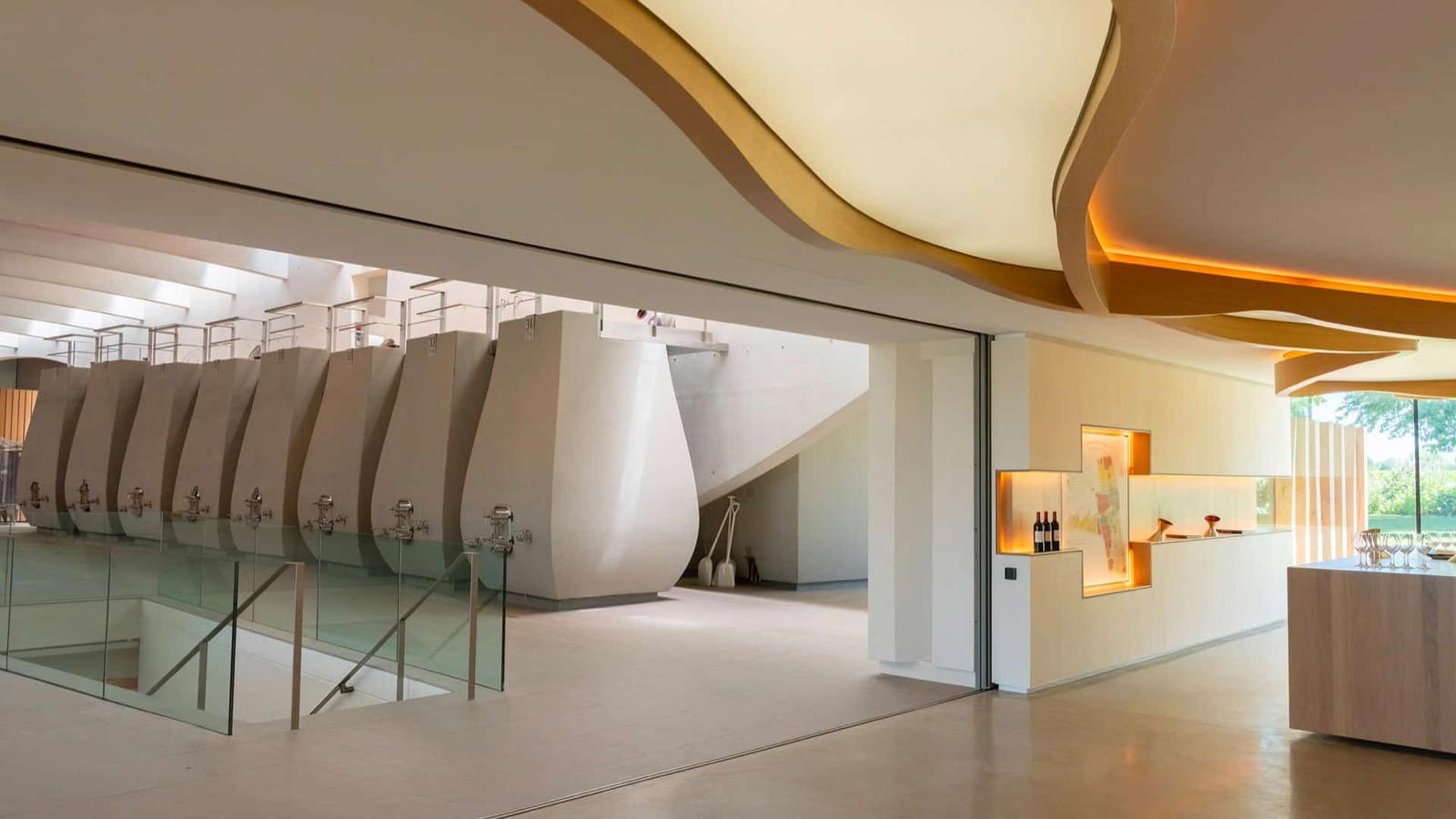
A Cheval Blanc cellar tour is appointment-only and relationship-driven. Here is how to request access, when to ask, and what the Portzamparc winery visit includes.
A Cheval Blanc cellar tour is appointment-only and relationship-driven. Here is how to request access, when to ask, and what the Portzamparc winery visit includes.
A Cheval Blanc cellar tour is possible in 2026, but only if you treat it as a relationship request, not a ticket purchase. Château Cheval Blanc1 does not operate an open cellar door. Visits to the Saint-Émilion estate are by appointment only, arranged through the château's hospitality team, and availability is limited. Plan ahead, contact the estate directly, and, in practice, lean on a prior relationship with the estate or a trusted négociant to smooth the path.
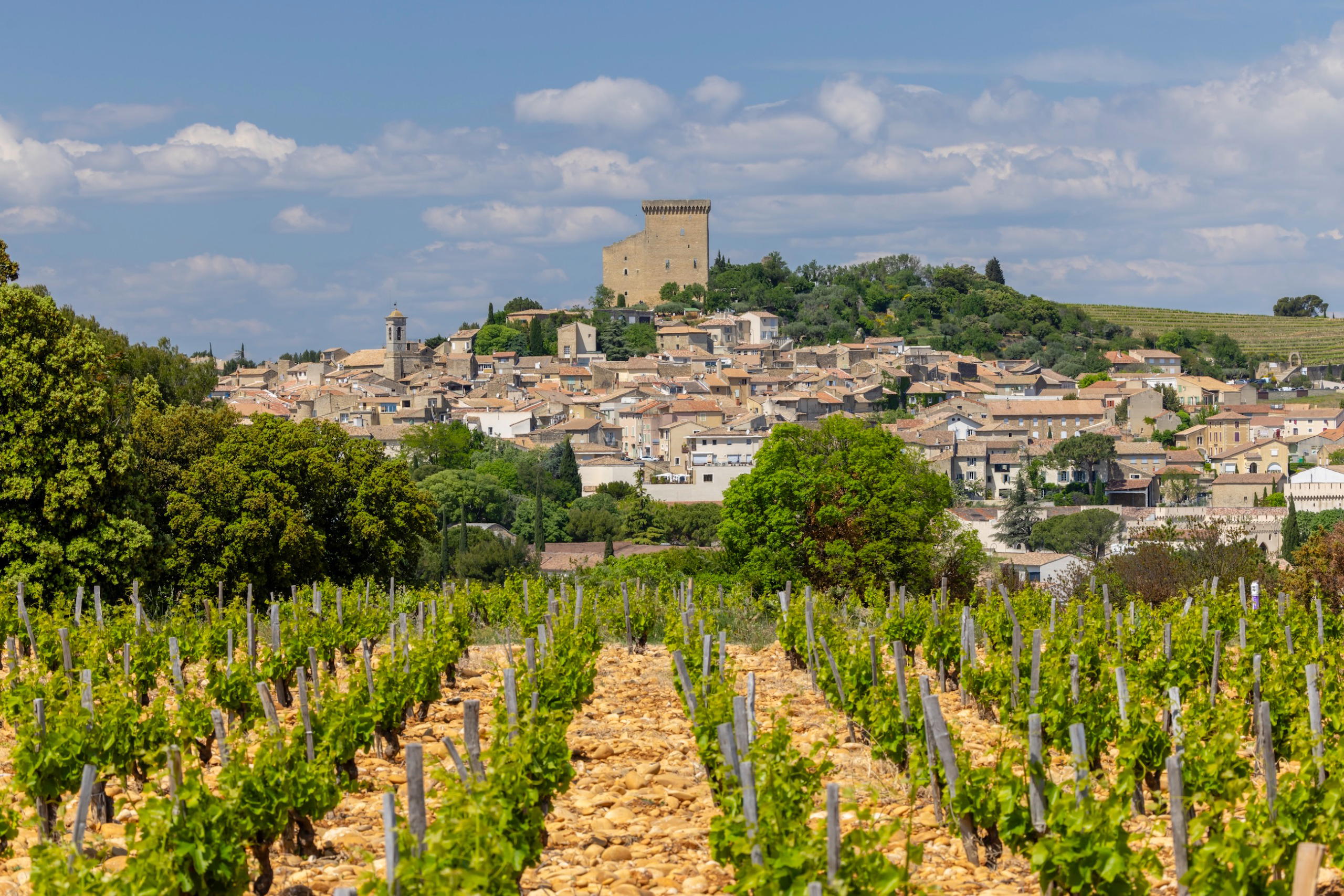
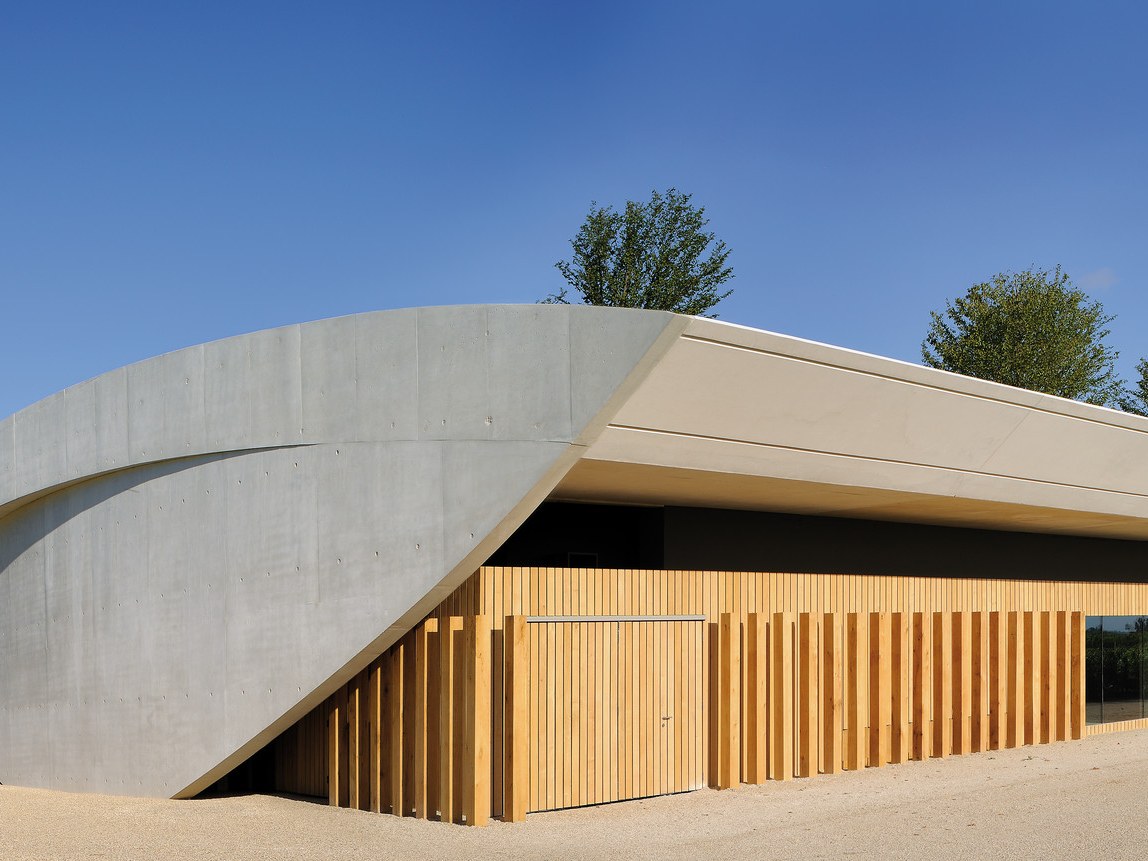
The estate's domain covers 39.5 hectares divided into 55 plots2 at the western edge of Saint-Émilion, where the gravel soils of Pomerol begin to bleed into the clay-limestone plateau. Bernard Arnault and Baron Albert Frère acquired the estate in 1998,3 and the investment since has been substantial: the winery completed in 2011, designed by architect Christian de Portzamparc and inaugurated in June 2011,4 cost over $20,000,000 to build5 and is as architecturally considered as any in Bordeaux.
That seriousness shapes how the estate manages access. Cheval Blanc is not a tourist destination in the way that, say, Château Smith Haut Lafitte has positioned itself with its hotel and spa. The team here focuses on the wine, the vineyards, and a small number of carefully curated visits. Demand from négociants, importers, press, and serious private collectors far exceeds the slots available, so approach the request with context: who you buy through, which wines you collect, and when you can travel.
The estate's hospitality team handles all requests directly, and the volume of those requests means response times can be slow. If you are serious, start with the château rather than searching for a public link.
Particularly reliably productive windows, based on how Bordeaux's top estates generally operate, are outside harvest (September, October) and outside the en primeur week in April, when the estate's attention is consumed by trade tastings. For a visit the following year, make contact in late autumn or early winter.
There are three realistic routes, ranked by probability of success.
Direct contact with the château. The estate's official website carries a contact form and hospitality enquiry channel. This is the correct first step for any private visitor. Be specific: name your dates, the size of your group, and, critically, your relationship to Cheval Blanc wines. A collector who can reference their allocation history or a recent purchase through a named merchant is more likely to receive a positive response than a cold enquiry with no context.
Through your négociant or fine wine merchant. This is the route that works most consistently. Négociants who hold allocations of Cheval Blanc, particularly those in Bordeaux's Place de Bordeaux, maintain relationships with the estate's commercial team. A merchant who places regular en primeur orders can often facilitate a visit for a valued client. If you buy Cheval Blanc through a merchant, ask them directly whether they can arrange access. The answer will tell you a great deal about the depth of their relationship with the château.
Through a specialist wine travel operator. A small number of Bordeaux-focused travel companies include Cheval Blanc in curated itineraries. These operators work on the basis of existing relationships and typically require significant lead time, often several months. Expect the operator to quote on request.
The estate does not list on Resy, Tock, or any comparable platform. Any URL purporting to sell Cheval Blanc cellar tours on a third-party site should be treated with caution.
Money vs. time tradeoffs. The patient route, building a merchant relationship over one or two en primeur campaigns, then requesting a visit, costs nothing beyond your wine purchases. The faster route, through a specialist wine travel operator, compresses that timeline but adds a meaningful premium to the overall cost of the trip. Neither route guarantees access; the estate retains final discretion over all visits. Treat any quoted timeline as an estimate to be confirmed directly.
Cost breakdown. The experience is not sold as a ticketed product. Costs to the visitor are typically absorbed into a broader itinerary, the operator's day rate, transport, and any tasting fees agreed directly with the estate. If you are approaching via a merchant relationship, the relevant consideration is your allocation spend: a collector with a consistent purchase history across multiple vintages is a more credible applicant than one making a single speculative purchase ahead of a visit request.
The winery, designed by Christian de Portzamparc and inaugurated in June 2011,4 is the centrepiece of any cellar visit. The building is low-slung and horizontal, designed to sit within the vineyard rather than above it. The winery exterior includes a garden of wild grasses atop an artificial hill overlooked by the château.4 Inside, the architecture follows the wine's journey: reception of the harvest, fermentation, and then the barrel cellar below.
The cellar is 6,000 m² and houses fifty-two vats arranged in six rows,4 concrete vats in fourteen different sizes, from 12 to 113 hectolitres, built in Italy,4 allowing the team to vinify each of the estate's 55 plots2 separately. Visitors describe walking through the cellar as treading on "hallowed ground," with an intimate yet airy feel.6 If your host offers time in the barrel hall, take it; this is where the parcel work becomes visible.
After fermentation, wine spends sixteen to eighteen months in barrels in an underground cellar maintained at a constant 14°C.4 The barrel hall is where most visits spend the majority of their time. Pierre-Olivier Clouet, who has served as Managing Director since July 2023 and previously as technical director since 2008,7 has spoken publicly about the importance of parcel-by-parcel vinification: the estate's blend of Cabernet Franc and Merlot is assembled from dozens of individual lots, each vinified separately.
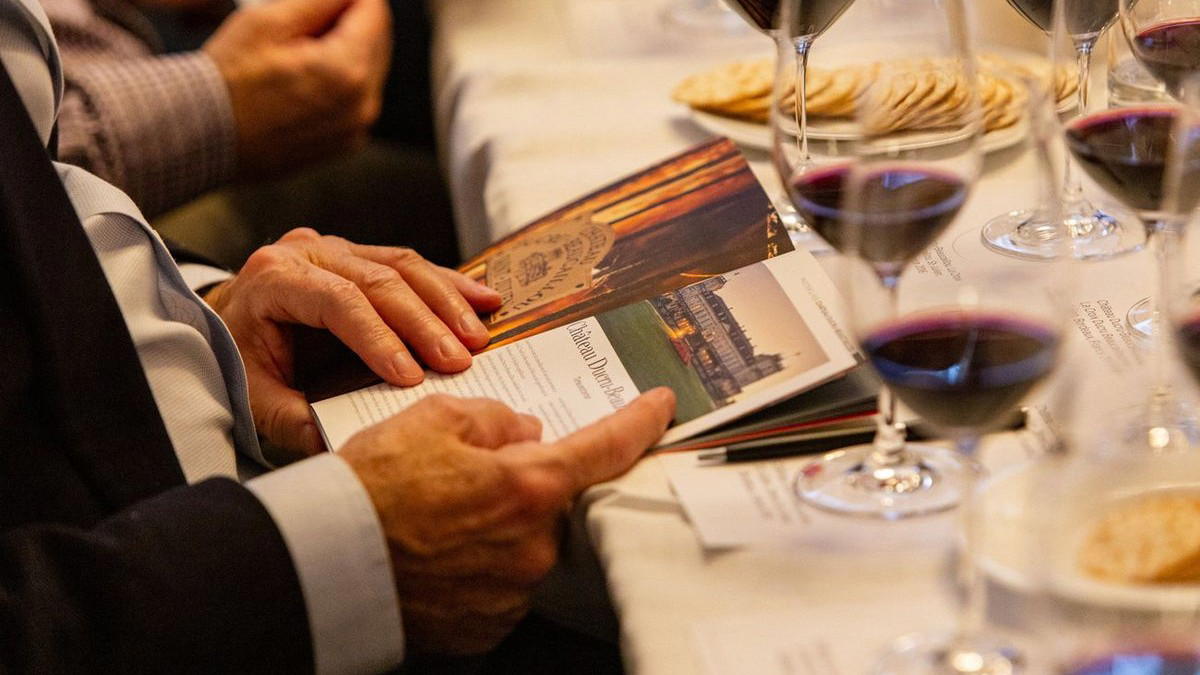
Visits typically include a tasting component, though the format, how many wines, and which vintages are not standardised and vary depending on the nature of the visit and the relationship with the host. Trade and press visits may include barrel samples and library wines; private collector visits are more likely to focus on a current release tasting. Do not arrive expecting a vertical of back vintages unless that has been explicitly arranged in advance.
The vineyard walk, when included, covers the transition from the gravel soils near the Pomerol border to the clay-limestone further east, the geological shift that, in part, explains why Cheval Blanc's Cabernet Franc produces something so different from the Cabernet Sauvignon-dominant wines of the Médoc. The cellar was the first in its category to be certified for the High Quality Environmental (HQE) standard,4 a detail that surfaces naturally on the tour and connects the building back to the land.
A visit to Cheval Blanc is easier to arrange if you are already a buyer. One practical strategy for a collector who wants both the wine and the access is to establish an en primeur relationship with a Bordeaux-connected merchant, one who holds a Place de Bordeaux allocation, and to buy consistently across two or three campaigns before requesting a visit. The 2024 futures are available now, with delivery expected in early 2027,8 priced at $2,324.29 for a case of six bottles via Millesima USA,8 a useful entry point for building that merchant history. For those who prefer a released vintage, the 2022 is available at approximately $699.99 per bottle9 through specialist retailers.
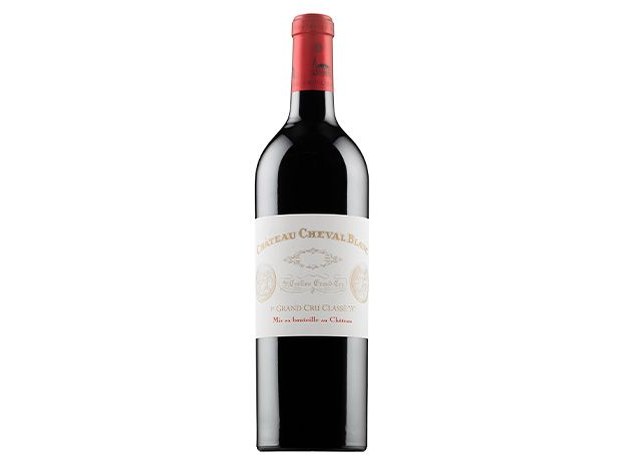
Le Petit Cheval, the estate's second wine, is a useful entry point. It is more widely available than the grand vin, carries the same address and winemaking philosophy, and buying it through a merchant signals a considered interest in the estate without requiring the outlay of a grand vin allocation. Some merchants treat consistent Petit Cheval buyers as credible candidates for grand vin allocations when supply allows.
Most failed requests share the same problem: they ask for Cheval Blanc access before showing why the estate should make room. Avoid these four mistakes.
The alternatives below are not consolation prizes. Each offers a different angle on the Saint-Émilion and Pomerol terroirs, and each is more practical to pursue if Cheval Blanc cannot confirm your dates. If your itinerary is tight, choose the estate whose booking route matches your lead time.
| Estate | Access Difficulty | Booking Route | Visit Format | Public Booking Available? |
|---|---|---|---|---|
| Cheval Blanc | High, appointment only, relationship required | Direct or via négociant | Winery tour + tasting (format varies) | No |
| Château Figeac | Medium, appointment preferred, more accessible than Cheval Blanc | Direct contact or wine travel operator | Cellar tour + tasting | No public platform; direct enquiry |
| Château Canon | Medium, Chanel-owned, structured visit programme | Direct via château website | Guided tour + tasting | Enquire directly |
| Château Angélus | Medium-high, withdrew from classification in 2022, appointment required | Direct or via operator | Cellar tour + tasting | No public platform |
Château Figeac sits immediately adjacent to Cheval Blanc and shares the gravel soils of the Saint-Émilion, Pomerol border. The estate's director has led it since 2012, and the 2022 vintage, the first following Figeac's promotion to Premier Grand Cru Classé A, is the current reference point. Access is more direct than at Cheval Blanc; the estate is receptive to direct enquiries from serious collectors.
Château Canon, owned by Chanel's Wertheimer family and sitting on the limestone plateau above Saint-Émilion, offers a structured visit experience with a more accessible hospitality programme. It is a practical alternative for collectors who want a polished Right Bank visit without the access friction.
Château Angélus, promoted to Premier Grand Cru Classé A in 2012 before withdrawing from the Saint-Émilion classification in 2022, is another appointment-based visit that rewards advance planning. The de Boüard de Laforest family has invested in the estate's visitor infrastructure in recent years.
A Cheval Blanc visit is worth pursuing if you are a committed collector of Right Bank Bordeaux, have an existing merchant relationship to draw on, and are planning a Bordeaux trip with enough flexibility to absorb a possible late change to your schedule. It is the right experience for a collector who wants to understand the Cabernet Franc-dominant blending philosophy at its source, or for someone building a cellar around the estate's wines who wants the context that only the barrel hall and vineyard can provide.
It is not the right experience for a first-time Bordeaux visitor, for anyone on a tight itinerary, or for a group larger than four or five people. The estate is not set up for large parties, and the intimacy of the visit, which is its main virtue, diminishes with scale. If that describes your trip, choose Château Canon or Figeac instead.
Cheval Blanc is not impossible to visit, but it is not easy. The estate keeps its hospitality programme small and relationship-driven, just as it manages the allocation list, the en primeur releases, and the winemaking itself. If you have the merchant relationship, the lead time, and the flexibility, the visit is worth arranging. The Portzamparc winery, which received the International Architecture Award from the Chicago Athenaeum in November 2013,4 justifies the effort for anyone interested in how architecture and winemaking can be made to think together.
For collectors who do not yet have the access, the practical path is clear: build the merchant relationship through Le Petit Cheval and the grand vin en primeur, make the request in autumn for the following year, and be specific about your connection to the estate when you do. The allocation list is the only route that reliably works, and a visit earned through that process carries a weight that no operator-arranged itinerary quite replicates.
It is possible but unlikely to succeed via a cold enquiry alone. The estate's hospitality team prioritises visitors with an established connection, through a merchant, a négociant, or a prior purchase history. A direct enquiry that includes context about your relationship to the wines (allocation history, merchant name, specific vintages purchased) stands a better chance than a generic visit request.
No. Cheval Blanc does not list visit slots on any public booking platform. All visits are arranged directly through the château's hospitality team or via a trusted négociant or wine travel operator. Any third-party site claiming to sell Cheval Blanc cellar tours should be verified carefully before booking.
Visits typically cover the Christian de Portzamparc-designed winery (inaugurated June 2011), the underground barrel cellar, and a tasting component. The exact format, number of wines, whether barrel samples or library vintages are included, varies depending on the nature of the visit and the relationship with the host. Confirm the format when arranging your visit.
Yes, in an indirect sense. Buying Le Petit Cheval consistently through a Bordeaux-connected merchant helps establish a purchase history with the estate's commercial network. Some merchants treat regular second-wine buyers as credible candidates for grand vin allocations and, in turn, for visit facilitation. It is not a guaranteed path, but it is a practical starting point for collectors who are not yet buying the grand vin.
Based on how Bordeaux's top estates generally operate, late autumn and early winter, outside harvest (September, October) and outside en primeur week (April), are likely to be more productive times to make contact. Verify directly when submitting your enquiry.
Get the App
Take the shortlist into the En Primeur Club app for concierge access, saved places, and the next step after discovery.
Get Exclusive AccessMore from the editors