← Guides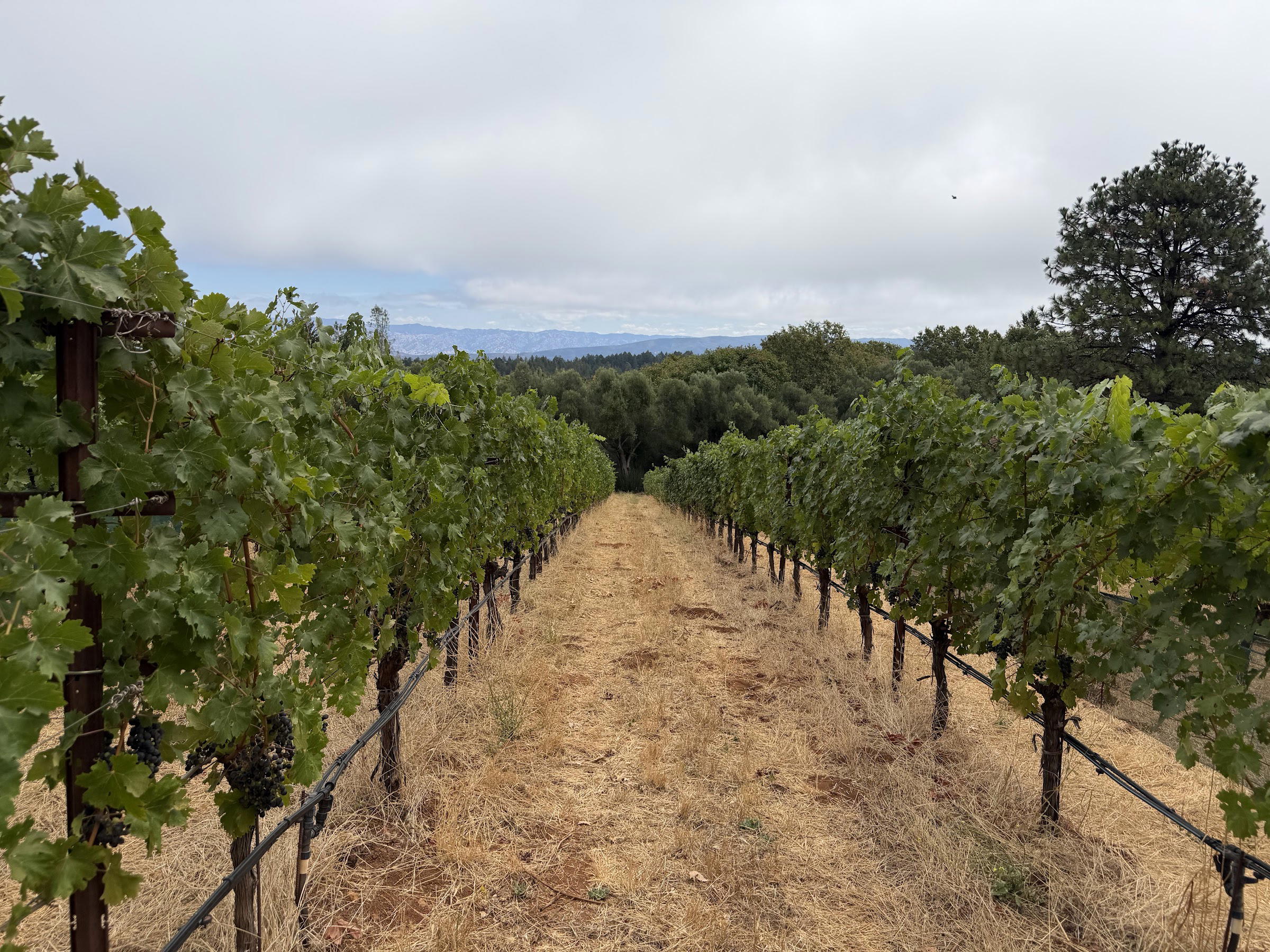
We rode with Lily Mirabelle Freedman in an old Land Cruiser to Howell Mountain vines at 2,100 feet, then tasted three Cabernet Sauvignons on the porch with Mike Dunn.
We rode with Lily Mirabelle Freedman in an old Land Cruiser to Howell Mountain vines at 2,100 feet, then tasted three Cabernet Sauvignons on the porch with Mike Dunn.
This Dunn Vineyards review begins with one of Napa Valley's most memorable winery visits: a private Land Cruiser tour of Howell Mountain with general manager Lily Mirabelle Freedman, followed by the working crushpad, the 1989 caves and a three-wine Cabernet tasting on the porch with Mike Dunn. Lily met us at the estate and drove us through the forest to Cabernet Sauvignon vines planted as high as 2,100 feet. Between the rows, she made the mountain legible, why the highest block can also be the warmest, why newer rows run in a different direction from the old ones, and why the family prefers to make its most consequential sorting decisions in the vineyard.
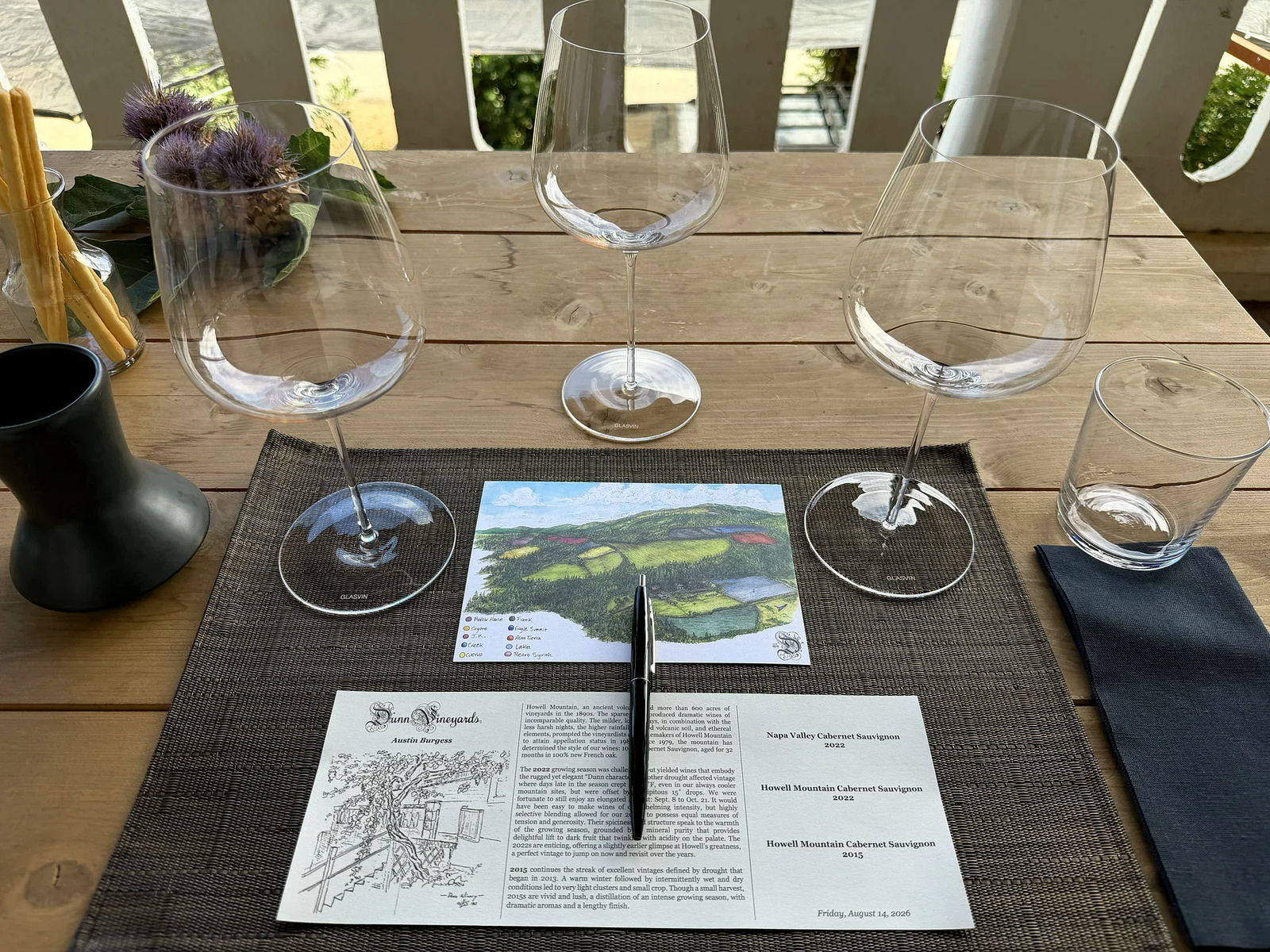
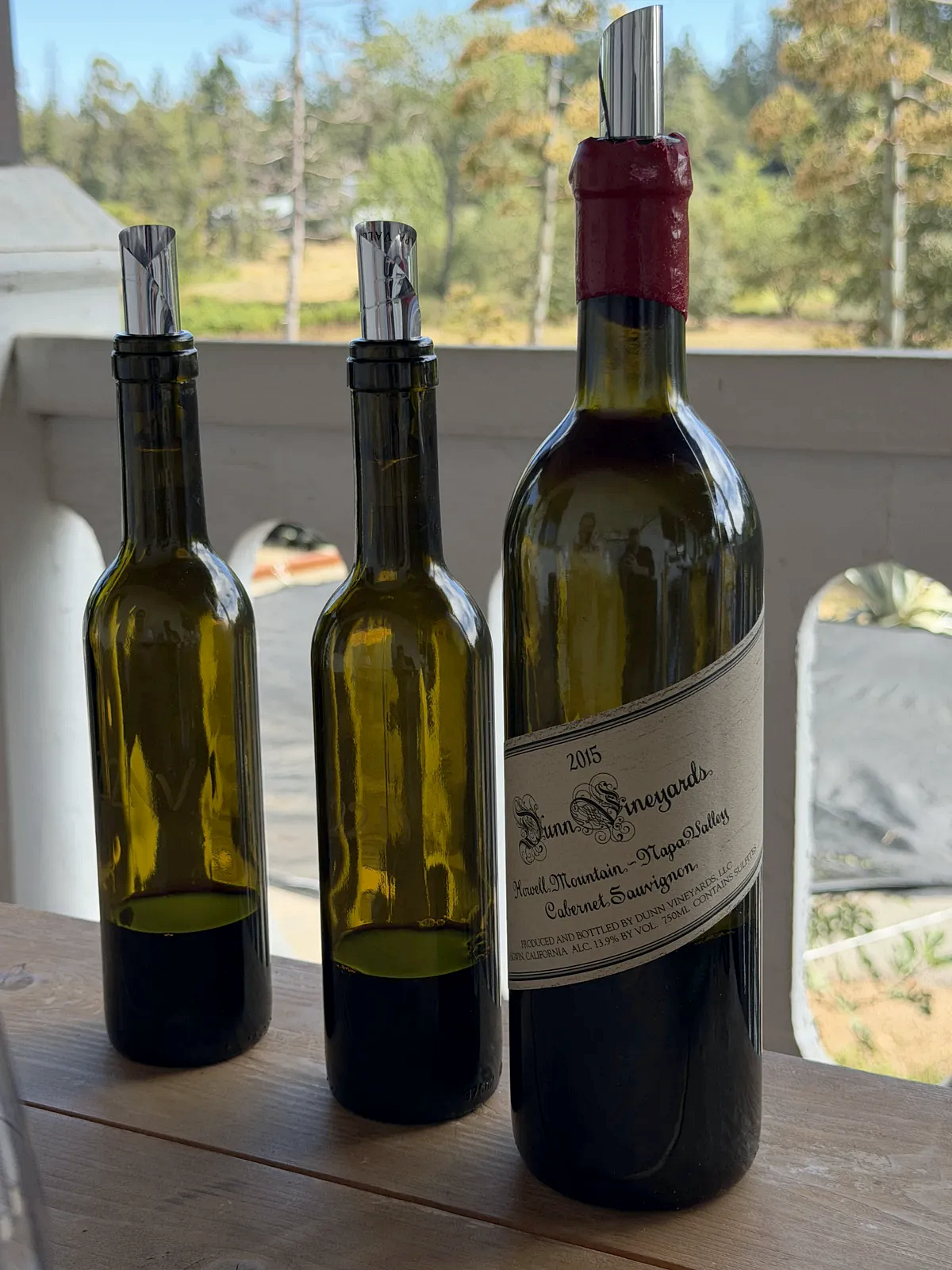
Then we returned to the winery with Lily, walked the open-air crushpad and toured the caves. Fresh, pale barrels sat beside older red-stained ones. The program uses new French oak, but the family joke is that they are “allergic to vanilla.” Every choice is aimed at keeping oak from becoming the flavor of the wine. Mike Dunn greeted us on the porch for the tasting, where a hand-drawn map of the estate sat beside three glasses: 2022 Napa Valley Cabernet Sauvignon, 2022 Howell Mountain Cabernet Sauvignon and 2015 Howell Mountain Cabernet Sauvignon from a red-waxed 750ml bottle.
Howell Mountain 750ml bottles were always waxed until 2017; after the fires, insurance no longer allowed bottled inventory to stay on the property until after harvest for the small team to hand wax. In 2018, the 40th anniversary, they changed to foil on 750ml Howell Mountain, matching Napa Valley bottles that were always foiled, and they still wax magnums of Howell Mountain and El Camino (black wax).
That sequence captured the point of the entire visit. Dunn makes essentially two wines, from one grape, by the same long method. Yet differences in elevation, parcel, vine age, vintage and selection made the glasses feel like a conversation rather than repetition. The wines had the structure expected from Howell Mountain, but also the freshness and proportion that make Dunn feel so singular.
Come for one of Napa's benchmark Cabernet families. What stays with you is how little distance exists between the vineyard, cellar, home and people who still farm, make and explain the wine here.
Yes, absolutely. If you care about classic Napa Cabernet, family-owned wineries or visits where the person showing you the vines can also explain how those exact lots move through the cellar, Dunn Vineyards belongs on your itinerary.
The luxury at Dunn is access: time in the vineyards, detailed cellar conversation and a direct connection to the family and team who work here. The property is rustic, agricultural and intensely personal. Harvest bins, a forklift, tanks and presses remain visible because this is a working winery. The former stagecoach stop that served as the early cellar is still the office, and multiple generations of the Dunn family remain closely involved in life and work on the mountain.
Our appointment went well beyond a seated tasting. Lily took us into the vineyards in the Land Cruiser, helped us read the terrain and farming choices, and led us through the caves. Mike joined us later on the porch for the tasting. Unless the weather is highly inclement, every visit includes the vineyards, the caves and a tasting of typically five wines, two Retro and three Dunns (Napa and Howell current release, plus one library), and umbrellas are provided. Current visit details are listed on Dunn's official visit page.
The strongest reason to visit is how completely the experience connects place to glass. You climb through the elevation, see why the cave was dug and what its humidity does, then taste how source and selection create two distinct expressions of the same house.
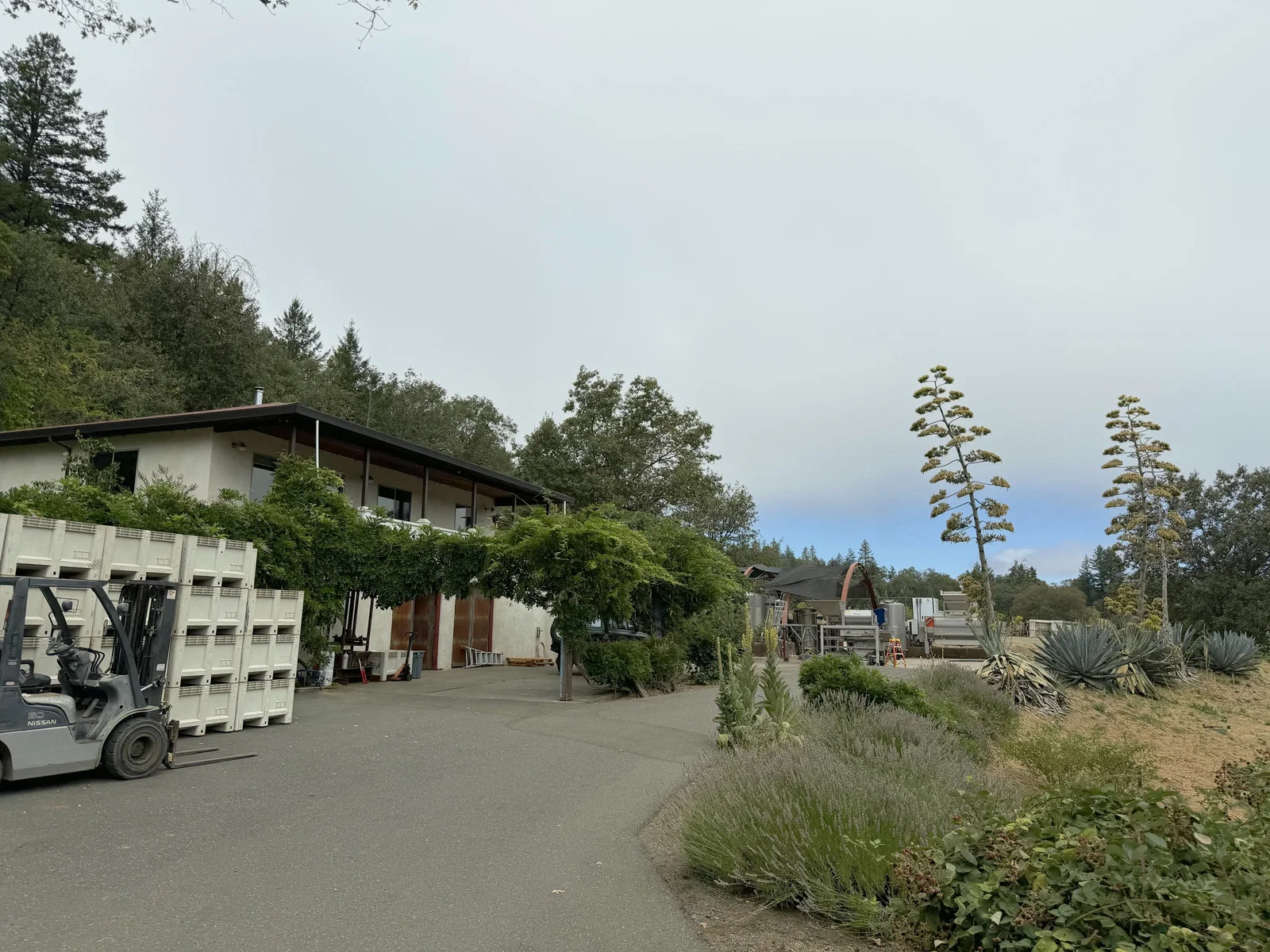
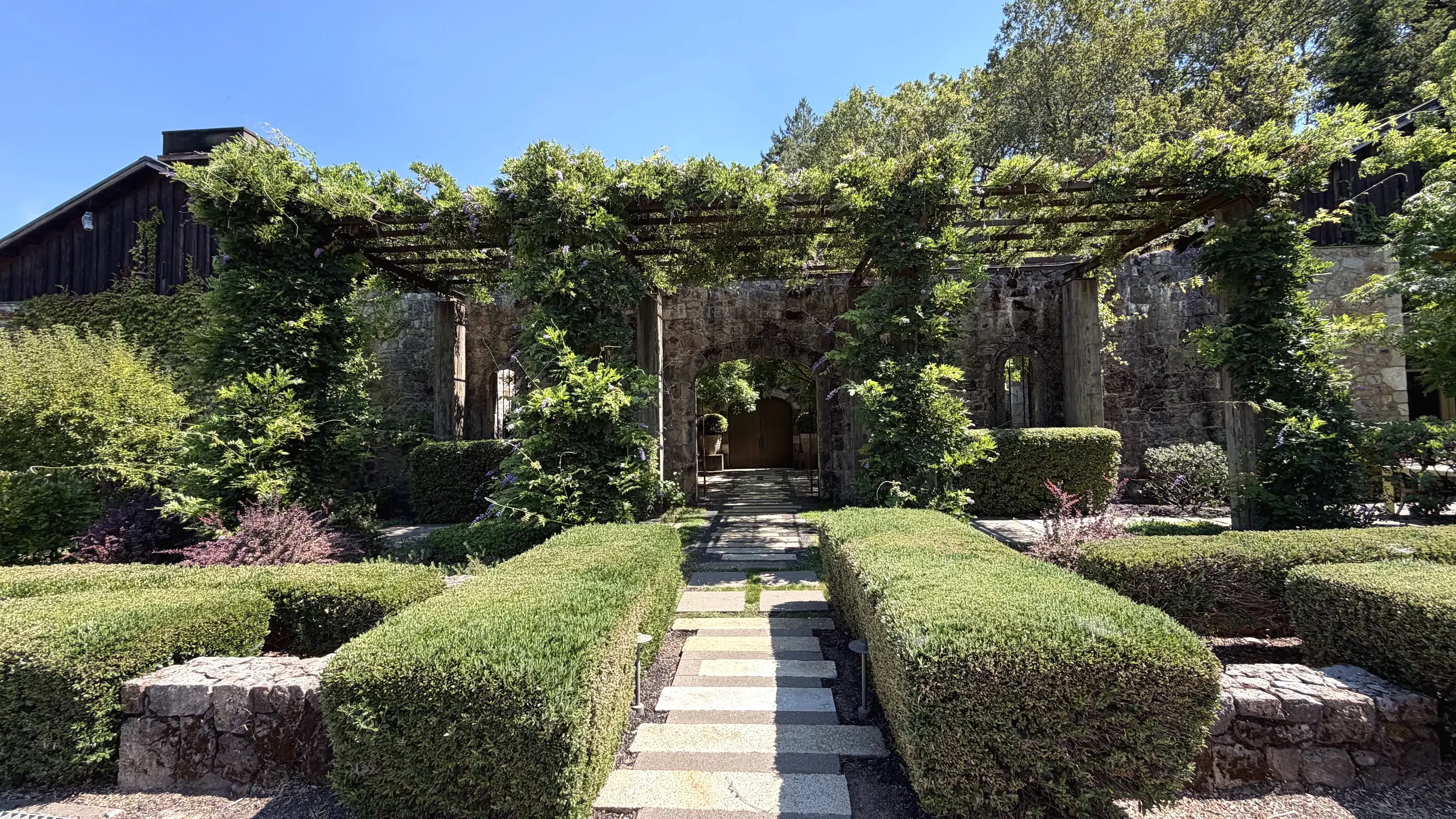
Our first view of Dunn set the tone. Stacked harvest bins, a forklift, the open-air crushpad, vineyard rows and enormous flowering agave all shared the same sightline. The giant agave even prompted a running joke about a future Dunn tequila, one more moment that made the visit feel relaxed and personal.
That informality is part of why the experience felt genuine. Dunn's story begins with Randy and Lori Dunn buying 14 acres in 1978, including five planted acres of Cabernet Sauvignon around 2,000 feet. The first 1979 Howell Mountain Cabernet amounted to 660 cases and was sold through a 1981 newsletter. The Napa Valley Cabernet followed in 1982. Randy and neighboring growers helped define the Howell Mountain AVA in 1983, establishing its lower boundary at 1,400 feet, above much of the valley's fog.
Randy was also making wine at Caymus during Dunn's early years. He began there in 1975, produced the first Dunn vintages at the Caymus facility and remained Caymus's winemaker through 1985. That history matters because Dunn did not emerge from a contemporary custom-crush business plan. It grew inside the working life of a winemaker who was building one important Napa Cabernet program while testing a much more personal mountain idea on nights, weekends and lunch breaks.
Lori handled customer requests, packing and shipping. Their son Mike grew up pruning, labeling and working in the cellar. Mike returned to the winery after the death of his sister Jennifer in 1999 and assumed primary winemaking responsibility in 2002. His wife, Kara Pecota Dunn, comes from another Napa winemaking family, and together they founded Retro Cellars in 2003. Their son Alex now directs much of Dunn's farming and regenerative work. Randy and Lori's daughter Kristina is the family's formally trained winemaker and lives near Eagle Summit with her family.
Mike was there. Lily knew the property in block-level detail. Alex's art appeared on the tasting sheet and map while his farming decisions were visible under the vines. Even the five vintage fire engines we heard about felt less like a collection assembled for display than one more eccentric part of a place that has accumulated a family's interests over nearly five decades.
Lily Mirabelle Freedman became Dunn's general manager in 2023, the first non-family member to oversee the operation. Before Dunn, she worked in the rare-wine market at Acker and in private clients, hospitality and marketing at Colgin Cellars. Those credentials sound formal. Her actual hosting style was the opposite: direct, relaxed, curious and completely comfortable putting us in an old Land Cruiser to see the mountain properly.
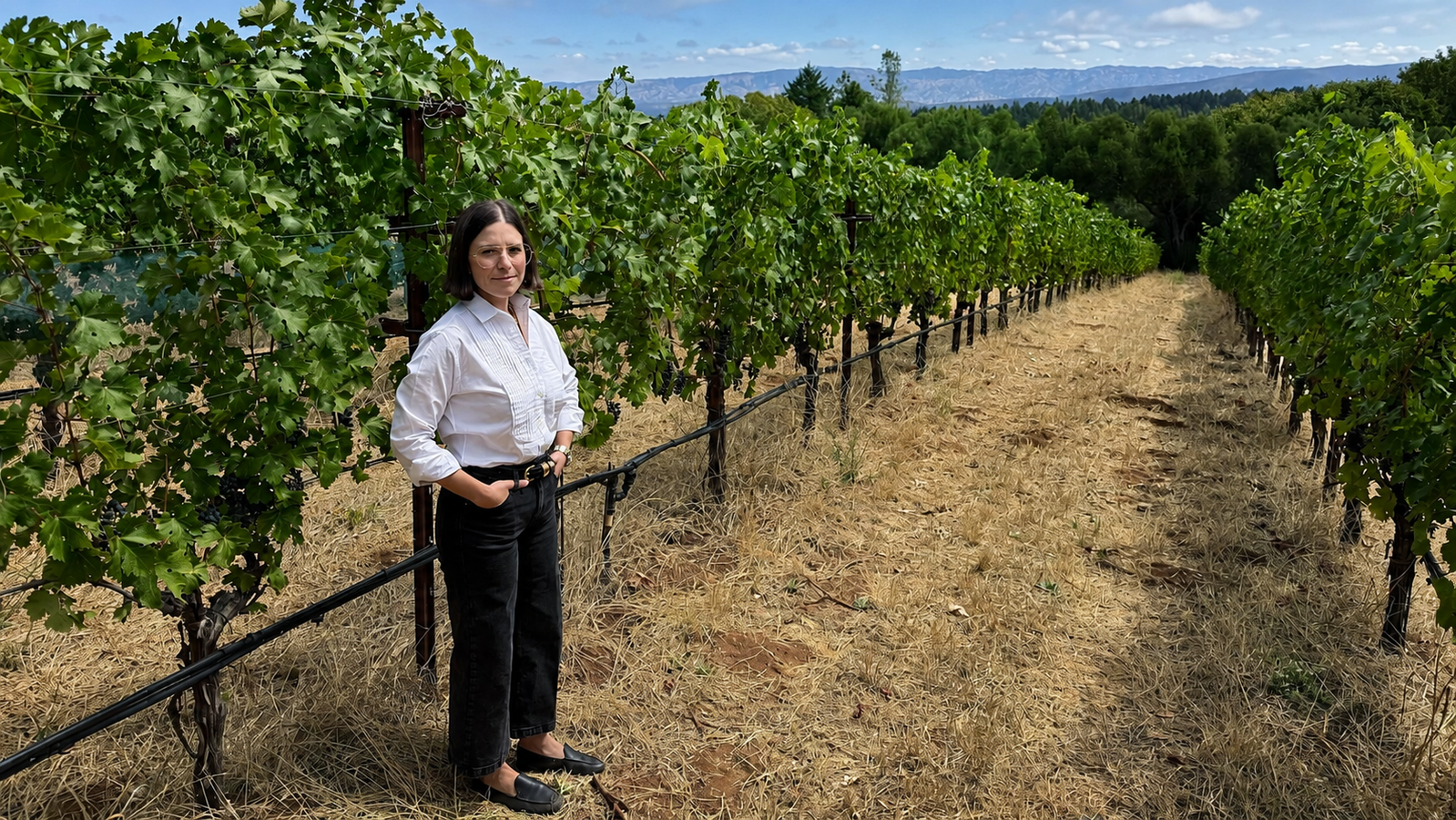
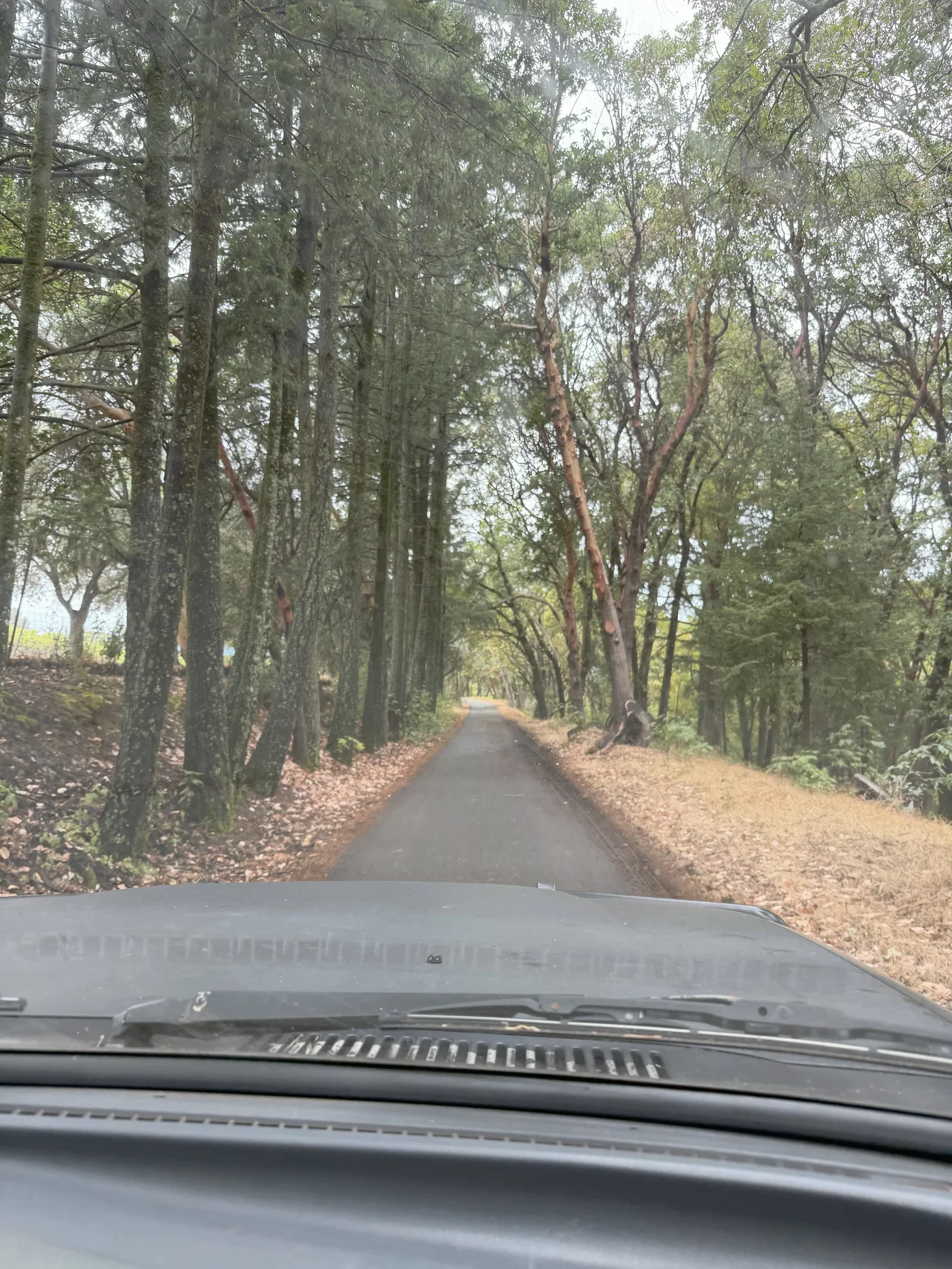
The drive mattered. Dunn's planted land is not one uniform carpet surrounding a hospitality building. Roads cut through forest, vines occupy distinct shelves and elevation changes the growing season in ways that are easy to misunderstand from the valley floor. Lily stopped so we could see the Cabernet first hand, not just photograph a distant block.
At elevation, the familiar Napa temperature logic can reverse. Dunn's highest Eagle Summit block, around 2,100 feet, can be the warmest and earliest to ripen because it sits above the cool air that settles lower on the mountain. The Lake section is the lowest and coolest, close enough to frost pressure that it needs overhead sprinklers and a wind machine. Howell Mountain overall is cooler than the valley floor, yet receives more sunshine because so much of the vineyard sits above the fog. The result is a long, bright growing environment rather than simple heat.
Lily also made the soils readable. In one place we saw reddish, iron-rich loam; elsewhere, pale volcanic tuff broke into powder. Neither soil gives the vines much easy fertility. Dunn describes its yields as roughly half those of the valley floor. Small berries and thick skins build concentration and tannin, but the house goal is not to turn that natural material into the biggest possible wine. It is to preserve the mountain's structure without allowing ripeness, extraction or oak to drown out the site.
The Land Cruiser portion felt special because it removed the usual divide between hospitality and farming. We were not looking through glass while someone summarized a vineyard program. We were standing in the rows with the general manager, talking about sunlight, pruning wounds, water, disease and what a block might need decades from now.
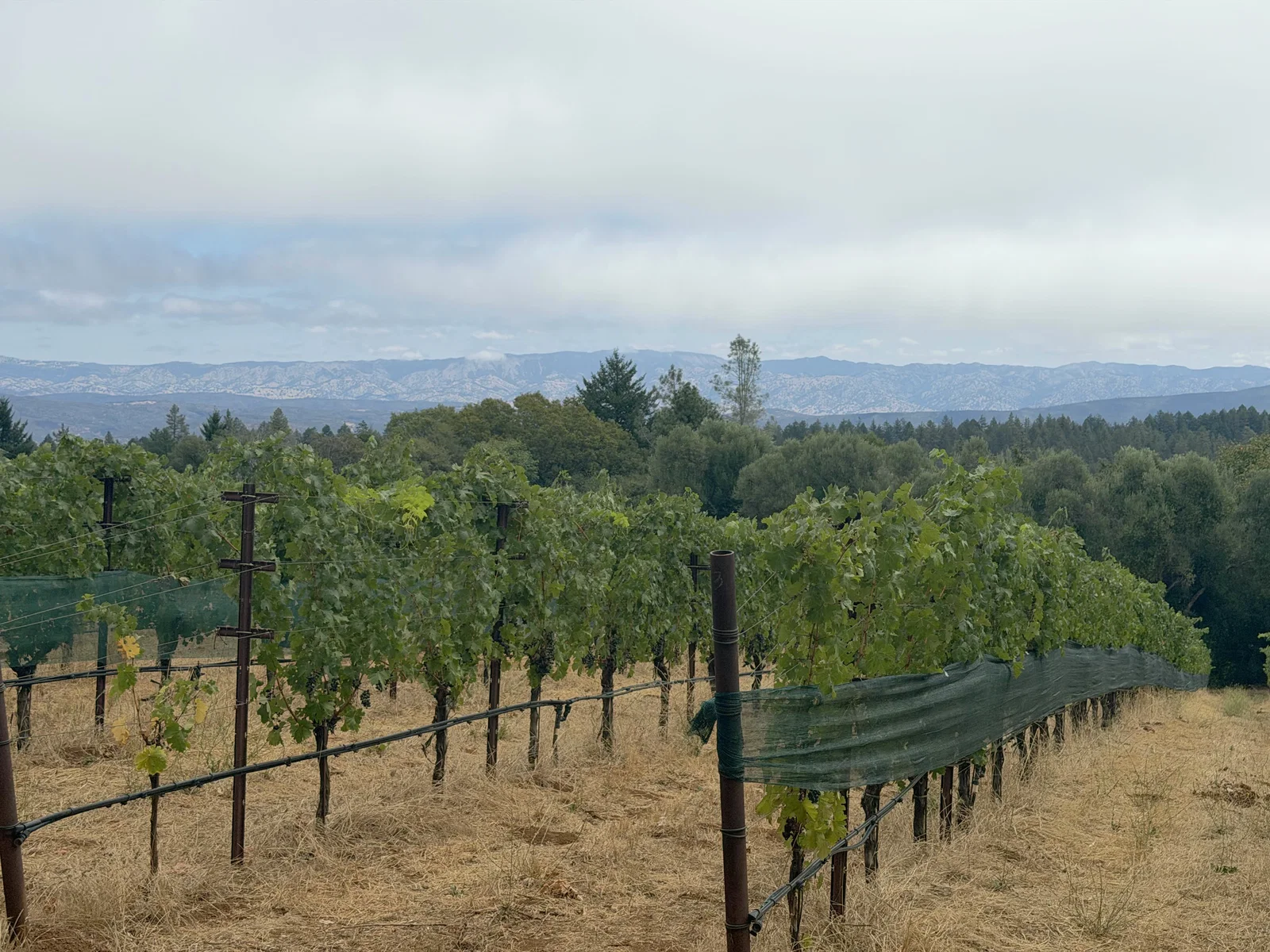
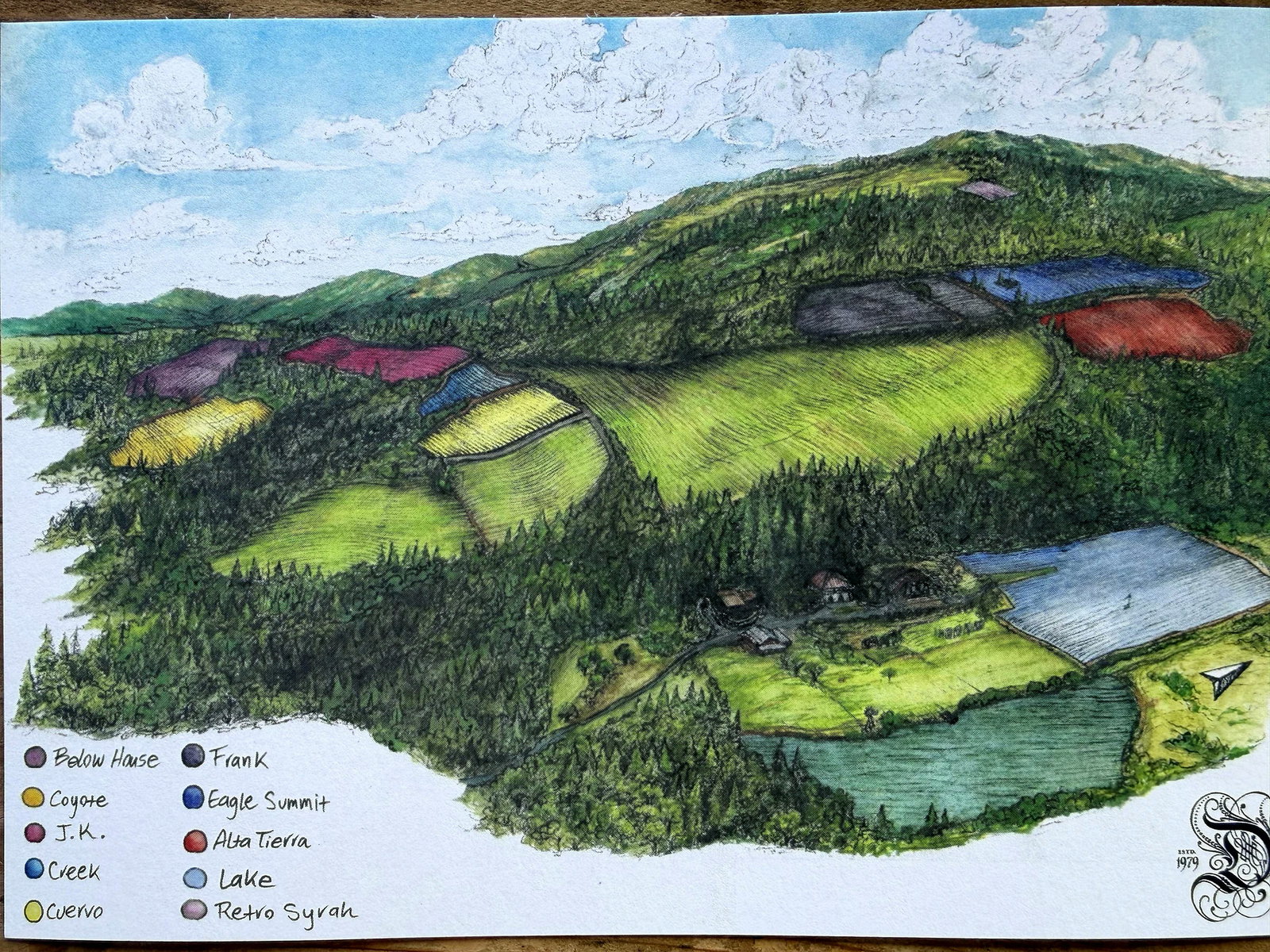
Dunn owns and farms approximately 42 acres between about 1,800 and 2,100 feet. The hand-drawn map at our tasting named ten blocks: Below House, Coyote, JK, Creek, Cuervo, Frank, Eagle Summit, Alta Tierra, Lake and a small Retro Syrah section. It turned an apparently simple estate into a patchwork of different ages, exposures and histories.
Alta Tierra is the original property Randy and Lori bought in 1978. It was long called Trailer Vineyard after the trailer at the summit of the block. Dunn removed the old vines after 2013, grafted the new planting in 2016 and gave it the Spanish name for “high land.” Frank, first planted in 1965, contributed alongside the original block to the inaugural 1979 wine and has remained under Dunn's care through multiple partial replants.
Eagle Summit sits at the summit, planted in 2000 and acquired by Dunn in 2018. Park Muscatine, purchased in 1991, contains the memorably named Cuervo, JK, Below House, Coyote and Creek blocks. Cuervo was named after crows stole the popsicle sticks used to mark new vines. JK honored Jennifer and Kristina. Below House took its name from the home of longtime vineyard manager Raul Martinez. Coyote recalls pups that learned to drink from the drip lines. Creek's old head-trained vines produced their final vintage in 2024 before the block was replanted with JK in spring 2025.
Lake sits lowest beside a reservoir and the winery. The family grew hay there for its horses for the property's first two decades, then planted roughly eight acres mainly to Cabernet Sauvignon between 2001 and 2003. On the western edge, one acre called Los Abuelos carries Petite Sirah and Peloursin for Mike and Kara's Retro Cellars. There are also a few family rows of Syrah.
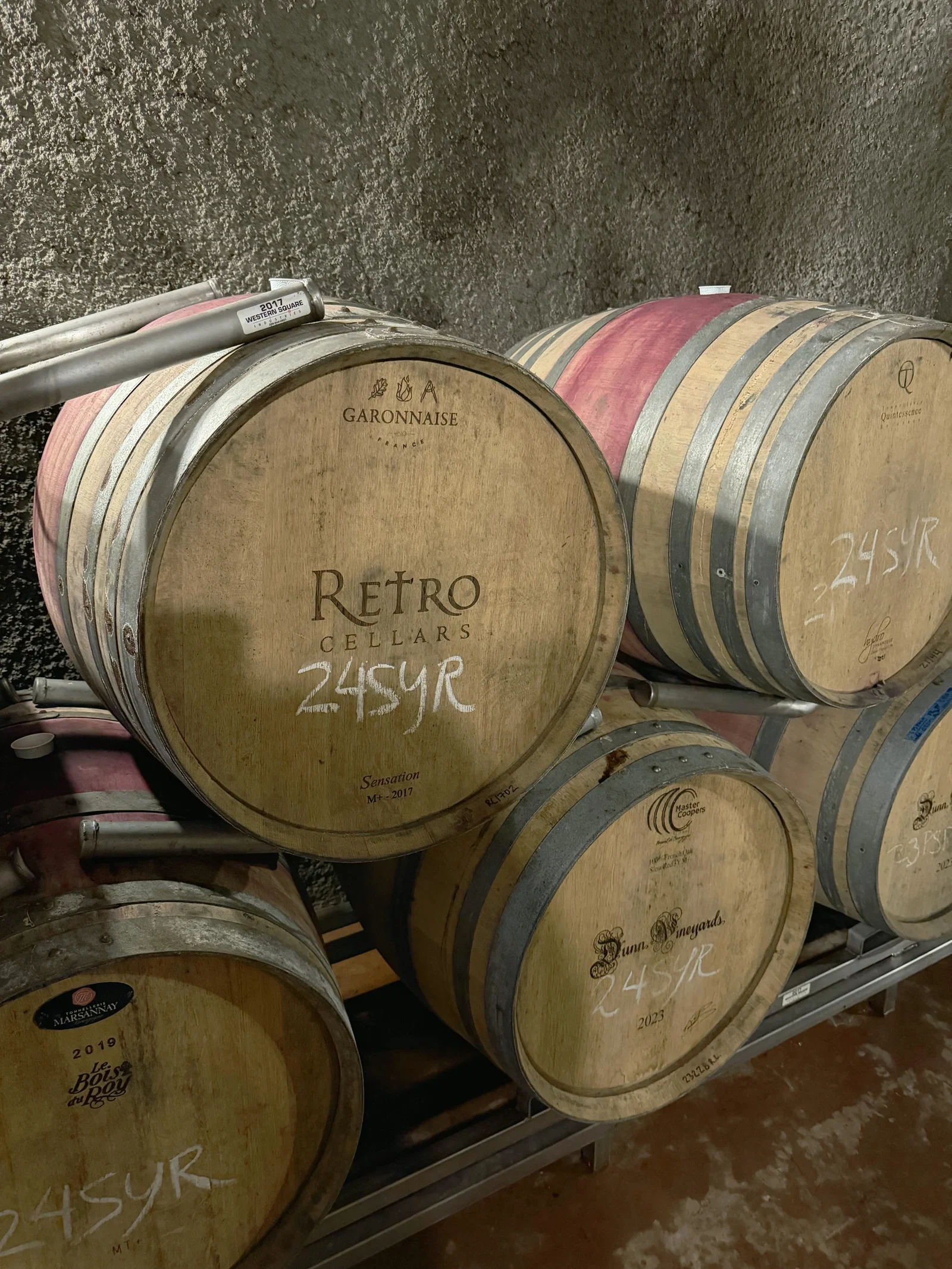
That last detail corrects a tempting simplification from the visit. Dunn Vineyards' two core wines and the overwhelming focus of its estate are Cabernet Sauvignon. Cabernet is not literally the only grape growing anywhere on the family property. The small Retro and home-consumption plantings are exceptions, and seeing Retro barrels in the cave made that family overlap tangible.
One forward-looking part of Dunn was not a new building or a new wine. It was the attempt to keep vines healthy and productive for much longer.
Dunn began deploying organic practices in 2016 and now describes regenerative agriculture as its focus. The careful wording matters. The winery is not advertising a rigid certification system, and Lily was candid about fungal and pest pressure on the mountain. The aim is to use better tools where they make sense, maintain biodiversity and avoid treating farming philosophy as a reason to lose a vineyard.
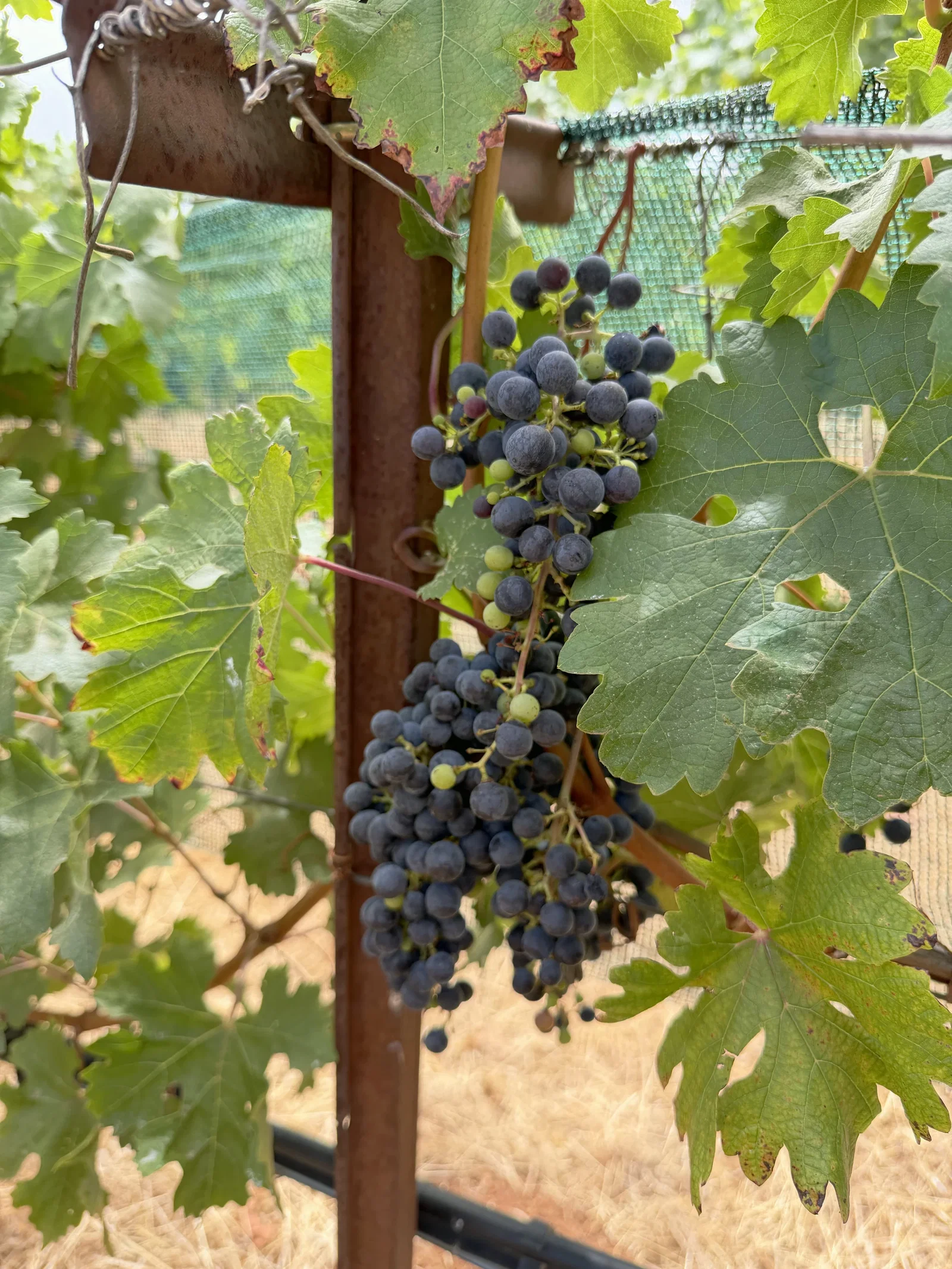
Instead of repeatedly tilling every cover crop into bare earth, the team often crimps or mows it. Crimping presses plant material down to form a protective layer, helping the soil hold moisture where the valley floor's fog cannot. Native legumes and daikon radish contribute organic matter and different root structures. Alex makes a compost tea that can move through the irrigation system. These practices treat the floor between vines as part of the vineyard rather than empty space.
Row direction is another long decision. Older sections were planted north-south. Some newer work runs east-west to soften the punishing sun exposure. Training differs too. Cordon can provide consistency and yield, but every permanent spur position carries pruning wounds that can become entry points for trunk disease. Double Guyot asks for different annual work and may reduce the accumulation of cuts. Dunn is not applying one technique everywhere; it is matching choices to block and future risk.
The sorting philosophy follows the same logic. Most rejection happens in the vineyard, before the clusters reach the winery. Dunn does not depend on an optical sorter to make every berry look identical. The team believes some diversity in berry size and material can contribute character as long as the fruit is healthy. The result is a clear philosophy: consequential quality decision should happen while the fruit is still connected to the place that grew it.
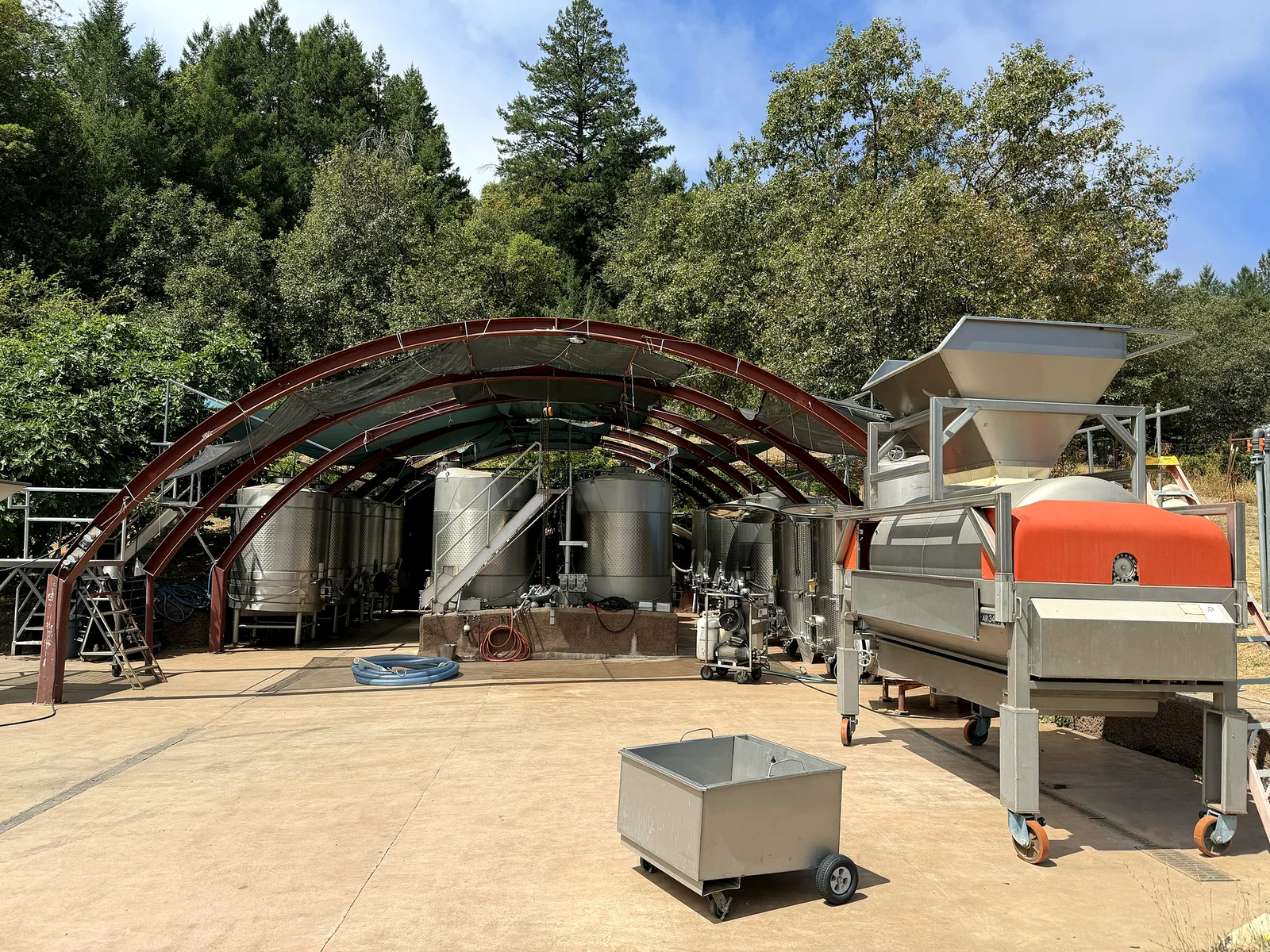
Dunn's open-air production area gives visitors an unusually clear view of a working Napa crushpad. Stainless tanks sit beneath curved red steel ribs and practical shade cloth. A destemmer and sorting equipment wait in the open, while hoses, drains and catwalks make the movement of each lot easy to understand. It is simple enough to read at a glance and complex enough to support many separate decisions.
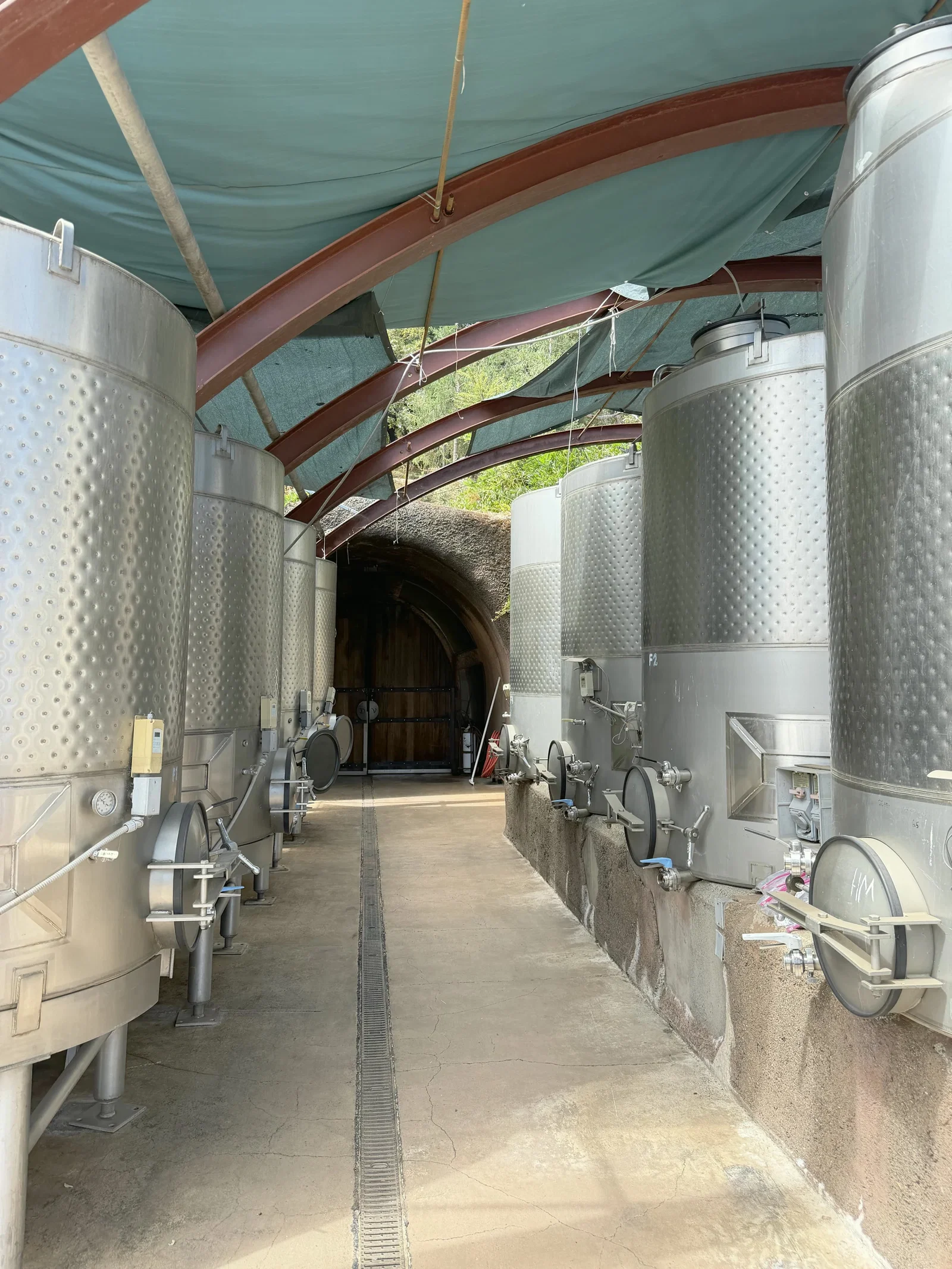
The estate may release only two regular Cabernet Sauvignons, but our host said the team can finish and evaluate roughly 17 separate lots before assembly. Different blocks, elevations, vine ages and barrel matches remain apart. The final work is selection: which components belong in Howell Mountain, which express the more accessible Napa Valley profile and whether a notable older-vine set can support the rare El Camino reserve without weakening the main wine.
Both core wines follow the same declared method. They are 100 percent Cabernet Sauvignon and spend 32 months in new French oak. That symmetry is important because the labels are not separated by an obvious cellar hierarchy. Dunn is not giving one wine a short élevage and the other a luxury barrel program, then calling the latter the true estate expression. The differences are built through vineyard source and blending.
The Napa Valley Cabernet began in 1982 and historically helped Dunn grow beyond the limited estate acreage by incorporating fruit from trusted valley-floor growers. More recently it can combine purchased fruit with younger or earlier-ripening Howell Mountain parcels. In 2022, however, the Napa Valley bottling was sourced entirely from the mountain estate, an unusual vintage in the modern record. It still tastes and functions as the Napa bottling because the team selected lots for its plushness and accessibility.
The cave conversation resolved what looks like a contradiction on paper. Dunn uses 100 percent new French oak for 32 months, yet the wines do not lead with sweet toast or vanilla. Mike's answer is that “new” describes the age of the vessel, not the intensity of its flavor. Cooper, forest, grain, seasoning and toast can matter as much as whether a barrel has held wine before.
Randy was loyal to one cooperage for the winery's first two decades, using a mix of new and once-used barrels. When Mike took over primary winemaking in 2002, he refreshed the cellar with new barrels as part of a larger focus on cleanliness. Then he started searching for barrels that delivered slow oxygen exchange and structural support with as little obvious flavor as possible.
Dunn's broader public history says a single vintage has used as many as eleven. The team chooses restrained, lighter-toast profiles and matches them to specific vineyard lots. The house line is that they are “allergic to vanilla.” It is funny, but it is also an exact description of the target.
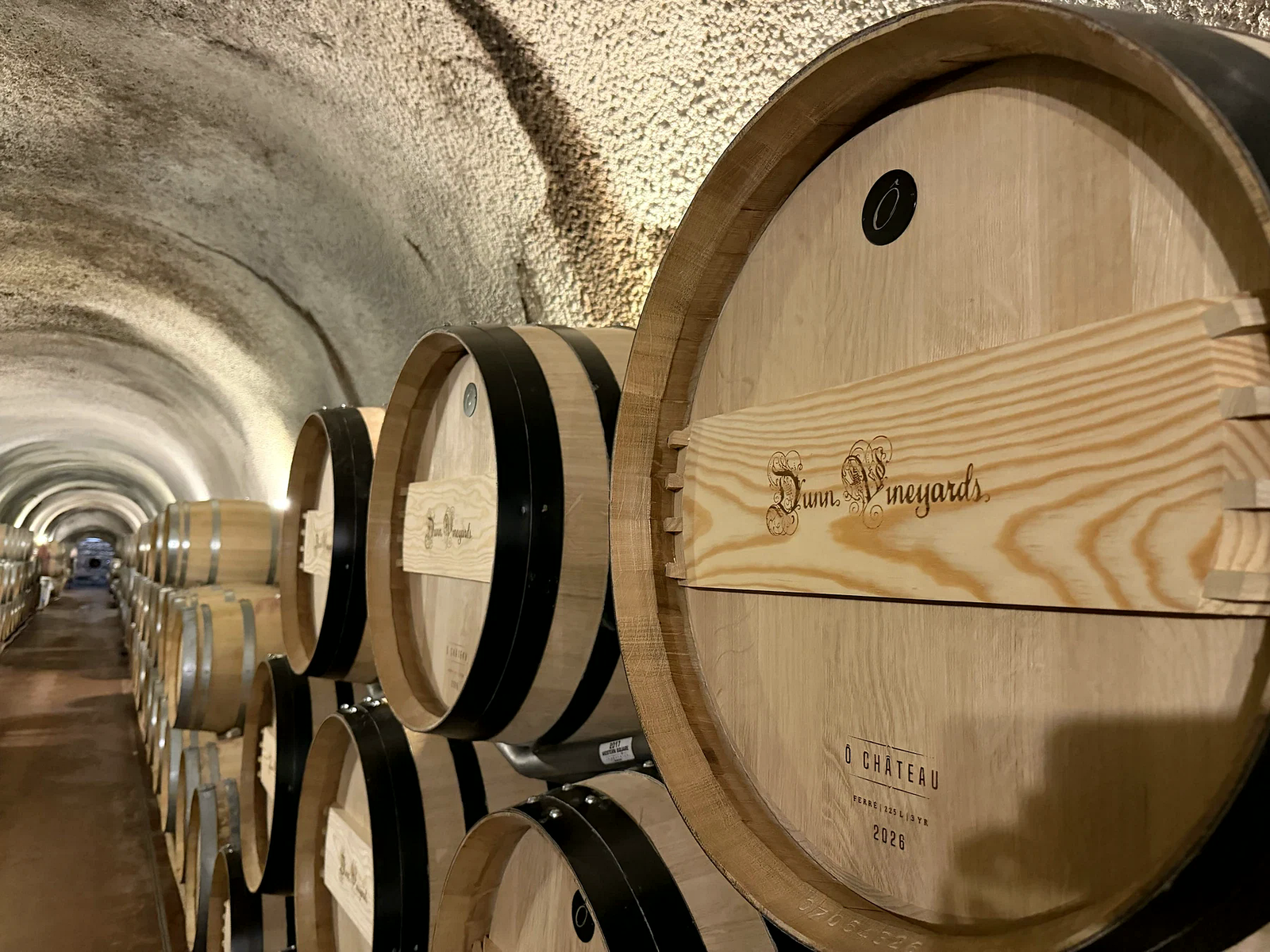
Lots remain separate through the 32-month élevage and are racked approximately every six months. That controlled introduction of oxygen helps the mountain tannins resolve gradually. New oak also reduces the microbial uncertainty that can come with used barrels, but Dunn's solution is not to make the barrel louder. It is to use cleaner vessels with quieter seasoning.
This is where our “Burgundian” impression needs precision. Dunn Cabernet does not taste like Burgundy, and the Howell Mountain wine is not light. It is Cabernet with real tannin, savory depth and longevity. The Burgundian quality is philosophical: many small parcels, attention to site, disciplined élevage, moderate alcohol and a refusal to let technique become more legible than the land.
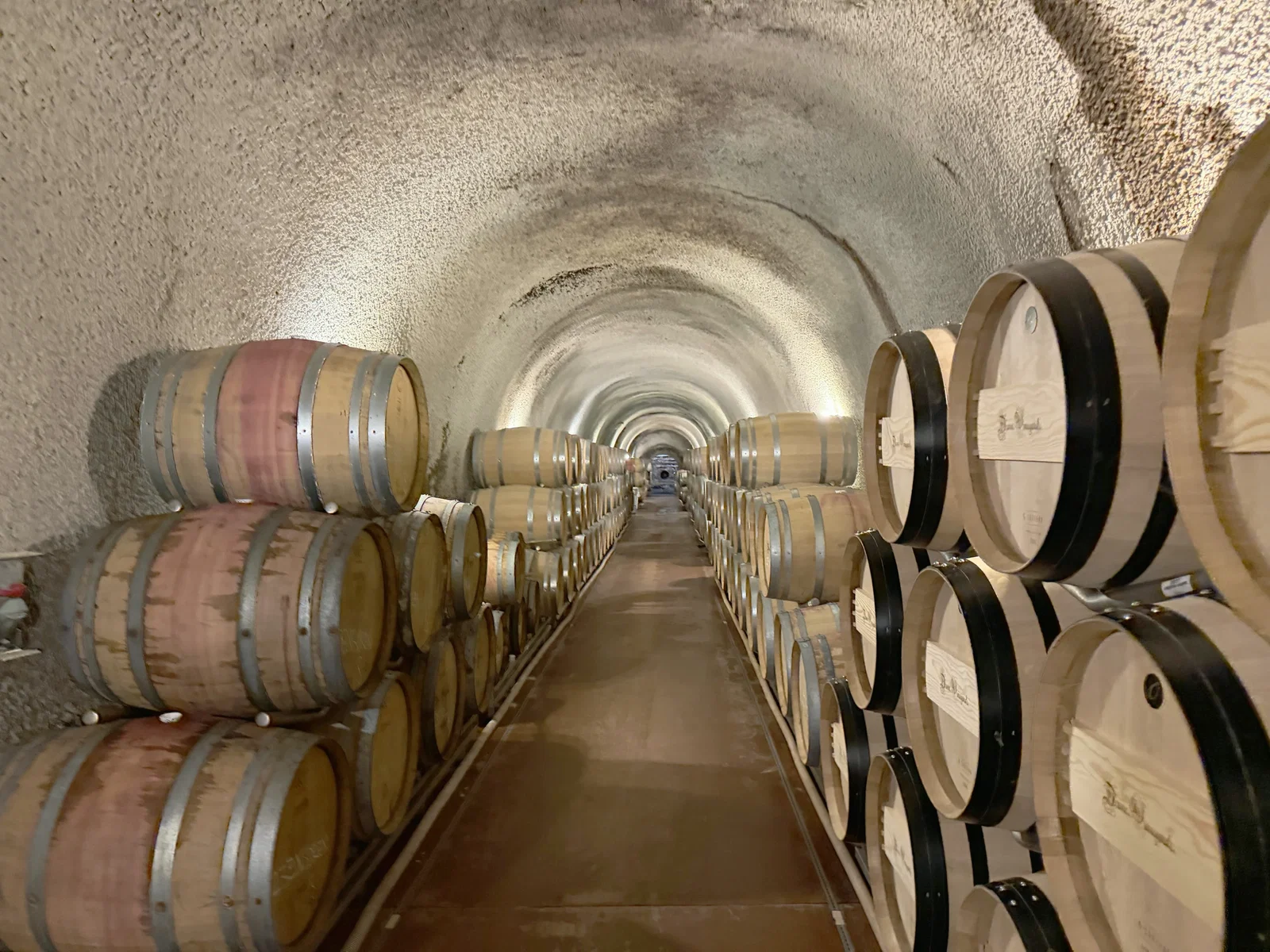
Dunn dug its 6,000-square-foot caves directly into Howell Mountain in 1989. The practical reason was evaporation. Early vintages were made beneath the family's original residence, an 1890s Western Union stagecoach stop, where the cellar could control temperature but not humidity. Wine lost water during the long barrel period and alcohol concentration could rise.
The cave holds around 56 degrees Fahrenheit and 98 percent humidity year-round. In that environment, Dunn says a wine can lose as much as one percentage point of alcohol over the long aging period without losing corresponding water. The effect aligns with one of Randy's most persistent positions: finished Cabernet should remain below 14 percent alcohol.
That stance once put Dunn against a powerful Napa trend toward later picking, richer texture and higher critic scores. Randy argued publicly that escalating alcohol could make wines hot, standardized and less expressive. The cave is therefore not only storage. It is infrastructure built around a stylistic conviction.
Walking through it with Lily made the philosophy feel practical. Barrels from different coopers lined the tunnel. Older red-stained vessels sat opposite pale new ones. Retro Cellars barrels appeared deeper inside, another reminder that multiple branches of the family work under the same mountain. At the far end, the original excavation face remained visible, a final reminder that the cave was built for wine first.
The wines are still powerful. Lower alcohol does not erase Howell Mountain's small berries, thick skins or long tannin. It keeps that structure in balance. What we loved was how the cave, long élevage and detailed barrel program work together to keep the finished wine focused on mountain Cabernet.
Our personalized sheet dated Friday, August 14, 2026 set out a brilliantly simple flight. Two 2022 wines showed how Dunn makes separate bottlings from one grape and method. A red-waxed 2015 Howell Mountain then showed what time does to the estate wine.
| Wine | Vintage | What it showed |
|---|---|---|
| Dunn Napa Valley Cabernet Sauvignon | 2022 | The more immediately plush Dunn profile, unusually assembled entirely from Howell Mountain estate fruit in this vintage |
| Dunn Howell Mountain Cabernet Sauvignon | 2022 | Greater mountain structure, savory spice and mineral tension from a difficult, selectively blended growing season |
| Dunn Howell Mountain Cabernet Sauvignon | 2015 | A red-waxed 750ml showing how Dunn's tannin and freshness become more expansive with age |
The 2022 Napa Valley Cabernet was the surprise of the flight because its source story breaks the normal shorthand. Dunn's Napa bottling often includes valley-floor fruit and mountain lots selected for an earlier, plusher profile. In 2022, it came entirely from Dunn's Howell Mountain vineyards. The team still built it to express the Napa wine's identity.
Dunn's note finds brambly raspberry, blackberry and black currant, with lacy tannin, lively acidity, graphite, black licorice and forest floor. What mattered most at the table was its generosity. It was unmistakably Cabernet and unmistakably Dunn, yet easier to read immediately than the Howell Mountain wine beside it. It showed why the Napa bottling should not be treated as a second wine. It is a selection for a different shape.
The 2022 growing season forced difficult choices. Late heat arrived in an already dry year, and Dunn's own account emphasizes selective blending rather than pretending every parcel sailed through unchanged. The finished Howell Mountain wine held power, spice and dark fruit in tension with freshness and mineral structure.
This was the glass that best explained the mountain outside. The tannin was present, as it should be, but the wine did not feel hot or heavy. Savory and herbal tones kept the fruit from becoming monolithic. The current note describes 2022 as an earlier glimpse of Howell Mountain's greatness, but not a short-lived one. That combination made sense: approachable enough to reveal itself, structured enough to reward a long return.
The 2015 arrived from a red-waxed 750ml bottle, which made the final pour feel ceremonial without changing the relaxed character of the visit. The traditional red wax has long been part of Dunn’s identity, so the bottle itself carried part of the winery’s history.
The tasting sheet describes a warm winter, alternating wet and dry conditions, light clusters and a small crop. It calls the 2015s vivid and lush, with dramatic aromatics and a long finish. Eleven years from vintage, the wine still had energy. The edges had broadened, the savory elements had integrated and the structure felt less like resistance than architecture.
This was our favorite lens on Dunn. The 2022s explained selection. The 2015 explained patience. You could understand why collectors cellar the Howell Mountain wine for decades while also seeing that age does not turn it into something soft and generic. It remains mountain Cabernet; it simply becomes more conversational.
Dunn's consistency is not the result of refusing to change. It comes from changing inside a narrow definition of what the wine should remain.
Mike's work after 2002 is the clearest example. He reorganized the cellar, refreshed the oak, expanded the cooperage set and made the wines more approachable without abandoning 32 months in barrel, 100 percent Cabernet Sauvignon or the house's lower-alcohol conviction. His own Retro Cellars gave him room to experiment with Petite Sirah while keeping Dunn's identity focused.
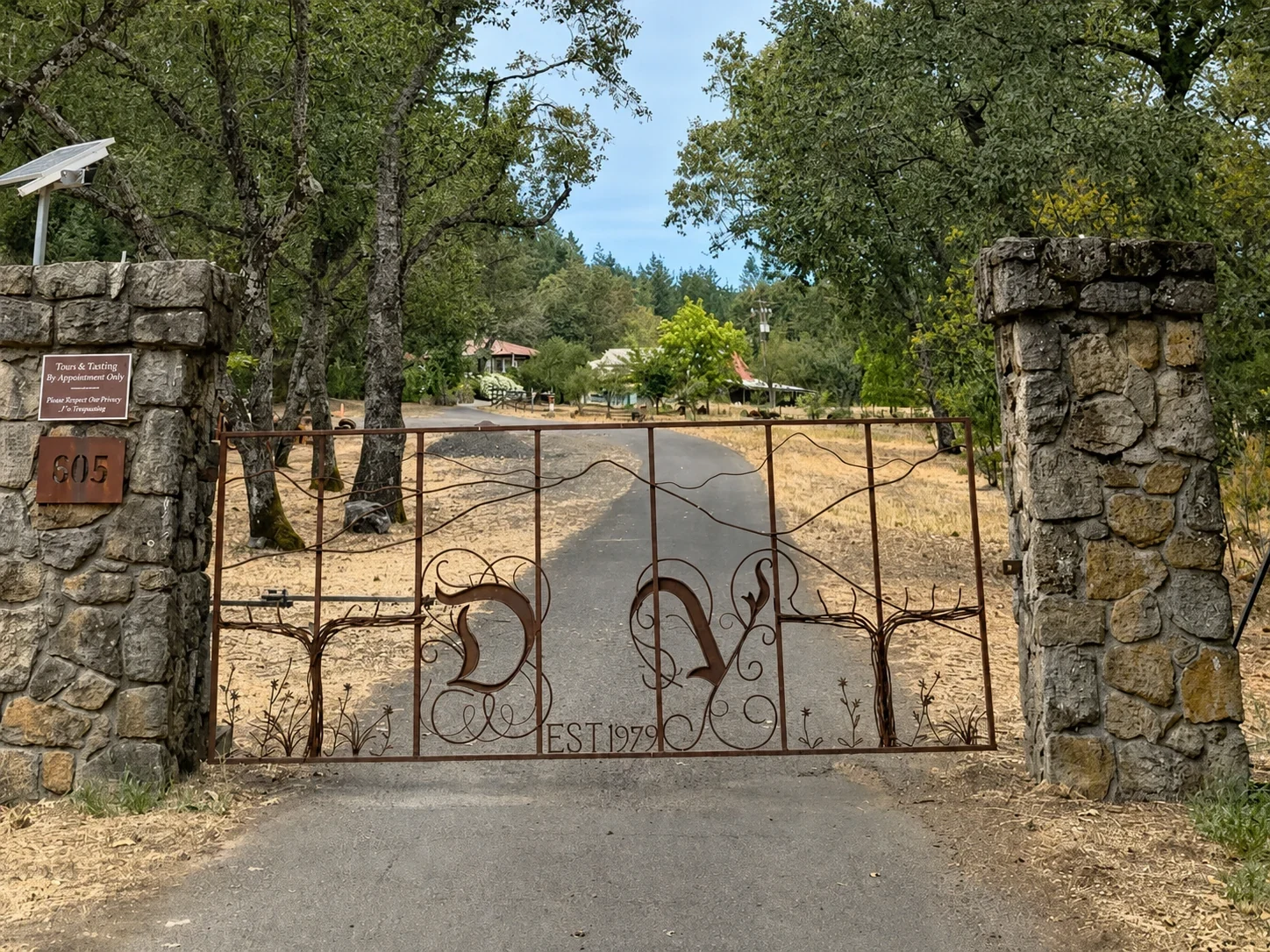
Alex approaches the future from the vineyard. A trained artist with a strong interest in California landscapes, he became full-time in 2022 and now leads regenerative work and farming. He designed the gate at the property and drew the block map on our table. The same person thinking about crimping, compost tea and trunk disease is also shaping how guests visualize the estate.
Ted Kizor joined in 2020 and became the official winemaker in 2023. His background includes Ridge, Joseph Swan, Clonakilla and Stéphane Ogier, names that suggest a palate comfortable with structure, cool-climate detail and long élevage. Dunn's own description of his job is charmingly modest: he works carefully not to mess up a diamond in the rough.
Lily's addition is just as significant. She brings an external view of the global fine-wine market while treating the family culture as the foundation of the experience. We received a serious, block-level education without losing the feeling that we had been welcomed into a family's home.
Collectors seeking a Dunn-focused appointment should contact the estate or email concierge@enprimeurclub.com. At the time of writing, private visits are available Monday through Friday for $125 per person. Requests must be made more than three business days in advance, there are no walk-ins and standard groups are capped at six. Larger parties need to contact the winery directly.
Allow more time than the tasting fee might suggest. Dunn is near Angwin on Howell Mountain, not in a valley-floor tasting corridor where another appointment sits five minutes away. The winding drive is part of the geographic education. Leave a generous buffer before and after, and arrange transportation that will wait or return reliably.
Wear shoes suitable for a working winery and uneven vineyard ground. The vineyard walk is part of every visit unless the weather is highly inclement, and umbrellas are provided. The Land Cruiser ride, specific host and exact flight can vary, so confirm any detail that is especially important to your visit.
Strong preparation is to taste at least one Dunn wine before you arrive. If possible, know the difference between the Napa Valley and Howell Mountain labels and bring a question about age, vintage or a specific block. Dunn rewards curiosity more than checklist tourism.
Dunn Vineyards was an immediate yes for us and among the more memorable visits on Howell Mountain. The authenticity is immediate: an old Land Cruiser, a working crushpad, a cool humid cave, multiple generations connected to the property and Cabernet vines surrounded by forest. This is a living family winery, and the experience makes that history tangible.
The greater achievement is the wine. Dunn has built an identity out of constraints that would seem severe anywhere else: essentially one grape, two main bottlings, 32 months in new oak and a determined commitment to moderate alcohol. Within that frame, the family finds enormous variation through elevation, block, vine age, vintage, cooperage and selection.
We loved the restrained, almost Burgundian sensibility, with the important qualification that these are still powerful Howell Mountain Cabernets. The wines had savory depth, acidity and tannin without heat or obvious vanilla. The 2022 Napa was generous, the 2022 Howell Mountain was structured and composed, and the 2015 showed why Dunn remains a reference point for collectors who have patience.
Should you visit Dunn Vineyards? Absolutely. Go if you want to understand how a historic Napa family still farms, makes and thinks about Cabernet. Go for Lily's ability to make the mountain legible and for Mike's cellar perspective. Most of all, go because the experience feels like Dunn itself: personal, uncompromising and far more nuanced than its apparent simplicity.
Yes. Dunn offers one of Napa Valley's most authentic private winery experiences, combining Howell Mountain vineyards, a working crushpad, the 1989 caves and a multi-vintage Cabernet tasting. It is especially strong for collectors and visitors interested in family history, vineyard decisions and restrained mountain Cabernet.
Dunn Vineyards is near Angwin on Howell Mountain in Napa Valley. Its estate vineyards sit approximately 1,800 to 2,100 feet above sea level, above the Howell Mountain AVA's 1,400-foot lower boundary.
Yes, by confirmed advance appointment. Dunn does not accept walk-ins. Its current page asks guests to request more than three business days ahead through the member portal.
The current published hospitality fee is $125 per person. Policies and prices can change, so verify the live appointment page before booking.
Ted Kizor has served as Dunn's official winemaker since 2023. Mike Dunn took over primary winemaking from Randy in 2002 and remains central to the cellar and house style. All three generations of the Dunn family participate in the blending process.
Lily Mirabelle Freedman is Dunn Vineyards' general manager. She joined in 2023 after roles at Acker Wines and Colgin Cellars and oversees operations, distribution, marketing and strategic direction.
Dunn is known for two regular 100% Cabernet Sauvignon wines: Napa Valley Cabernet Sauvignon and Howell Mountain Cabernet Sauvignon. In notable years it may also produce a small El Camino reserve selection from older estate blocks.
Both use the same stated method: 100% Cabernet Sauvignon and 32 months in new French oak. The difference is selection and source. Howell Mountain is entirely estate fruit selected for the mountain wine's structure, spice and mineral profile; Napa Valley is assembled for a plusher, earlier expression and may include valley-floor fruit depending on vintage.
Yes. Both main wines spend 32 months in new French oak. Dunn uses many cooperages and restrained, lighter-toast barrel profiles to support oxygen exchange and tannin development without making vanilla or toast the dominant flavor.
Dunn deliberately targets finished alcohol below 14%. Its cool, humid caves help reduce alcohol during the long barrel period without concentrating it through water loss. The wines remain structured and powerful, but they avoid the heat associated with some riper Cabernet styles.
Our August 14, 2026 flight included 2022 Napa Valley Cabernet Sauvignon, 2022 Howell Mountain Cabernet Sauvignon and 2015 Howell Mountain Cabernet Sauvignon from a red-waxed 750ml bottle.
History, vineyard, people, wine, cave and appointment details were checked on August 23, 2026 against Dunn Vineyards' official history, vineyard profiles, wine program and appointment page. Tasting impressions and photographs come from a firsthand August 14, 2026 visit; hosts, routes and wines can vary by appointment.
Get the App
Take the shortlist into the En Primeur Club app for concierge access, saved places, and the next step after discovery.
Get Exclusive AccessMore from the editors