← Guides
Château Angélus and Pavie in Person: How to Get In and What You'll See Both estates sit within walking distance of Saint-Émilion's medieval bell tower, yet neither operates a walk-in cellar door.
Château Angélus and Pavie in Person: How to Get In and What You'll See Both estates sit within walking distance of Saint-Émilion's medieval bell tower, yet neither operates a walk-in cellar door.
Both estates sit within walking distance of Saint-Émilion's medieval bell tower, yet neither operates a walk-in cellar door. Château Angélus and Château Pavie, only the latter currently ranked among Saint-Émilion's Premier Grand Cru Classé A elite, require a confirmed appointment before you set foot on either estate. For collectors who want the experience of one of Saint-Émilion's historic upper-tier estates, Pavie is the more accessible starting point. Pavie welcomes private visitors by advance online booking; Angélus is inquiry-led, while Cheval Blanc restricts tours to professional guests.
Angélus occupies a south-facing amphitheatre of limestone and clay soils on the plateau edge above the town, the name itself references the three church bells audible from the vines. The estate's cellars are carved directly into the limestone bedrock, and a visit typically moves through the barrel hall, where the grand vin ages in new French oak, before arriving at a seated tasting. The format varies by appointment type: trade visits tend to focus on current and recent vintages from barrel or bottle; collector visits, when granted, may include older library wines at the discretion of the estate team. Angélus tours and tastings book up quickly, particularly during peak season, and the estate recommends reserving several weeks or even months ahead.1
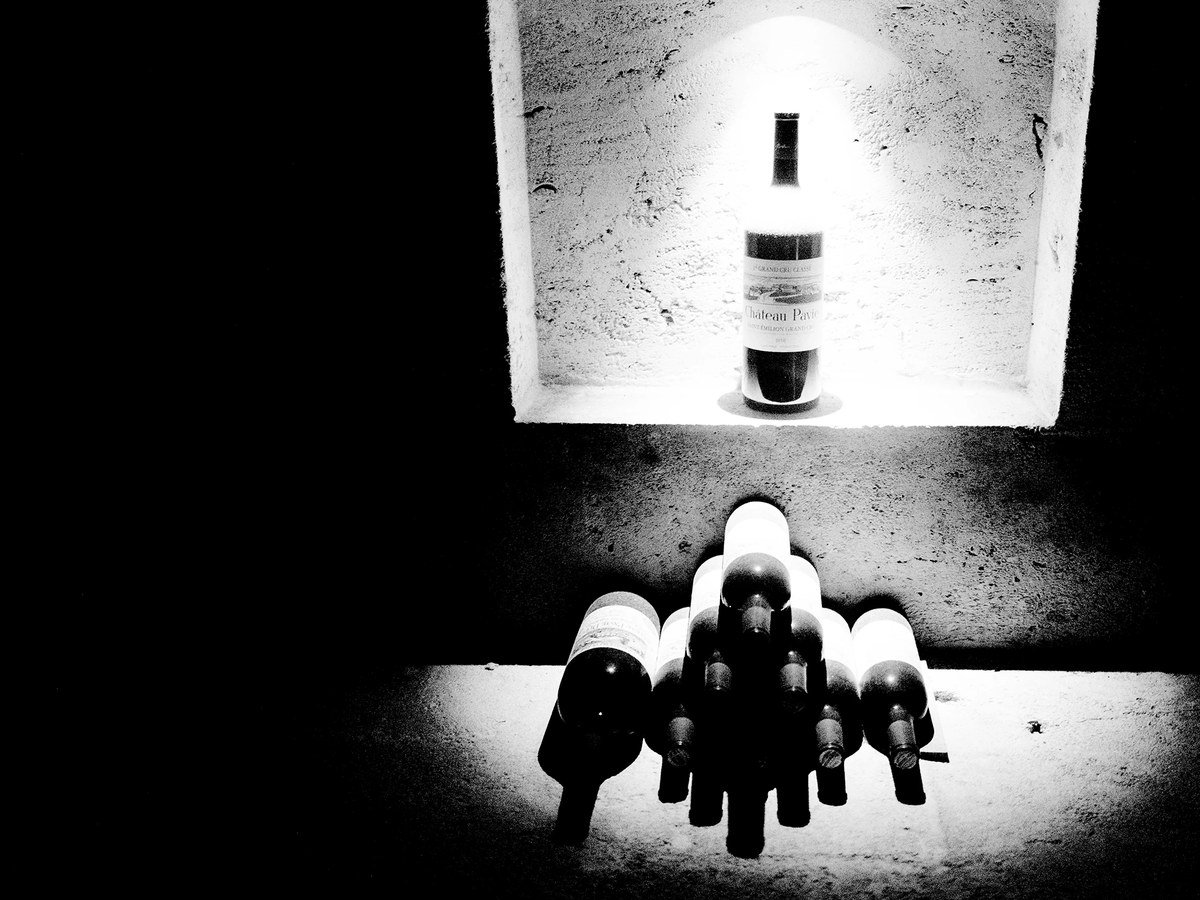
Pavie, owned by the Perse family since 1998 and now led by Gérard Perse's daughter Angélique and son-in-law Henrique da Costa, sits on one of Saint-Émilion's largest single-vineyard sites. The winery's gravity-fed chai and the underground cellars cut into the côte are the visual centrepiece of any visit. Tastings here lean toward the vertical: Pavie's house style, with its concentration and structured tannins, rewards comparison across vintages, and the estate team tends to pour with that arc in mind.
Pavie publishes four distinct private tour formats. The Discovery Tour is priced at €85 per person, runs approximately 1h15, and accommodates groups of two to twelve.2 The Origins Tour carries a flat fee of €300, also runs approximately 1h15, and is limited to two to four people.2 The Well-known Tour is priced at €680 flat and accommodates two to eight guests for approximately 1h15.2 At the summit of the range, the Trilogy Tour is priced at €2,500 fixed, runs 1h30 to 2h00, and is available for groups of two to eight.2 All tours are private.2 The estate receives visitors Monday to Friday by appointment only.2
Angélus does not publish equivalent tiered pricing on its public website; any cost associated with a private visit there should be confirmed directly with the estate's hospitality team.
Saint-Émilion's appellation sits within Bordeaux's broader en primeur ecosystem, where the primary relationship is between château and négociant, not château and end consumer. Both Angélus and Pavie allocate their production through the Place de Bordeaux, the négociant network that distributes Bordeaux's classified growths globally. That commercial structure shapes visit access directly: the estates' hospitality resources are oriented toward the trade professionals who move their wine, not toward individual collectors arriving independently.
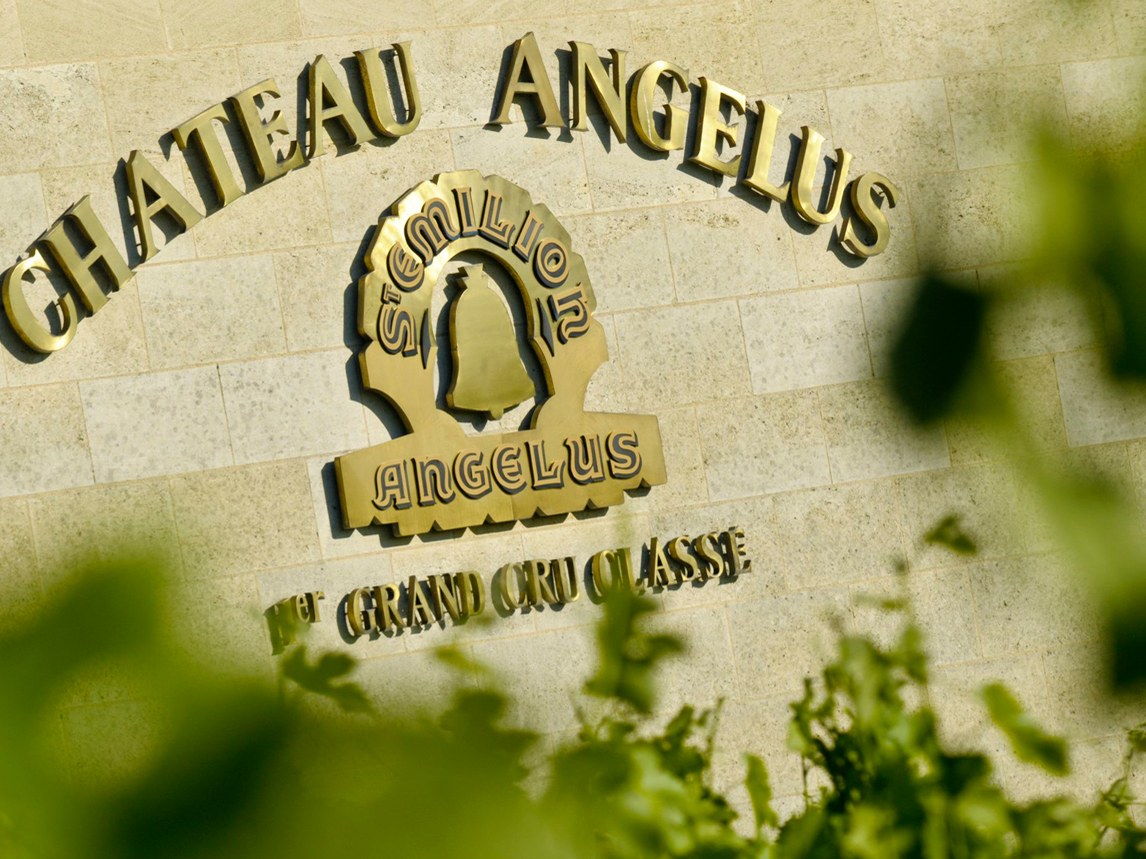
Their standing as Premier Grand Cru Classé A estates under the 2012 classification, alongside Ausone and Cheval Blanc, historically intensified demand. The Saint-Émilion classification was revised in 2022, when Ausone, Cheval Blanc, and Angélus all withdrew from the classification. As of 2022, the two Premier Grand Cru Classé A estates are Pavie and Figeac. Visit demand at Pavie and Angélus remains high regardless of classification status. Angélus in particular has invested heavily in its cellar architecture and visitor infrastructure, but that investment serves a curated programme, not an open-door policy.
Harvest season (typically late September into October) and the en primeur week in April are the two periods when both estates are most active with visitors, and also the periods when appointment slots are most tightly held for trade. Planning a private visit outside those windows, in June or July, gives you a better chance of a response.
Angélus does not publish a booking calendar, a release window for visit slots, or a public ticketing system for private collector visits. Visit requests are handled by each estate's hospitality or communications team directly. Angélus does not publish specific lead times for how far in advance to apply, and you should confirm directly with each château before planning travel around a specific date.
What the estates do publish: contact forms and email addresses on their respective websites. Pavie tours can be booked directly via the 'Book your visit' button on their website.2 A well-framed email to Angélus, identifying yourself as a collector, naming specific vintages you follow, and proposing two or three date options, will receive more traction than a generic tourism enquiry.
If you are travelling with a Bordeaux négociant or a UK/US merchant who holds an allocation relationship with either estate, that introduction changes the calculus entirely. Merchants with active allocation accounts can often facilitate a visit on a client's behalf. For Angélus, this is one reliable route for private collectors; Pavie offers direct online booking.
Ranked by realistic success rate for a private collector:
1. Through your wine merchant. If you buy Angélus or Pavie en primeur through a Bordeaux négociant or a UK/US merchant with an allocation relationship, ask them to facilitate an introduction. For Angélus, this is the channel that works most consistently. The merchant's commercial relationship with the château opens doors that a cold email does not.
2. Direct email to the estate. Angélus accepts direct enquiries; Pavie accepts direct online bookings. Write in French if possible, be specific about your interest in the wines, and propose dates outside the trade-heavy April and October windows. A response is not guaranteed, but a well-targeted email to the right contact, the hospitality manager rather than the general inbox, improves your odds.
3. Luxury wine tour operators. Several Bordeaux-specialist operators, including those running curated Right Bank itineraries, hold standing relationships with both estates and can include a visit as part of a multi-day programme. This route involves a premium over a self-arranged visit but removes the cold-contact problem entirely. Verify that the operator's relationship is current before booking.
4. En primeur week (April). The Union des Grands Crus de Bordeaux organises an annual en primeur tasting week in April, open to registered trade and press. Private collectors with trade credentials or press accreditation can attend. This is not a cellar visit to either estate specifically, but it is a reliable way to taste current-vintage barrel samples from both Angélus and Pavie in a single trip.
Pavie's published tour pricing runs from €85 per person for the Discovery Tour2 up to €2,500 fixed for the Trilogy Tour,2 a range that reflects both group size and the depth of the tasting programme. Angélus does not publish equivalent fees; treat any figure you encounter online as unconfirmed until verified directly with the estate. Visits facilitated through a merchant or tour operator will carry the operator's margin on top of any estate charge; en primeur week registration through the UGCB carries its own accreditation requirements and is not a consumer-facing ticketed event.
The real cost of access to Angélus is the allocation relationship, buying the wines en primeur through a merchant who holds an account. That relationship, maintained over multiple vintages, is what converts a cold visit request into a warm introduction. Specific en primeur release prices are vintage-dependent and should be confirmed with your merchant at the time of each campaign.
Pavie requires cancellations by email only, at least 24 hours before the scheduled appointment; no refunds are given after that point.2 During harvest, tours may be shortened or cancelled at short notice.2 Factor both policies into your travel planning.
Arriving without an appointment. Both estates have security at the gate. Turning up unannounced, even as a serious collector, will not result in a tasting. It will result in a polite refusal and a damaged relationship with the estate's hospitality team.
Emailing during en primeur week or harvest. The estates' teams are at maximum capacity in April and late September. A visit request sent during these windows is likely to be deprioritised or missed. Send your enquiry in May, June, or July for the response rate.
Requesting a visit without establishing a purchase history. Both estates are aware of who buys their wine. A collector who has followed Angélus across multiple vintages through a négociant carries implicit credibility. A first-time enquiry with no purchase context is harder to prioritise. If you are new to either wine, buying a recent vintage through a merchant before requesting a visit is not cynical, it is how the relationship is built.
Conflating the two estates' visit formats. Angélus and Pavie are neighbours in classification but distinct in hospitality approach. Do not assume that an introduction to one automatically opens the door to the other. Each requires its own enquiry and its own relationship.
A visit to either estate rewards collectors who already follow the wines closely and want to deepen their understanding of the terroir and winemaking decisions behind specific vintages. If you are building a cellar position in Saint-Émilion's Premier Grand Cru Classé A tier, seeing the limestone plateau and côtes in person, and tasting from barrel with the estate team, adds a layer of context that no tasting note replicates.
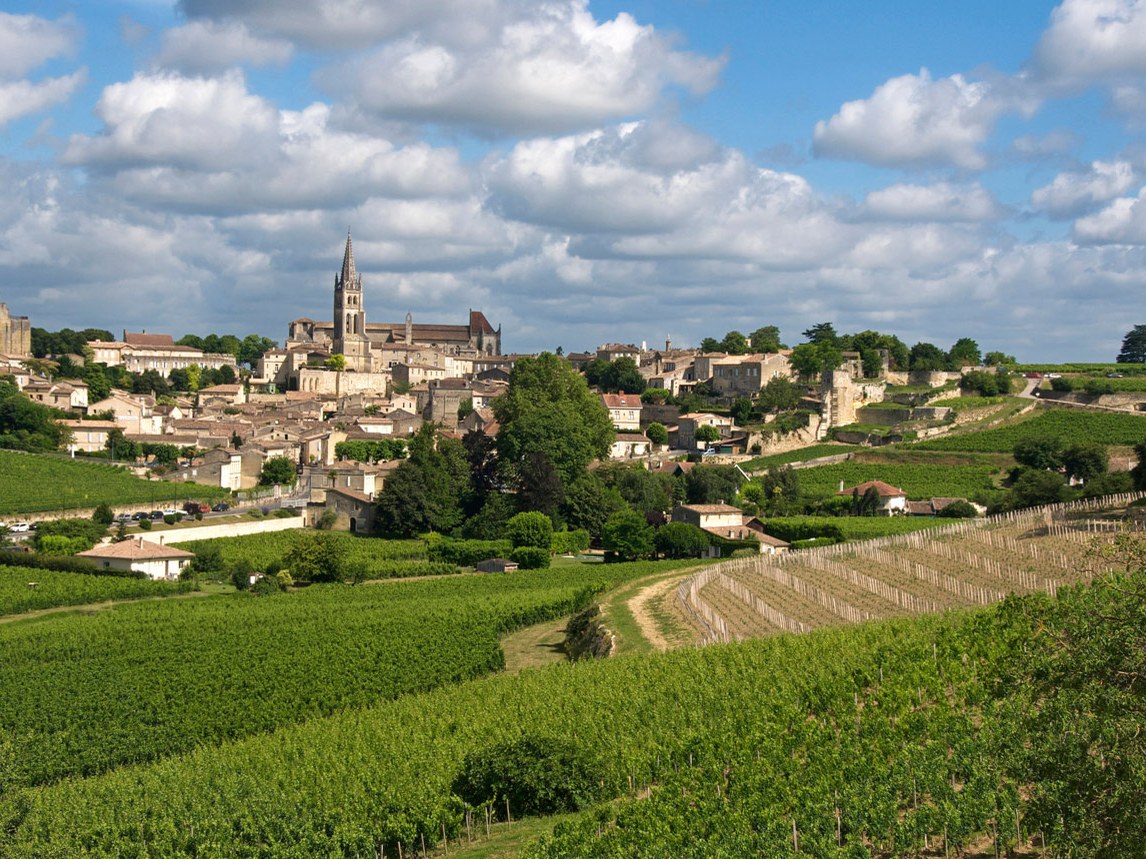
For a first visit to Saint-Émilion, the effort-to-reward ratio is lower. The town itself is worth the trip regardless, and the appellation's broader landscape is accessible through the many estates that do operate open tasting rooms. Save the Angélus and Pavie appointment for a return visit, when you arrive with a purchase history and a specific vintage question in mind.
The ideal occasion: a dedicated Right Bank trip in June or early July, combining a confirmed appointment at one or both estates with visits to Pétrus's négociant (Jean-Pierre Moueix in Libourne), and a dinner at one of Saint-Émilion's better tables, Les Belles Perdrix de Troplong Mondot being the obvious choice for staying on-appellation.
| Estate / Experience | Access Difficulty | Visit Format | How to Book | Best For |
|---|---|---|---|---|
| Château Angélus | High, appointment only, trade-prioritised | Private cellar tour + tasting, format varies | Direct email or merchant introduction | Established collectors with purchase history |
| Château Pavie | High, appointment only, Monday to Friday | Private tours from €85pp to €2,500 flat; 1h15 to 2h00 | 'Book your visit' on Pavie's website2 | Collectors focused on côtes terroir and vertical depth |
| Château Cheval Blanc | High, professional guests only | Guided visit + tasting | Special enquiries via estate website | Wine merchants, retailers, wine shops, and sommeliers |
| Château Canon (Chanel-owned) | Medium, appointment preferred but more accessible to private visitors | Cellar visit + tasting | Direct email to estate | Collectors exploring the Saint-Émilion plateau |
| UGCB En Primeur Week (April) | Medium, trade/press accreditation required | Grand tasting format; barrel samples from 100+ estates | Registration through Union des Grands Crus de Bordeaux | Trade professionals and accredited press; broadest vintage coverage |
Château Cheval Blanc does not operate a public visitor programme; it reserves château and cellar tours for professional guests. For collectors who want the Premier Grand Cru Classé A experience with a higher probability of success, Pavie is the more accessible starting point through its online booking platform.
Château Canon, owned by Chanel since 1996 and farmed with the same precision the group applies to Rauzan-Ségla in Margaux, offers a visit experience that is genuinely easier to arrange for private collectors. The wines, particularly the grand vin and the second wine Croix Canon, are worth the detour on their own terms.
For tasting Angélus and Pavie without a château visit, one practical route is a well-stocked Saint-Émilion wine bar or a merchant tasting in London, New York, or Hong Kong. Both estates' wines appear regularly in merchant portfolio tastings; this is how most collectors first encounter them at depth.
For a collector who already follows Angélus or Pavie across vintages and buys en primeur through a merchant, the visit is worth pursuing, not as a tourist experience, but as a deepening of a relationship that already exists in the glass. The limestone cellars, the barrel hall, and the estate team's willingness to talk through a specific vintage's decisions are genuinely useful context for anyone building a cellar position in Saint-Émilion's top tier.
For everyone else, the effort required to arrange a private appointment at either estate is disproportionate to what a first visit yields. Saint-Émilion's appellation is rich enough, in accessible estates, in good restaurants, in the town itself, that a trip built around the hope of an Angélus or Pavie appointment risks disappointment. Build the merchant relationship first, buy the wines across a few vintages, and let the visit follow naturally from that history.
For Angélus, a négociant or merchant introduction remains the route most likely to convert into access; Pavie accepts direct online bookings. The visit is the reward for the relationship, not the entry point to it. That distinction, once understood, makes the whole system legible, and the wines, when you finally taste them in the cellar, considerably more meaningful.
No. Both estates are appointment-only and have staffed gates. Arriving without a confirmed appointment will not result in a tasting. Contact each estate's hospitality team by email well in advance of your visit, or arrange an introduction through a wine merchant who holds an allocation relationship with the estate.
Château Pavie advises booking several weeks ahead. Check live availability on the estate's online booking platform. Avoiding the busy April en primeur period and late-September harvest window gives your enquiry a stronger chance of a prompt response. You can initiate a booking via the 'Book your visit' button on Pavie's website.
For Angélus, it may. Both estates are aware of their allocation relationships through the Place de Bordeaux. A collector with a purchase history through a négociant or merchant carries implicit credibility when requesting a visit. Asking your merchant to facilitate an introduction is one reliable route to Angélus; Pavie offers direct online booking.
Pavie publishes four private tour formats: the Discovery Tour at €85 per person (up to 12 guests, approximately 1h15); the Origins Tour at €300 flat (two to four guests, approximately 1h15); the Well-known Tour at €680 flat (two to eight guests, approximately 1h15); and the Trilogy Tour at €2,500 fixed (two to eight guests, 1h30 to 2h00). Château Angélus does not publish equivalent pricing; confirm any cost directly with the estate.
June and early July offer a useful combination of quieter estate schedules and good weather for visiting the vineyards. April (en primeur week) and late September through October (harvest) are the periods when both Angélus and Pavie are most active with trade visitors and least likely to accommodate private collector appointments. Note that during harvest, Pavie tours may be shortened or cancelled at short notice. If your goal is to taste current barrel samples, the UGCB's en primeur week in April, open to registered trade and press, is especially efficient single event for Right Bank coverage.
Get the App
Take the shortlist into the En Primeur Club app for concierge access, saved places, and the next step after discovery.
Get Exclusive AccessMore from the editors