← Guides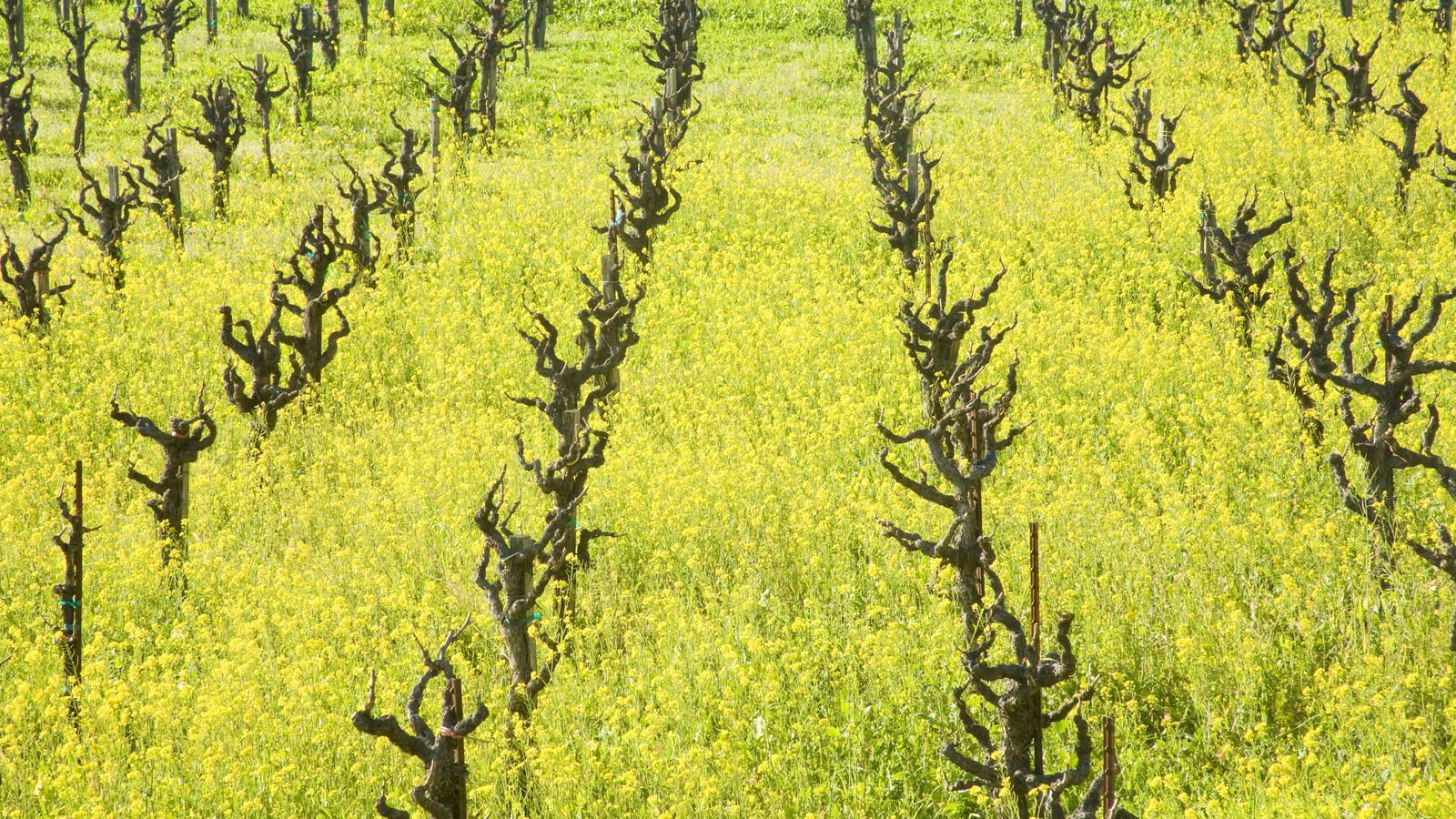
Tegan Passalacqua’s old-vine argument is a collector’s warning: America has no legal standard for one of its rarest wine assets.
Tegan Passalacqua’s old-vine argument is a collector’s warning: America has no legal standard for one of its rarest wine assets.
John Muir noticed the clue in pines before winegrowers gave it a name: by 50 to 100 years, he wrote in My First Summer in the Sierra, trees ‘begin to acquire individuality, so that no two are alike in their prime or old age.’ America’s old vines are living wine archives, yet the United States still has no legal definition for ‘old vine’ on a label. That absence matters now because Decanter reports that America has only a thin and shrinking stock of old vineyards, with little protection beyond the goodwill and persistence of growers.
Tegan Passalacqua, director of winemaking at Turley Wine Cellars and the winemaker behind Sandlands in California, has built his work around historic vineyards. His argument is not nostalgia dressed up as terroir talk. It is more severe: America’s old vines are irreplaceable viticultural assets, carrying historical, genetic and sensory value, and the market has not yet built a serious structure to protect them.
Passalacqua’s image of youth in the vineyard is deliberately unsentimental. ‘A young vineyard reminds me of an army, where everyone looks the same, trained for a mission,’ he told Decanter. Anyone who has walked a block trained for efficiency knows the sight: straight rows, consistent canopies, vines made legible to machines, crews and spreadsheets. It can be beautiful. It can also be anonymous.
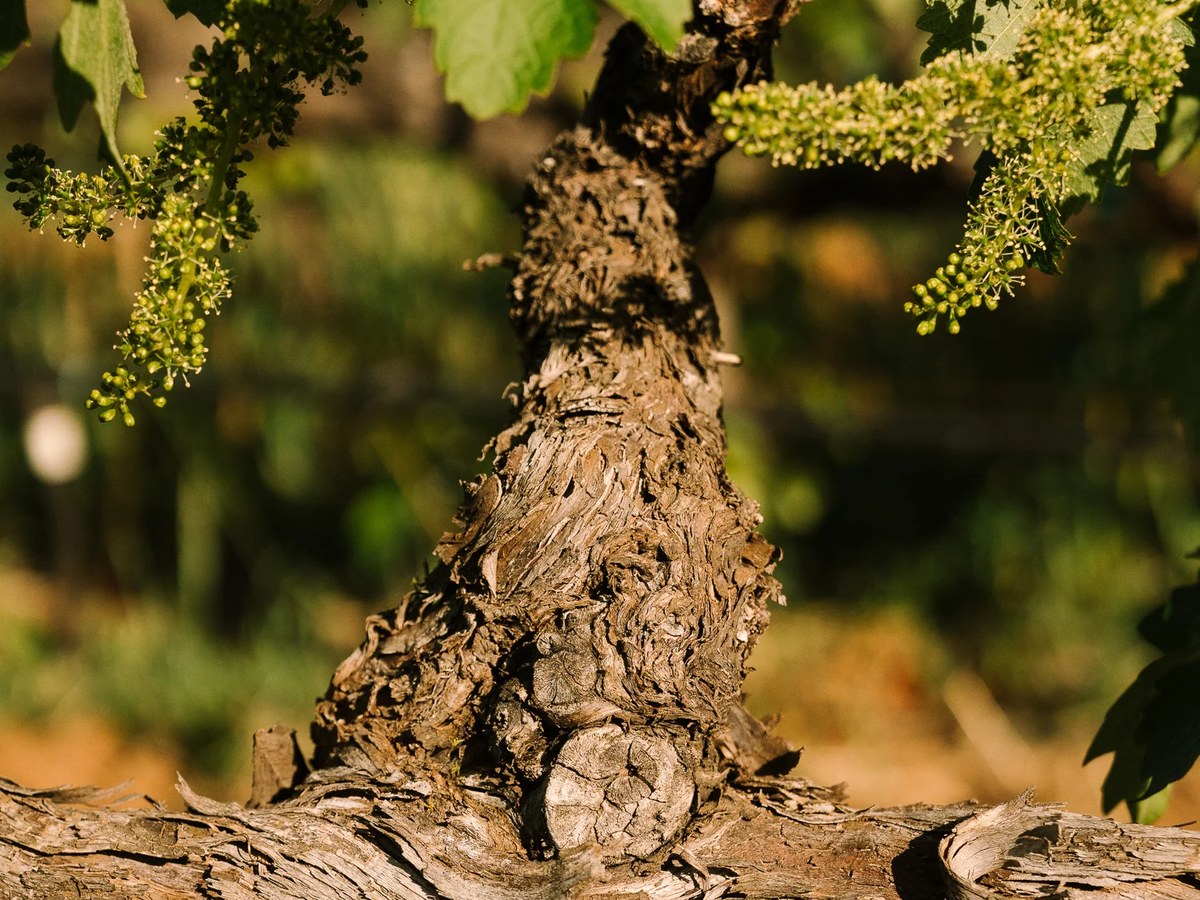
Old vines resist that tidiness. According to Decanter’s account of Passalacqua’s conversation, he reached for Muir because the naturalist’s language about aging pines gave him a way to describe mature vines: each plant begins to carry its own form, stress record and response to place. Passalacqua said old vines do the same, each growing to express something different from where it is planted. Then he drew the line cleanly: ‘That’s the difference between agriculture and agribusiness.’
This is the core of the American old-vine argument. The value is not simply that a vine has survived for decades. Survival is only the first credential. The deeper value lies in what those decades preserve: field blends planted by immigrants, vines that made it through phylloxera and Prohibition, and foundational plantings that helped establish whole regions. In a country whose wine identity often rewards the new AVA, the new clone, the new cellar door and the new release, these vineyards hold the longer memory.
For collectors, America’s old vines also create a different kind of scarcity from the scarcity of a small allocation. A mailing list can expand if a winery buys more fruit or opens another label. A century of vine age cannot be purchased at harvest. If an old vineyard disappears, the loss is not equivalent to one missing vintage; it is the end of a living source of site information that no young replanted block can reproduce on a schedule.
Turley Wine Cellars and Sandlands matter in this discussion because Decanter identifies both as California brands with an explicit focus on historic vineyards. Passalacqua is not speaking from the safe distance of a panel discussion. His work puts the question in bottle: what do these plants still teach when a winemaker lets vineyard character matter more than a predetermined flavour target?
The romantic case for old vines has always been easier to pour than to prove. An old-vine Zinfandel or a field blend can arrive with the authority of gnarled trunks and family stories, but serious drinkers should still ask the harder question: does age itself change the wine, or do we simply forgive more in a bottle with a better story?
Decanter’s answer is cautious but important. Science is slowly supporting the claim that old vines can produce higher-quality wines with greater aromatic complexity and phenolic structure. The wording matters: can produce, not always produce. Vine age is not an automatic imprimatur. A neglected old vineyard will not be rescued by age alone, and a young site farmed with precision can produce a wine of clarity. But the emerging evidence gives old vines a stronger footing than sentiment.
That distinction should appeal to collectors who have grown wary of label language. ‘Old vine’ can appear on a front label with the romance of handwriting and dust, yet in the United States it carries no legal definition. The sensory promise, where it exists, should come through structure and aromatic layering rather than mere concentration. Decanter’s phrasing points toward two areas serious tasters can test in the glass: aromatic complexity and phenolic structure. Those are not brochure words. They are the architecture of the wine.
The counter-argument deserves a fair hearing. A producer may use old-vine language because it sells, even when the vineyard age, original planting material or farming record remain vague. Another producer may farm an old block beautifully but bottle it in a style that obscures the site. The phrase alone does not protect you. It asks you to investigate.
That is where Passalacqua’s idea of old vines as teachers becomes useful. ‘One of the important factors of old vines is they're educational,’ he said. ‘There's something the farmers and winemakers can learn from them that you might not learn as easily from young vines.’ The statement shifts the discussion from age as marketing to age as evidence. A mature vineyard offers a long record of adaptation: what survived, what failed, what continued to give fruit under pressure, what flavours appeared when the grower did not force uniformity.
For the drinker, this does not mean every old-vine bottling belongs in the cellar. It means the stronger questions change. Instead of asking only whether the wine is old-vine, ask who defines that term, what percentage of the block traces to the original planting, and whether the producer has named the vineyard rather than leaning on the phrase as decoration.
America’s old vines carry a historical burden that younger vineyards cannot claim. Decanter describes them as a living record of American wine history: immigrant-planted field blends, survivors of phylloxera and Prohibition, and plantings that helped establish entire regions. That history is not abstract. It is agricultural memory held in wood, roots and fruit.
The field-blend point is especially important for American wine. A field blend is not merely a blend made before bottling; it is often a vineyard planted with multiple varieties together, sometimes for practical reasons, sometimes because the grower’s knowledge came from another country and another drinking culture. In the United States, those plantings can carry the imprint of immigrant farming decisions that predate the language of modern varietal marketing. Pull them out, and you do not just lose old vines. You lose an archive of choices.
Prohibition deepens the stakes. Vines that survived that rupture did so through a period when American winegrowing was not simply unfashionable but legally and economically battered. To drink from such a vineyard today is to taste continuity across a break that erased many producers, cellars and farming traditions. Phylloxera adds another layer of selection pressure. Decanter does not invite us to treat these vines as museum pieces; it asks us to notice that survival itself can be a form of information.
The global picture sharpens the American case. At the end of March, the Old Vine Registry reached 10,000 vineyards registered globally, according to Decanter. Launched in 2023, the public database documents living vineyards older than 35 years and now covers over 40,900 hectares of historic plantings, 1,144 grape varieties and 42 countries. Those numbers give old vines a map and a vocabulary beyond anecdote.
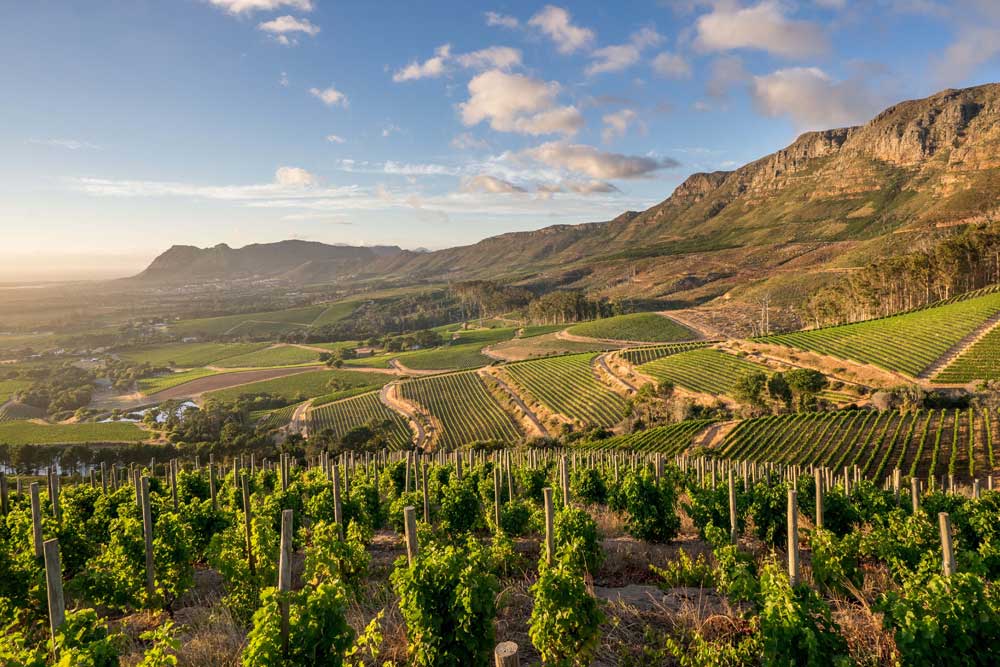
The 10,000th vineyard registered was not in California. Decanter reports that it was Beaumont Family Wine’s Hope Vineyard in Bot River, South Africa, planted to Chenin Blanc in 1974. That detail matters because South Africa has given old vines an organised public identity, helped by the Old Vine Project created by viticulturist Rosa Kruger in 2016. The Cape examples cited by Decanter include Chenin, Semillon, Pinotage, Cinsault, Grenache and Palomino, often planted as dry-farmed bush vines. For American growers and drinkers, the lesson is direct: documentation changes how a culture values its old vineyards.
America’s old vines need that same documentary seriousness. California has the Historic Vineyard Society, which draws its line at 50 years for currently producing California vineyards, with at least one-third of productive vines traceable to the original planting. That standard gives collectors and producers a practical anchor. It does not solve the national legal gap, but it offers a disciplined way to separate a meaningful claim from a loose one.
The United States has no legal definition of ‘old vine.’ For a category so charged with history and price sensitivity, that vacuum should make every collector pause. A back label can imply patrimony; the law does not require the phrase to meet a federal age threshold.
Two definitions now circulate with more credibility than casual usage. The Historic Vineyard Society draws the line at 50 years for currently producing California vineyards, with at least one-third of productive vines traceable to the original planting. The International Organisation of Vine and Wine defines an old grapevine as at least 35 years old. Neither gives the United States a binding national standard for labels, but together they frame the debate: is old-vine status a 35-year international category, or should California’s historic vineyards be held to a 50-year line with original-planting continuity?
This distinction is not pedantry. A 36-year-old vineyard and a 90-year-old field blend do not carry the same historical weight, even if both might sit inside a broad old-vine conversation. Nor does a replanted block with a few surviving trunks tell the same story as a vineyard where a material share of productive vines traces to the original planting. The Historic Vineyard Society’s one-third requirement matters because it acknowledges continuity, not just age.
For producers working honestly, the lack of a legal standard creates a communication problem. They must explain what should already be clear: vineyard age, original plant material, whether the wine comes from a named site, and how much of the productive vineyard remains connected to the first planting. For less careful producers, the same lack creates room for soft claims.
Collectors already know how to navigate similar ambiguity elsewhere in wine. A cru name, a vineyard designation, an estate bottling, a producer’s farming record, none should be accepted without context. Old-vine language deserves the same scrutiny. The safest approach is to look for alignment between the producer’s public focus and the bottle’s claim. In this case, Turley Wine Cellars and Sandlands are relevant because Decanter identifies their explicit focus on historic vineyards and because Passalacqua’s remarks show a coherent viticultural philosophy behind that focus.
The legal vacuum also exposes a cultural problem. Modern wine often protects origin through appellation rules, while vine age, one of the things that can make an origin speak with more complexity, remains largely dependent on voluntary care. If the market rewards productivity and efficiency, old vines can become vulnerable precisely because their value is slower to measure and harder to standardise.
The first rule is simple: treat ‘old vine’ as a question, not an answer. A credible bottle should lead you toward specifics: the vineyard name, the age claim, the producer’s relationship to historic sites, and whether any external body or registry supports the designation. If the label gives only romance, ask for more.
The second rule is to separate age from style. Passalacqua’s critique of modern winemaking goes directly to this point. Decanter reports that he argues much of the winemaking that expanded in America in the 1990s was built to meet specific market demand rather than to explore terroir, and that the mindset still lingers. His words are plain: ‘Modern winemakers and modern wine drinkers know what they want it to taste like,’ he said. ‘They're not embracing the character of the site.’
That is a sharp warning for anyone buying America’s old vines. If a wine is made to match a preselected flavour profile, old-vine fruit may become an input rather than a voice. The trunk age goes on the label; the site disappears in the glass. Strong old-vine wines should not taste old. They should taste specific.
Specificity begins before purchase. Ask whether the wine comes from California vineyards meeting the Historic Vineyard Society’s 50-year line, or whether the producer uses the International Organisation of Vine and Wine’s 35-year threshold. Ask whether the vineyard is included in the Old Vine Registry, which now counts 10,000 vineyards globally. Ask whether the producer can explain the vineyard’s planting history without resorting to vague inheritance language.
For travel, old-vine country rewards a different itinerary from the usual cellar-door circuit. The experience is less about polished architecture and more about seeing vine age in physical form: irregular trunks, plants that no longer look interchangeable, rows where uniformity gives way to individual habit.
Decanter’s opening contrast between immaculate young vineyards and older vines with character is not just visual. It changes how you listen during a visit. The revealing tasting may come when a grower points to a vine and explains what remains from the original planting, what has been replaced, and why the block still earns its place.
California remains the central American reference in Decanter’s discussion, not least because Passalacqua works there and because the Historic Vineyard Society’s definition applies to currently producing California vineyards. But the global frame matters for American collectors. South Africa’s registry milestone, Beaumont Family Wine’s Hope Vineyard in Bot River, planted to Chenin Blanc in 1974, shows how old-vine identity can move from private admiration to public record. Once a vineyard is documented, it becomes harder to treat it as interchangeable agricultural inventory.
The final rule is to value educational bottles. Passalacqua’s phrase about old vines being ‘educational’ should guide both buying and tasting. Open old-vine wines beside younger-vine wines from the same producer when possible. Taste for aromatic spread, phenolic shape and the degree to which the wine resists easy categorisation. Keep notes not only on pleasure, but on site signal. A collector’s cellar should teach as well as impress.
America’s old vines now sit between two forces: the efficiency that favours uniform vineyards and the growing evidence that old plants can carry quality, history and instruction no nursery order can replace. Until the United States gives ‘old vine’ a legal meaning, the burden falls on growers, winemakers, registries and attentive drinkers; the next chapter will belong to the producers who can name the vineyard, defend the age claim and let the site speak louder than the market brief.
Get the App
Take the shortlist into the En Primeur Club app for concierge access, saved places, and the next step after discovery.
Get Exclusive AccessMore from the editors