Bar Premio
Bar Premio gives Atlanta drinkers another reason to look closely at the Rankin Street corridor, where warehouse edges and neighborhood energy suit a bar built around cocktails rather than spectacle. With public details still limited, the useful reading is contextual: treat it as part of Atlanta’s growing specialist bar map, then confirm booking channels and service details directly before planning an evening.
Pearl is the En Primeur Club membership app — saves, bookings, and concierge access live there. Same editors, same standards.
- Address
- 800 Rankin St NE, Atlanta, GA 30308
- Phone
- (470) 470-8020
- Website
- barpremioatlanta.com
- Directions
- Get directions
 Saves & bookings on Pearl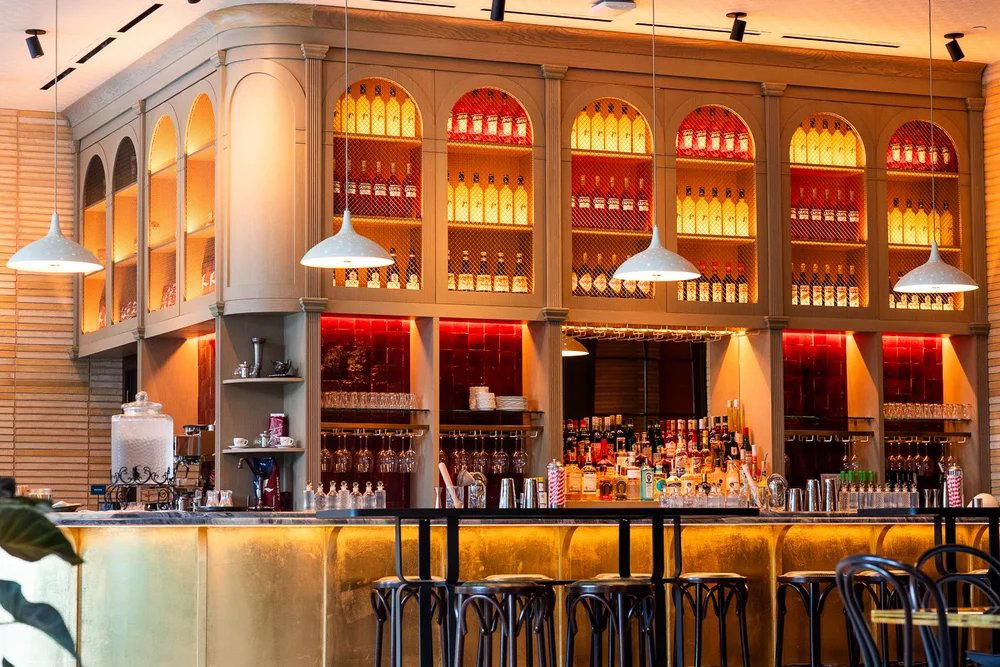
Rankin Street, cocktails, and the Atlanta bar shift
Approaching 800 Rankin Street NE places Bar Premio in a part of Atlanta where the city’s evening culture feels less formal than hotel-lobby drinking and less predictable than the old Midtown circuit. The address sits in the Old Fourth Ward orbit, close enough to the BeltLine-era dining current to benefit from foot traffic, but industrial enough to suit a cocktail bar that does not need velvet-rope theater to announce itself. In Atlanta, that matters. The city’s better drinking rooms increasingly work between restaurant hospitality and standalone bar discipline: shorter menus, clearer drink identities, and rooms that can function as first stop, second stop, or the reason for the night.
The cocktail programme is the right lens here because Atlanta has moved beyond the era when a serious bar could rely on borrowed speakeasy language. Drinkers now expect proof of technique, not just dim lighting and a coupe glass. Public venue data for Bar Premio does not list a named bar director, awards, price range, hours, seat count, or signature drinks, so any precise claim about house serves would be guesswork. The useful editorial read is narrower and more honest: Bar Premio belongs to a city category where the bar’s credibility will be judged by structure, consistency, and how well the room translates cocktail intent into a night out.
That framing also protects the visitor from reading too much into scarcity. A sparse public record can mean a venue is new, lightly documented, deliberately low-key, or simply not yet well indexed. It does not prove rarity or quality. What it does signal is the need to approach the bar with practical curiosity: confirm current operating details before going, treat published third-party snippets with caution, and compare it against Atlanta peers by what the drinks list actually does, not by aesthetic shorthand.
What Atlanta now asks of a cocktail bar
Atlanta’s drinking culture has widened in several directions at once. Rooftop bars sell skyline access, restaurant bars lean on chef-driven food programs, hotel bars offer polished consistency, and neighborhood cocktail rooms try to build repeat business through bartending rather than views. That split is visible in EP Club’s Atlanta coverage, from the open-air draw of 9 Mile Station to seafood-adjacent drinking at Alici Oyster Bar. Bar Premio enters that comparison less as a scenery play and more as a test of whether a Rankin Street address can support a drink-first evening.
The city’s stronger cocktail rooms tend to solve three problems. First, they decide whether the menu is meant for discovery or repetition. A discovery menu asks for house techniques, batched components, clarified textures, bittering systems, or unusual base spirits. A repetition menu earns loyalty through balance and recognisable signatures. Second, they manage tempo. Atlanta diners often fold cocktails into restaurant-led nights, so a bar has to make sense for a 45-minute stop as much as a full evening. Third, they know their neighborhood. Old Fourth Ward and its surrounding corridors draw mixed traffic: residents, BeltLine walkers, destination diners, and late-evening groups moving between venues.
Bar Premio’s available data does not specify cuisine type, kitchen format, or price tier. That absence places more weight on the cocktail identity. If food is secondary or undocumented, the drinks must carry the room’s purpose. If food is more developed than public data currently shows, then the bar has to make clear whether it is operating as a cocktail-led venue with food support or a restaurant bar where drinks are part of a wider table experience. Atlanta has space for both, but confusing the two usually weakens a night.
How to read the programme without a published drink list
When a bar’s public record does not list signature drinks, the evaluation starts with categories rather than names. A serious cocktail programme usually reveals itself through how it handles classics, how much it asks from technique, and whether nonalcoholic or lower-ABV options receive real menu space. A house martini variation, a stirred whiskey drink, a citrus-led sour, a highball, and a bitter aperitif serve different purposes; a balanced list gives each type a reason to be there. Atlanta guests who drink across the city will recognise the difference between a menu assembled from fashionable ingredients and one engineered for pacing.
This is where Bar Premio’s name becomes less important than its context. In cities with maturing cocktail scenes, the newer bar does not need to imitate New York, Miami, Seattle, or London to be credible. It needs to show local relevance through service rhythm, ingredient choices that make sense in the market, and a room that knows how guests actually move through the night. A comparison with Café La Trova in Miami is useful only as contrast: Miami’s Cuban cantinero tradition gives that room a defined cultural spine. Atlanta’s newer cocktail venues often have to build identity without a single inherited template.
Technique also needs proportion. Clarification, infusions, freezer-door service, acid adjustment, and culinary prep can sharpen a menu, but they can also flatten personality when every drink begins to taste like process. The better version is quieter: a drink arrives at the right temperature, dilution is controlled, the garnish has a job, and the bartender can explain the build without turning the exchange into a lecture. That is the bar Atlanta drinkers increasingly reward. They have access to polished national references, including places such as Happy Accidents in Albuquerque and Roquette in Seattle through travel and media, but local loyalty comes from execution in the room.
The Rankin Street equation
Rankin Street sits in a zone where the city’s development story has changed the way people drink. Rather than a single nightlife strip, the area functions as a set of linked pockets: walkable in parts, ride-share dependent for others, and shaped by the gravitational pull of nearby dining and residential growth. That produces a different bar dynamic from Buckhead lounge culture or downtown convention traffic.
For a cocktail bar, the neighborhood equation affects everything from arrival time to group size. Early evening can bring guests starting with one round before dinner; later service depends on whether the room can turn into a destination rather than a pass-through. Public data does not list hours, so timing should be confirmed before building plans around the venue. It is also sensible to check whether the bar accepts walk-ins, reservations, or event-related changes, because Atlanta’s weekend demand can shift sharply around concerts, sports, festivals, and neighborhood events.
The lack of published seat count also matters. A small room and a larger barroom create different expectations. Low-capacity cocktail bars reward earlier arrival and flexible party size; larger spaces can absorb looser plans. Until seat count is available from a verified source, Bar Premio should be treated as a venue requiring confirmation rather than assumption. That is not a criticism. It is a practical reading of limited data, and it is the difference between informed planning and a night built on search-result fragments.
Where it sits among Atlanta drinking choices
Atlanta’s bar map is not a single hierarchy. It is a set of use cases. Rooftop drinks, oyster-bar aperitifs, wellness-adjacent lounges, neighborhood cocktail rooms, and restaurant counters all compete for different hours of the same evening. EP Club’s broader Atlanta bar coverage shows that spread through venues such as Ashland Bar and Bakaris Pizza & Kava Lounge - Halal, Plant-Based & Wellness. Bar Premio reads as part of the cocktail-room side of that equation rather than the view-led or concept-dining side, though current venue data does not provide enough detail to assign it a narrower subgenre.
That distinction matters for readers comparing a full night in the city. If the plan is built around food, start with Our full Atlanta restaurants guide and decide whether drinks should come before or after dinner. If the plan is hotel-led, Our full Atlanta hotels guide will make more sense for anchoring location and transport. The value of Bar Premio will be clearest when judged against that local bar context, not against unrelated dining rooms.
For visitors building a wider Atlanta itinerary, the city now supports more than dinner-and-drinks planning. Wine-focused travelers can scan Our full Atlanta wineries guide, while culture-led planners should pair evening reservations with Our full Atlanta experiences guide. That broader context is useful because Atlanta nights often work in clusters. A bar on Rankin Street may fit naturally after a neighborhood dinner, before a late show, or as a low-commitment stop within a larger Old Fourth Ward evening.
Awards, credentials, and what is not yet documented
In a city with a fast-moving hospitality scene, that absence should be read carefully. It means the bar cannot yet be positioned through Michelin, James Beard, 50 Best, or comparable award signals in this article. The available trust signal is contextual rather than accolade-based: a verified Atlanta address in a drinking district where cocktail-led venues are competing for a more informed audience.
That may sound restrained, but restraint is useful. Atlanta has enough bars described online with recycled enthusiasm and almost no supporting facts. A better approach is to separate what is known from what needs confirmation. Known: Bar Premio is at 800 Rankin St NE in Atlanta, Georgia. For a reader, that creates a clear next step before making plans: verify current service information through a reliable listing or direct channel if one is available.
The absence of named personnel also keeps the story where it should be: on the cocktail scene rather than a personality profile. A bartender’s creative vision can define a room, but only when it is documented. Without verified leadership information, the meaningful analysis is category-based. Atlanta rewards bars that can translate technique into hospitality, and the Rankin Street setting gives Bar Premio a plausible audience for that kind of programme. The final judgment depends on the menu in hand, the pacing of service, and the room’s ability to make a drink-led visit feel intentional.
Planning a visit to Bar Premio
Planning should begin with the address rather than a booking assumption: Bar Premio is listed at 800 Rankin St NE, Atlanta, GA 30308. That is especially relevant on weekends, when Atlanta’s Old Fourth Ward-adjacent corridors can shift from relaxed early-evening traffic to tighter late-night demand. If a reservation channel appears on a verified listing, use it; if not, keep party size flexible and build in time for a backup bar nearby.
Price planning also requires caution. With no listed price range, Bar Premio cannot be responsibly described as a value bar, a premium cocktail room, or a special-occasion splurge. In Atlanta, cocktail pricing varies by neighborhood, spirit selection, and whether the venue runs a full kitchen or bar-snack format. The practical move is to check a current menu before arrival if one is available, then decide whether the bar is the main event or part of a larger evening. That avoids the common mistake of treating every serious cocktail room as interchangeable.
Dress code is not listed, so the safest read is city-smart rather than formal: Atlanta cocktail rooms generally accept a polished casual range unless a venue states otherwise. Transport should be planned with the neighborhood in mind. Without latitude and longitude in the record, this article will not state distances to landmarks, but the Rankin Street address places the bar in a part of town where ride-share use and neighborhood walking can both factor into the evening depending on the preceding stop.
At a Glance
- Elegant
- Modern
- Sophisticated
- Trendy
- Industrial
- Cozy
- After Work
- Date Night
- Casual Hangout
- Solo
- Group Outing
- Late Night
- Hotel Bar
- Design Destination
- Historic Building
- Seated Bar
- Lounge Seating
- Conventional Wine
- Natural Wine
- Classic Cocktails
- Low Abv
Current opening hours
- Monday
- 7 AM–11 PM
- Tuesday
- 7 AM–11 PM
- Wednesday
- 7 AM–10 PM
- Thursday
- 7 AM–10 PM
- Friday
- 7 AM–11 PM
- Saturday
- 7 AM–11 PM
- Sunday
- 7 AM–10 PM
Hours can change for holidays and private events. Last verified .
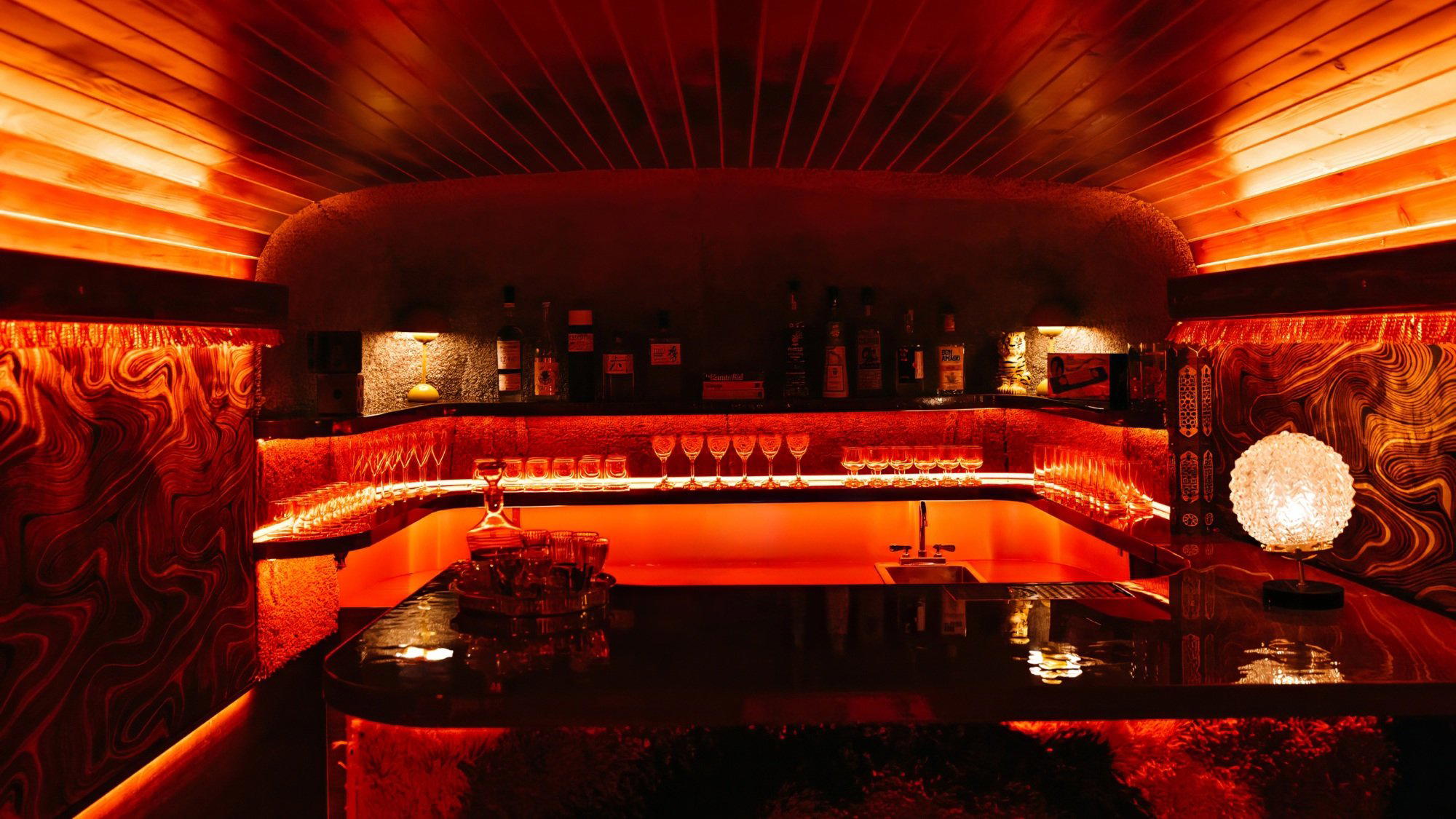
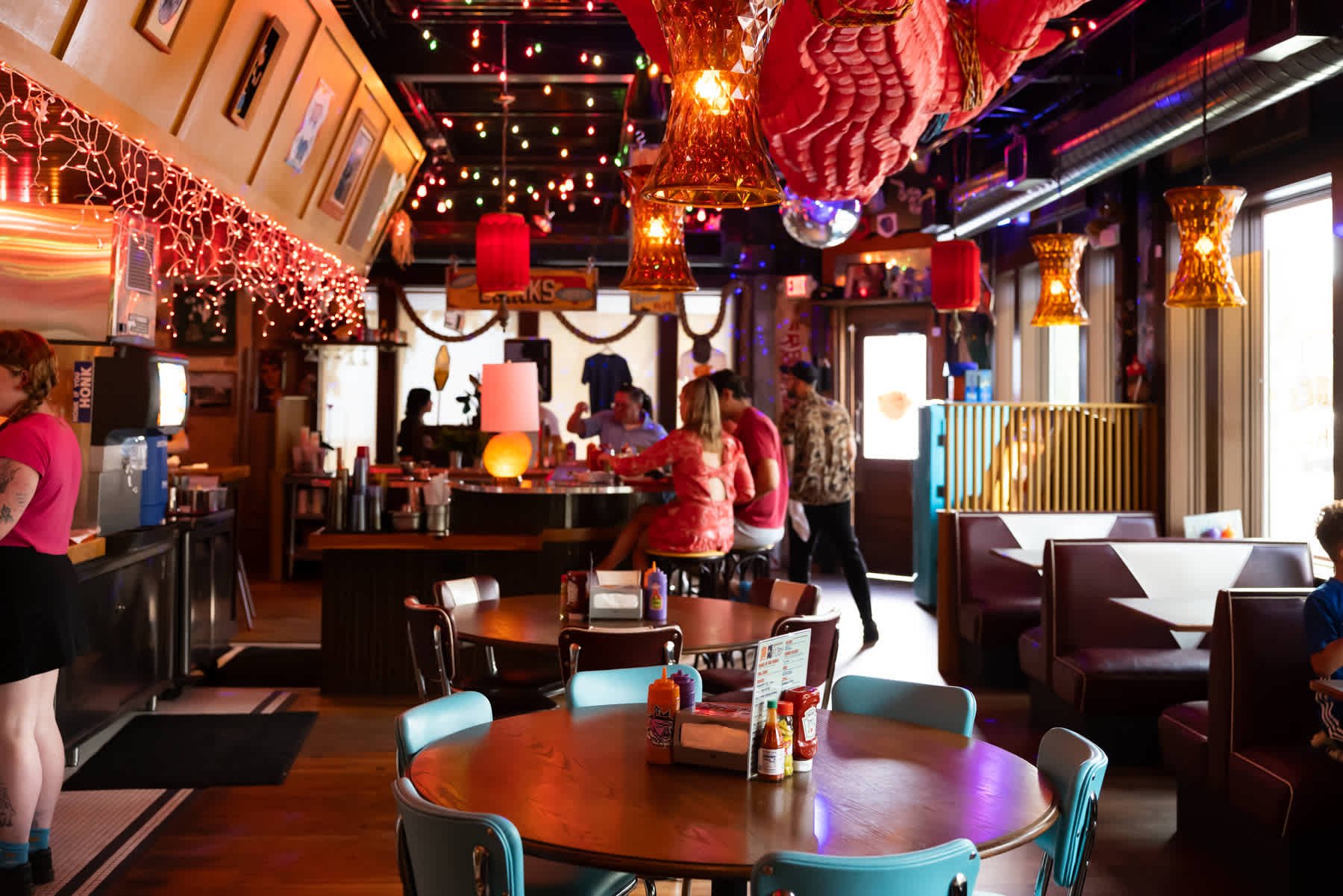
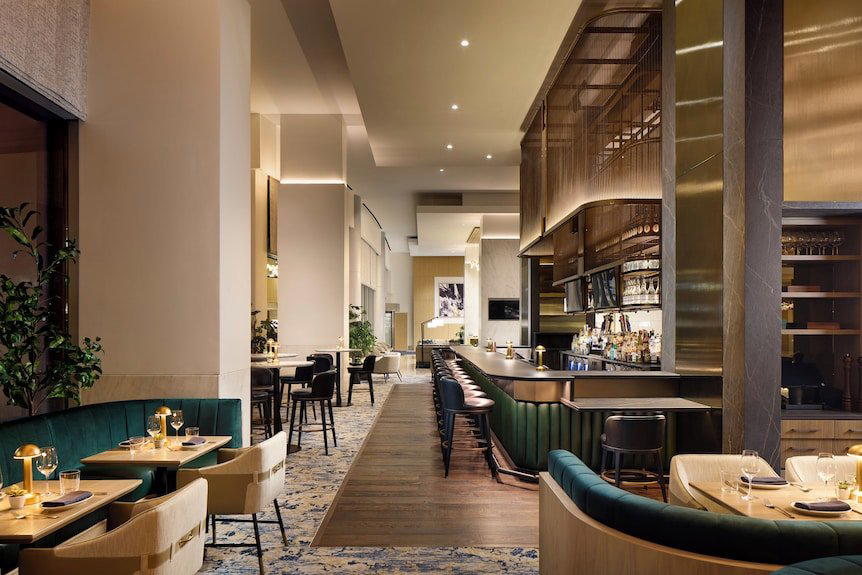
A gorgeous, low-lit lobby bar with a refined yet relaxed European feel and moody industrial touches, designed for lingering over coffee by day and intimate wine and cocktail conversations by night.
Know Before You Go
- Getting there
- 800 Rankin St NE, Atlanta, GA 30308