Al Mesayan
Abu Dhabi's rooftop dining scene has been moving outward as much as upward. While Corniche-facing terraces compete for marina views and reflected skyline light, venues in districts like Al Wathba South operate under a different logic: space over spectacle, sky over skyline. Al Mesayan occupies that outer-ring position, offering a rooftop setting where the horizon is desert rather than tower glass, and where the ambient noise level drops below anything you'd encounter inside the city's central dining belt. The Physical Logic of a Desert-Edge Rooftop Rooftop venues in the Gulf carry a specific seasonal contract with their guests. For roughly five months of the year, the outdoor platform is where the evening begins and ends. For the remainder, air conditioning logistics determine how much of the outdoor space remains usable after sundown. Al Mesayan's location in Al Wathba South, away from the heat-trapping density of central Abu Dhabi, means that desert breezes arrive with less urban interference than they would on a Corniche-level terrace. That is not a minor distinction: airflow is the primary comfort variable on any Gulf rooftop, and venues that catch prevailing desert air have a structural advantage over those flanked by concrete on three sides. The spatial character of Al Wathba as a district also matters here. The area sits at the southeastern edge of the Abu Dhabi urban footprint, adjacent to the Al Wathba Wetland Reserve and the camel racetrack. Rooftop sight lines here reach farther and lower than anything available from a high-rise terrace closer to the Corniche. The view category is horizontal and wide rather than vertical and dense, which creates a fundamentally different atmospheric register. Venues like Andaz Pool Deck deliver a polished urban-resort feel; Al Mesayan's offer is quieter and less produced. Where This Sits in Abu Dhabi's Terrace Tier Abu Dhabi's outdoor drinking and dining venues have stratified clearly over the past several years. At one end sit the hotel rooftops, where group dining packages and F&B minimums are standard and the crowd skews toward international hotel guests. At the other end are neighborhood-level spots where locals and longer-term residents form the base. Al Mesayan's Al Wathba address places it outside both of those categories. It is not a hotel rooftop dependent on room occupancy for its covers, and it is not a neighborhood spot in any dense, walkable sense. It occupies a third position: a destination rooftop that requires deliberate travel, which in practice means its guests arrive with a specific reason to be there rather than defaulting to it as the nearest option. That deliberateness tends to self-select for a calmer, more intentional visit. Venues in Abu Dhabi's more central corridors, such as 18 Degrees Bar & Terrace or Al Meylas, absorb considerable walk-in and overflow traffic. A venue that requires a drive into Al Wathba South does not. The guest mix at Al Mesayan will skew toward people who planned the visit, which changes both the pacing of an evening and the ambient energy of the room. For comparison points outside Abu Dhabi, rooftop venues that prioritize setting over centrality tend to attract a similar crowd profile. Al Liwan in Liwa Desert operates on an even more remote logic, positioning the landscape itself as the primary draw. Al Mesayan sits on a less extreme version of that spectrum: close enough to central Abu Dhabi for a viable evening out, far enough that the surroundings feel different from the city's denser districts. Abu Dhabi's Rooftop Category in Context Across the Gulf, the rooftop venue category has matured into something more segmented than it was a decade ago. Early iterations were largely hotel amenities, added to capture sunset trade and justify F&B revenue targets. The current generation includes freestanding rooftop concepts, venues that exist specifically for the outdoor platform rather than as an add-on to accommodation. The distinction matters because freestanding rooftop venues tend to invest more specifically in the design and atmosphere of the outdoor space itself, since there is no adjacent hotel product to carry part of the experience. It is worth setting Abu Dhabi against its regional peers here. Dubai's outdoor bar and terrace scene, which includes venues like Zuma in Dubai, has developed a denser concentration of high-production rooftop concepts. Abu Dhabi's version of the same category is smaller in number and tends toward venues that work within the city's more conservative F&B licensing framework. Venues like Fado Irish Pub & Restaurant represent the licensed end of Abu Dhabi's evening offering. Al Mesayan, based on its Al Wathba address, likely operates within a different zone of that licensing framework. Visitors planning an evening should verify the current drinks service before arrival, as F&B licensing in Abu Dhabi remains location-specific and subject to change. Planning a Visit Al Wathba South is not within walking distance of central Abu Dhabi, so the visit requires a car or a booked ride. The district is accessible from the city center in roughly 30 to 40 minutes depending on departure point and traffic, placing it well inside the range of a viable evening destination without requiring overnight proximity. The rooftop format suggests the experience is most suited to the cooler months, from October through April, when outdoor seating in Abu Dhabi is comfortable from early evening onward. In the peak summer window, any rooftop in the emirate becomes a logistical question about how much shade and air movement the space can provide. For a broader view of where Al Mesayan fits within Abu Dhabi's dining circuit, the full Abu Dhabi restaurants guide maps out the city's options across price tiers and neighborhood types. Travelers who cross-reference Gulf rooftop experiences with international comparisons will find the format here closer in spirit to something like Bar Leather Apron in Honolulu, where a specific sense of place does more work than production value, than to the kind of high-volume terrace concept more common in Dubai or on Abu Dhabi's Corniche itself. Frequently Asked Questions What is the signature drink at Al Mesayan?Given the venue's rooftop format and Gulf location, the drinks offering likely aligns with the F&B licensing applicable to the Al Wathba South zone. Contacting the venue directly before your visit is the most reliable way to confirm what is currently available and whether awards or recognition apply to any specific program.Why do people go to Al Mesayan?The primary draw is the rooftop setting in Al Wathba South, which offers a desert-edge atmosphere that is difficult to replicate closer to Abu Dhabi's Corniche or downtown districts. The deliberate travel required to reach the venue also self-selects for guests looking for a quieter, more specific evening rather than a central dining circuit option. Abu Dhabi's city-center terraces serve a different crowd and a different pace.What is the ideal way to book Al Mesayan?The most direct route is to search for the venue by name and contact them via whichever channel appears on their current digital presence. For context on how Al Mesayan sits within Abu Dhabi's broader venue options, the EP Club Abu Dhabi guide provides comparative framing across price tiers and neighborhood types.Is Al Mesayan suitable for a first visit to Abu Dhabi's rooftop dining scene?Al Mesayan's location in Al Wathba South positions it as a more specific, destination-led choice rather than an introductory rooftop experience. Visitors new to Abu Dhabi's outdoor dining circuit may find it useful to first establish a baseline with more centrally located terraces before making the drive to Al Wathba, as the venue's appeal is rooted in its contrast with the city-center experience rather than a standalone introduction to it. That said, travelers based near the Al Wathba area or arriving via the camel racetrack route will find it a logical and rewarding stop on any given evening.For further reference points across different terrace and rooftop formats, the EP Club covers venues from Café La Trova in Miami and Jewel of the South in New Orleans to Superbueno in New York City and Lexington Grill & Bar in Ras Al Khaimah, offering a broad set of comparisons for travelers building a mental map of what different venue formats deliver across different cities and climates.

Pearl is the En Primeur Club membership app — saves, bookings, and concierge access live there. Same editors, same standards.
- Address
- Al Wathba South, Abu Dhabi (rooftop)
- Directions
- Get directions
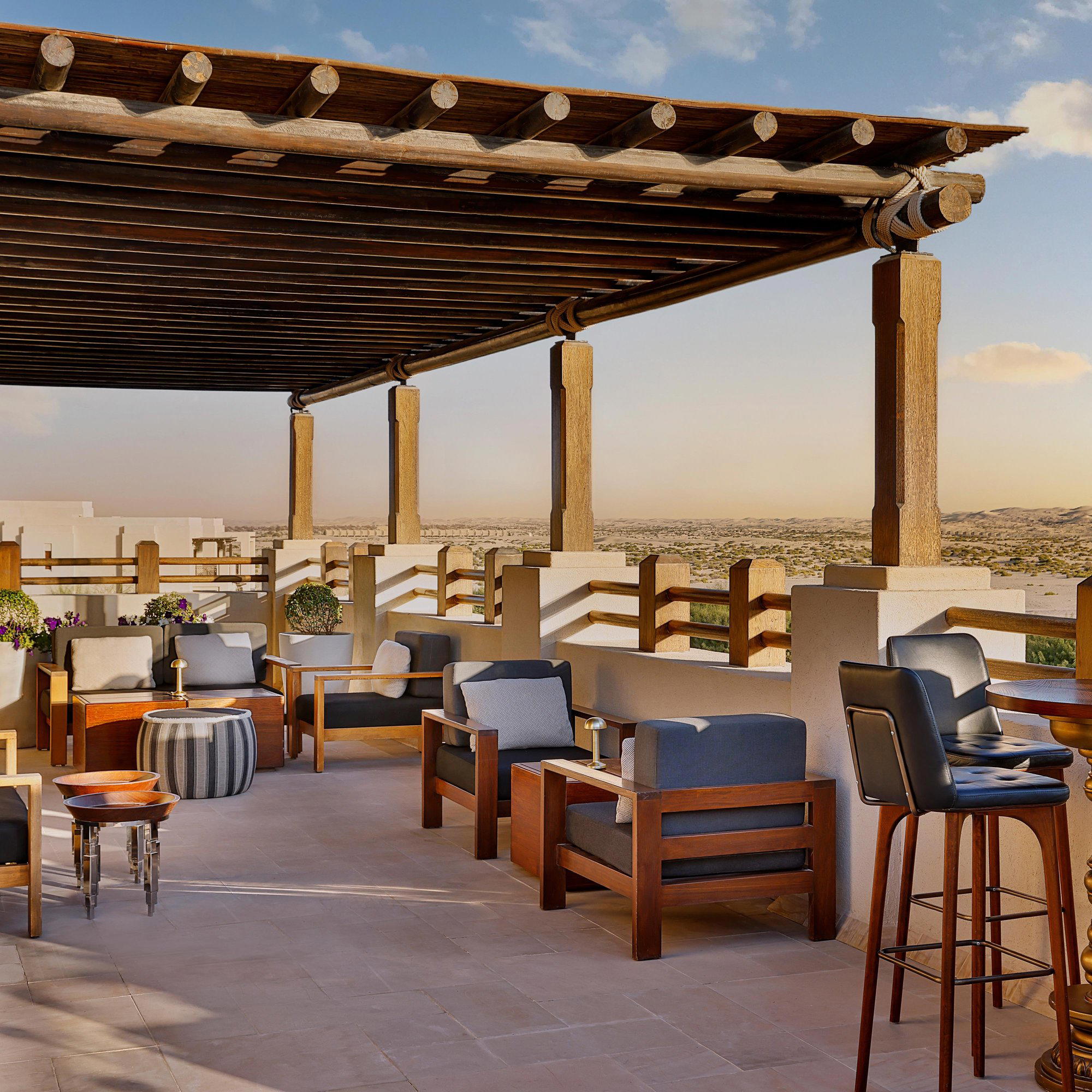
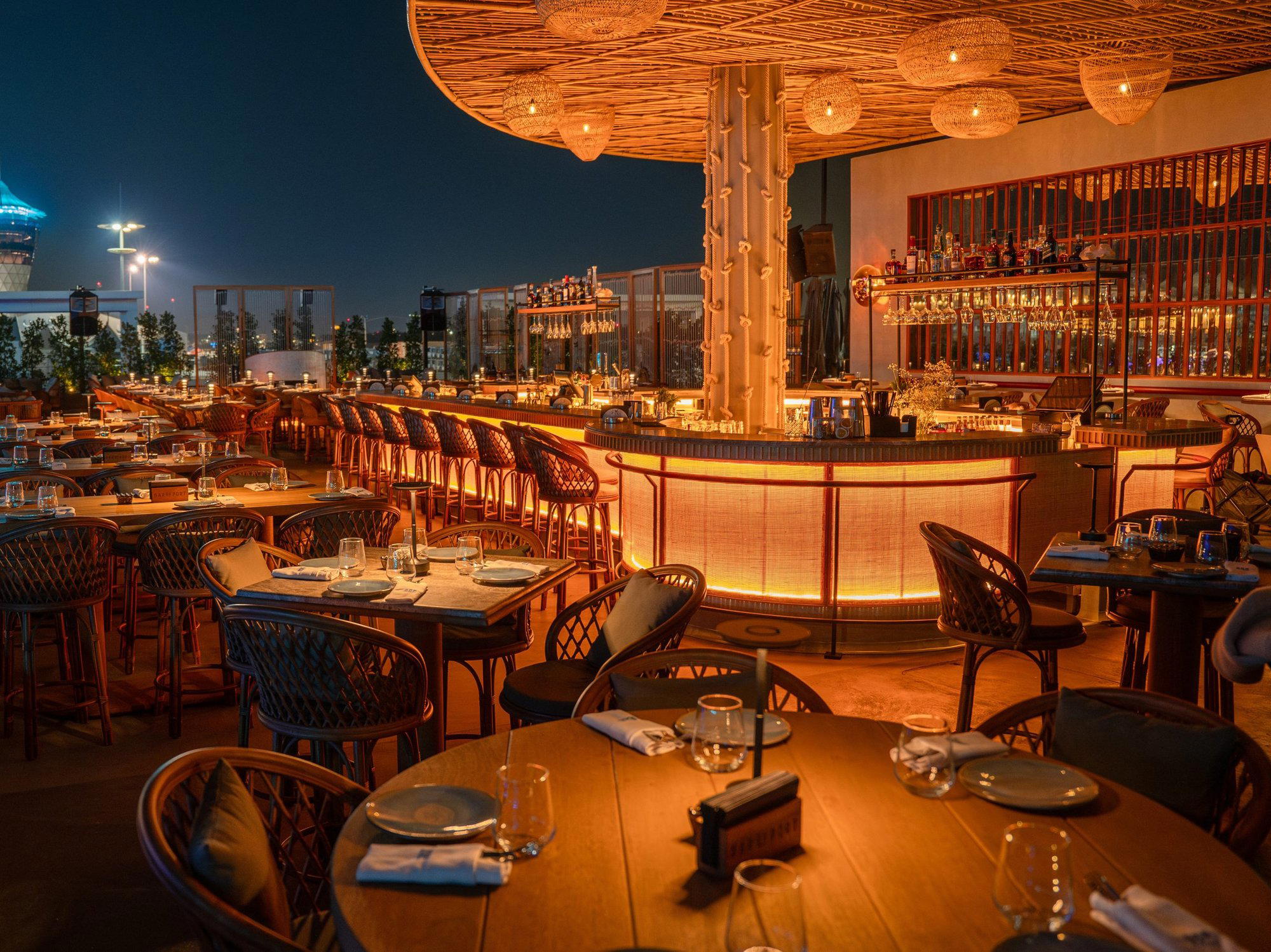
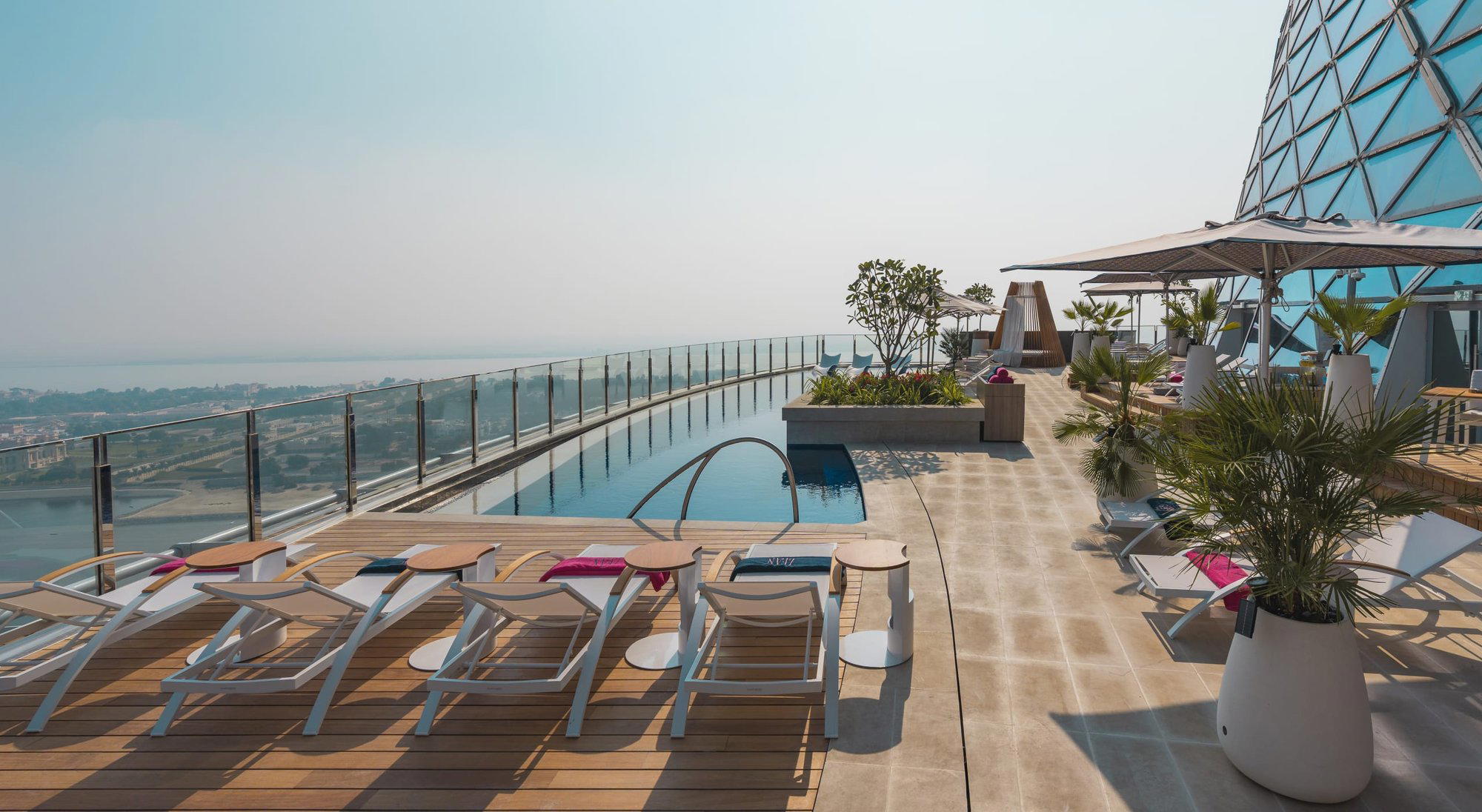
Abu Dhabi's rooftop dining scene has been moving outward as much as upward. While Corniche-facing terraces compete for marina views and reflected skyline light, venues in districts like Al Wathba South operate under a different logic: space over spectacle, sky over skyline. Al Mesayan occupies that outer-ring position, offering a rooftop setting where the horizon is desert rather than tower glass, and where the ambient noise level drops below anything you'd encounter inside the city's central dining belt.
The Physical Logic of a Desert-Edge Rooftop
Rooftop venues in the Gulf carry a specific seasonal contract with their guests. For roughly five months of the year, the outdoor platform is where the evening begins and ends. For the remainder, air conditioning logistics determine how much of the outdoor space remains usable after sundown. Al Mesayan's location in Al Wathba South, away from the heat-trapping density of central Abu Dhabi, means that desert breezes arrive with less urban interference than they would on a Corniche-level terrace. That is not a minor distinction: airflow is the primary comfort variable on any Gulf rooftop, and venues that catch prevailing desert air have a structural advantage over those flanked by concrete on three sides.
The spatial character of Al Wathba as a district also matters here. The area sits at the southeastern edge of the Abu Dhabi urban footprint, adjacent to the Al Wathba Wetland Reserve and the camel racetrack. Rooftop sight lines here reach farther and lower than anything available from a high-rise terrace closer to the Corniche. The view category is horizontal and wide rather than vertical and dense, which creates a fundamentally different atmospheric register. Venues like Andaz Pool Deck deliver a polished urban-resort feel; Al Mesayan's offer is quieter and less produced.
Where This Sits in Abu Dhabi's Terrace Tier
Abu Dhabi's outdoor drinking and dining venues have stratified clearly over the past several years. At one end sit the hotel rooftops, where group dining packages and F&B minimums are standard and the crowd skews toward international hotel guests. At the other end are neighborhood-level spots where locals and longer-term residents form the base. Al Mesayan's Al Wathba address places it outside both of those categories. It is not a hotel rooftop dependent on room occupancy for its covers, and it is not a neighborhood spot in any dense, walkable sense. It occupies a third position: a destination rooftop that requires deliberate travel, which in practice means its guests arrive with a specific reason to be there rather than defaulting to it as the nearest option.
That deliberateness tends to self-select for a calmer, more intentional visit. Venues in Abu Dhabi's more central corridors, such as 18 Degrees Bar & Terrace or Al Meylas, absorb considerable walk-in and overflow traffic. A venue that requires a drive into Al Wathba South does not. The guest mix at Al Mesayan will skew toward people who planned the visit, which changes both the pacing of an evening and the ambient energy of the room.
For comparison points outside Abu Dhabi, rooftop venues that prioritize setting over centrality tend to attract a similar crowd profile. Al Liwan in Liwa Desert operates on an even more remote logic, positioning the landscape itself as the primary draw. Al Mesayan sits on a less extreme version of that spectrum: close enough to central Abu Dhabi for a viable evening out, far enough that the surroundings feel different from the city's denser districts.
Abu Dhabi's Rooftop Category in Context
Across the Gulf, the rooftop venue category has matured into something more segmented than it was a decade ago. Early iterations were largely hotel amenities, added to capture sunset trade and justify F&B revenue targets. The current generation includes freestanding rooftop concepts, venues that exist specifically for the outdoor platform rather than as an add-on to accommodation. The distinction matters because freestanding rooftop venues tend to invest more specifically in the design and atmosphere of the outdoor space itself, since there is no adjacent hotel product to carry part of the experience.
It is worth setting Abu Dhabi against its regional peers here. Dubai's outdoor bar and terrace scene, which includes venues like Zuma in Dubai, has developed a denser concentration of high-production rooftop concepts. Abu Dhabi's version of the same category is smaller in number and tends toward venues that work within the city's more conservative F&B licensing framework. Venues like Fado Irish Pub & Restaurant represent the licensed end of Abu Dhabi's evening offering. Al Mesayan, based on its Al Wathba address, likely operates within a different zone of that licensing framework. Visitors planning an evening should verify the current drinks service before arrival, as F&B licensing in Abu Dhabi remains location-specific and subject to change.
Planning a Visit
Al Wathba South is not within walking distance of central Abu Dhabi, so the visit requires a car or a booked ride. The district is accessible from the city center in roughly 30 to 40 minutes depending on departure point and traffic, placing it well inside the range of a viable evening destination without requiring overnight proximity. The rooftop format suggests the experience is most suited to the cooler months, from October through April, when outdoor seating in Abu Dhabi is comfortable from early evening onward. In the peak summer window, any rooftop in the emirate becomes a logistical question about how much shade and air movement the space can provide. For a broader view of where Al Mesayan fits within Abu Dhabi's dining circuit, the full Abu Dhabi restaurants guide maps out the city's options across price tiers and neighborhood types.
Travelers who cross-reference Gulf rooftop experiences with international comparisons will find the format here closer in spirit to something like Bar Leather Apron in Honolulu, where a specific sense of place does more work than production value, than to the kind of high-volume terrace concept more common in Dubai or on Abu Dhabi's Corniche itself.
Continue exploring
More in Abu Dhabi
Bars in Abu Dhabi
Browse all →
Restaurants in Abu Dhabi
Browse all →
Details
- Scenic
- Elegant
- Sophisticated
- Intimate
- Date Night
- After Work
- Group Outing
- Special Occasion
- Rooftop
- Hotel Bar
- Seated Bar
- Lounge Seating
- Outdoor Terrace
- Craft Cocktails
- Low Abv
- Zero Proof
- Mountain
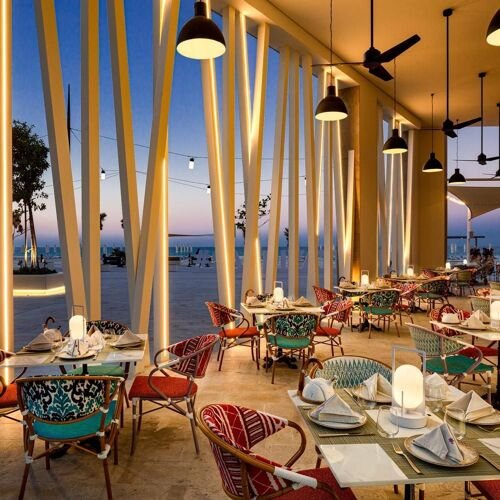
Rooftop desert setting with sunset-focused views, described as comfortable and atmospheric, with a memorable dusk-to-night transformation over the dunes.