Drinking at Altitude: What a Bar Means in Jomsom There is a particular quality to drinking at high elevation that has nothing to do with the drink itself. The air is thinner, the light sharper, and the sense of remove from ordinary life more complete. Jomsom sits at roughly 2,720 metres above sea level in Nepal's Mustang district, at the junction of the Kali Gandaki river valley and the trade routes that once connected the Tibetan plateau to the lowland markets of the subcontinent. A bar here is not competing with the rooftop terraces of Kathmandu or the cocktail programmes of a capital city. It is operating in a different register entirely, one where the context does most of the work. Aara Bar, located in Marpha-5 on the main corridor through Jomsom, sits inside this geography. For travellers on the Annapurna Circuit or the shorter Jomsom trek, the town functions as a logistical hub: flights connect to Pokhara, permits are checked, acclimatisation happens here. A bar that serves this population is serving people who have either just arrived with their legs still carrying trail dust, or who are resting before pushing north toward Muktinath. The ritual of sitting down with something in a glass carries more weight in that context than it would almost anywhere else. The Cocktail Programme in a Context Without Cocktail Culture Infrastructure The editorial challenge in writing about bars in this part of Nepal is that the framework applied to, say, Kumiko in Chicago or Bar Leather Apron in Honolulu does not translate directly. Those programmes run on reliable supply chains, controlled temperature environments, trained bar teams pulling from decades of accumulated technique, and guest bases that arrive with expectations shaped by the global cocktail conversation. The bars that earn recognition in cities like New York, as Dear Irving and Superbueno demonstrate, are competing in an environment where differentiation requires clear technical vision and consistent execution at volume. Jomsom offers none of those structural conditions. Supply chains into the upper Mustang district depend on weather, the twice-daily wind patterns that make afternoon flights unreliable, and the single road that connects the valley to the outside world. A drinking establishment here operates with what arrives and what can be sourced locally. That constraint, rather than limiting what a bar can be, often produces the more interesting editorial question: what does a thoughtful drinks programme look like when it is built around scarcity and place rather than abundance and trend? The apple orchards of Marpha, the neighbouring village and the most productive fruit-growing area in Nepal at this altitude, have long supplied the region with apples and, more relevantly, apple brandy. Local raksi, a grain-distilled spirit produced in homes and small operations across the Himalayan foothills, represents a tradition that predates any notion of a cocktail menu. A bar in this area that draws on those materials is engaging with something that has real regional specificity, the kind of place-based ingredient logic that programmes like Jewel of the South in New Orleans and Julep in Houston apply to their own regional traditions. What the Scene Looks Like on the Ground Jomsom's drinking scene is small and structured almost entirely around the trekking calendar. The high season runs from October through November and again in March through May, when the trails are accessible and the lodges are full. During those windows, the town's guesthouses and associated bars fill with a mix of international trekkers, Nepali domestic tourists, and the occasional expedition team moving through. Outside those months, particularly during the June-to-September monsoon when trails become unpredictable and the mountain airstrip operates intermittently, the population drops significantly and so does the demand for anything beyond basic provisions. This seasonality shapes what a bar in Jomsom can realistically sustain. The comparison set is not Café La Trova in Miami or Le Bar du Plaza Athénée in Paris, both of which operate year-round with deep institutional support and urban foot traffic. The relevant peer group is the community of high-altitude hospitality operations globally that serve transient populations with something worth pausing for. The bars that earn genuine affection in those contexts tend to do so not through programme complexity but through atmosphere, warmth, and the sense that the people running them understand why you are there. For travellers consulting our full Jomsom restaurants guide, Aara Bar appears within a small field of options. Jomsom does not offer the density of Kathmandu, where Barc represents a different tier of urban bar culture, or the programme ambition of The Parlour in Frankfurt or Experimental Bistro in Taipei. It offers something more elemental: a place to sit after a long day at altitude, where the drink in your hand is made from something grown within a few kilometres of where you are sitting. Planning a Visit Jomsom is accessible by a short flight from Pokhara, typically 20 to 25 minutes, though afternoon departures are frequently cancelled due to the Kali Gandaki valley's notorious wind conditions, which build reliably each day from around midday. Morning flights are the reliable option. The town is also reachable overland from Beni via a road that the Nepali government has progressively extended north, though this route involves several hours of travel on rough terrain. Trekking from Nayapul or Tatopani remains a popular approach for those doing the full Annapurna Circuit or the shorter Jomsom-Muktinath route. Marpha-5, the address associated with Aara Bar, places the venue in the Marpha sub-area of the Jomsom municipality rather than the central town strip, which means travellers staying in Jomsom's main guesthouse cluster may have a short walk. Given the absence of published contact details or booking infrastructure in the available record, walk-in is the practical approach. During peak trekking season, arriving early in the evening is advisable as seating in any Jomsom establishment can fill quickly when lodges are at capacity. Frequently Asked Questions What's the vibe at Aara Bar?Aara Bar operates in a high-altitude trekking hub rather than an urban hospitality market, which means the atmosphere is shaped by geography and the specific social dynamic of people at rest after physical effort. Jomsom does not have a cocktail bar scene in the capital-city sense; the vibe here reflects the town's character as a waypoint, quieter and more purposeful than a leisure destination.What do regulars order at Aara Bar?In the broader Jomsom and Mustang region, locally produced apple brandy from the Marpha orchards and traditional raksi feature heavily in what drinking establishments serve, as these are the products with the most reliable local supply. Any establishment in this area that draws on those regional ingredients is engaging with a drinks tradition that has geographic specificity rather than imported trend.Why do people go to Aara Bar?The primary draw is context. Jomsom is a genuine crossroads: trekkers completing legs of the Annapurna Circuit, travellers heading to the sacred site at Muktinath, and people simply transiting between Pokhara and upper Mustang all pass through. A bar in this location offers something that no urban awards-circuit venue can replicate, namely the particular pleasure of a drink at the end of a day spent at altitude in one of Nepal's most geographically distinctive valleys. No awards data is recorded for Aara Bar.Do I need a reservation for Aara Bar?Walk-in is the practical approach. During the October-November and March-May peak trekking seasons, Jomsom's limited hospitality capacity can fill quickly, so arriving earlier in the evening is a sensible strategy. Outside peak season, capacity constraints are less pressing.Is Aara Bar a good option for travellers who are not trekkers?The Mustang district has attracted growing interest beyond pure trekking, including from travellers exploring the area's Tibetan-influenced culture, the walled city of Lo Manthang, and the apple harvest season in autumn. Aara Bar sits within Jomsom's role as the district's main access point, meaning it serves a broader range of visitors than the trekking-only framing suggests.

Pearl is the En Primeur Club membership app, where members save venues, book tables and use the concierge.
Drinking at Altitude: What a Bar Means in Jomsom
There is a particular quality to drinking at high elevation that has nothing to do with the drink itself. The air is thinner, the light sharper, and the sense of remove from ordinary life more complete. Jomsom sits at roughly 2,720 metres above sea level in Nepal's Mustang district, at the junction of the Kali Gandaki river valley and the trade routes that once connected the Tibetan plateau to the lowland markets of the subcontinent. A bar here is not competing with the rooftop terraces of Kathmandu or the cocktail programmes of a capital city. It is operating in a different register entirely, one where the context does most of the work.
Aara Bar, located in Marpha-5 on the main corridor through Jomsom, sits inside this geography. For travellers on the Annapurna Circuit or the shorter Jomsom trek, the town functions as a logistical hub: flights connect to Pokhara, permits are checked, acclimatisation happens here. A bar that serves this population is serving people who have either just arrived with their legs still carrying trail dust, or who are resting before pushing north toward Muktinath. The ritual of sitting down with something in a glass carries more weight in that context than it would almost anywhere else.
The Cocktail Programme in a Context Without Cocktail Culture Infrastructure
The editorial challenge in writing about bars in this part of Nepal is that the framework applied to, say, Kumiko in Chicago or Bar Leather Apron in Honolulu does not translate directly. Those programmes run on reliable supply chains, controlled temperature environments, trained bar teams pulling from decades of accumulated technique, and guest bases that arrive with expectations shaped by the global cocktail conversation. The bars that earn recognition in cities like New York, as Dear Irving and Superbueno demonstrate, are competing in an environment where differentiation requires clear technical vision and consistent execution at volume.
Jomsom offers none of those structural conditions. Supply chains into the upper Mustang district depend on weather, the twice-daily wind patterns that make afternoon flights unreliable, and the single road that connects the valley to the outside world. A drinking establishment here operates with what arrives and what can be sourced locally. That constraint, rather than limiting what a bar can be, often produces the more interesting editorial question: what does a thoughtful drinks programme look like when it is built around scarcity and place rather than abundance and trend?
The apple orchards of Marpha, the neighbouring village and the most productive fruit-growing area in Nepal at this altitude, have long supplied the region with apples and, more relevantly, apple brandy. Local raksi, a grain-distilled spirit produced in homes and small operations across the Himalayan foothills, represents a tradition that predates any notion of a cocktail menu. A bar in this area that draws on those materials is engaging with something that has real regional specificity, the kind of place-based ingredient logic that programmes like Jewel of the South in New Orleans and Julep in Houston apply to their own regional traditions.
What the Scene Looks Like on the Ground
Jomsom's drinking scene is small and structured almost entirely around the trekking calendar. The high season runs from October through November and again in March through May, when the trails are accessible and the lodges are full. During those windows, the town's guesthouses and associated bars fill with a mix of international trekkers, Nepali domestic tourists, and the occasional expedition team moving through. Outside those months, particularly during the June-to-September monsoon when trails become unpredictable and the mountain airstrip operates intermittently, the population drops significantly and so does the demand for anything beyond basic provisions.
This seasonality shapes what a bar in Jomsom can realistically sustain. The comparison set is not Café La Trova in Miami or Le Bar du Plaza Athénée in Paris, both of which operate year-round with deep institutional support and urban foot traffic. The relevant peer group is the community of high-altitude hospitality operations globally that serve transient populations with something worth pausing for. The bars that earn genuine affection in those contexts tend to do so not through programme complexity but through atmosphere, warmth, and the sense that the people running them understand why you are there.
For travellers consulting our full Jomsom restaurants guide, Aara Bar appears within a small field of options. Jomsom does not offer the density of Kathmandu, where Barc represents a different tier of urban bar culture, or the programme ambition of The Parlour in Frankfurt or Experimental Bistro in Taipei. It offers something more elemental: a place to sit after a long day at altitude, where the drink in your hand is made from something grown within a few kilometres of where you are sitting.
Planning a Visit
Jomsom is accessible by a short flight from Pokhara, typically 20 to 25 minutes, though afternoon departures are frequently cancelled due to the Kali Gandaki valley's notorious wind conditions, which build reliably each day from around midday. Morning flights are the reliable option. The town is also reachable overland from Beni via a road that the Nepali government has progressively extended north, though this route involves several hours of travel on rough terrain. Trekking from Nayapul or Tatopani remains a popular approach for those doing the full Annapurna Circuit or the shorter Jomsom-Muktinath route.
Marpha-5, the address associated with Aara Bar, places the venue in the Marpha sub-area of the Jomsom municipality rather than the central town strip, which means travellers staying in Jomsom's main guesthouse cluster may have a short walk. Given the absence of published contact details or booking infrastructure in the available record, walk-in is the practical approach. During peak trekking season, arriving early in the evening is advisable as seating in any Jomsom establishment can fill quickly when lodges are at capacity.
Continue exploring
More in Jomsom
Hotels in Jomsom
All hotels in Jomsom →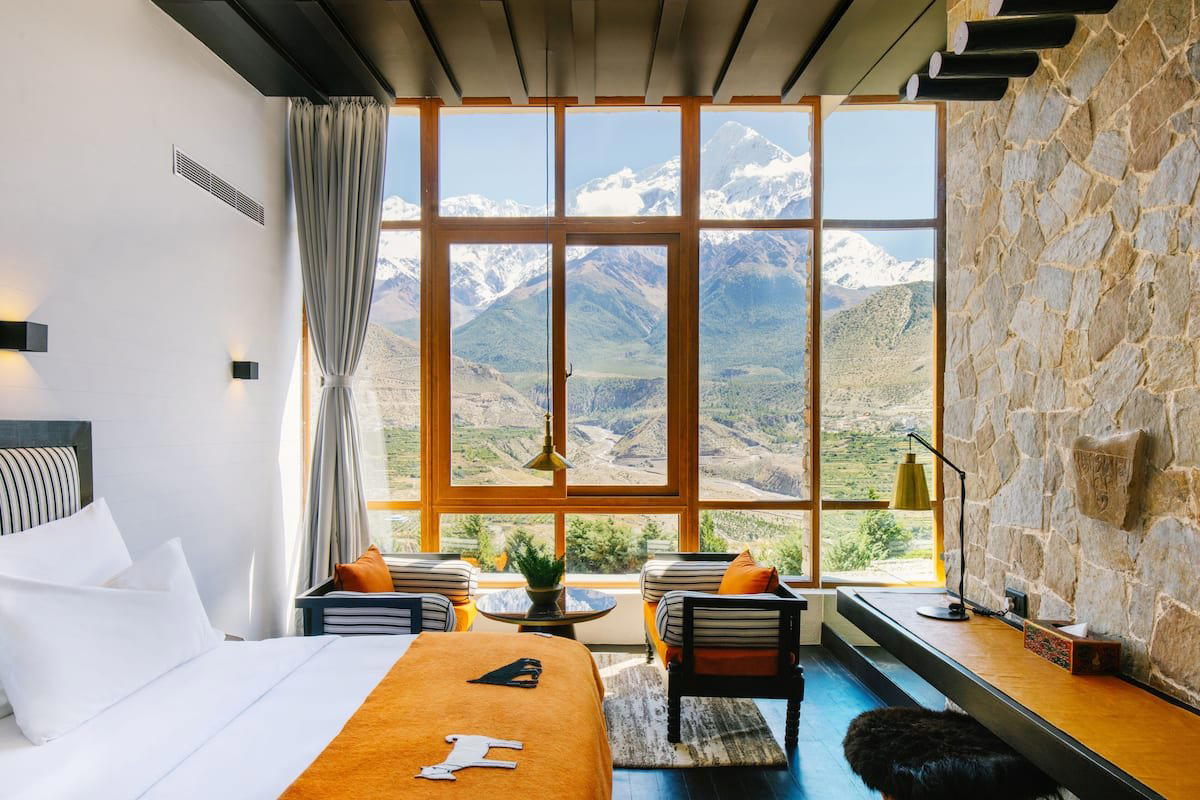
Details
- Scenic
- Cozy
- Elegant
- Sophisticated
- Special Occasion
- Date Night
- Panoramic View
- Hotel Bar
- Lounge Seating
- Seated Bar
- Craft Cocktails
- Whiskey
- Mountain
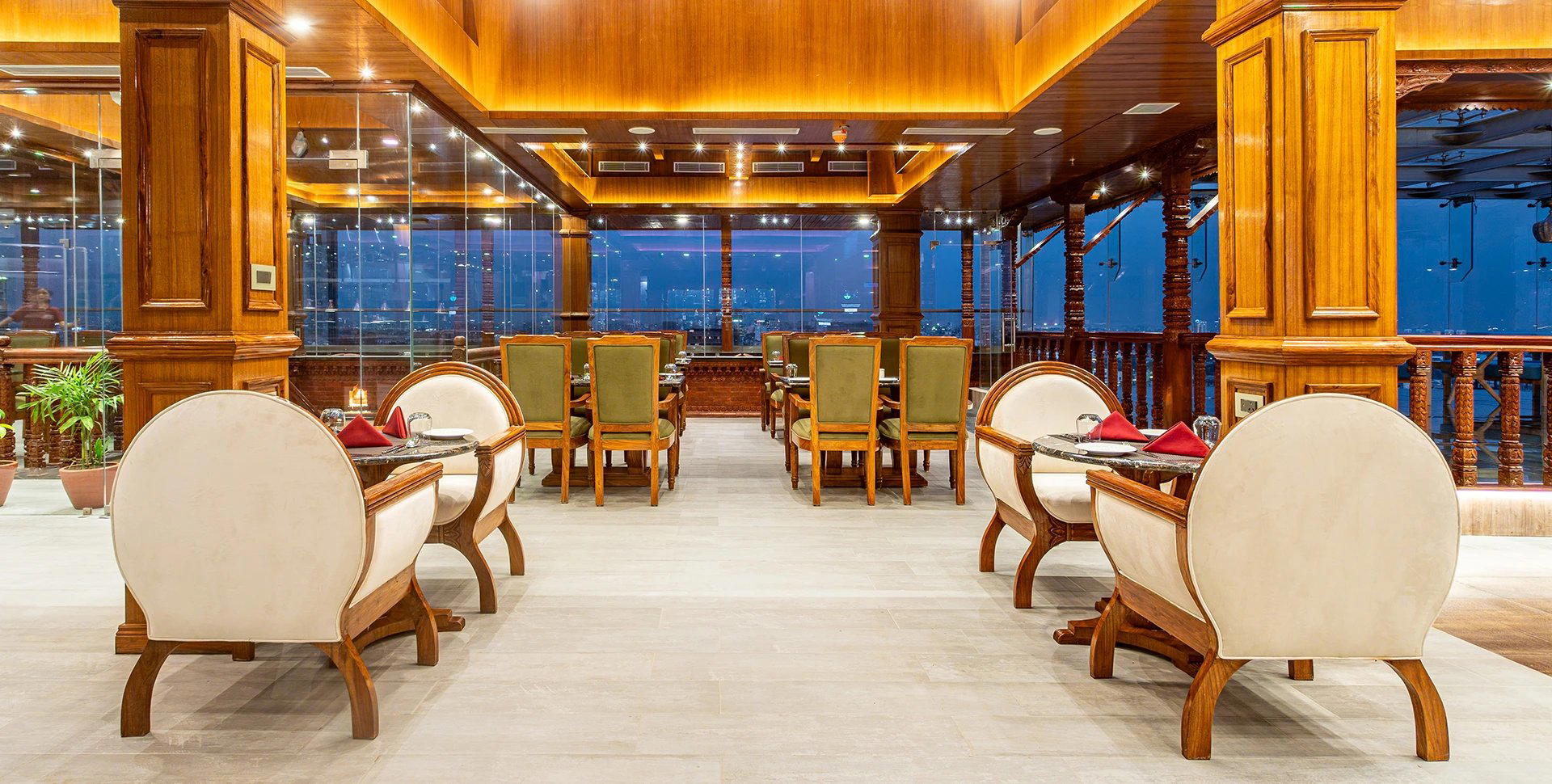
Plush leather stools, parquet floors, cozy wood and leather seating, and floor-to-ceiling windows overlooking dramatic Himalayan landscapes.