
Falstaff Winery - Listed
Magpie Estate is a Rhône-minded Barossa Valley producer in Tanunda, founded in 1993 around shiraz, grenache, mourvèdre and a restrained reading of regional character. Its interest lies in Barossa fruit handled without heavy extraction or dominant oak, with small-scale production, cellar-door tastings and recognition from Australian wine reference circles.

Pearl is the En Primeur Club membership app — saves, bookings, and concierge access live there. Same editors, same standards.
- Address
- Tanunda, Barossa Valley, South Australia, Australien

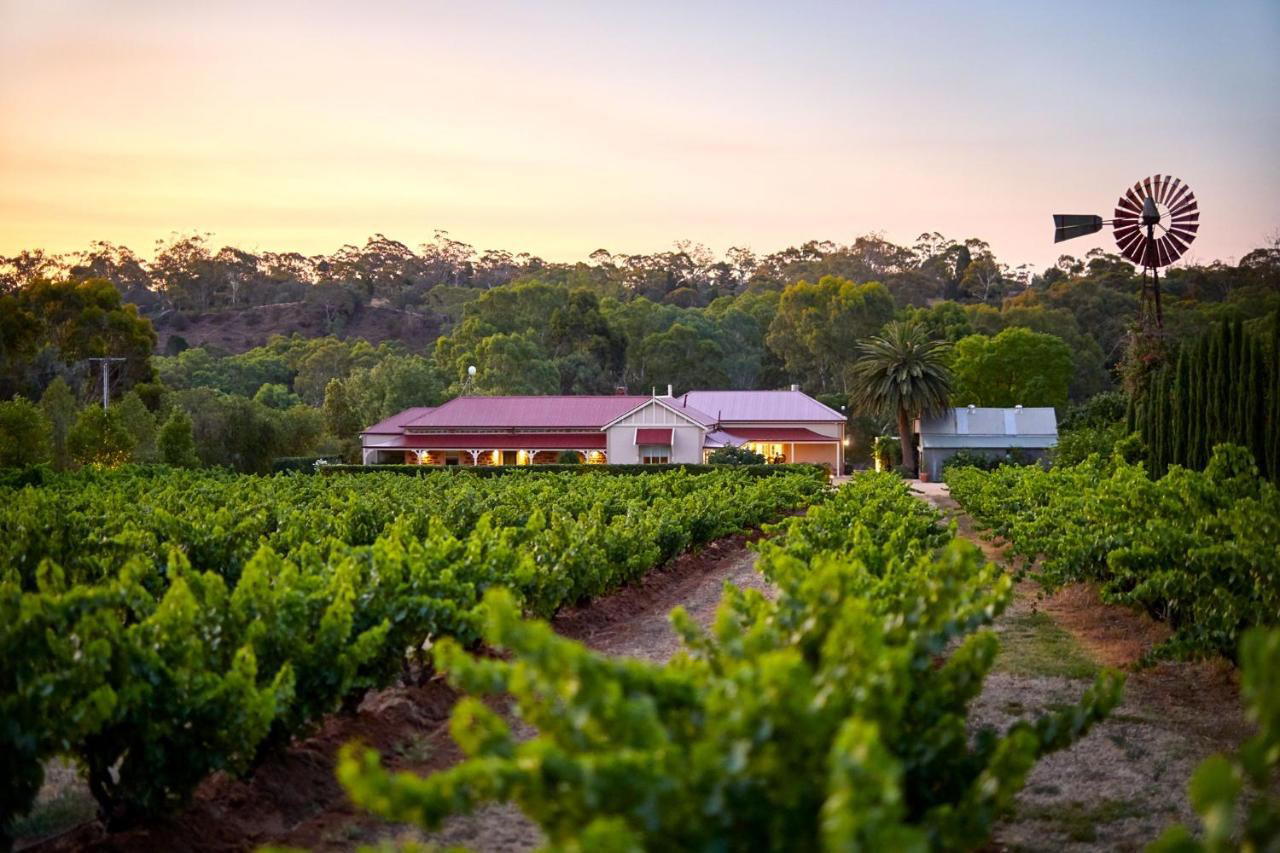
Tanunda cellar doors can divide quickly between theatre and substance. The more interesting end of the Barossa conversation is quieter: fruit, site, blending decisions and the question of how much weight a wine needs before it starts losing detail. Magpie Estate belongs to that second camp. Its cellar-door identity is compact and wine-led, with the emphasis falling on Barossa character rather than architecture, spectacle or restaurant-style hospitality.
The estate’s lane is clear enough to matter in a region often reduced to power. Founded in 1993 by Barossa winemaker Rolf Binder and UK wine merchant Noel Young, it was built around Rhône varieties at a time when mourvèdre and grenache had less fashion capital than they do now. That historical timing gives the project some weight: it was not chasing the current appetite for lighter, spice-driven Barossa reds, but working in that direction before the market made it easy.
Barossa read through a Rhône lens, not through heavy oak
The Barossa Valley remains one of Australia’s defining red-wine regions, but its reputation has never been a single style. There is the broad-shouldered version, built on ripeness, extract and oak presence, and there is the more controlled version that treats old-vine material, blending and tannin management as the point. Magpie Estate sits in the latter reading. James Halliday’s Australian Wine Companion frames the ambition as wines showing “true Barossa characters” with complexity and “a degree of elegance,” while avoiding “massive extract and over-oaked wines.” That is not a throwaway stylistic note; in Barossa terms, it is a position.
Varietal mix explains the house logic. Shiraz anchors the regional language, while grenache and mourvèdre pull the wines toward a Rhône vocabulary of structure and savoury depth. Cabernet sauvignon and riesling broaden the range, but the core argument remains red-wine Barossa seen through blending discipline rather than sheer scale. The portfolio names that appear in public wine references, including The Black Sock Mourvèdre, The Malcolm Barossa Valley Shiraz and The Scoundrel Barossa Valley Grenache Shiraz, suggest a producer comfortable with personality on the label while keeping the serious work in the vineyard and blend.
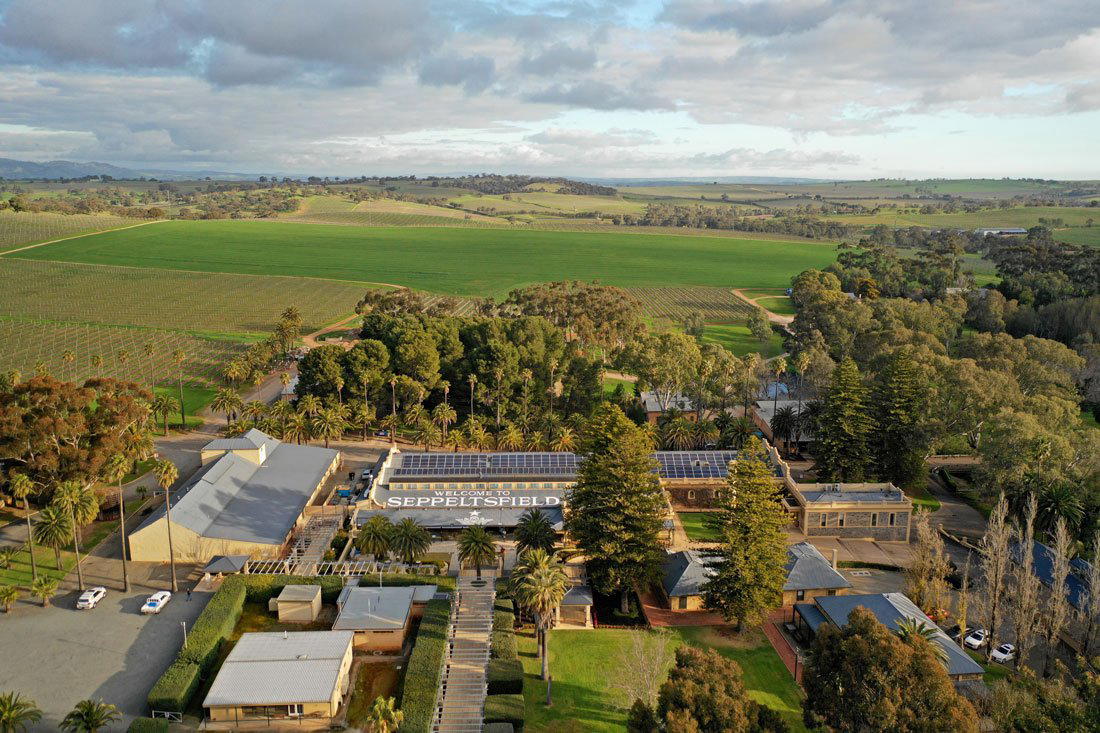
That restraint matters for travellers tasting across Tanunda. A cellar-door itinerary can quickly blur if every stop is framed around richness. Magpie Estate offers a useful counterpoint: Barossa fruit with less emphasis on cellar polish and more attention to varietal shape. For a wider sense of the town’s wine circuit, the full Tanunda wineries guide is the right starting point, while nearby producer pages such as Chaffey Bros. Wine Co, Glaetzter Wines PTY LTD, Purple Hands Wines, Seppeltsfield and Soul Growers help map how broad the local cellar-door field has become.
Small-scale production gives the blending room real purpose
The production model is the strongest evidence for the style. Magpie Estate works from 16 hectares and about 16,000 cases, a scale that keeps it out of industrial-volume territory without making scarcity the whole story. Fruit has historically come from select growers, with each batch kept separate to preserve blending options. From the 2017 vintage, estate-grown fruit from Smalltown Vineyard in Ebenezer added a more direct vineyard component to that model.
This matters because Barossa terroir is rarely about a single postcard image. The valley’s internal differences, from grower parcels to subregional sites such as Ebenezer, give producers material that can be blended for shape rather than uniformity. Keeping batches separate is a practical winemaking decision, but it also signals how the region is being interpreted: not as one broad flavour, but as a set of components that need sorting, restraint and proportion.
The minimal-intervention language attached to the estate should be read in that context. It does not need to imply fashionably cloudy wines or a rejection of technical control. Here, the phrase is better understood as a refusal to bury Barossa fruit under extraction and oak. The result, at least as a critical proposition, is a cellar-door stop for drinkers who want regional depth without caricature.
Recognition is specialist rather than trophy-led
Magpie Estate’s credibility comes less from a public medal narrative than from wine-reference visibility. Halliday’s coverage gives it standing within Australian wine criticism, while Tastingbook has listed The Black Sock Mourvèdre with 93 Tb for the 2012 vintage and 92 Tb for the 1998 vintage, alongside a 93 Tb producer popularity figure. Those numbers should be read as collector-platform signals rather than universal consensus, but they do show that the estate has an audience beyond casual cellar-door traffic.
Export reach also sharpens the picture. Distribution to markets including the UK, Canada, Denmark, Poland, Finland, Singapore and Taiwan suggests the wines are not merely local souvenirs. They are built to sit in an international conversation about Barossa, especially for drinkers who understand how grenache and mourvèdre have shifted from supporting players to central actors in Australian red wine.
For trip planning beyond wine, Tanunda is easiest to understand as a small regional hub rather than a single-purpose stop. The full Tanunda restaurants guide, full Tanunda hotels guide, full Tanunda bars guide and full Tanunda experiences guide are useful companions when building a day around tastings. For broader wine reference points outside the Barossa circuit, EP Club also covers 19 Crimes in Southbank, Accolade Fine Wines in Melbourne, Adelina Wines in Clare Valley, »der Steiner« Hans Steiner in Podersdorf am See and & Handwein in Mannheim.
The verdict is simple: this is a sharper choice for drinkers interested in Barossa nuance than for visitors seeking a hospitality production. Its value lies in the way Rhône varieties, small-scale sourcing and restrained winemaking offer a less inflated version of the region’s power.
Recognition history
Dated appearances from independent guides and award organizations, with the underlying list record or original source where available.
Falstaff Winery - Listed
Falstaff
Details
- Quiet
- Classic
- Sophisticated
- Wine Education
- Solo Exploration
- Special Occasion
- Private Tasting
- Shiraz
- Grenache
- Mourvedre
- Cabernet Sauvignon
- Riesling
- Still Red
- Still White
- Cellar Door Tasting
A focused, minimal-intervention cellar-door winery with an emphasis on Barossa character, complexity, and elegance rather than heavy oak or extraction.