
Falstaff Winery - Listed
Kutjevo is better read through its wine country than through a conventional venue checklist. With for pricing, awards, winemaker, cuisine, or booking channels, the value lies in the town’s Slavonian context: Graševina country, continental weather, and a slower cellar-door rhythm that rewards travelers who plan ahead.
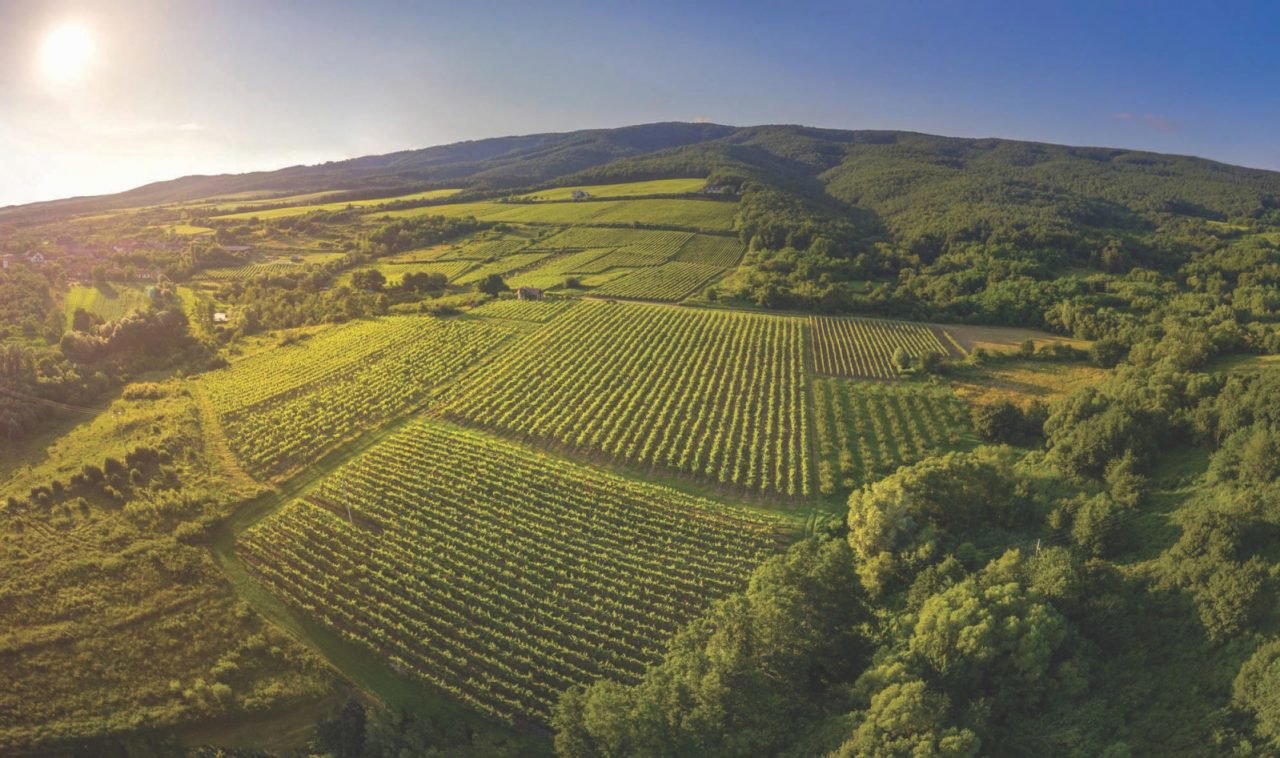
Approaching Kutjevo Through Slavonian Wine Country
The approach to Kutjevo is not a city arrival in the coastal Croatian sense. The tempo changes inland: vineyard slopes, forested hills, agricultural villages, and a quieter rhythm than the Adriatic travel circuit. This is continental Croatia, where wine culture is shaped less by sea breeze and summer spectacle than by diurnal shifts, cooler seasons, and a long habit of tying local identity to the cellar. For travelers used to Dalmatian terraces or Istrian hill towns, Kutjevo asks for a different reading. The reward is not density or nightlife. It is terroir, patience, and the chance to understand why Slavonia’s white wines carry a serious domestic reputation.
Kutjevo, in Kutjevo, should be approached as a wine-country reference point rather than a conventional restaurant or bar profile. Slavonia is one of Croatia’s important inland wine regions, and Kutjevo is strongly associated with Graševina, the Croatian name for Welschriesling. That grape is often treated casually elsewhere, but in the right continental sites it becomes a serious marker of place: fresh when picked early, textured when grown on better slopes, and capable of showing the difference between simple refreshment and structured regional wine.
Why the Land Matters Here
Terroir is not decorative language in this part of Croatia. The region’s identity rests on inland conditions: warm growing-season days, cooler nights, and vineyard positions influenced by the surrounding hills. Those conditions matter for Graševina because the grape can lose definition when handled as bulk white wine, yet it gains precision when ripeness and acidity are kept in balance. Kutjevo’s broader wine story belongs to that second conversation. The smarter frame is to taste for how continental Croatia handles freshness, fruit weight, and texture without leaning on the coastal cues many travelers associate with Croatian wine.
That inland character also changes the pace of a visit. In coastal wine regions, tasting rooms often orbit summer tourism, seaside restaurants, and short-stay itineraries. Kutjevo belongs to a slower circuit. The surrounding area gives more context to a glass than a quick label scan can. Soil, exposure, and cellar tradition all matter, but so does the economic reality of Slavonian wine country, where domestic drinkers and regional loyalty have historically shaped demand as much as international tourism. Travelers comparing inland Croatia with better-known European regions should think less of polished brand theater and more of a working wine town whose reputation is tied to a grape, a place, and a local drinking culture.
The Graševina Question
Graševina is central to understanding Kutjevo. It is not a fashionable grape in the global shorthand of Chardonnay, Riesling, or Sauvignon Blanc, and that is part of the appeal for serious travelers. The grape can be neutral when overcropped, but in regions where it is treated with intent, it offers a disciplined expression of orchard fruit, citrus line, herbal edges, and mineral restraint. Those descriptors should be read as regional context rather than as tasting notes for this specific venue, since no verified bottle list or tasting menu is available here. The broader point is more useful: Kutjevo gives the grape a stage where it is not an afterthought.
There is a clear comparison to be made with other wine destinations built around place-specific grapes or styles. Franschhoek has its Cape heritage and sparkling-wine culture, which readers can compare through Haute Cabrière in Franschhoek. Reims reads through Champagne’s chalk, cellar architecture, and controlled luxury, visible in a house such as Pommery in Reims. Vila Nova de Gaia is shaped by the history of Port lodges, with Real Companhia Velha in Vila Nova de Gaia offering another model of wine tourism built around age, trade, and fortified wine. Kutjevo’s appeal is quieter: a continental Croatian town where a white grape carries the conversation.
How Kutjevo Fits a Wider Wine Travel Map
Premium wine travel often splits into two camps. One camp is highly formal: architect-designed estates, priced tastings, cellar museums, and international appointment systems. The other is region-first: travel built around villages, vineyards, local meals, and conversations that may require more planning because public information is thinner. Kutjevo belongs closer to the second camp based on the available record. That does not make it lesser; it makes the traveler’s preparation more important. The right move is to treat the stop as part of a wider Kutjevo itinerary, not as a guaranteed drop-in.
For comparison, whisky and wine destinations with stronger visitor infrastructure operate differently. Strathisla in Keith sits inside a Scotch tourism culture where distillery visits are a mature category. Kentucky bourbon tourism, represented in the EP Club archive by Woodford Reserve in Versailles, has built a clear route system around guided tastings and brand-led hospitality. German estate culture, such as Weingut Dr. Bürklin-Wolf in Wachenheim an der Weinstraße, often communicates classification, vineyard hierarchy, and tasting appointments with precision. Kutjevo asks for a more grounded approach: understand the region first, then confirm the practicalities before shaping the day around a single stop.
The Town, Not the Checklist
Kutjevo’s strength as a travel idea comes from how neatly the town and wine tradition overlap. This is not a place where a restaurant district, hotel scene, and cocktail culture compete for attention in the way they might in Zagreb, Split, or Dubrovnik. The city context is narrower and more focused. For EP Club readers, that is useful. A visit can be framed around inland Croatian wine rather than a general luxury circuit. It should place the stop inside a terroir-led itinerary, where the main question is what the land and local grape culture reveal.
That also affects expectations around food. Any claim about a menu would be speculation. What can be said with confidence is that wine travel in Slavonia is often more coherent when paired with regional eating patterns: richer inland cooking, preserved foods, pork, freshwater fish, paprika, and bread culture have historically played a different role here than on the coast. Those are regional reference points, not venue-specific promises. Travelers should use them to understand what kind of appetite belongs to the area, then verify actual dining arrangements locally.
Planning a Kutjevo Wine Stop
No address, phone number, website, opening hours, booking method, price range, seat count, or dress code is listed. That makes walk-in planning unreliable. A traveler should not build a fixed schedule around arrival without checking current local information through a verified channel, hotel concierge, tourism office, or direct contact if details become available. In wine country, especially outside heavily touristed circuits, opening patterns can depend on season, staffing, harvest work, private groups, and local holidays. Autumn harvest season can bring energy to vineyard areas, while winter and shoulder-season travel may require more advance confirmation.
That structure matters because inland Croatian wine travel works better as a day plan than as a single appointment. Meals, tastings, driving time, and opening confirmations should be solved together.
How It Compares With New World Cellar Doors
Kutjevo’s terroir-led interest becomes clearer when set against New World cellar-door cultures. In the Yarra Valley, a property such as Yering Station in Yarra Valley fits into a region known for cool-climate Australian wine and a developed visitor economy. Santa Barbara County tells a different story through Rhône varieties, Pinot Noir, Chardonnay, and urban tasting rooms, with references such as Andrew Murray Vineyards in Los Olivos and Au Bon Climat in Santa Barbara. Sonoma’s tasting culture, represented in the archive by B.R. Cohn Winery in Glen Ellen, often comes with clearer consumer-facing infrastructure. Kutjevo is not playing that same game. Its strength is the specificity of inland Croatia and a grape that rewards curiosity over label familiarity.
That comparison is not a hierarchy. It is a decision filter. Travelers who want polished hospitality, published packages, and predictable visitor flows may find better matches in more developed wine tourism corridors. Travelers who want to understand how a Croatian inland region expresses itself through Graševina, and who are comfortable confirming logistics before arrival, will find Kutjevo a more interesting proposition. Instead, the trust signal here is contextual authority: Kutjevo’s place in Slavonian wine culture and its association with one of Croatia’s defining white grapes.
Frequently asked questions
Is Kutjevo more low-key or high-energy?
Kutjevo reads as low-key wine country, not a high-energy dining district.
What makes Kutjevo worth visiting?
Kutjevo is worth visiting for its place in Croatian wine country, especially Slavonia and Graševina.
Can I walk in to Kutjevo?
Do not assume a walk-in will work in Kutjevo. The record gives no address, phone number, website, or hours for the venue in Kutjevo, Croatia, so advance planning matters.
What wines should I try at Kutjevo?
Start with Graševina if it is available, since it is the grape most closely tied to Kutjevo’s wine identity. The venue data does not list a winemaker or wine list, but the Kutjevo, Croatia setting points squarely toward local white wine.
Recognition history
Dated appearances from independent guides and award organizations, with the underlying list record or original source where available.
Falstaff Winery - Listed
Falstaff
Request a visit to Kutjevo
Tell us when you would like to go and how many people, and we put the request to the estate and reply to you by email.
Continue exploring
More in Kutjevo

Details
- Classic
- Scenic
- Historic
- Wine Education
- Special Occasion
- Group Outing
- Historic Building
- Estate Grounds
- Vineyard
- Graševina
- Chardonnay
- Pinot Gris
- Sauvignon Blanc
- Still White
- Dessert
- Tasting Room
- Guided Tour
- Croatian
- English
Historic and heritage-driven, with a strong cellar-and-tradition atmosphere centered on centuries-old winemaking; the region is also described as picturesque with rolling hills and a continental wine-country feel.