Ellero Wine

Falstaff Winery - Listed
Ellero Wine is a small Cromwell winery in Central Otago, framed here through the region’s dry climate, mountain-defined sites, and still-white focus. The practical appeal is narrow rather than showy: quiet setting, open allocation status, and Riesling as the named varietal signal a cellar-door proposition for travellers interested in site expression over spectacle.

Pearl is the En Primeur Club membership app — saves, bookings, and concierge access live there. Same editors, same standards.
- Address
- Cromwell, Neuseeland
- Directions
- Get directions

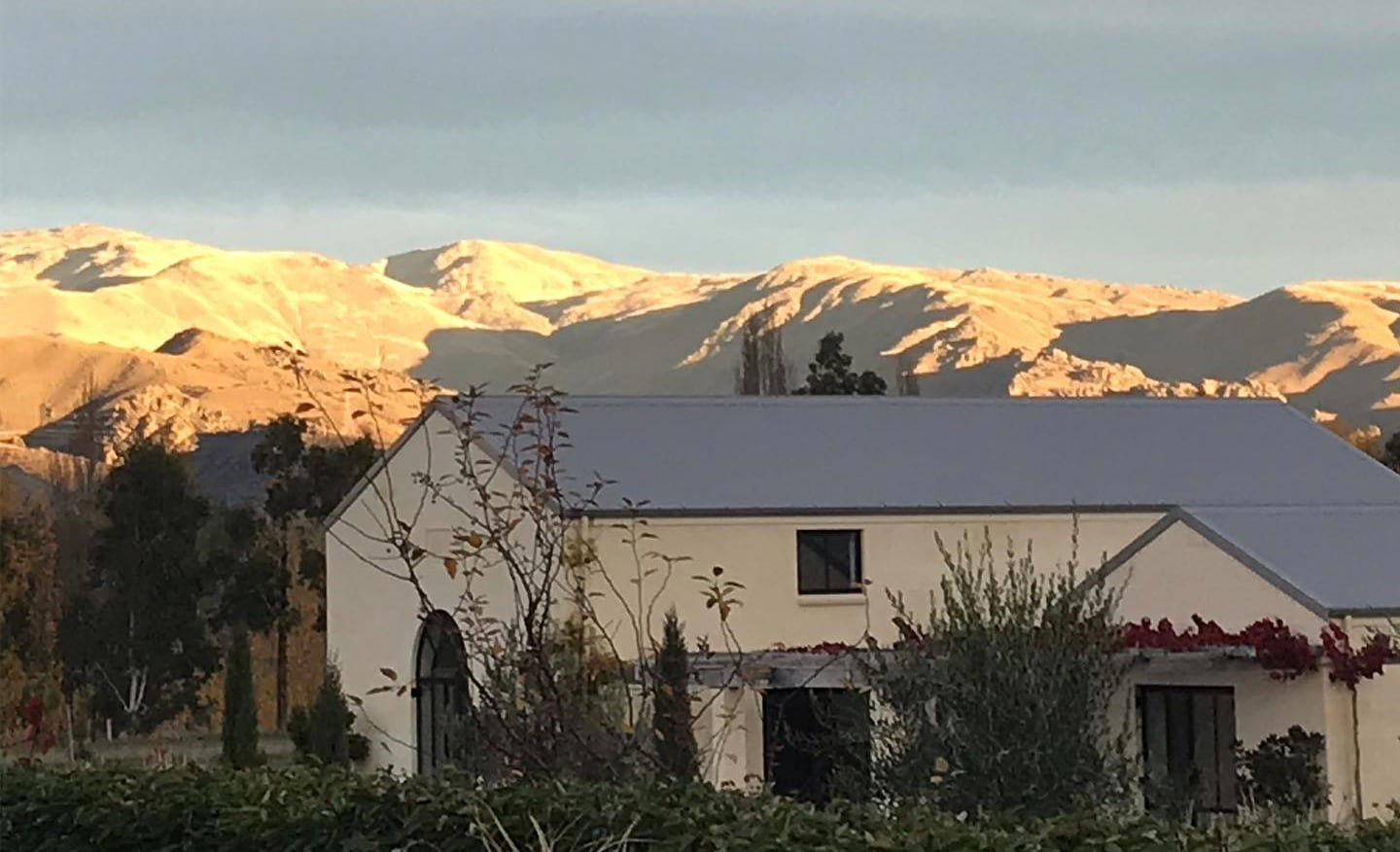
Approaching wine in Cromwell means reading the country before reading the label: hard light, dry air, low rainfall, and mountains that make aspect and altitude matter. Central Otago has built its modern reputation on small differences between valleys and slopes, and that is the right lens for Ellero Wine. This is not a winery to frame through public awards theatre or grand hospitality claims. It sits inside a region where the ground does much of the talking, especially when a producer’s public profile is compact and the useful signals are format, varietal focus, and place.
Cromwell is one of the more practical bases for understanding Central Otago wine because it connects the region’s cellar-door culture with the daily machinery of viticulture. The town is not a stage set built only for visitors; it is a working hub in a high-country wine region where irrigation, frost risk, sunlight, and diurnal range shape decisions in the vineyard. That matters for travellers because Central Otago can be misread as a single Pinot Noir story. Pinot dominates the regional conversation, but aromatic whites have their own logic here, especially where cool nights protect acidity and clear skies drive ripeness.
Central Otago through a Riesling lens
Ellero Wine’s named varietal is Riesling, and that places the winery in a more precise corner of the Central Otago discussion. Riesling in this part of New Zealand is less about volume than tension: acidity, ripeness, and the way a continental climate can sharpen aromatic varieties. The category suits travellers who want to understand Central Otago beyond the headline red-wine narrative. A still-white focus also changes the tempo of a tasting decision. Instead of judging the region only by structure and tannin, the question becomes how freshness, fruit weight, and residual balance can carry a wine from a dry inland climate.
That context is useful because Cromwell sits within Central Otago, the southernmost commercial wine-growing region in the world. The phrase is often repeated, but it has practical meaning rather than postcard value. Latitude, mountain exposure, and marked seasonal swings create a region where site selection has consequences. In a place like this, aromatic whites are not an afterthought; they are one way to read the climatic edge that defines the region.
The winery’s public format signals point toward a quieter, smaller-scale visit rather than a high-capacity cellar-door model. Capacity is listed as small, noise level as quiet, and allocation status as open. Those are modest details, but they help set expectations. Central Otago has room for polished tasting rooms, restaurant-led estates, and appointment-driven specialist producers; this address belongs in the quieter end of that spectrum. For a traveller building a wine day, that can be a strength if the aim is concentration rather than throughput.
A small Cromwell address in a broad wine circuit
The surrounding wine circuit gives Cromwell its depth. Travellers often pair winery research with broader local planning, from Our full Cromwell wineries guide to the town’s dining, lodging, and after-hours options in Our full Cromwell restaurants guide, Our full Cromwell hotels guide, and Our full Cromwell bars guide. The broader itinerary matters here because Central Otago wine travel is rarely about a single stop. It is about pacing, geography, and matching cellar-door styles to the day’s purpose.
Within Cromwell research, names such as Aurum Wines, Ceres Wines, Doctors Flat, Domaine Thomson, and Lowburn Ferry help show how densely the area is mapped by small-production wine addresses. Ellero Wine should be understood in that same regional frame: not as a standalone spectacle, but as part of a compact wine geography where small producers, narrow varietal focus, and site-led conversation are often more instructive than broad hospitality programs.
There is also a wider Central Otago and New Zealand wine route around Cromwell. Akarua Winery in Nevis extends the lens into another local sub-area, while Akitu in Wānaka shows how nearby lake-country sites can alter the mood of a wine itinerary. For travellers continuing beyond the region, Alan McCorkindale Limited in Christchurch belongs to a different urban context entirely. Even distant references such as »der Steiner« Hans Steiner in Podersdorf am See and & Handwein in Mannheim are reminders that small wine producers are often best judged by place first, polish second.
How to place it in a Cromwell itinerary
Ellero Wine is better approached as a focused Cromwell wine stop than as a full-service leisure venue. The format details point away from outdoor seating, food pairing, large groups, children, and dogs. That makes the address more suitable for adults building a concise wine itinerary than for travellers seeking an all-afternoon estate visit with broader amenities. The useful editorial question is not whether it offers every cellar-door extra; it is whether a quiet, small-format Riesling-focused producer adds definition to a Central Otago day.
For travellers interested in terroir expression, the answer is yes, with the right expectations. Central Otago’s reputation can become flattened by repetition, especially when every itinerary is reduced to the same regional clichés. A smaller Cromwell winery with a still-white focus offers a different reading of the place: less about hospitality scale, more about how aromatic varieties operate in a dry, mountain-shaped climate. Falstaff’s winery directory listing gives Ellero Wine a public wine-industry marker, but the stronger reason to pay attention is the regional logic behind the bottle. In Cromwell, Riesling can be a sharper teacher than another generic tasting flight.
Travellers wanting to round out the day beyond wine can use Our full Cromwell experiences guide to build in non-cellar-door time. That is often the smarter way to handle Central Otago: keep the wine stops selective, leave room for the landscape in its literal sense, and treat each producer as one clue in a larger regional argument. Ellero Wine fits that method neatly. It is a compact signal from a region where restraint, climate, and site specificity can say more than a crowded tasting room.
Recognition history
Dated appearances from independent guides and award organizations, with the underlying list record or original source where available.
Falstaff Winery - Listed
Falstaff
Continue exploring
More in Cromwell
Wineries in Cromwell
Browse all →
Restaurants in Cromwell
Browse all →

Details
- Riesling
- Still White