Axial Vinos

Axial Vinos is a production-led Spanish wine group in Almonacid de la Sierra, built around Garnacha from Cariñena DOP, Campo de Borja DOP and Navarra DO. The interest is less polished cellar-door theatre than terroir comparison: red, white and rosé wines shaped by three regions, organic and sustainable sourcing, and a Dutch-founded project dating to 1999.
Pearl is the En Primeur Club membership app — saves, bookings, and concierge access live there. Same editors, same standards.
- Address
- Almonacid de la Sierra, Aragon, Spanien
 Saves & bookings on Pearl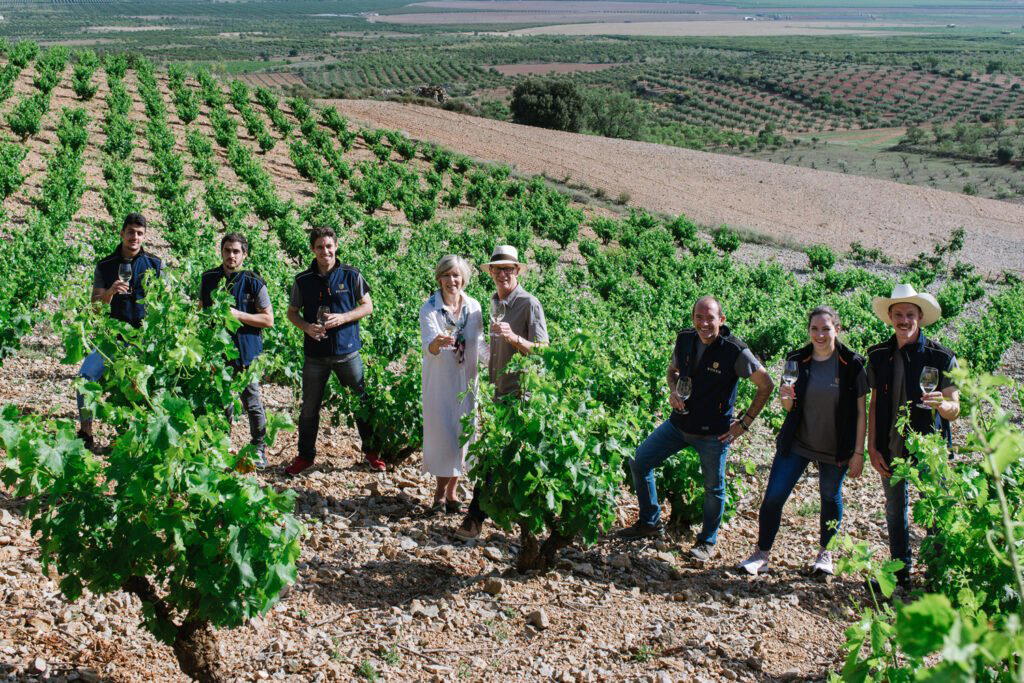
Axial Vinos in Almonacid De La Sierra is best understood as a production-focused Spanish wine company rather than a traditional visitor-focused estate. The picture is narrow but useful: the emphasis is on artisan, terroir-driven Garnacha across multiple regions, with an atmosphere that is likely functional and rural at the winery site rather than centered on polished hospitality. In other words, a reliable way to read this venue is through its production identity first, and through any potential visit only after expectations have been checked carefully.
That distinction matters for planning expectations. This is not a page to read as a promise of a formal tasting room, a restaurant-style stop or a fixed visitor program. The clearest grounded reason to pay attention is the producer’s Garnacha focus and its multi-region perspective within Spanish wine. For travelers who build wine stops around atmosphere and amenities, that may feel limited; for travelers interested in how a producer frames place, grape and regional difference, the limited information still points to a coherent theme.
Garnacha as a multi-region study, not a single-vineyard slogan
Axial Vinos is described around artisan, terroir-driven Garnacha across multiple regions. Without details on individual appellations, grape blends, labels or winemaking methods, the safest way to frame the producer is as a Spanish wine company using Garnacha as its central thread rather than as a single-estate showcase. That wording is important because it keeps the focus broad: the interest is not reduced to one vineyard, one room or one visitor experience, but to the way Garnacha can be approached through more than one regional lens.
The appeal is therefore conceptual as much as logistical. A multi-region Garnacha focus invites comparison between places and expressions, while the production-led identity keeps the emphasis on the wine rather than on a hospitality spectacle. Specific claims about varieties, certifications, tasting formats or visitor services should be confirmed directly before making plans. The responsible assumption is that the company’s story is strongest where it is already stated: artisan production, terroir-driven thinking and Garnacha as the through-line.
That makes Axial Vinos most useful for people who already know they want to think about Garnacha in a Spanish context. Instead of treating the producer as a broad leisure stop, it is better to treat it as a focused point of reference. The available description does not support elaborate claims about style, cellar practice or the shape of a visit, but it does support a clear editorial reading: this is a producer whose identity is tied to Garnacha and to the idea that place matters.
The price level is listed as $$, placing the winery in a moderate bracket.
What the format says about modern Spanish wine tourism
Some wine destinations are built primarily for visitors; others are working producers whose public identity is centered on the bottle and the production model. The winery sit closer to the second category: functional, rural and production-focused, with Garnacha as the main point of interest. That category can be rewarding, but it asks for a different rhythm from the traveler: less expectation of a ready-made hospitality experience, more attention to the producer’s stated purpose.
That does not make it less relevant for wine-minded travelers. It simply changes the expectation. The grounded draw is not a confirmed dining program, architectural destination or luxury tasting format; it is the chance to understand a Spanish Garnacha producer whose work is described across multiple regions. The value, then, lies in approaching the stop with curiosity rather than assumptions. If the visit is possible, it should be understood as a way to connect with a production-led project, not as a guaranteed full-service winery outing.
For a first-timer, one useful approach is to keep questions focused on Garnacha, regional expression and how the company thinks about terroir. Those questions stay inside the strongest available facts and avoid pushing the venue into a role it has not clearly claimed. They also help distinguish the winery from places where the main appeal is the setting, the meal, the tasting room or the itinerary. Here, the more durable interest is the relationship between grape, region and production identity.
Planning the Almonacid De La Sierra wine stop
Almonacid De La Sierra is the location context for the winery. The atmosphere at the winery site is likely functional and rural, so travelers should avoid assuming the amenities of a visitor-focused estate unless confirmed in advance. That means treating practical planning as essential rather than incidental: if access, tastings or any kind of structured visit matter to the day, they should be before the route is built around the producer.
For broader planning in the area, cross-check dining, hotel, bar and experience options in Almonacid De La Sierra generically. The dependable facts are intentionally limited: the winery is a $$ Spanish wine company in Almonacid De La Sierra with an emphasis on artisan, terroir-driven Garnacha across multiple regions. Within those limits, the venue reads as a focused wine reference rather than an all-purpose destination, and that is the fairest way to include it in an itinerary.
Recognition history
Dated appearances from independent guides and award organizations, with the underlying list record or original source where available.
Falstaff Winery - 2 Stars
Falstaff
At a Glance
- Rustic
- Quiet
- Organic
- Sustainable
- Vineyard
- Cariñena Dop; Campo De Borja Dop; Navarra DO
- Garnacha
- Tempranillo
- Syrah
- Merlot
- Macabeo
- Vidadillo
- Still Red
- Still White
- Still Rosé
Production-focused Spanish wine company with an emphasis on artisan, terroir-driven Garnacha across multiple regions rather than a traditional visitor-focused estate; atmosphere is likely functional and rural at the winery site rather than polished hospitality-driven.