Yod Abyssinia
Our verdict
Yod Abyssinia is one of Addis Ababa's most recognised venues for traditional Ethiopian dining, drawing both local families and international visitors to a setting where injera-based communal eating is framed as a full cultural event. Live music and traditional dance accompany the meal, making the format as much performance as dinner. It sits comfortably within the city's established tier of cultural dining destinations.

Pearl is the En Primeur Club membership app, where members save venues, book tables and use the concierge.
The menu
What to order
- Tibs
The Architecture of a Communal Table
In Addis Ababa, the most instructive thing about a restaurant is often not what it serves but how it expects you to eat. Ethiopian dining is built around shared experience in a way that few other traditions so thoroughly encode into the meal's physical structure. The injera, a large, spongy sourdough flatbread made from teff, arrives not as a side item but as the plate itself, with stews, legume preparations, and spiced vegetables arranged across it. Eating with your hands, from a single shared surface, is not a stylistic choice at these tables; it is the architecture of the meal. Yod Abyssinia operates fully within this tradition, presenting Ethiopian cuisine in a format where the communal structure of the menu is the first thing you encounter.
That structural commitment distinguishes Addis Ababa's cultural dining tier from the city's growing roster of international and fusion restaurants. Where venues like The Kitchen and The Oriental address visitors looking for European or Asian reference points, Yod Abyssinia sits in the category that treats Ethiopian culinary tradition as the primary subject.
What the Menu Reveals About the Tradition
Ethiopian menus in this category do not follow the Western convention of starter, main, and dessert. Instead, they present a spread: a combination of wats (slow-cooked stews), tibs (sautéed meat preparations), and a range of vegetable and lentil dishes that reflect both Orthodox Christian fasting traditions and the country's agricultural diversity. Fasting menus, entirely plant-based, are not a concession to dietary preference but a deeply rooted culinary category. On fasting days, which align with the Ethiopian Orthodox calendar, plant-based spreads become the default, and in many venues the fasting menu is as complex and carefully composed as the meat options.
The layering of flavours in Ethiopian cooking relies heavily on berbere, a spice blend that typically includes chilli, fenugreek, coriander, and several other aromatics, and on niter kibbeh, a clarified spiced butter that carries heat and depth through stewed dishes. These are not background notes; they are structural elements that give the cuisine its identity as clearly as soy or dashi does in Japanese cooking. Reading an Ethiopian menu through this lens, as an expression of spice architecture and communal format rather than individual plating, is the most productive way to approach it.
The Setting and the Performance
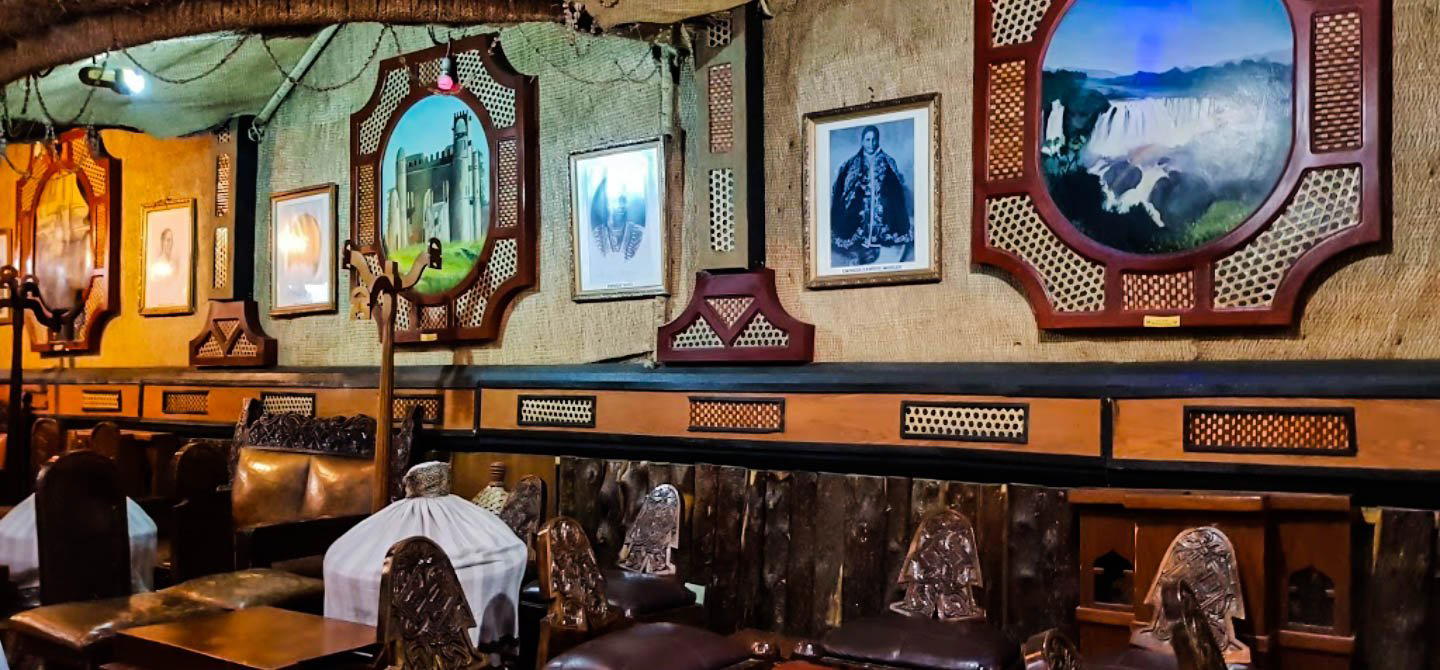
Yod Abyssinia positions the meal within a wider programme of live traditional music and dance, a format that places it in a specific sub-tier of Ethiopian cultural dining. This is not incidental entertainment; in several of Addis Ababa's best-known cultural restaurants, the performance is as central to the offering as the food. Traditional instruments including the krar (a bowl-shaped lyre) and the masenqo (a single-stringed fiddle) accompany dances that vary by region, Tigray, Amhara, Oromo, and Somali movement traditions each carry distinct postures and rhythms. For visitors encountering Ethiopian culture through the dining experience, this programming provides context that the food alone cannot supply.
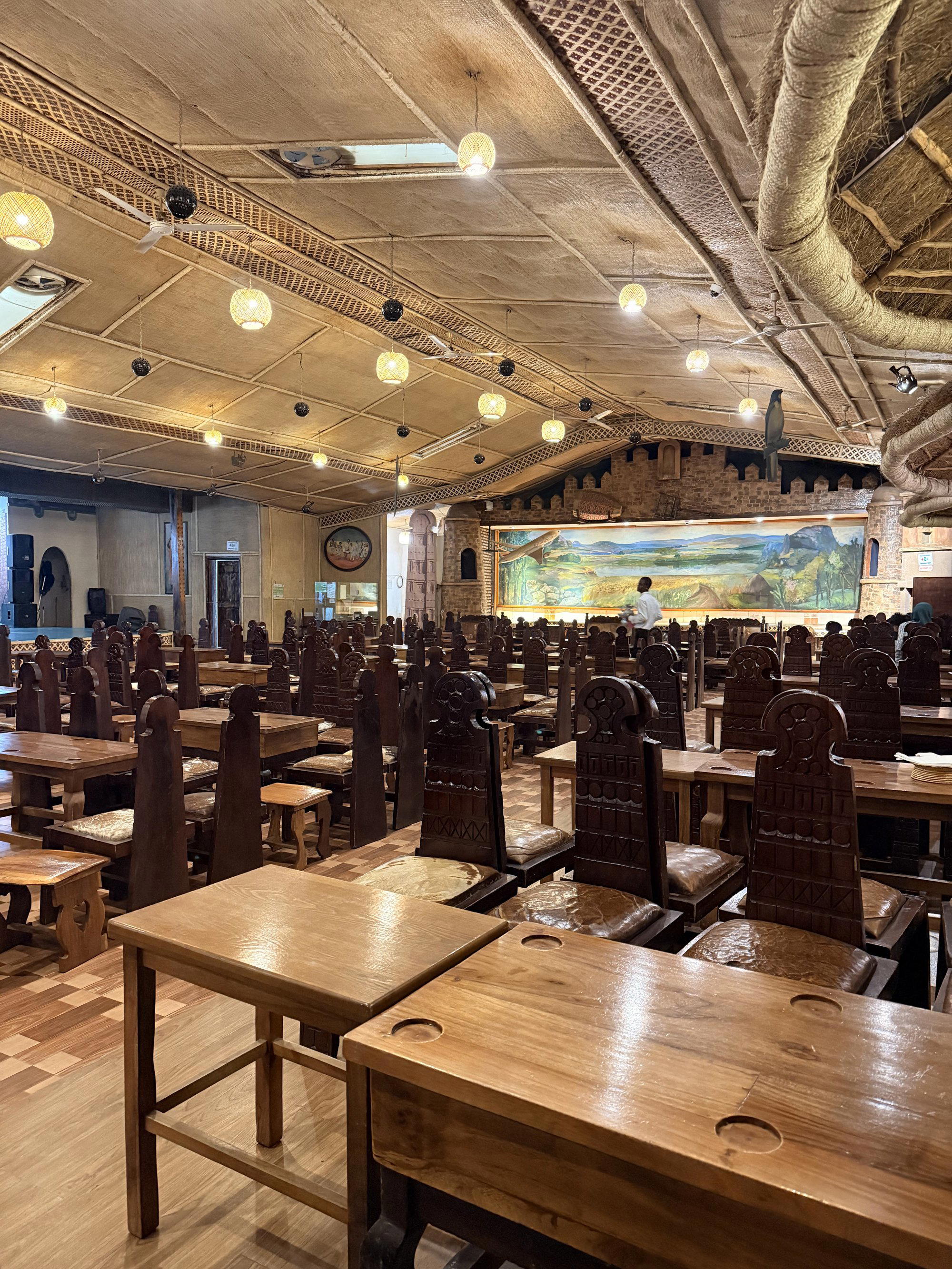
The physical environment at venues in this tier typically features traditional décor, open seating arrangements suited to large groups, and a scale that can accommodate tour parties alongside smaller private tables. The atmosphere shifts across the evening as the performance develops, which means arrival time affects the character of the meal considerably. Coming early positions you against the quieter, pre-performance setting; arriving mid-evening places the meal against the full programme.
Addis Ababa's Cultural Dining Scene in Context
Addis Ababa occupies an unusual position among African capitals when it comes to food culture. As the seat of the African Union and a long-standing diplomatic hub, the city has developed a restaurant culture that serves an unusually international professional class alongside a domestic middle class with strong culinary traditions of its own. The result is a dining scene that splits, broadly, between high-volume cultural venues aimed partly at tourist and diplomatic audiences, and more neighbourhood-oriented spots where the food is less performative and the prices reflect a local market.
Yod Abyssinia belongs to the former tier. Its visibility among international visitors, its scale, and its programme of live performance all signal a venue calibrated for an audience that includes significant numbers of first-time visitors to Ethiopian food. That is not a criticism; it describes a genuine function in the city's hospitality ecosystem. Visitors arriving in Addis Ababa for the first time, looking for a reliable and comprehensive introduction to the cuisine, will find this format useful precisely because it is structured for orientation. For a broader picture of where this sits within the city's options, see our full Addis Ababa restaurants guide.
The contrast with Ethiopia's regional dining scenes is also worth noting. Venues like Four Sisters Restaurant in Gondar and Tasty Cafe in Harar operate in cities where distinct regional culinary identities are the primary reference point. Gondar's food traditions differ from those of Addis Ababa's more cosmopolitan synthesis, and Harar's Muslim culinary heritage introduces different spice profiles and meat preparations entirely. Yod Abyssinia, by contrast, presents a broader national overview rather than a regional specialisation.
Planning Your Visit
Given Yod Abyssinia's position in the city's tourism infrastructure, booking ahead is advisable, particularly if your visit coincides with peak diplomatic or conference periods in Addis Ababa, when the city's upper-tier venues fill quickly. The venue's evening programme makes dinner the primary visit format, with the performance schedule structuring the later hours of service. For visitors with specific dietary requirements, direct contact with the venue before arrival is the appropriate route, given that the Ethiopian fasting tradition already creates a well-developed plant-based menu category that may address many requirements, though confirmation is always preferable to assumption. Specific pricing, hours, and booking contacts are best confirmed directly, as this information changes seasonally.
Frequently asked questions
Where is Yod Abyssinia in Addis Ababa?
Yod Abyssinia is located at አዲስ አበባ, Addis Ababa.
Does Yod Abyssinia suit first-time visitors to Ethiopian cuisine?
Among Addis Ababa's cultural dining venues, the combination of communal injera-based eating and live traditional performance gives first-time visitors both a practical introduction to how Ethiopian meals are structured and a broader cultural frame for the food. The format, shared dishes, no individual plating, eating with the right hand, is part of what the experience is designed to demonstrate. For anyone arriving in Addis Ababa without prior exposure to Ethiopian dining customs, this kind of venue provides more context than a neighbourhood restaurant would.
What's the signature dish at Yod Abyssinia?
Ethiopian cultural restaurants in this tier do not operate around a single hero dish. The structural logic is a shared spread of wats, tibs, and vegetable sides served atop injera, the sourdough flatbread that doubles as plate and utensil. Ordering here means choosing a combination rather than a centrepiece, which is the point of the format.
How far ahead should I plan for Yod Abyssinia?
Addis Ababa hosts the African Union headquarters and a dense schedule of international conferences, which creates demand spikes at established cultural dining venues that track diplomatic calendars rather than weekend rush patterns. Booking several days ahead is a reasonable baseline; if your trip coincides with an AU summit or major multilateral event in the city, extend that to a week or more.
What is Yod Abyssinia known for?
Yod Abyssinia is one of Addis Ababa's established venues for traditional Ethiopian cuisine presented alongside live traditional music and dance. It sits in a specific sub-tier of the city's dining scene where the meal functions as a cultural programme, drawing diplomats, international visitors, and travellers seeking a structured introduction to Ethiopian food customs. The communal injera-based format is central to the experience.
How does Yod Abyssinia handle allergies?
Ethiopian cuisine has a well-developed fasting tradition, observed by Orthodox Christians for up to 200 days a year, that produces an extensive range of plant-based dishes free from meat and dairy. This means dairy-free and meat-free requirements are structurally accommodated rather than improvised.
Is Yod Abyssinia good value for money?
Within Addis Ababa's cultural dining tier, venues that combine food with live performance typically price above neighbourhood injera spots that focus purely on the meal. The relevant comparison is not against street-level Ethiopian dining but against other Addis Ababa venues offering a comparable dinner-plus-performance programme.
Accolades, Compared
| Venue | Cuisine | Price |
|---|---|---|
| Yod AbyssiniaThis venue (the venue you are viewing) | Traditional Ethiopian Cultural | $10–20 |
| Kategna Restaurant | Traditional Ethiopian | $10–20 |
| Kategna | Traditional Ethiopian | $10–20 |
| 2000 Cultural Ethiopian Restaurant | Traditional Ethiopian Cultural | $10–20 |
| The Kitchen | Middle Eastern | $20–30 |
| The Oriental | Asian-Western BBQ Fusion | $20–30 |
Continue exploring
More in Addis Ababa
Restaurants in Addis Ababa
All restaurants in Addis Ababa →
Bars in Addis Ababa
All bars in Addis Ababa →
Hotels in Addis Ababa
All hotels in Addis Ababa →
Details
- Lively
- Energetic
- Rustic
- Well Known
- Group Dining
- Celebration
- Casual Hangout
- Live Music
- A La Carte
- Vegetarian Friendly
Astounding cultural environment filled with lively energy from live traditional dance and music shows.