Our verdict
In a city that has traded across the Horn of Africa for centuries, Tasty Cafe sits inside Harar's walled old town, drawing on the same market corridors that have supplied local kitchens for generations. The cafe operates within a dining culture shaped by qat, coffee ceremony, and the spice routes that made Jugol one of East Africa's most historically layered urban settlements. For travellers moving through the region, it represents a practical entry point into Harari home cooking.

Pearl is the En Primeur Club membership app, where members save venues, book tables and use the concierge.
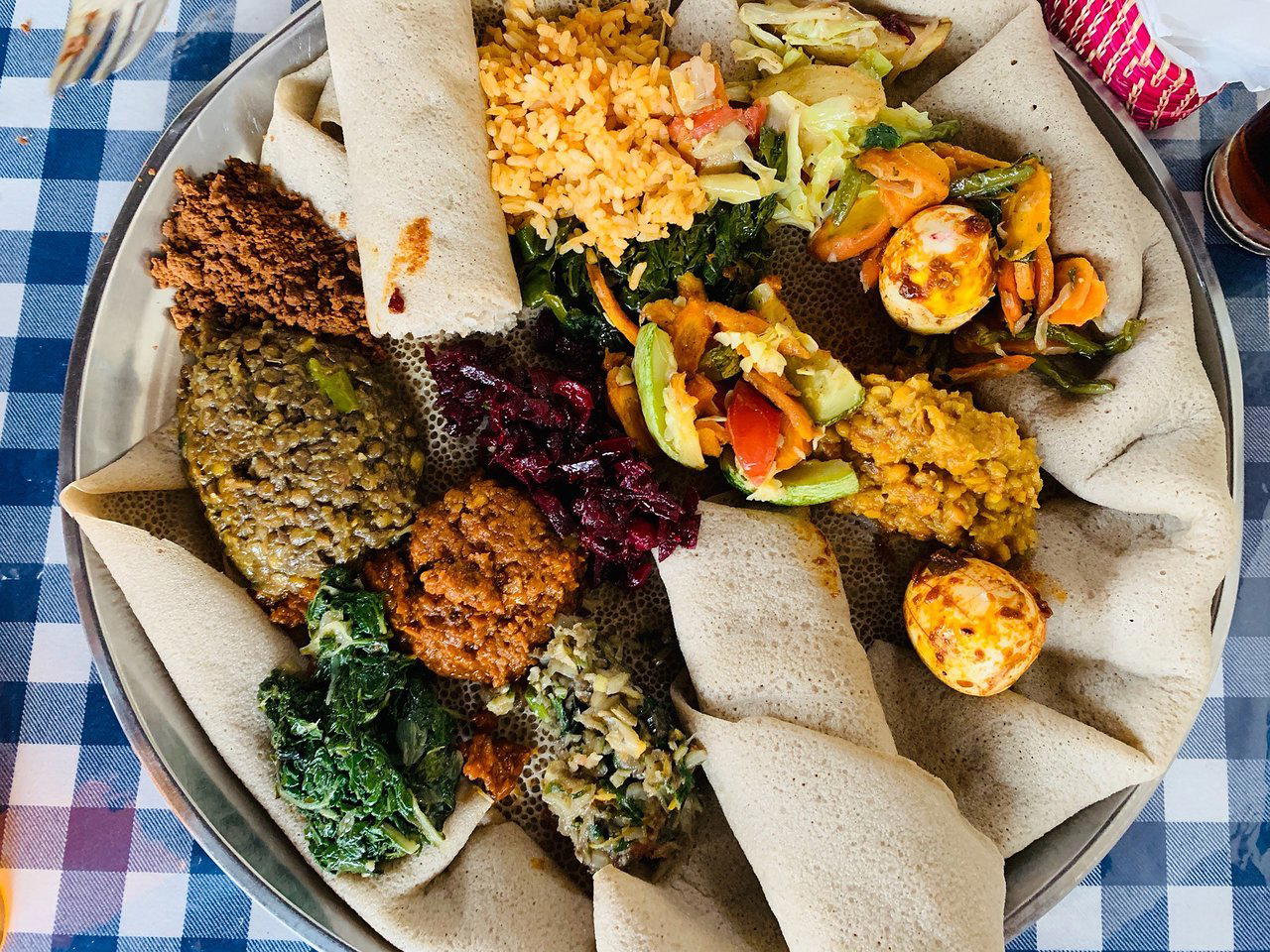
The menu
What to order
- Traditional Ethiopian coffee ceremony
Eating Inside the Walls: Harar's Cafe Culture in Context
Harar's Jugol, the UNESCO-listed walled city, is one of the few urban environments in sub-Saharan Africa where the medieval street plan, the market economy, and the daily food culture have remained substantially intact. The city is historically Islamic, commercially Somali and Oromo as much as Harari, and its kitchens reflect centuries of ingredient exchange across the Horn. Spices arrive from the same wholesale corridor that supplied caravans heading toward Djibouti and Berbera. Coffee, grown in the surrounding highlands of the Harari region, is treated not as a casual drink but as a formal ceremony with its own grammar of roasting, serving, and social obligation. Understanding where Tasty Cafe sits requires understanding that food here is never purely local in the narrowest sense: it is the product of a trading city that absorbed flavours from the Arabian Peninsula, the Ethiopian highlands, and the Somali coast over several hundred years.
Within that context, cafes and small restaurants in Harar operate on a model that prioritises ingredient proximity and daily market dependency over fixed menus or brand consistency. The city's covered market, one of the most active in the eastern highlands, turns over fresh produce, legumes, and dried goods every morning. Kitchens in Jugol and the surrounding neighbourhoods are supplied by that rhythm, which means menus shift with what is available and what the season allows. This is not a philosophical choice in the way a farm-to-table declaration might be for a restaurant in Copenhagen or San Francisco: it is simply the operational reality of cooking in a city where cold-chain logistics are limited and proximity to supply is the baseline condition.
What the Ingredient Chain Tells You About the Food
Harari cuisine sits in a distinctive position within Ethiopian food culture. Unlike the Addis Ababa mainstream, which centres on injera-based communal plates and the tej (honey wine) tavern tradition, Harari cooking carries a stronger spice identity, a higher proportion of meat-based dishes, and a closer relationship to the flatbread and stew combinations common across the Somali and Afar borderlands. The berbere and mitmita spice blends used in eastern Ethiopia carry a different heat profile from those found in the highlands around Gondar or Lalibela, shaped by the specific dried chillies and aromatics traded through Harar's markets for generations.
Cafes in the city that draw on this tradition are not replicating a fixed canon: they are working from a living larder that changes with the agricultural calendar of the surrounding region. The coffee served in Harar specifically comes from trees cultivated in the Harari highlands and the adjacent zones of Oromia, producing a cup with a distinct winey acidity that separates it from the cleaner, more chocolatey profiles associated with Yirgacheffe or Sidama. A cafe that sources its coffee from within the region rather than from a national distributor is offering something traceable in a way that matters to anyone paying attention to origin. For travellers comparing notes on Ethiopian coffee traditions, the distinction between Harar arabica and the southern highland varieties is one of the more concrete differentiators available in the country's coffee geography.
For broader context on how Ethiopian restaurants position themselves across different price tiers and dining formats, the Kategna Restaurant in Addis Ababa and Four Sisters Restaurant in Gondar offer useful reference points: both operate within the communal injera tradition but with different regional emphases, illustrating how Ethiopian food culture fragments across geography.
Harar as a Dining Destination
The city receives a fraction of the tourist infrastructure directed at Addis Ababa or the northern historical circuit. There are no five-star hotel dining rooms here, no international chef residencies, and no tasting menus pitched at expense-account travellers. What Harar has instead is a density of small, owner-operated food establishments that serve the city's mixed population of students, traders, civil servants, and the relatively small number of travellers who make it this far east. That compression of the market means the gap between where locals eat and where tourists end up is smaller than in most Ethiopian cities. A cafe that trades on daily supply and home-style execution does not need to signal quality through credentials visible from the outside: the market does that work through foot traffic and return custom.
Visitors planning time in the city should note that Harar operates on its own social clock. Coffee ceremony, qat chewing in the early afternoon, and evening socialising around tea and light food create distinct windows in the day when different establishments are busier. Arriving at a cafe outside these social rhythms, particularly during the midday lull, may mean a quieter room and a different energy than the same place at its natural peak hours. For a fuller picture of what the city offers across dining and experience categories, our full Harar restaurants guide maps the options by neighbourhood and meal type.
The comparison with globally recognised dining destinations is instructive not because Harar competes with them but because the contrast clarifies what makes the city's food scene function as it does. Where a venue like Le Bernardin in New York or Arpège in Paris builds its identity around named sourcing relationships formalised into a public narrative, Harar's cafes operate on the same sourcing principle without the apparatus of branding. The ingredient chain is shorter, more direct, and more dependent on the morning market than any written philosophy could capture. That is, in its own way, a more complete version of what farm-to-table rhetoric aspires to describe.
For context on how other cities in the region approach informal dining and cafe culture, the noodle house in Addis Ababa's Bole district illustrates how immigrant food traditions establish themselves alongside local cuisine in Ethiopian urban centres, a pattern that has been visible in Harar since at least the nineteenth century.
Planning Your Visit
Harar is accessible by road from Dire Dawa, the nearest city with a functional domestic airport receiving regular flights from Addis Ababa, approximately a one-hour drive from Jugol. The old town is compact enough to cover on foot, and most eating establishments within the walled city are reachable from any of the main gates within fifteen minutes of walking. Booking infrastructure for small cafes in Harar is not formalised: walk-in is the norm, and the ideal time to visit is typically morning through early afternoon when market supply is freshest and kitchens are at full operation. Payment in cash is the standard expectation across most local establishments. Travellers connecting Harar with the broader Ethiopian route may also find it useful to cross-reference Emeril's in New Orleans or Lazy Bear in San Francisco for a sense of how community-rooted food traditions translate into different market contexts globally.
Frequently asked questions
Is Tasty Cafe suitable for children?
Harar's cafe culture tends toward informal, neighbourhood settings, and Tasty Cafe sits within that tradition. The walled city of Jugol operates at a pedestrian pace with communal street life, which generally makes it a manageable environment for families. That said, specific facilities for children are not documented so parents with young children should verify on arrival.
What's the overall feel of Tasty Cafe?
Tasty Cafe operates in Harar, one of the few cities in sub-Saharan Africa where a medieval urban fabric has remained largely intact within UNESCO-listed walls. Cafes here function as neighbourhood anchors rather than destination dining rooms, shaped by a local coffee tradition that predates modern Ethiopian cafe culture. The atmosphere reflects that context: grounded, unhurried, and oriented toward regulars.
What makes Tasty Cafe a useful base for exploring Harari food culture?
Harar receives significantly less tourist infrastructure than Addis Ababa or the northern historical circuit, which means local cafes like Tasty Cafe function as genuine community spaces rather than tourist-facing operations. The city's position as a historic centre of the Ethiopian coffee trade gives even an everyday coffee stop here a depth of context rarely found elsewhere in the region. For visitors arriving via Dire Dawa and the road into Jugol, a neighbourhood cafe is often the most direct entry point into how Harari residents actually eat and drink.
What do regulars order at Tasty Cafe?
Harari cuisine occupies a distinct position within Ethiopian food culture, drawing on trade-route influences and local grain traditions that differ from the injera-centred plates dominant in Addis Ababa. Coffee is central to daily life in Harar, historically one of the most significant coffee-producing and trading regions in Africa, so a coffee service anchors most visits.
How It Stacks Up
| Venue | Cuisine | Price |
|---|---|---|
| Tasty CafeThis venue (the venue you are viewing) | Ethiopian Cafe | Not listed |
| Kategna Restaurant | Traditional Ethiopian | $10–20 |
| Kategna | Traditional Ethiopian | $10–20 |
| 2000 Cultural Ethiopian Restaurant | Traditional Ethiopian Cultural | $10–20 |
| The Kitchen | Middle Eastern | $20–30 |
Details
- Cozy
- Casual Hangout
- A La Carte
Warm and charming atmosphere