2000 Cultural Ethiopian Restaurant
Our verdict
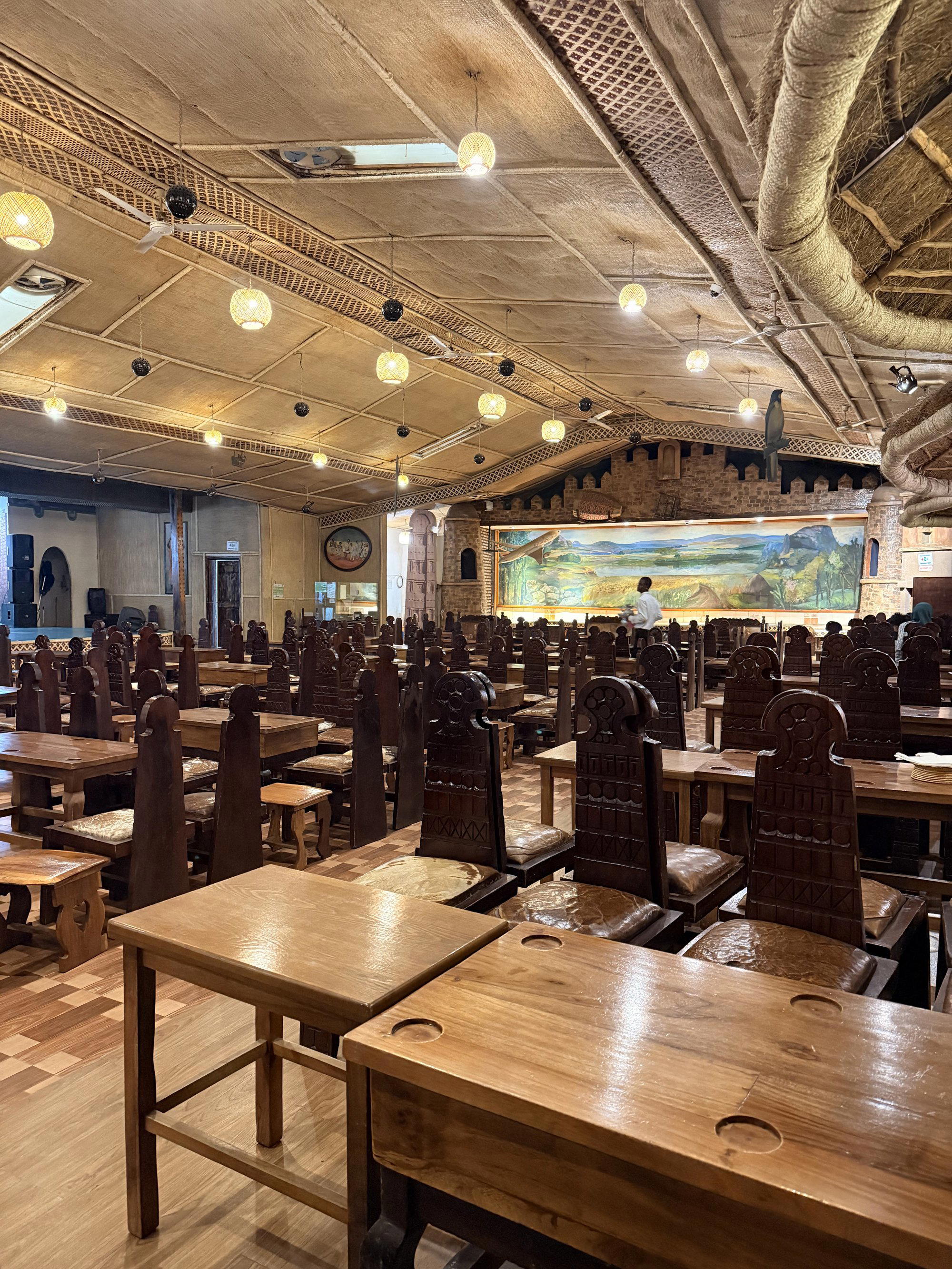
On Bole Road in Addis Ababa, 2000 Cultural Ethiopian Restaurant places traditional Ethiopian dining within one of the city's most accessible corridors. The kitchen works within a format that prioritises communal eating and cultural ceremony over contemporary reinterpretation. For visitors orienting themselves in the capital's dining scene, it serves as a practical and culturally grounded starting point.

Pearl is the En Primeur Club membership app, where members save venues, book tables and use the concierge.
The menu
What to order
- Tibs
- Doro wat
- Beyaynetu
Ethiopian Dining and the Tradition It Carries
Bole Road is where Addis Ababa orients itself toward the outside world. The avenue runs toward Bole International Airport, drawing a cross-section of diplomats, business travellers, returning diaspora, and first-time visitors into one of the city's most active corridors. Within that context, restaurants positioned as cultural Ethiopian experiences carry a particular weight: they are often the first point of contact between a visitor and a cuisine that operates on entirely different structural logic from Western fine dining. The eating is communal, the injera is both plate and utensil, and the meal is designed to be shared rather than portioned.
2000 Cultural Ethiopian Restaurant sits along that road and within that tradition. The name signals intent: this is a venue that frames itself around cultural continuity rather than modernist revision.
The Architecture of an Ethiopian Meal
Understanding Ethiopian cuisine requires abandoning the Western framework of starter, main, and dessert as separate acts. An Ethiopian spread arrives together: a large round of injera, the spongy sourdough flatbread made from teff, laid flat and covered with wats (stews), tibs (sautéed meats), and vegetable sides arranged in a pattern that is as much visual as practical. Diners tear pieces of injera and use them to scoop the dishes directly, a technique that makes the bread simultaneously the vehicle and the flavour component.
The cuisine divides along two axes that matter for visitors: fasting and non-fasting. Ethiopian Orthodox Christianity, practised by a significant portion of the population, requires fasting from animal products on Wednesdays and Fridays, as well as across longer liturgical periods. This has produced a parallel vegetarian tradition of considerable depth, built around lentil and chickpea wats, gomen (braised collard greens), and misir (spiced red lentils). A restaurant operating within the cultural frame will typically maintain both tracks, and the fasting menu is not a concession but a developed culinary language in its own right.
In Addis Ababa's broader restaurant scene, venues like Yod Abyssinia pair traditional food with live cultural performance, while Kategna has built a strong local following for its category-defining injera quality. Kategna Restaurant represents the kind of local institution that sets a reference point against which other Ethiopian kitchens are measured. 2000 Cultural Ethiopian Restaurant operates in this same tier of culturally framed dining, drawing on the same traditions without the theatrical overlay some competitors provide.
Bole Road and Its Dining Logic
The Bole corridor functions differently from Addis Ababa's older dining pockets around Piazza or the Mercato area. Its restaurants skew toward accessibility and visibility, serving a clientele that includes international arrivals on short stays alongside resident expats and local professionals. This shapes how a culturally positioned restaurant must perform: it needs to be legible to someone encountering injera for the first time while remaining grounded enough not to alienate the local diner who would find an over-explained or simplified version of the cuisine patronising.
For visitors who want to orient themselves further in the city's dining range, The Kitchen and The Oriental represent the international end of Addis Ababa's restaurant spectrum, offering useful contrast. Across Ethiopia more broadly, Four Sisters Restaurant in Gondar and Tasty Cafe in Harar demonstrate how the country's culinary identity shifts by region, with Harar in particular bringing distinct spice profiles and bread traditions into the mix. The full Addis Ababa restaurants guide maps the wider field for those planning beyond a single meal.
Bole also houses a range of internationally oriented establishments, reflecting the neighbourhood's cosmopolitan character. A noodle house in Bole signals the kind of culinary plurality that has developed in this part of the city as its international population has grown. That mix makes a clearly positioned Ethiopian cultural restaurant more, not less, useful as an anchor point for a visitor's eating itinerary.
What to Expect at the Table
What the cultural Ethiopian format typically delivers, and what a visitor should anticipate, includes the central injera spread, at minimum one or two meat-based wats such as doro wat (chicken in berbere-spiced sauce, considered the country's signature dish) and key wat (beef stew), alongside the fasting vegetable options. Coffee, which Ethiopia produces and consumes with genuine ceremony, may follow the meal in a traditional coffee service involving roasting, grinding, and pouring in stages, a ritual that carries social as much as gastronomic meaning.
Practical planning for Bole Road restaurants generally involves arriving with flexibility on timing. The area is accessible from the airport and from the central hotel zone, making it a reasonable first or last meal location for travellers. Given the absence of confirmed booking data for 2000 Cultural Ethiopian Restaurant, visiting directly or confirming arrangements in advance through the venue is the prudent approach.
Ethiopian Dining in Global Context
The dining traditions that 2000 Cultural Ethiopian Restaurant represents exist at a considerable remove from the formats that dominate international fine dining coverage. The restaurants that receive the most global editorial attention, from Le Bernardin in New York to Alinea in Chicago and Amber in Hong Kong, operate within European-derived fine dining structures: individual plating, sequential courses, sommelier service. Ethiopian communal dining operates on different organising principles, and those principles are neither primitive nor underdeveloped. They reflect a different set of social values around eating, centred on sharing, hospitality, and the meal as a collective rather than individual experience.
That distinction matters when assessing what a restaurant like this offers. The measure is not whether it performs against the criteria of Alléno Paris or Louis XV in Monte Carlo. It is whether it holds faithfully to a culinary tradition with deep roots and communicates that tradition clearly to whoever sits at the table. For visitors to Addis Ababa, encountering that tradition in a dedicated setting on one of the city's primary arteries is a reasonable and well-located way to begin.
Frequently asked questions
What part of town is 2000 Cultural Ethiopian Restaurant in?
2000 Cultural Ethiopian Restaurant is located at Bole road, Addis Ababa, Addis Ababa.
Is 2000 Cultural Ethiopian Restaurant a good option for first-time visitors to Ethiopian cuisine in Addis Ababa?
Bole Road restaurants generally skew toward accessibility, and a venue identifying itself as a cultural Ethiopian format is oriented around presenting the communal platter tradition in full rather than adapting it for unfamiliar diners. For someone encountering injera-based shared eating for the first time, that context matters: the meal is structured collectively, not around individual plates. Addis Ababa is the right city to encounter this tradition at its source, and Bole Road is one of its more navigable entry points.
What's the must-try dish at 2000 Cultural Ethiopian Restaurant?
The cultural Ethiopian format centres on shared injera platters layered with wots and vegetable preparations, eaten communally rather than ordered individually. The Bole Road location draws a mixed crowd familiar with this format, so the table logic itself is part of what you're there for.
Can I walk in to 2000 Cultural Ethiopian Restaurant?
On Bole Road, where foot traffic from both airport transit and local regulars is consistent, walk-in availability depends heavily on time of day and day of the week. Arriving outside peak lunch and dinner windows gives the best chance of being seated without a prior arrangement.
What's the standout thing about 2000 Cultural Ethiopian Restaurant?
The venue's positioning on Bole Road places it at the intersection of Addis Ababa's international-facing corridor and the city's own dining culture, making it accessible to visitors arriving from or departing to Bole International Airport without being calibrated solely for tourists. The cultural Ethiopian format it represents, communal eating from a shared central platter on injera, is a dining structure with centuries of documented practice behind it. That architecture of eating is what distinguishes this category from most restaurant formats a visitor might be familiar with.
Price and Positioning
Comparable venues nearby, for context on price, style, and recognition.
| Venue | Cuisine | Price | Notes |
|---|---|---|---|
| 2000 Cultural Ethiopian RestaurantThis venue (the venue you are viewing) | Traditional Ethiopian Cultural | $10–20 | Not listed |
| Yod Abyssinia | Traditional Ethiopian Cultural | $10–20 | Bole Medhaniyalem, Traditional Ethiopian Cultural |
| Kategna | Traditional Ethiopian | $10–20 | Bole, Authentic Ethiopian |
| The Kitchen | Middle Eastern | $20–30 | Meskel Square, Middle Eastern |
| The Oriental | Asian-Western BBQ Fusion | $20–30 | Meskel Square, Asian-Western BBQ Fusion |
| Kategna Restaurant | Traditional Ethiopian | $10–20 | Bole Medhanialem, Traditional Ethiopian |
Continue exploring
More in Addis Ababa
Restaurants in Addis Ababa
All restaurants in Addis Ababa →
Bars in Addis Ababa
All bars in Addis Ababa →
Hotels in Addis Ababa
All hotels in Addis Ababa →
Details
- Lively
- Rustic
- Group Dining
- Celebration
- Casual Hangout
- Live Music
- Organic
- Local Sourcing
- Family Style
- Tej
- Vegetarian Friendly
- Vegan Options
- Gluten Free Options
Warm, lively atmosphere with low-slung wooden seating and cultural performances.