

Michelin Bib Gourmand · Tabelog Bronze #412
Our verdict
Shutei Tanaka gives Tokyo yakitori a disciplined, counter-led reading in Sumida, closer to a sake-focused shutei than a showy grill room. The draw is the ritual: salted chicken skewers, neatly cut drinking snacks, two brothers alternating service, and recognition from Tabelog that places it firmly inside the city’s serious yakitori conversation.

Pearl is the En Primeur Club membership app, where members save venues, book tables and use the concierge.
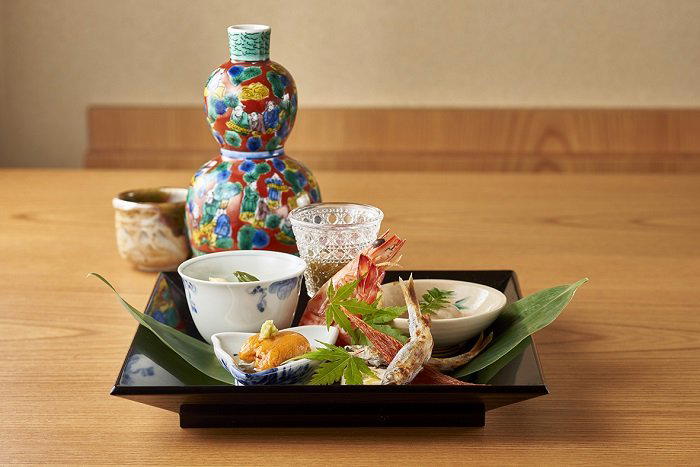
Approaching a small yakitori counter in eastern Tokyo changes the register of the night. Ginza and Roppongi make dining feel public; Sumida keeps it local, compact, and closer to the old rhythm of drinking houses where the grill is not scenery but the clock. Shutei Tanaka belongs to that quieter Tokyo, where the meal is paced by skewers, sake, and the small pauses between one cut of chicken and the next.
Tokyo’s yakitori culture has split into several tiers. At one end are casual smoke-filled counters built for beer and repetition. At the other are tightly run omakase formats where chicken is treated with the same concentration usually associated with sushi or tempura. This address sits in the latter camp without abandoning the grammar of the shutei, a word that points back to the tavern rather than the luxury dining room. That distinction matters: the performance is controlled, but the meal’s logic remains drink, grill, snack, repeat.
Salt, sake, and the counter rhythm of modern Tokyo yakitori
The house style is built around a prix fixe yakitori sequence, with chicken skewers mainly served salted. In Tokyo, that choice signals restraint rather than plainness. Tare can pull a meal toward sweetness and gloss; salt leaves the diner closer to fat, smoke, muscle, and the quality of the bird. The format also leaves room for sake, shochu, and wine, a spread that places the restaurant nearer to serious drinking culture than to a single-purpose skewer shop.
The kitchen is run by two brothers with backgrounds in other disciplines of Japanese cuisine, a useful credential because the meal is not only about grilling. The snacks are cut and arranged with the precision expected in broader washoku, while the yakitori keeps returning the room to the heat of the grill. The brothers’ alternating service gives the counter a baton-passing cadence rather than a single-chef theater. Even the final dish keeps that structure in view, with choices available and an oyakodon described through a relay of grilled chicken and egg.
That ritual explains why Shutei Tanaka is more interesting than a simple category label suggests. Yakitori is often translated too narrowly as grilled chicken skewers, but the better Tokyo counters behave like full meals: offcuts, seasoning decisions, drinking snacks, closing rice or egg dishes, and the social contract of a small room all matter. The point is not variety for its own sake. It is progression.
Why Sumida changes the mood
Location shapes expectation. Sumida is not the default dining district for visitors chasing Tokyo’s restaurant trophies, and that works in the restaurant’s favor. The area east of the city’s more polished hotel-and-retail corridors brings a different tempo: less destination gloss, more neighborhood texture, and a stronger sense that the counter is part of local evening life rather than a stage built for culinary tourism.
Recognition has followed anyway. The restaurant has appeared in Tabelog’s yakitori selections for eastern Japan and received Tabelog Award Bronze recognition, with a score listed above 4.2 in recent award data. In Tokyo, where yakitori competition runs deep, those signals matter because they place a small counter in the same conversation as better-known specialists rather than in the general izakaya pool. The comparison is not about copying a template; it is about how narrow the margin has become among serious chicken counters.
Within that competitive set, the useful contrast is price and mood. Yakitori Omino, Jimbocho Gokita, and Yakitori Honda sit in a higher price bracket, while BIRD LAND and 124. KAGURAZAKA occupy a closer tier for diners thinking about Tokyo yakitori without pushing into the city’s costlier end. Shutei Tanaka’s appeal is its combination of award-level attention and a pub-rooted structure. It does not ask the diner to treat yakitori as precious; it asks for attention to pacing.
How to read the room before choosing it
This is a counter meal, so the social rules are different from a large restaurant. Small rooms reward punctuality, concise ordering, and a willingness to follow the sequence rather than treat the evening like an à la carte survey. Diners expecting loud groups, children at the table, or a flexible drop-in rhythm will be better served elsewhere. Diners who understand that yakitori can be a full-course conversation between grill, drink, and rice will get the point faster.
The broader Tokyo plan should also matter. A yakitori dinner in Sumida pairs naturally with a day spent outside the usual west-side dining circuit, while travelers staying in central luxury hotels may need to treat it as a deliberate east-side evening. For adjacent research, EP Club’s full Tokyo restaurants guide maps the wider dining field, while the Tokyo hotels guide, Tokyo bars guide, Tokyo wineries guide, and Tokyo experiences guide help frame the rest of the trip.
For yakitori cross-reading, compare the more familiar Tokyo names: BIRD LAND, 124. KAGURAZAKA, Asagaya BIRD LAND, Aramaki, and Chataro. Beyond Tokyo, the category stretches in different directions at Ayamuya in Osaka and Birdie in Hong Kong. Broader Japan dining references include Grilled beef Sukiyaki KAMAKURA TANUKIAN in Kamakura.cafe in Osaka.know in Kumamoto, (Shoku) Vietnam in Kawasaki, [Curry Senmon Ten] Maruyama Kyoju. in Sapporo, and [ki:] in Kyoto.
Frequently asked questions
Is Shutei Tanaka a family-friendly restaurant?
No. the public record lists children not allowed, and the room is arranged as a 10-seat counter in Sumida, Tokyo. It is set up for an adult dinner service rather than family dining. Check the venue's official channels for the latest details.
Is Shutei Tanaka better for a quiet night or a lively one?
It suits a quiet night. The 10-seat counter, reservation-only format, and omakase service point to a contained, focused meal rather than a lively room. The Tabelog Bronze recognition also places it in a serious dinner tier, not a casual drop-in spot.
What's the cuisine at Shutei Tanaka?
Shutei Tanaka serves Yakitori cuisine.
How much does it cost to eat at Shutei Tanaka?
Pricing at Shutei Tanaka is listed as ¥¥.
What are Shutei Tanaka's hours?
Hours at Shutei Tanaka: Mon: 5:30–9:30 PM; Tue: 5:30–9:30 PM; Wed: 5:30–9:30 PM; Thu: 5:30–9:30 PM; Fri: 5:30–9:30 PM; Sat: 5:30–9:30 PM; Sun: 5:30–9:30 PM.
Where is Shutei Tanaka located?
Shutei Tanaka is located in Tokyo.
Side-by-Side Snapshot
Comparable venues to calibrate price, style, and recognition.
| Venue | Cuisine | Price | Awards | Notes |
|---|---|---|---|---|
| Shutei TanakaThis venue (the venue you are viewing) | Yakitori Izakaya | Not listed | Michelin Bib Gourmand · Tabelog Bronze #412 | Not listed |
| Hashimoto | Traditional Edo-Style Charcoal-Grilled Eel (Unagi Kabayaki) | $30–50 | Michelin Bib Gourmand · Tabelog Silver #33 | Taitō |
| au deco | French | $50–100 | 1 Michelin Star · Tabelog 100 #40 | Shibuya |
| Ginza Katsukami | Tonkatsu Omakase | $50–100 | Michelin Bib Gourmand · Tabelog 100 #97 | Chūō |
| Gigio | Regional Italian Trattoria | $50–100 | Michelin Bib Gourmand | Setagaya |
| Katsuo Shokudo | Bonito Specialty Japanese Cafeteria | $20–30 | Michelin Bib Gourmand · Tabelog 100 #3 | Shibuya |
Recognition history
Dated appearances from independent guides and award organizations, with the underlying list record or original source where available.
Michelin Bib Gourmand
Michelin
Tabelog Bronze #412
Tabelog
Full recognition history (5 entries)
Michelin Plate
Michelin
Tabelog Bronze
Tabelog
Tabelog 100 #44 · No. 44
Tabelog · Tabelog 100 - Yakitori - EAST - 2025
Continue exploring
More in Tokyo
Restaurants in Tokyo
All restaurants in Tokyo →




Details
- Classic
- Cozy
- Intimate
- Date Night
- Solo
- Business Dinner
- Chefs Counter
- Standalone
- Sake Program
- Counter Dining
- A La Carte
Current opening hours
- Monday
- 5:30–9:30 PM
- Tuesday
- 5:30–9:30 PM
- Wednesday
- 5:30–9:30 PM
- Thursday
- 5:30–9:30 PM
- Friday
- 5:30–9:30 PM
- Saturday
- 5:30–9:30 PM
- Sunday
- 5:30–9:30 PM
Hours can change for holidays and private events. Hours as of .
Quiet, intimate, and understated, with a serious, no-frills atmosphere focused on the grill and counter service.