Our verdict
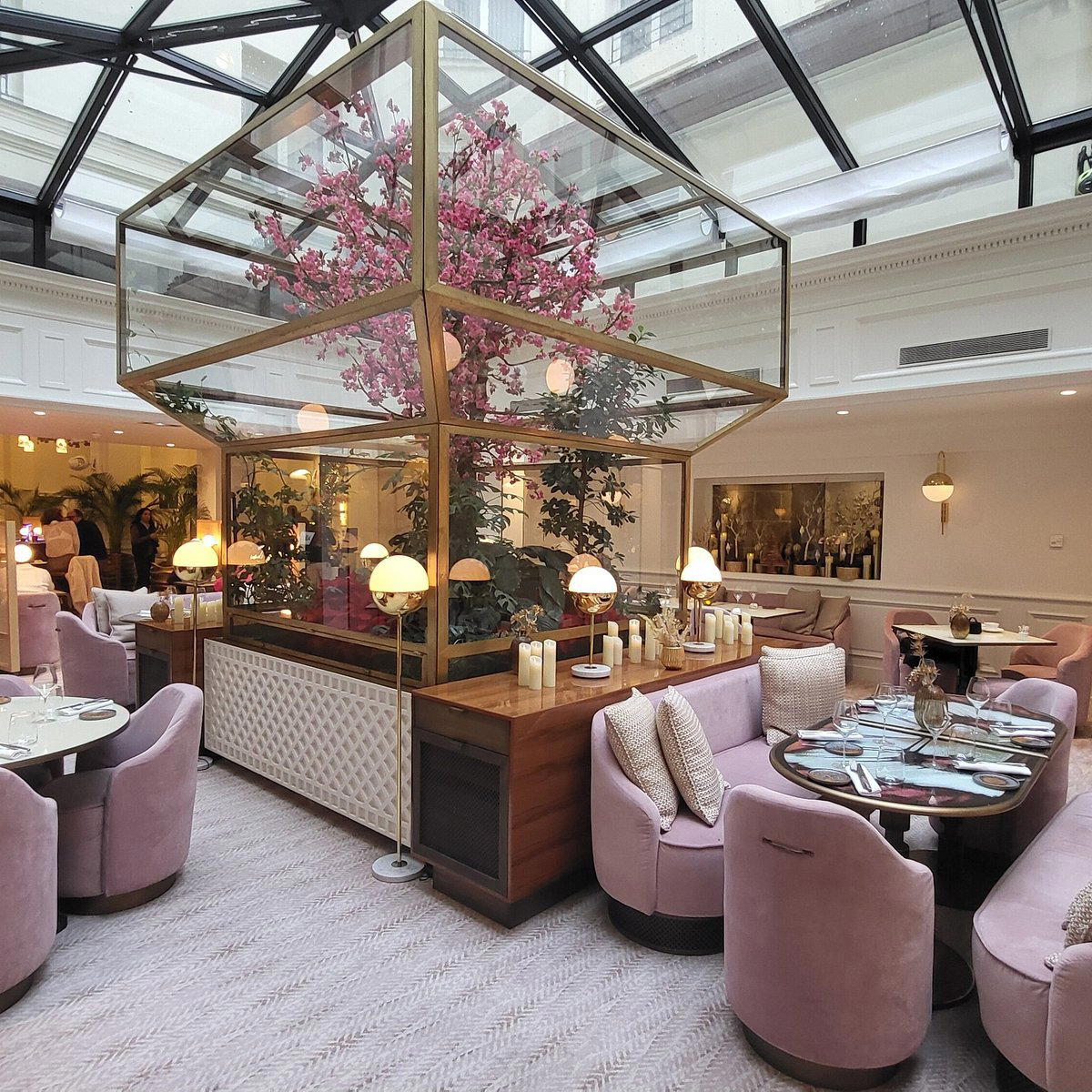
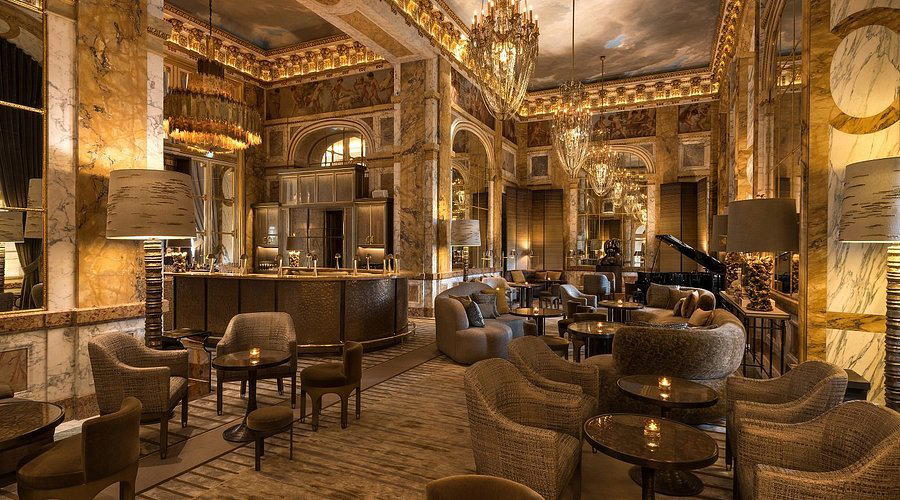
Bar Rivages belongs to the Opéra district’s more useful drinking culture: central, hotel-adjacent, and suited to conversations before or after the evening’s main event. Its half-moon bar at 1 Rue Scribe gives the room a clear focal point, placing it in a Paris category defined less by spectacle than by address, rhythm, and ease of return.

Pearl is the En Primeur Club membership app, where members save venues, book tables and use the concierge.
The menu
What to order
- Sériole ikejime with mojito and lemon balm
- Scallops with brocoletti and Camargue rice
- Sobacha chocolate tart
The half-moon bar and the Opéra rhythm
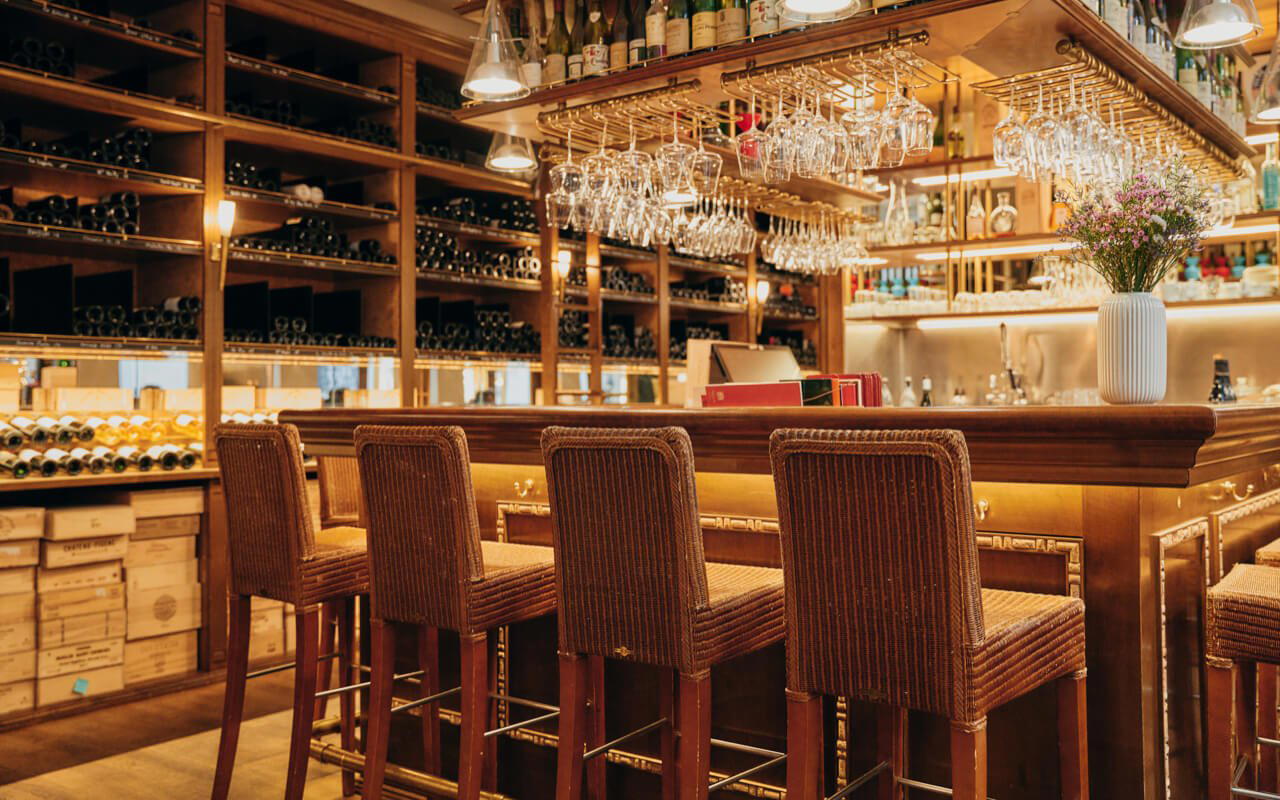
There is a particular kind of Paris bar that only makes sense in a district built around arrivals and intervals. Around Opéra, the city runs on curtain times, department-store footfall, late trains, hotel lobbies, and tables taken for one drink rather than a long sitting. Bar Rivages, listed at 1 Rue Scribe in the 9th arrondissement, enters that rhythm through a half-moon bar, a physical detail that matters because shape dictates behaviour. A curved counter softens the formality of a hotel-adjacent address: guests face the room as much as the bartender, and regulars can read the evening without committing to a booth.
Paris drinking has spent the past decade splitting into several lanes. The Marais and northern arrondissements helped normalize compact cocktail rooms with technical menus and tight booking cultures. The grands boulevards and palace-hotel belt kept alive another tradition: bars as civic antechambers, places for a drink between offices, theatres, shopping, and railway stations. The Opéra district is not a village in the Left Bank sense, but it has its own repeat traffic. A bar here earns relevance by being legible to several audiences at once: the local who wants a familiar counter, the visitor staying nearby, the pre-performance drinker, and the late-evening pair not looking for a club.
That is the right lens for reading this address. That absence should not be filled with fantasy. Instead, the editorial point is clearer: this is a neighbourhood watering hole in a high-traffic Paris quarter, where the address and room format carry more useful information than a manifesto. In a city crowded with bars competing through backstory, a counter with a defined geometry near Opéra signals a different kind of promise: continuity, visibility, and a drink taken without needing to decode a theme.
Why the 9th arrondissement matters for drinking
The 9th arrondissement has never been only one Paris. It moves from the theatre corridors and auction-house formality around Drouot to Pigalle’s later hours, from department-store grandeur near Boulevard Haussmann to smaller streets where office workers spill out before dinner. Bars in this part of the city succeed when they understand tempo. The guest may have twenty-five minutes before a reservation, or ninety minutes after a performance, or no plan beyond staying within walking distance of a hotel. That creates a different standard from destination cocktail rooms, where the night is arranged around the bar itself.
Compared with the city’s concealed-door cocktail culture, Opéra bars are judged more by usefulness and tone than secrecy. Candelaria helped define the Paris speakeasy grammar: a casual food frontage, a back-room cocktail identity, and a sense of discovery built into the room. Danico belongs to a more polished central-Paris category, where design, cocktail craft, and fashion-district energy meet. Bar Nouveau speaks to the newer appetite for small-format, design-conscious drinking. The Rue Scribe address sits in another register: not hidden, not built around a dramatic reveal, but positioned for the habits of the neighbourhood.
That distinction matters for travellers choosing where to spend an evening. Paris bars are often discussed as if the only meaningful question is technical ambition. In practice, geography is often the sharper filter. A serious drink in the 9th before dinner is a different decision from crossing town for a reservation-only counter. The former needs proximity, comfort, and a room that does not punish a shorter visit. The latter can justify a more elaborate plan. Bar Rivages belongs to the first camp, which makes it more useful for certain nights than a louder name with a less convenient address.
A bar for repeat traffic, not trophy collecting
The neighbourhood-watering-hole model in Paris is easy to underestimate because it rarely produces dramatic language. It is not about a single rare bottle, an award plaque, or a chef-driven menu. It is about the room becoming part of a circuit. In Opéra, that circuit may include the grands magasins, the Palais Garnier area, nearby hotels, and restaurants clustered across the 2nd and 9th arrondissements. A bar at 1 Rue Scribe benefits from that practical geography, but it also has to manage the mixed crowd that geography produces.
The half-moon counter is useful evidence here. Straight counters often create a linear hierarchy: regulars at one end, service at the other, newcomers looking for permission to settle. A curved bar makes the social field less rigid. Without claiming anything about the drink list not provided in the record, the room format suggests a bar designed for watching, pausing, and returning. That is a different form of Parisian hospitality from the reservation-only cocktail room, where scarcity itself becomes part of the experience.
How it compares with Paris cocktail addresses
Paris no longer needs to prove that it can make serious cocktails. The city has moved past the early phase when every ambitious bar had to explain itself against London or New York. The stronger question now is typology. Is the bar a hotel room, a neighbourhood counter, a restaurant-adjacent lounge, a late-night scene, or a technical cocktail lab? Bar Rivages is leading read through the first two categories: central, address-led, and built around a counter rather than a publicized drinks narrative.
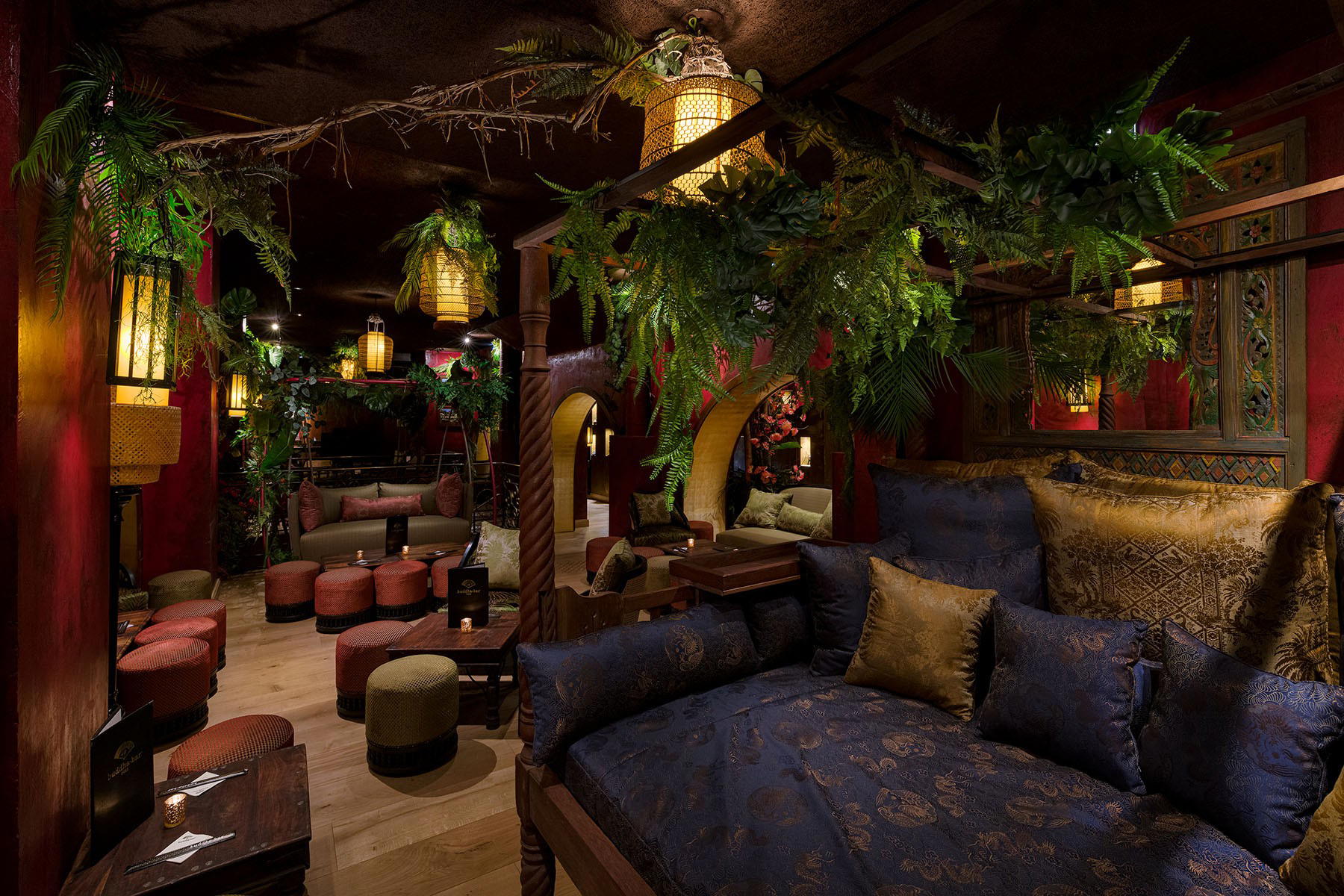
That puts it at a useful distance from Buddha Bar, where scale, sound, and visual theatre define the proposition. It also differs from the compact cocktail addresses that reward advance planning and a single-minded itinerary. For a traveller staying in or moving through the Opéra district, the value is not novelty for its own sake. It is the ability to fold a drink into the evening without making the bar the entire agenda.
The same comparison holds beyond Paris. Papa Doble in Montpellier shows how a city outside the capital can build a bar identity around precision and local loyalty. La Vertu in Reims sits in a Champagne-region context where drinking culture inevitably converses with wine. Café La Trova in Miami represents a different model again, where music, Cuban bar tradition, and hospitality performance shape the room. Against those references, the Rue Scribe proposition is more Parisian in a specific way: centrality, restraint, and the usefulness of a bar that can serve as a hinge between other plans.
What the absence of awards tells the reader
That should be taken plainly, not spun into mystique. Awards are useful when comparing technical cocktail programs, but they are not the only measure of a bar’s function in Paris. In neighbourhood-led drinking, especially around hotel and theatre districts, repeat use can matter more than public ranking. The smarter reading is that this address should not be chosen as an awards-chasing stop. It should be chosen when the evening calls for a central counter in the 9th, close to the Opéra flow and suited to conversation.
In practical terms, that means travellers should treat it as an unknown rather than assume a tariff. For EP Club readers, that distinction matters: a reliable editorial page should separate what is known from what is merely likely.
What to drink, and what not to invent
That limits any responsible recommendation. The more useful advice is structural: choose this kind of address when the priority is a well-situated bar seat in Paris rather than a documented destination cocktail pilgrimage.
In practice, a bar in this category rewards a simple first order. A classic aperitif, a spirit-forward cocktail, Champagne by the glass if offered, or a non-alcoholic serve can all make sense depending on the list presented on the night. The important move is to read the room before over-ordering: if the counter is functioning as a pre-dinner stop, keep the first round clean and short; if the evening settles, let the bartender’s actual menu guide the second drink. That is not a secret tip, just sound Paris drinking etiquette.
The local identity angle
Neighbourhood bars in Paris depend on recognition, not spectacle. Staff remember patterns; guests return because the room solves a recurring problem. Around Opéra, that problem is often timing. Where to meet before dinner near the 2nd? Where to sit after shopping without surrendering to a tourist café? Where to take one drink near a hotel without committing to a late-night room? A half-moon bar on Rue Scribe answers those questions through placement and form.
This also explains why the bar belongs in a wider Paris itinerary rather than an isolated list of cocktail trophies. A traveller might use Our full Paris restaurants guide to anchor dinner, then place a drink nearby according to arrondissement rather than hype. The same logic applies when pairing bars with stays from Our full Paris hotels guide. Paris is easier when the evening is mapped by neighbourhood clusters, not by crossing the city for every course and glass.
Planning a visit without overplanning it
The practical facts are limited but important. The listed address is 1 Rue Scribe, 75009 Paris, with the identifying note of a half-moon bar. That means planning should be conservative: verify same-day hours through the venue’s current public channels or the associated property before relying on it for a tightly timed evening. For a pre-theatre or pre-dinner drink in the Opéra area, allow enough margin that a full counter does not derail the plan.
The safer approach is to treat it as a central Paris bar where walk-in dynamics may matter, then check directly if the evening depends on a specific time. Early evening generally suits the Opéra rhythm better than late arrival when theatre, hotel, and dinner traffic can overlap. That is a neighbourhood inference, not a venue-specific policy.
For broader comparison, Our full Paris bars guide is the better tool for deciding whether this should be a first drink, a final drink, or one stop among several. Travellers building a culture-heavy itinerary can cross-reference Our full Paris experiences guide, while wine-focused readers can use Our full Paris wineries guide for a different side of the city’s drinking culture. The point is not to turn one bar into the whole evening. It is to place the counter where it works.
Frequently asked questions
Where is Bar Rivages located?
Bar Rivages is located at 1 Rue Scribe, 75009 Paris (half-moon bar), Paris.
What should I know about Bar Rivages before I go?
The key detail is the address: 1 Rue Scribe, 75009 Paris, in the Opéra area. The record gives no phone number, website, hours, or price range, so visitors should plan around the location rather than fixed service details.
How far ahead should I plan for Bar Rivages?
Its central Paris address makes it suited to an evening built around nearby theatre, hotel, or dinner plans.
What's the must-try cocktail at Bar Rivages?
The address at 1 Rue Scribe, Paris, is the reliable anchor; the drink choice should follow the day’s menu rather than a guessed house special.
Who is Bar Rivages best for?
Bar Rivages suits travellers and locals who want a bar in the Opéra district, especially for a pre- or post-dinner stop in the 9th arrondissement. The half-moon counter format at 1 Rue Scribe gives it a clear local identity without needing awards to explain it.
Continue exploring
More in Paris
Restaurants in Paris
All restaurants in Paris →
Bars in Paris
All bars in Paris →
Details
- Elegant
- Sophisticated
- Romantic
- Quiet
- Modern
- Business Dinner
- Date Night
- Special Occasion
- Brunch
- Private Event
- Hotel Restaurant
- Private Dining
- Design Destination
- Craft Cocktails
- Sustainable Seafood
- A La Carte
- Prix Fixe
- Cocktails
- Vegetarian Friendly
- Pescatarian Friendly
Current opening hours
- Monday
- 12–10 PM
- Tuesday
- 12–10 PM
- Wednesday
- 12–10 PM
- Thursday
- 12–10 PM
- Friday
- 12–10 PM
- Saturday
- 12–10 PM
- Sunday
- 12–10 PM
Hours can change for holidays and private events. Hours as of .
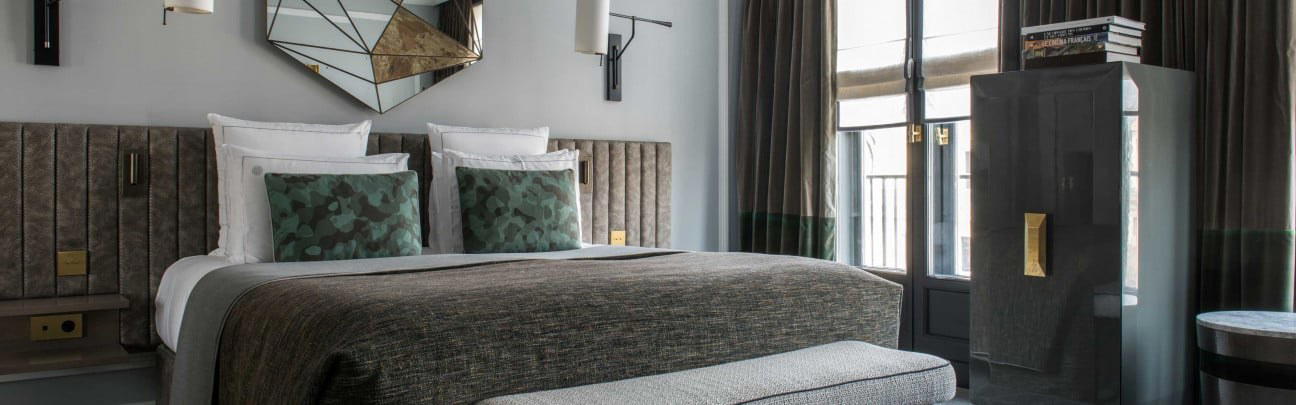
Chic, calm and softly lit, with a contemporary polished setting, well-spaced tables and a hushed, elegant atmosphere suited to business lunches and intimate dinners.