Restaurant Poreho

Relais Chateaux Award
Our verdict
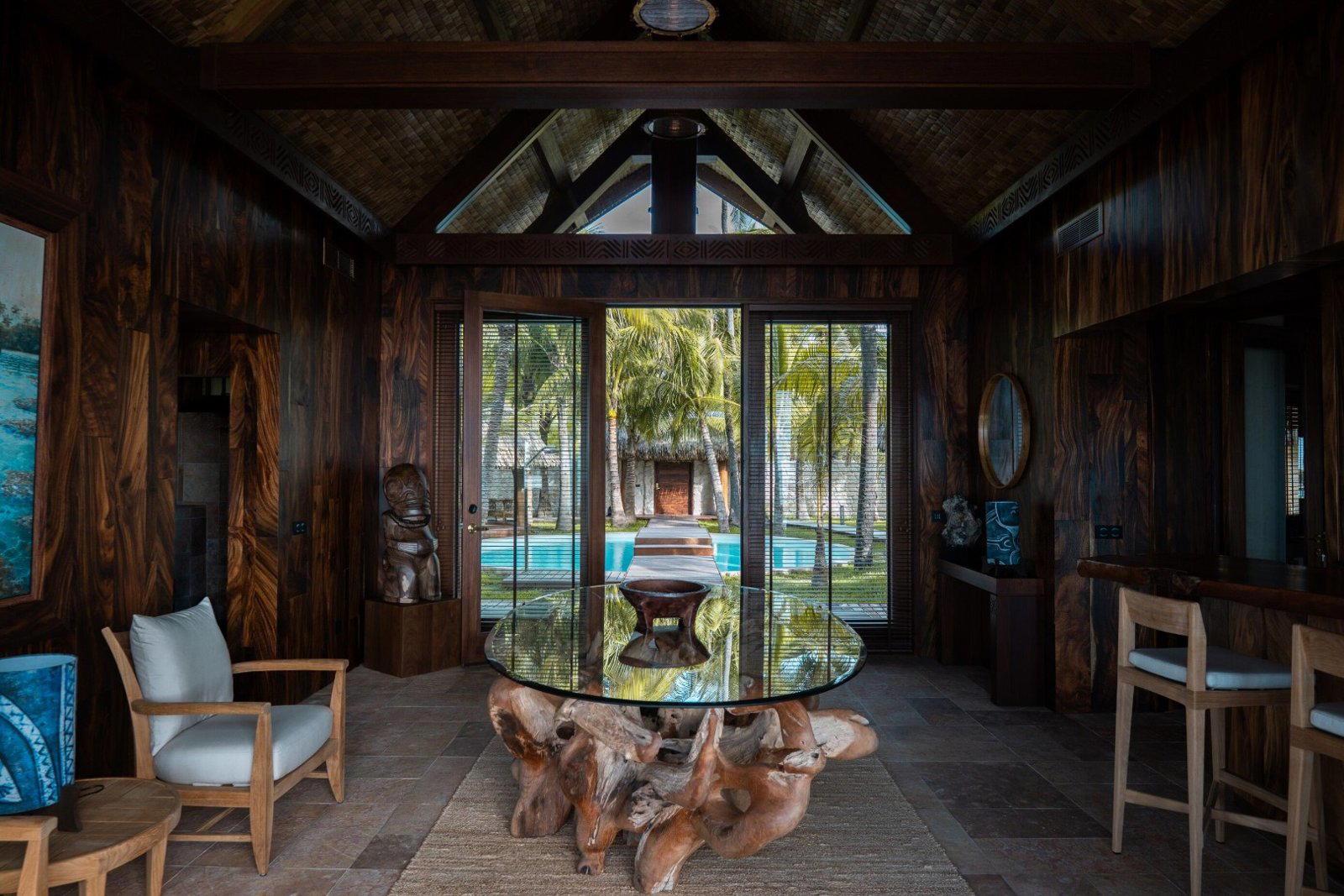
Restaurant Poreho frames Tuherahera dining through lagoon seafood, Polynesian architecture, and a terroir-led kitchen under Chef Anthony Eonet. The circular fare pote setting matters here: it places the meal inside a local building tradition rather than treating the atoll as scenery behind imported fine-dining habits.

Pearl is the En Primeur Club membership app, where members save venues, book tables and use the concierge.
The menu
What to order
- Freshly caught lagoon fish
- Curry shrimp
- Ori Tiare hibiscus dessert
Approaching Restaurant Poreho, the first impression should be understood through place rather than through a checklist of imported luxury signals. In French Polynesia, that matters. Too many resort dining rooms in remote island settings flatten place into a generic view; stronger ones let the setting and local sense of hospitality carry equal weight. Restaurant Poreho sits in that second category, with its official positioning centered on an “expression of the terroir” rather than on a detached international formula.
Tuherahera moves to an atoll rhythm, where meals are shaped by weather, travel plans, lodging, and the pace of the island as much as by the plate itself. Dining here is judged differently than in larger or more heavily trafficked destinations. The question is not only how refined the experience feels, but whether it seems anchored to the place that produced it. Poreho’s strongest editorial argument is that it keeps the meal close to that geography: a Tuherahera restaurant whose recognition frames the kitchen through terroir rather than spectacle.
Terroir, not imported resort theatre
French Polynesian dining is often filtered through travel fantasy, and hotel restaurants can translate place into a polished but generic register. The risk is over-correction, where technique and setting erase local logic. Poreho is more persuasive as part of the current return to terroir language across premium travel dining: not terroir as wine-world cliché, but as a practical claim about what a kitchen foregrounds and how directly it wants to speak from its location.
The restaurant’s stated cuisine, “expression of the terroir,” is useful only if kept specific. In Tuherahera, that expression should be read as a commitment to place rather than as a broad label pasted onto a resort meal. The point is not to force the restaurant into a familiar metropolitan category, but to understand it as a dining room whose identity is tied to its island context and to the official culinary language attached to it.
Chef Anthony Eonet gives the kitchen a named author, but the more interesting story is not biography for its own sake. In remote-island dining, a chef’s real test is translation: carrying local context, visitor expectation, and refined service without turning the meal into performance. Poreho’s positioning suggests a kitchen more interested in place than spectacle, a sharper proposition than the usual luxury-island script, where imported signals and scenery can be asked to do too much work.
For readers mapping French Polynesia through food, Tuherahera should be read on its own terms rather than as a lesser version of better-known island stops. Larger destinations may have broader commercial dining networks and higher-visibility resort circuits; the value here is a more concentrated atoll rhythm. For a broader route through the territory, start with Our full Tuherahera restaurants guide, then compare the island rhythm with other dining in Tuherahera and elsewhere in French Polynesia in more general terms, keeping Restaurant Poreho as the relevant named point of reference.
A Tuherahera setting changes the tempo of the meal
The setting is not a neutral container. In restaurant terms, location changes how formality lands, especially in a destination where travel, weather, and the island’s pace shape the evening before service even begins. A dining room in Tuherahera can soften conventional fine-dining codes without reducing the kitchen’s seriousness. The result is closer to a high-context island meal than a transplanted metropolitan tasting room, a useful distinction for travelers deciding where to spend limited dinners in Tuherahera.
There is also editorial discipline in a restaurant like this. Destination dining can lean too heavily on atmosphere, letting setting excuse vague cooking. Poreho’s stated focus on an expression of the terroir gives the experience a firmer spine. The restaurant’s location, its chef, and its official culinary language point in the same direction; when those elements align, the meal reads as site-specific rather than merely scenic.
The recognition attached to the restaurant is a meaningful trust signal because it identifies Restaurant Poreho through concrete, source-backed details: Chef Anthony Eonet and a cuisine described as an expression of the terroir. In a destination where many dining decisions are made through hotel convenience or itinerary pressure, recognition tied to a named chef and a place-led cuisine helps separate a considered table from a generic travel meal.
How to place it within a Tuherahera stay
Restaurant Poreho makes the clearest sense for travelers who want one meal in Tuherahera to speak directly to the atoll rather than simply fill an evening. It is not the page to judge by a long list of luxury markers. Its appeal is narrower and more valuable: a restaurant in Tuherahera led by Chef Anthony Eonet, officially described through the language of terroir, and best understood through its relationship to place.
The practical decision is timing within the trip. Tuherahera is not a city where visitors casually cross town between several competing fine-dining rooms in one night; meals sit inside a wider plan of transfers, weather, activities, and lodging. Advance planning is sensible, especially for travelers building an itinerary around specific dining experiences rather than treating restaurants as afterthoughts.
For the wider Tuherahera file, pair the restaurant search with Our full Tuherahera hotels guide, Our full Tuherahera bars guide, Our full Tuherahera wineries guide, and Our full Tuherahera experiences guide. Readers tracking terroir-led dining beyond French Polynesia can also place the phrase in a broader international context without turning those comparisons into direct peers: the same category can point to different products, climates, and culinary assumptions, while Restaurant Poreho remains the relevant Tuherahera reference here.
Frequently asked questions
Can I bring kids to Restaurant Poreho?
Restaurant Poreho is in Tuherahera, and its place-led positioning may suit travelers looking for a meal that feels connected to the island rather than to a formal urban dining-room template. For family-specific policies, check directly with the restaurant before booking.
What is the atmosphere like at Restaurant Poreho?
Restaurant Poreho is best understood as a Tuherahera dining room with a strong sense of place. Its official culinary framing as an expression of the terroir gives the meal a local, destination-specific context rather than a generic resort-restaurant identity.
What distinctions does Restaurant Poreho have?
Restaurant Poreho is recognized by Relais & Châteaux, with Chef Anthony Eonet associated with the restaurant and its cuisine described as “Expression of the terroir.”
What should I expect cuisine-wise at Restaurant Poreho?
Restaurant Poreho serves Expression of the terroir cuisine.
Where is Restaurant Poreho in Tuherahera?
Tuherahera.
Who is the chef at Restaurant Poreho?
The chef associated with Restaurant Poreho is Chef Anthony Eonet.
How hard is it to get a table at Restaurant Poreho?
Restaurant Poreho is a destination dining room in Tuherahera, with Chef Anthony Eonet associated with the restaurant and its cuisine described as an expression of the terroir. Planning ahead is sensible, especially for travelers building one major meal into a French Polynesia itinerary.
Reputation & Price
Comparable venues nearby, for context on price, style, and recognition.
| Venue | Cuisine | Price | Awards | Notes |
|---|---|---|---|---|
| Restaurant PorehoThis venue (the venue you are viewing) | Polynesian-European lagoonfront fine dining | $50–100 | Relais Chateaux Award | Not listed |
| Blue Banana | French-Polynesian Fusion | $30–50 | Not listed | Punaauia, French-Polynesian Fusion |
| L'O A La Bouche | French with Polynesian Influences | $50–100 | Not listed | Papeete, French with Polynesian Influences |
| Tipairua – Restaurant gourmet | Gourmet French‑Polynesian Fusion | Not listed | Relais Chateaux Award | Patio, Taha’a, Gourmet French‑Polynesian Fusion |
| 54 Rue Paul Gauguin | French Soufflé Bistro | $20–30 | Not listed | center, French Soufflé Bistro |
| Café Maeva Marché de Papeete | Polynesian Café | $10–20 | Not listed | Marche de Papeete, Polynesian Café |
Recognition history
Dated appearances from independent guides and award organizations, with the underlying list record or original source where available.
Relais Chateaux Award
Relais Chateaux
Continue exploring
More in Tuherahera
Hotels in Tuherahera
All hotels in Tuherahera →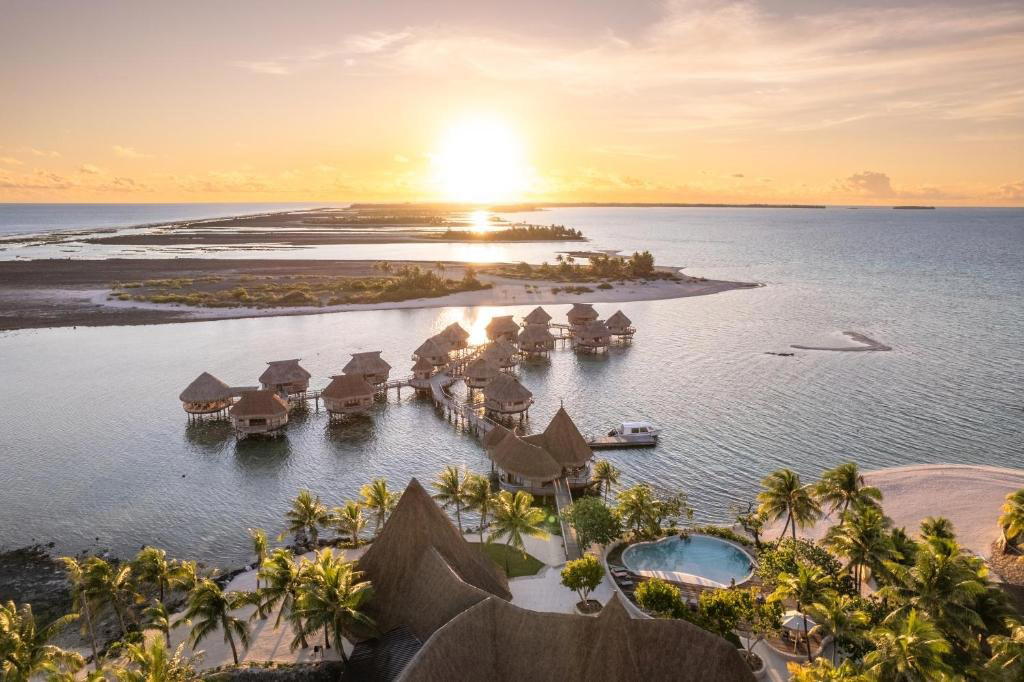
Details
- Romantic
- Scenic
- Elegant
- Intimate
- Date Night
- Special Occasion
- Celebration
- Business Dinner
- Waterfront
- Panoramic View
- Hotel Restaurant
- Terrace
- Local Sourcing
- Sustainable Seafood
- Waterfront
- A La Carte
- Tasting Menu
- Wine
- Cocktails
- Pescatarian Friendly
Refined yet relaxed resort atmosphere with open-air spaces and an open deck over the lagoon, soft lighting in the evening, and a romantic, intimate feel enhanced by the water and infinity-pool setting.