
Tabelog 100 #94
Our verdict
Muraya Higashi Tei gives Hokota a serious soba address rather than a casual noodle stop, with Tabelog 100 Soba EAST 2025 recognition placing it in a stronger regional conversation. The appeal is rural and ingredient-led: buckwheat noodles, sake, counter and tatami seating, and a house-restaurant setting that suits solo diners, families, and small groups.

Pearl is the En Primeur Club membership app, where members save venues, book tables and use the concierge.
The menu
What to order
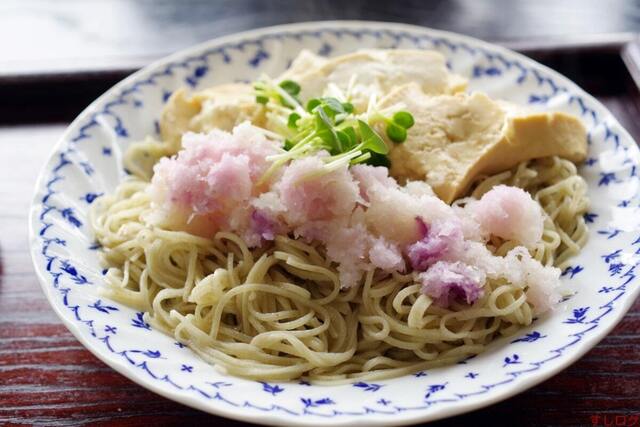
- Bukkake oroshi soba
- Tempura soba
- Chicken tempura bowl
Approaching a house restaurant in Hokota changes the expectations around soba. The meal belongs less to the station-front noodle-shop rhythm of urban Japan and more to the agricultural plain around it: quiet roads, a slower lunch mood, and a dining room that feels closer to a local food tradition than a destination tasting menu.
That matters with soba because buckwheat is unforgiving. Unlike ramen, where broth, fat, tare, and toppings can carry the drama, soba exposes the grain. Texture, cut, aroma, water, and dipping sauce do the work. In rural settings, where restaurants often sit closer to production areas than to nightlife districts, the category reads differently: less performance, more attention to staple ingredients and everyday craft.
Hokota soba in a rural house-restaurant register
Muraya Higashi Tei sits in that register. Its selection for Tabelog 100 Soba EAST 2025 gives the restaurant a credible marker within eastern Japan’s soba field, a category where many strong addresses are modest, lunch-oriented, and removed from the dining circuits that dominate Tokyo coverage. The Tabelog score is 3.74, useful not as a universal verdict but as a signal that a rural soba shop has earned attention beyond its immediate area.
The price position also tells a story. This is not luxury dining disguised as tradition; it sits in a low lunch band, closer to everyday soba culture than to the extended-course restaurants that use noodles as one component in a broader formal arc. Compared with out-of-metro casual peers such as Bansen Store and Karma, the distinction is recognition and category focus rather than a claim of grandeur. Ogura Ya, RESTAURANT Ohtsu, and Taverna Hamburg help show how varied Hokota-area dining can be, while Muraya Higashi Tei remains tightly tied to lunch-priced soba rather than general regional dining.
The ingredient angle is the reason to care. Soba rewards restraint, and the dining format here keeps the emphasis on buckwheat noodles rather than spectacle. The appeal is a Japanese grammar of grain, water, and temperature, with the meal itself remaining compact. The room and pacing keep the experience practical, with everyday local dining as much a part of the picture as destination travel.
Recognition without the urban ceremony
Hokota is not a city that asks to be read like Ginza, Kyoto, or Osaka. Its food value comes from scale, proximity, and a lower-key relationship between restaurant and locality. For soba, that can be an advantage. The form does not require a grand room or a long menu to make its case; it needs discipline around noodles and a setting that does not overcomplicate the act of eating them.
Muraya Higashi Tei’s recognition places it inside a broader eastern Japan soba conversation, but the restaurant’s practical character remains rural. The experience reads more like a planned local lunch than a spontaneous bar-hop stop, and the dining decision depends on timing and patience rather than a metropolitan concierge calendar.
That rural rhythm is part of the appeal for the right traveller. In Japan’s higher-profile dining cities, access often becomes the story before the food does. Here, the story is a category with deep regional roots, delivered in a format that keeps price, room, and pacing close to ordinary life. Travellers should treat the restaurant as a Hokota stop and plan the surrounding movement with the slower tempo of the city in mind.
How to place it in a Hokota itinerary
The better use of Muraya Higashi Tei is as a focused lunch anchor, not as a general evening plan. The publicly listed budget points to lunch at JPY 1,000 to JPY 1,999, while dinner is not presented as the main spending reference. That detail matters more here than it would in a hotel-district restaurant, because the surrounding plan may not offer many easy substitutes at the same recognition level.
For travellers mapping Hokota by category, this is the restaurant entry that makes the strongest case for slowing down around a single craft. Start with Our full Hokota restaurants guide, then use Our full Hokota hotels guide, Our full Hokota bars guide, Our full Hokota wineries guide, and Our full Hokota experiences guide to build the rest of the day without forcing the city into a big-metropolis template.
Readers comparing broader Japan dining formats can look across different casual and specialist registers, from noodle houses and compact lunch rooms to grills, cafés, curry counters, hamburger specialists, and mountain-hut dining. For Japanese food culture outside Japan, similarly narrow formats show how focused ideas can travel when the core craft stays disciplined.
The editorial case is simple: go for soba as a craft, not for ceremony. The value is in a recognized eastern Japan noodle house operating at rural scale, where buckwheat, lunch timing, and a modest room do more work than décor or theatre.
Frequently asked questions
Can I bring kids to Muraya Higashi Tei?
The public record should be checked directly for current family and children policies. For location, Muraya Higashi Tei is in Hokota.
What's the overall feel of Muraya Higashi Tei?
It reads as a daytime soba house rather than a formal destination dining room, with lunch listed in the JPY 1,000 to JPY 1,999 range and a Tabelog 100 Soba EAST 2025 selection as the clearest trust signal.
What price level is Muraya Higashi Tei?
Pricing at Muraya Higashi Tei is listed as JPY 1,000 - JPY 1,999 View spending breakdown.
What is Muraya Higashi Tei known for?
Muraya Higashi Tei is known for soba in Hokota, with recognition from Tabelog 100 Soba EAST 2025.
Snapshot
Comparable venues by cuisine and price in the same metro.
| Venue | Cuisine | Price | Awards | Notes |
|---|---|---|---|---|
| Muraya Higashi TeiThis venue (the venue you are viewing) | Traditional handmade soba (buckwheat noodles) | $10–20 | Tabelog 100 #94 | Not listed |
| Kitchen Nankai (キッチン南海) | Japanese Yoshoku | $1–10 | Tabelog 100 #88 | Jimbocho |
| Gyoza no Fukuho (餃子の福包) | Traditional Japanese Gyoza | $1–10 | Not listed | Shinjuku |
| Drive-in Ippei (ドライブイン一平) | Japanese Curry & Tonkatsu Diner | Not listed | Not listed | 小城市 |
| ラーメン亭「十五夜」 | Japanese Ramen | Not listed | Not listed | Kushiro |
| 幻の中華そば加藤屋 百万遍にぼ次朗 | Niboshi (Dried Sardine) Jiro-Style Ramen | Not listed | Not listed | Hyakumanben, Sakyo Ward |
Recognition history
Dated appearances from independent guides and award organizations, with the underlying list record or original source where available.
Tabelog 100 #94 · No. 94
Tabelog · Tabelog 100 - Soba - EAST - 2025
Continue exploring
More in Hokota
Details
- Rustic
- Cozy
- Quiet
- Classic
- Family
- Solo
- Casual Hangout
- Group Dining
- Standalone
- Private Dining
- Sake Program
- A La Carte
- Counter Dining
- Sake
- Beer
Current opening hours
- Monday
- 11:30 AM–3:30 PM
- Tuesday
- 11:30 AM–3:30 PM
- Wednesday
- Closed
- Thursday
- 11:30 AM–3:30 PM
- Friday
- 11:30 AM–3:30 PM
- Saturday
- 11:30 AM–3:30 PM
- Sunday
- 11:30 AM–3:30 PM
Hours can change for holidays and private events. Hours as of .
A quiet, rural house-restaurant with counter seats and tatami rooms, offering a relaxed, non-smoking, family-friendly atmosphere suited to solo diners and small groups.