Masztalerz

Michelin Plate
Our verdict
Set in the vaulted cellar of a 15th-century manor house in eastern Poland's stud-farm country, Masztalerz pairs technical French-Polish cooking with ingredient discipline. The dual-menu format, 'Green' for plant-based dishes, 'Red' for meat and fish, runs classic preparations through local supply lines, and the historic brick setting anchors the experience in the region's agricultural past.

Pearl is the En Primeur Club membership app, where members save venues, book tables and use the concierge.
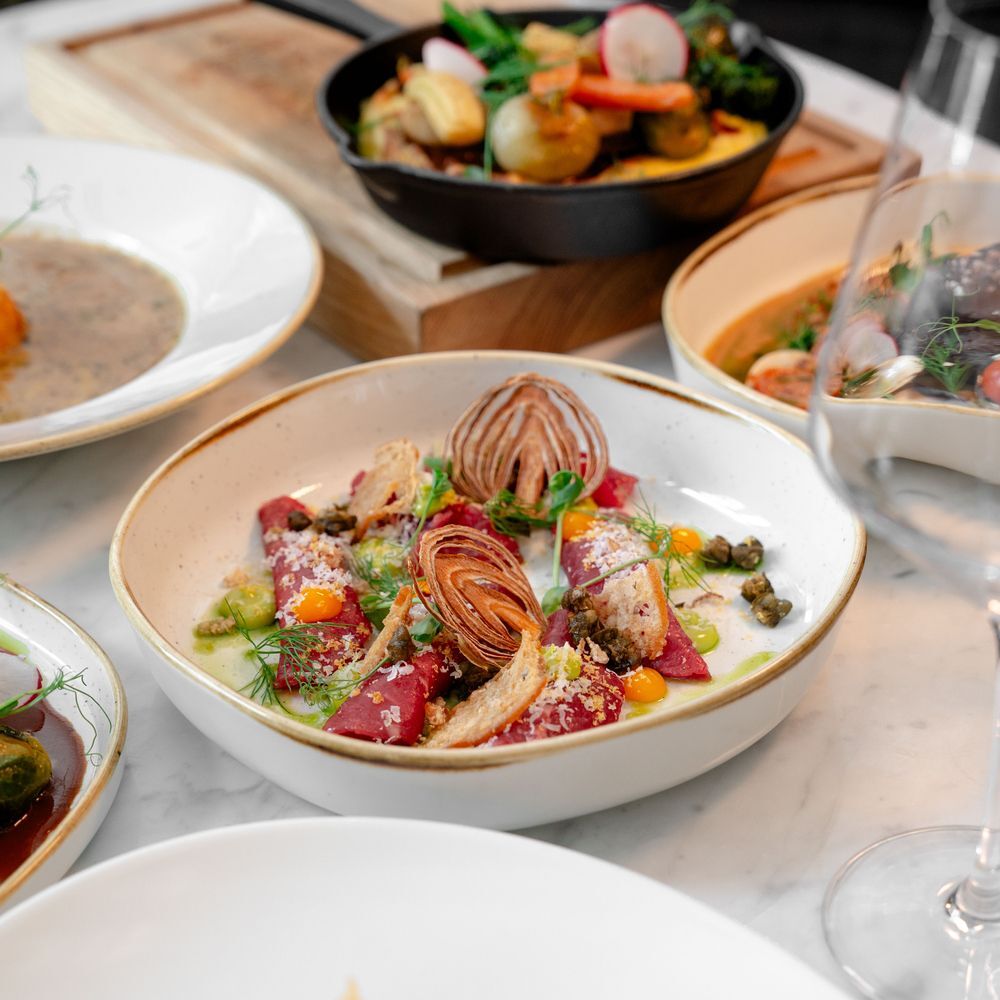
The menu
What to order
- Smoked tartare
- Broth with poured noodles
- Kartacze with game meat
- Vegetarian cabbage rolls with groats
Eastern Poland's Lublin Voivodeship doesn't register on most dining itineraries, but the region's manor-house hotels have begun hosting kitchens that treat local farms as the primary supplier rather than an afterthought. Masztalerz occupies the brick-lined cellar of Zamek Janów Podlaski, a manor hotel with origins in the 15th century, and its split-menu format, vegetarian-vegan on one side, meat-and-fish on the other, reflects the kitchen's preference for ingredient-driven French technique over folkloric Polish revivalism. The room itself, with vaulted ceilings and exposed brick, reads more wine cellar than dining room, and the atmosphere skews formal without the stuffiness that often accompanies historic settings. Janów Podlaski sits 50 kilometres north of Biała Podlaska and draws most of its visitors for the Arabian horse stud farm; dining traffic tends to come from hotel guests and weekend travellers willing to detour for a kitchen that sources its beef, dairy, and vegetables from within a tight radius.
Two Menus, One Supply Chain
The 'Green' and 'Red' nomenclature functions as more than dietary signposting. Both menus lean on the same network of farms, dairy from smallholders near Siedlce, beef from pasture-raised herds in the Lublin uplands, vegetables from biodynamic plots within an hour's drive, and the kitchen applies the same technical rigor whether the centrepiece is celeriac or tenderloin. Polish beef tenderloin arrives with a demi-glace that shows proper reduction discipline, and the meat itself carries the marbling and flavor depth that comes from slow-growing breeds on grass. The vegetarian side of the card demonstrates that plant-focused cooking here isn't an accommodation but a parallel track: seasonal vegetables get the same stock-and-sauce treatment, and the kitchen doesn't replace protein with starch filler. The ingredient sourcing extends to dairy: butter, cream, and cheese come from named producers rather than commodity suppliers, and you can taste the difference in sauces that rely on fat for structure. For a region where industrial dairy still dominates, that level of specificity is noteworthy.
Classic Technique, Regional Supply
Masztalerz doesn't chase modernist formats or tasting-menu theatrics. The cooking sits comfortably in the French-inflected Polish tradition, think demi-glace over jus gras, fondant over molten cake, and the kitchen's strength lies in execution rather than invention. Chocolate fondant arrives with a liquid center that hasn't been overworked, and the dessert's success depends on timing and temperature control more than novelty. That restraint aligns with the venue's broader identity: this is a kitchen that privileges ingredient quality and technical consistency over conceptual ambition, and the result is a dining experience that feels grounded in place without leaning into rustic cliché. The vaulted cellar setting reinforces that balance, the room's age and architectural weight lend gravitas, but service and plating remain polished rather than folksy. For context, Janów Podlaski's dining scene remains limited, and Masztalerz functions as the category anchor for visitors who want a meal with structure rather than a pub-style feed.
The dual-menu model also clarifies the kitchen's priorities. Rather than offering a token vegetarian option, the 'Green' menu runs the same length as the 'Red' and carries equal weight in terms of technique and composition. That parity matters in a region where plant-based cooking often defaults to pierogi or salad, and it positions Masztalerz as a venue where dietary preference doesn't dictate quality tier. The farm-to-table ethos here isn't marketed aggressively, no chalkboard manifestos or chef-farmer photospreads, but the sourcing shows up in texture, flavor, and the kitchen's willingness to let ingredients carry a dish without heavy intervention. For travellers exploring Poland's eastern dining landscape, this approach offers a useful counterpoint to the more urban, fusion-leaning kitchens in Warsaw or Kraków, where ingredient provenance often takes a backseat to conceptual plating.
Context and Competitive Set
Janów Podlaski's population hovers around 1,200, and the town's identity centers on the national Arabian horse stud farm rather than hospitality infrastructure. Masztalerz sits inside that narrow visitor funnel, most diners are either staying at the Zamek hotel or making a deliberate culinary stop while touring the region. The venue doesn't compete with Warsaw's AHAAN or Kraków's 3 Rybki in terms of urban dining density, but it does share a technical baseline with regional manor-house restaurants like 1906 Gourmet Restaurant in Ciekocinko, where ingredient sourcing and classical technique define the kitchen's identity. The cellar setting also places Masztalerz in conversation with Poland's historic-property dining tier, where atmosphere and architecture carry as much weight as the food itself. For visitors accustomed to urban bar culture or vineyard tasting rooms, the formal cellar environment and paced service may feel slower, but that's consistent with the manor-house format across eastern Poland.
The kitchen's emphasis on local supply also mirrors a broader shift in Polish fine dining, where ingredient provenance has moved from marketing language to operational priority. Venues like 2PiEr in Lublin and Acanti in Łódź have built menus around named farms and seasonal availability, and Masztalerz fits into that cohort without the urban visibility. The dual-menu structure offers a practical advantage for mixed-dietary groups, vegetarians and omnivores can order from separate cards without compromise, and the kitchen's willingness to treat both tracks with equal seriousness distinguishes it from venues where plant-based dishes function as afterthoughts. For travellers exploring regional experiences beyond dining, Masztalerz works as a culinary anchor for a weekend itinerary that includes the stud farm, nearby manor estates, and the Lublin region's network of small producers. The venue's location inside the Zamek hotel also simplifies logistics for overnight guests, though the cellar's hours and service pace mean this isn't a quick-bite option.
Frequently asked questions
Can I bring kids to Masztalerz?
The vaulted, brick-lined setting in the basement of Zamek Janów Podlaski Hotel suits families comfortable in a quieter dining environment. Both the Green and Red menus include straightforward preparations, beef tenderloin, chocolate fondant, that work for most palates. High chairs and formal service protocols are not documented, so check the venue's official channels if you need specific accommodations.
What's the vibe at Masztalerz?
The restaurant occupies a 15th-century basement vault beneath Zamek Janów Podlaski Hotel, and the brick-lined walls and low arches deliver an old-school, atmospheric feel. Cooking follows classical French-Polish technique, demi-glace sauces, properly executed fondant, without modernist flourishes. The pace and formality align with the historic setting, making it better suited to leisurely dinners than quick stops.
Is Masztalerz Michelin-listed?
Masztalerz has received recognition including: Located in the basement of the historic Zamek Janów Podlaski Hotel, which has its origins in the 15th century, there’s a suitably old-school, atmospheric feel to this vaulted, brick-lined restaurant. Choose dishes from across both the ‘Gree….
Where is Masztalerz located?
Masztalerz is located at Arche Zamek Janów Podlaski Hotel, ul. Zamkowa 1, Janów Podlaski, Lublin, 21-505, POL, Janow Podlaski.
At-a-Glance Comparison
Comparable venues by cuisine and price in the same metro.
| Venue | Cuisine | Price | Awards |
|---|---|---|---|
| MasztalerzThis venue (the venue you are viewing) | Traditional Polish / European | $20–30 | Michelin Plate |
Recognition history
Dated appearances from independent guides and award organizations, with the underlying list record or original source where available.
Michelin Plate
Michelin
Continue exploring
More in Janow Podlaski
Restaurants in Janow Podlaski
All restaurants in Janow Podlaski →
Details
- Elegant
- Classic
- Sophisticated
- Historic
- Romantic
- Date Night
- Business Dinner
- Group Dining
- Family
- Special Occasion
- Historic Building
- Hotel Restaurant
- Beer Program
- Local Sourcing
- A La Carte
- Beer
- Vegetarian Friendly
Historic and refined, with a castle-hotel atmosphere that feels elegant, calm, and closely tied to regional tradition.