Destylarnia

Michelin Plate
Our verdict
Housed in a 19th-century vodka distillery on the Mierzęcin Palace estate, Destylarnia offers seasonal Polish cooking in a dining room anchored by original steam generators and fermentation hoppers. The menu draws heavily on estate-grown produce, and the wine list is sourced exclusively from the property's own vineyards.

Pearl is the En Primeur Club membership app, where members save venues, book tables and use the concierge.
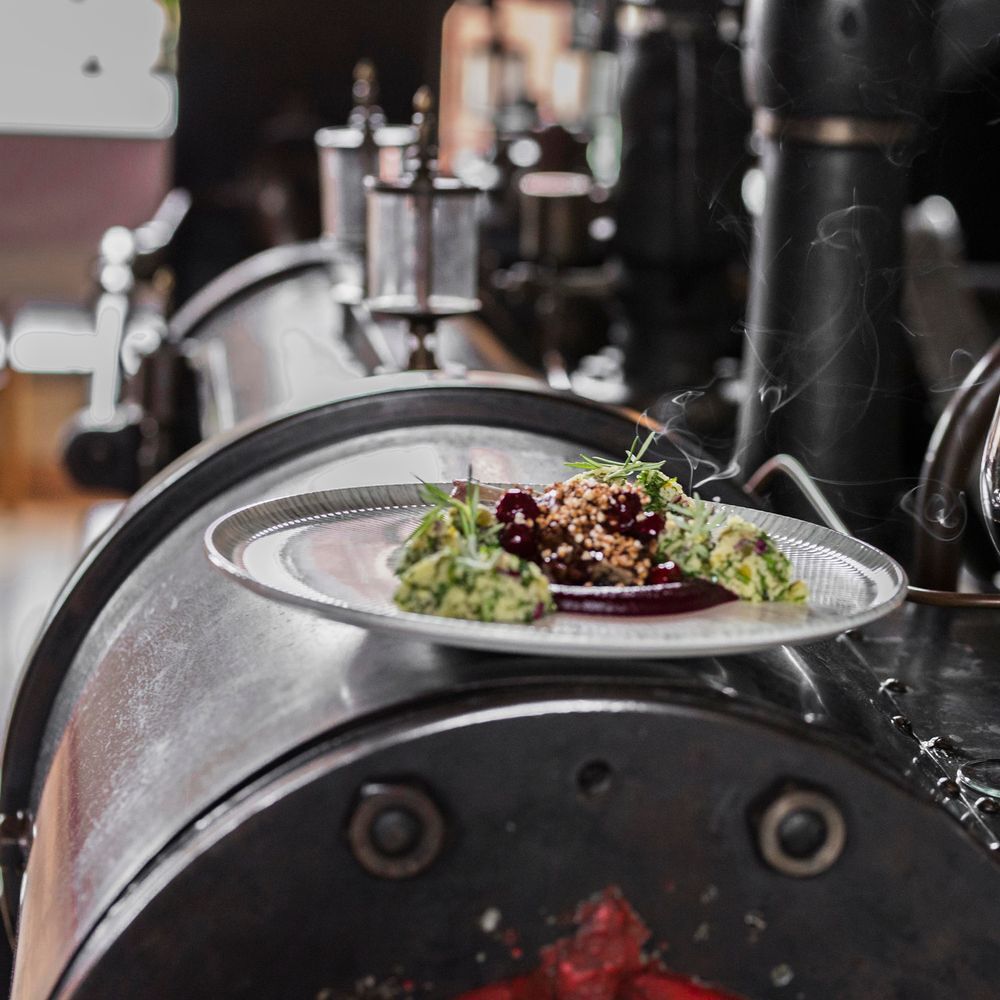
The red-brick distillery building stands at the edge of the Mierzęcin Palace estate, a few kilometres outside Dobiegniew in western Poland. Inside, the dining room retains the machinery of its industrial past: a hulking steam generator, cast-iron hoppers that once held fermenting potatoes, and exposed brickwork that frames a working kitchen. The setting is theatrical without being precious, and it anchors the meal in the history of Polish agricultural production, vodka, grain, and the rhythms of the harvest calendar.
Destylarnia sits within a broader shift in Polish dining, where estate properties and small-scale producers are beginning to build vertical food systems around their own land. The estate here grows much of what appears on the menu, and the wine programme is drawn entirely from estate vineyards. That closed-loop model is still uncommon outside wine regions, and Destylarnia uses it as both a practical constraint and a curatorial stance. The menu changes with the seasons, and the kitchen works within the limits of what the estate can supply. For context, see our full Dobiegniew restaurants guide for other dining options in the area, and our full Dobiegniew hotels guide for accommodation on the estate and nearby.
Estate Sourcing and the Closed-Loop Menu
The ingredient model at Destylarnia is direct: if the estate grows it, the kitchen uses it. Root vegetables, brassicas, and orchard fruit form the backbone of the menu during colder months, while summer brings soft herbs, berries, and early greens. The kitchen supplements with local dairy and protein, but the core pantry is estate-grown. That approach narrows the palette but sharpens the focus, and the cooking reflects it. Dishes are built around two or three components, and the kitchen uses modern techniques, sous vide, fermentation, controlled reduction, to amplify rather than mask the raw material. The bread service, a highlight according to the venue's own description, is paired with house-made flavoured oils that change with the menu. The oils are often pressed from estate-grown seeds or infused with herbs from the property's gardens, and they function as a preview of the kitchen's approach: ingredient-driven, technically clean, and seasonally tethered.
The wine list is composed entirely of estate-produced bottles, a rarity in Poland, where most fine-dining programmes lean on French, Italian, or Austrian imports. The estate vineyards are planted to both international and hybrid varieties, and the list reflects a cooler-climate profile: crisp whites, light reds, and some skin-contact styles. If you prefer more conventional pairings, this is a limitation; if you're interested in what Polish estate winemaking looks like in 2026, the programme offers a rare snapshot. For other Polish dining perspectives, see venues such as 2PiEr in Lublin, 3 Rybki in Kraków, or AHAAN in Warsaw, each of which takes a different approach to sourcing and menu structure.
The Dining Experience and What to Expect
Service is paced deliberately, with courses arriving at intervals that allow conversation. The room is quieter than most urban dining spaces, and the industrial architecture creates a sense of occasion without formality. The kitchen is visible from most tables, and the open layout reinforces the transparency of the estate-to-table narrative. The menu format is not disclosed in public records, but the cooking style suggests a seasonal prix-fixe or à la carte structure with limited substitutions. Portion sizes are moderate, and the kitchen prioritises technique and ingredient clarity over volume. The distillery setting is well-suited to a celebratory meal or a weekend escape, and the estate context, vineyards, wellness facilities, walking trails, extends the experience beyond the dining room. For a full picture of the region's hospitality options, see our full Dobiegniew hotels guide and our full Dobiegniew experiences guide. If you're exploring other parts of Poland, consider 1906 Gourmet Restaurant in Ciekocinko or 1911 Restaurant in Sopot for similar estate or resort-based dining programmes.
The location is remote by Polish dining standards. Dobiegniew is a small town roughly halfway between Szczecin and Gorzów Wielkopolski, and the estate sits just outside its centre. Public transport options are limited, and most guests arrive by car. The drive from Berlin is under two hours; from Warsaw, closer to four. The estate's wellness facilities and vineyard tours are often bundled with overnight stays, making Destylarnia most practical as part of a longer visit rather than a standalone meal. For other estate or rural dining options in Poland, see Acanti in Odz or Acquario in Wrocław, both of which operate in more urban settings but share a focus on Polish ingredients and seasonal menus. For contrast, Nare Sushi and A nóż widelec in Poznań offer different culinary angles within the Polish dining landscape.
The Michelin Guide recognises Destylarnia for its characterful setting and modern seasonal cooking, noting the bread service and estate wine list as particular strengths. That recognition places it within Poland's small but growing cohort of destination restaurants tied to agricultural estates, a category that includes a handful of properties in wine regions and historic manor houses. The distillery room, with its preserved industrial equipment and brick vaults, is the venue's most distinctive asset, and it sets the tone for a meal that is as much about place as it is about plate. The estate-sourcing model is ambitious and limiting in equal measure, and the kitchen's success depends on how well it navigates those constraints. The wine list, while geographically narrow, offers a rare opportunity to taste Polish estate viticulture in a dining context, and the overall experience leans heavily on the story of the land and its production history. For additional regional dining context, see our full Dobiegniew bars guide and our full Dobiegniew wineries guide. If you're planning a broader Polish itinerary, consider pairing Destylarnia with stops at Amfora in Katowice, Alahamora Gildia Czarodziejów in Gliwice, or MaQAron Spaghetteria in Bydgoszcz for a sense of the country's evolving dining scene.
Frequently asked questions
Is Destylarnia good for families?
The red-brick distillery setting at Mierzęcin Palace favours a slower, more contemplative pace, with courses arriving at intervals designed for conversation rather than quick turnover. The room is quieter than most urban venues and lacks children's programming, making it better suited to older guests who appreciate heritage architecture and seasonal produce.
Is Destylarnia better for a quiet night or a lively one?
Destylarnia is designed for a quiet evening. The distillery hall retains the original steam generator and potato hoppers, and the acoustics and service rhythm reinforce that sense of place over energy. Guests come here to focus on estate wines and seasonal cooking, not for scene or volume.
Does Destylarnia have a Michelin star or similar recognition?
Destylarnia has received recognition including: At this red-brick former vodka distillery, you have the chance to dine amongst the old steam generator and the hoppers which once held fermenting potatoes. It’s a hugely characterful setting which forms part of a wider country estate and se….
Where do I go for Destylarnia?
Destylarnia is located at Mierzęcin Palace Wellness & Wine Resort Mierzęcin 1, Dobiegniew, Lublin, 66-520, POL, Dobiegniew.
Comparable venues by cuisine and price in the same metro.
| Venue | Cuisine | Price | Awards |
|---|---|---|---|
| DestylarniaThis venue (the venue you are viewing) | Modern European | Not listed | Michelin Plate |
| Lumière | Modern French Fine Dining | $50–100 | Tabelog 100 #1 |
| Nare Sushi | Modern Japanese Sushi | $20–30 | Michelin Plate |
| Gusto Restaurant at Ilonn Hotel | Modern French with Regional Polish Influences | $30–50 | Star Wine List |
Recognition history
Dated appearances from independent guides and award organizations, with the underlying list record or original source where available.
Michelin Plate
Michelin
Details
- Scenic
- Elegant
- Classic
- Sophisticated
- Historic
- Rustic
- Date Night
- Business Dinner
- Group Dining
- Family
- Special Occasion
- Historic Building
- Wine Cellar
- Design Destination
- Hotel Restaurant
- Standalone
- Extensive Wine List
- Sommelier Led
- Local Sourcing
- Garden
- Vineyard
- A La Carte
- Wine
- Vegetarian Friendly
Current opening hours
- Monday
- 12–10 pm
- Tuesday
- 12–10 pm
- Wednesday
- 12–10 pm
- Thursday
- 12–10 pm
- Friday
- 12–10 pm
- Saturday
- 12–10 pm
- Sunday
- 12–10 pm
Hours can change for holidays and private events. Hours as of .
Industrial-historic and refined, with the former distillery setting and old machinery creating a distinctive, atmospheric dining room.