The Historic Requa Inn
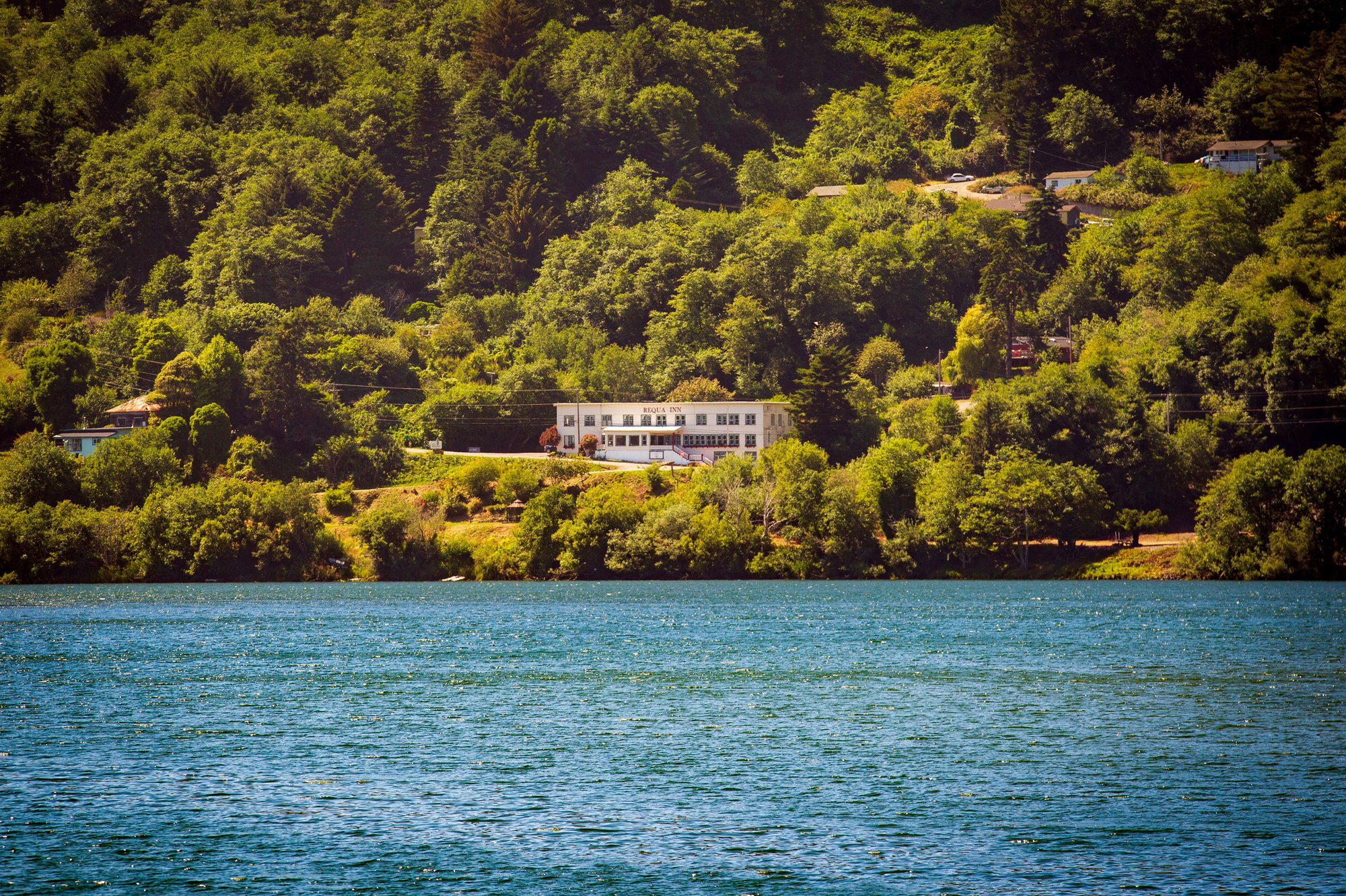
A century-old inn perched above the Klamath River in California's redwood corridor, the Historic Requa Inn trades on architectural character and geographic isolation in roughly equal measure. The surrounding Del Norte County coastline attracts travelers willing to drive past the last highway exit, and the inn positions itself as the only lodging of its kind at this particular bend of the river.

Pearl is the En Primeur Club membership app, where members save venues, book tables and use the concierge.
Where the River Bends and the Architecture Holds
There is a particular category of American inn that survives not because of renovation ambition or marketing budgets, but because the building itself refuses to become irrelevant. The Historic Requa Inn, at 451 Requa Rd in Klamath, California, occupies that category. It sits above the confluence of the Klamath River and the Pacific, in a stretch of Del Norte County where the redwood canopy closes in from both sides of the road and the fog off the ocean arrives in the late afternoon regardless of season. The building pre-dates the era of highway motels entirely, and it reads that way: a structure shaped by a period when inns were the destination, not the last resort before the campsite.
Del Norte County sits in the far northwestern corner of California, roughly midway between Eureka to the south and the Oregon border to the north. The region draws a specific type of traveler: one who has already done the easier parks and wants to reach old-growth redwood groves that require actual commitment to access. Klamath itself is a small community at the mouth of its namesake river, and the inn occupies the Requa bluff at a point where the views down the river corridor are unobstructed. That positioning is architectural in its own right: whoever chose this site a century ago understood that prospect and shelter were the two things a building in this landscape needed to get right.
The Building as Primary Argument
Historic preservation in American hospitality tends to produce two outcomes: the property that has been restored to a period-accurate standard with the seams showing, and the property that has been layered with successive renovations until the original bones are largely theoretical. The Requa Inn, from what its presence and reputation in the region suggest, belongs to the first category. The architecture of the Pacific Northwest coast in the early twentieth century drew on craftsman and vernacular traditions: broad porches, wood-dominant construction, pitched rooflines that shed the considerable rainfall of this latitude, and interiors oriented around warmth rather than spectacle.
That design logic still applies here. The inn's physical presence on the Requa bluff is not incidental to its identity; it is the identity. Properties at this price tier in rural Northern California generally compete on one of two grounds: outdoor access credentials or architectural character. The Requa Inn's location at the edge of Redwood National and State Parks addresses the former, while the historic building itself handles the latter. Both points are relevant to a reader deciding between a wilderness-adjacent property like this and, say, the polished pastoral setting of Blackberry Farm in Walland or the design-led seclusion of Post Ranch Inn in Big Sur.
Context: Rural Historic Inns and Their Particular Trade
The American historic inn category is distinct from the resort category in ways that matter for planning. Resorts at the level of Amangiri in Canyon Point or Kona Village in Kailua Kona operate at scale, with full-service amenities, dedicated programming, and staffing ratios built around the guest experience as a managed product. Historic inns operate differently: the experience is less deliberately arranged and more atmospheric, the service model is smaller-scale, and the guest is expected to bring more of the agenda themselves. That is not a deficiency; it is a different contract.
In that context, the Requa Inn's location is its programming. Redwood National and State Parks offer some of the most ecologically significant old-growth forest in North America, and the trailheads in this corridor put multi-century trees within reach of a short drive or, in some cases, a short walk. The Klamath River is one of the major salmon rivers of the Pacific coast, and the overlook above the river mouth is among the better whale-watching points on the Northern California coast during migration season, which runs roughly from December through April. These are not manufactured amenities. They are features of a geography that the inn has occupied for a century, and they give the property a set of credentials that no amount of interior renovation could replicate.
Travelers calibrating their Northern California itinerary will find the Requa Inn at a significant distance from the wine country and urban properties that dominate the state's hospitality conversation. The Auberge du Soleil in Napa, the SingleThread Farm Inn in Healdsburg, and the 1 Hotel San Francisco all operate within a tighter geographic and hospitality cluster in the Bay Area corridor. The Requa Inn is a different proposition: six-plus hours of driving north of San Francisco, past Eureka, into a county where the accommodation options narrow sharply. That isolation is both the obstacle and the point. For travelers who want to reach the redwood corridor without camping, the inn occupies a position with very few genuine alternatives.
Planning a Stay
The leading access to Klamath is by car via US-101 north from Eureka, which takes roughly an hour, or south from Crescent City, which is closer to 20 minutes. There is no regional air service of consequence; the nearest commercial airports are Arcata-Eureka Airport (ACV), roughly 60 miles south, and Rogue Valley International in Medford, Oregon, roughly 100 miles north. Coastal Northern California weather follows a pattern of summer fog and mild temperatures, dry conditions from July through September, and wetter, cooler weather from October through April. The whale-watching window and the salmon run overlap with the wetter season, which is worth factoring into the decision of when to arrive. For current availability, rates, and room categories, contacting the inn directly is the most reliable approach; for broader context on what the Klamath area offers, see our full Klamath restaurants guide.
Travelers building itineraries that combine the Requa Inn with other landmark American properties in the rural inn and lodge category might also consider Troutbeck in Amenia, Sage Lodge in Pray, or Alpine Falls Ranch in Superior for comparable combinations of historic or landscape-driven character and geographic remove. At the urban-historic end of the spectrum, the Chicago Athletic Association and The Fifth Avenue Hotel in New York City offer a reference point for how historic structures can be repositioned within dense city contexts, which clarifies by contrast what a rural historic property like Requa is actually offering. The comparison also applies to properties like Raffles Boston or Aman New York, where the historic shell has been rebuilt around a luxury service model that the Requa Inn does not attempt to replicate.
A Quick Peer Check
| Venue | Price | Awards |
|---|---|---|
| The Historic Requa InnThis venue (the venue you are viewing) | Not listed | Not listed |
| Aman New York | Not listed | 3 Michelin Keys · World's 50 Best #87 |
| Amangiri | $1,000–1,500 | 3 Michelin Keys · World's 50 Best #45 |
| Hotel Bel-Air | $750–1,000 | 3 Michelin Keys · World's 50 Best #57 |
| The Beverly Hills Hotel | Not listed | 3 Michelin Keys · World's 50 Best #65 |
| The Carlyle, A Rosewood Hotel | $1,500–2,500 | 2 Michelin Keys · World's 50 Best #64 |
Details
- Romantic
- Cozy
- Rustic
- Scenic
- Historic
- Romantic Getaway
- Weekend Escape
- Anniversary
- Historic Building
- Waterfront
- Panoramic View
- Wi Fi
- Hot Tub
- Waterfront
- Mountain
- Step Free Entrance
Cozy and relaxing with warm lighting, comfortable furniture, lobby fireplace, and serene riverside setting amid redwoods.