



Michelin Selected · La Liste Top Hotels · Virtuoso Luxury Hotel Partner
On Nicaragua's Emerald Coast, Rancho Santana spreads across 2,700 acres of Pacific-facing cliffs, remote beaches, and jungle canopy between Tola and Rivas. The resort returned to La Liste's Top 100 Hotels in 2026 with a score of 90.5 points, drawing repeat visitors with its sea turtle sanctuary, farm-driven kitchen, and a spa set within the tree line. It occupies a category of its own among Nicaragua's coastal properties.

Pearl is the En Primeur Club membership app — saves, bookings, and concierge access live there. Same editors, same standards.
- Address
- Comarca Limon #1, Carretera Las Salinas, Tola-Rivas, Popoyo Nicaragua, Tola 48500
- Phone
- (310) 299-7550
- Website
- ranchosantana.com
- Directions
- Get directions
Clifftop Design on Nicaragua's Emerald Coast
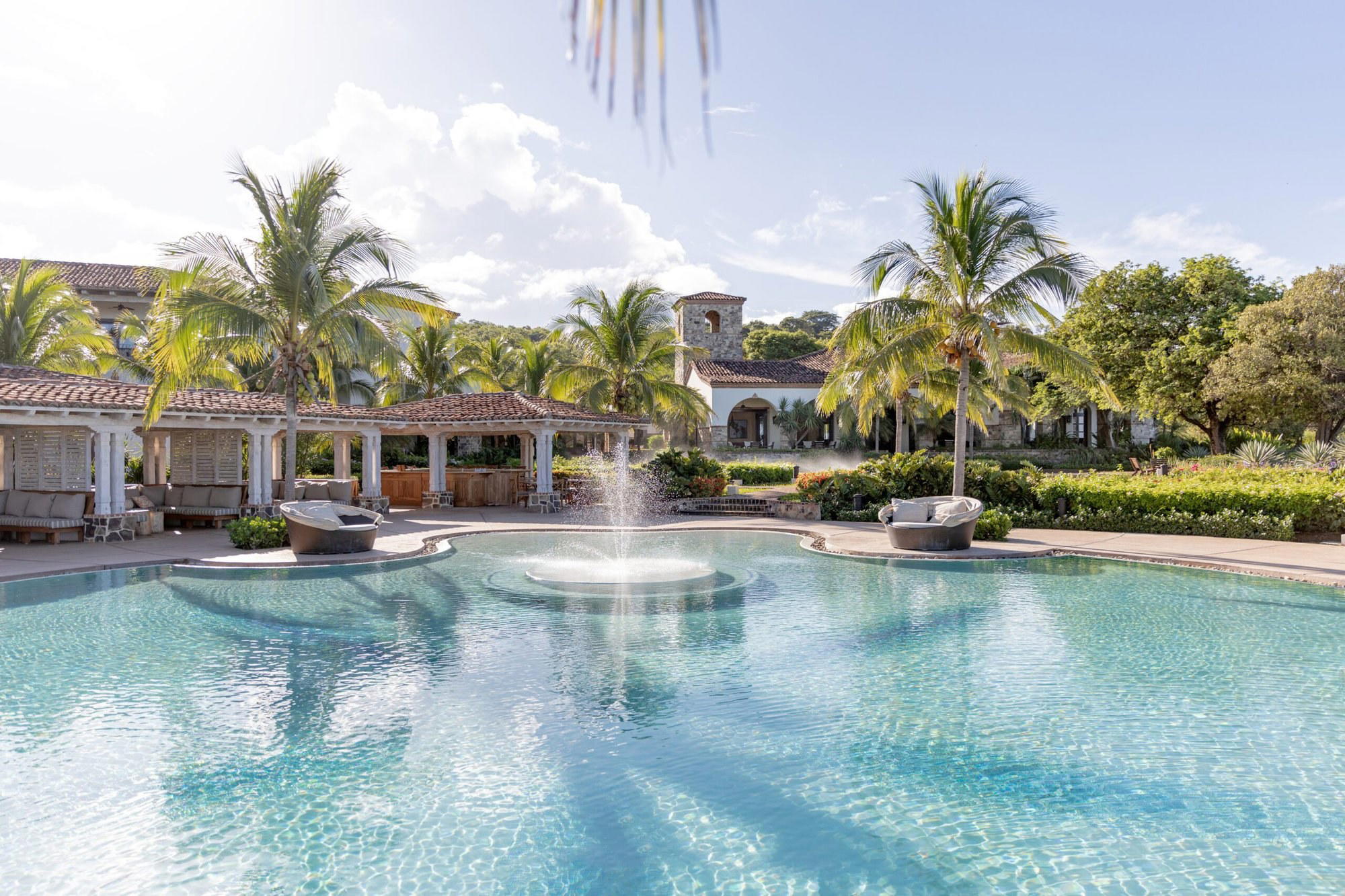
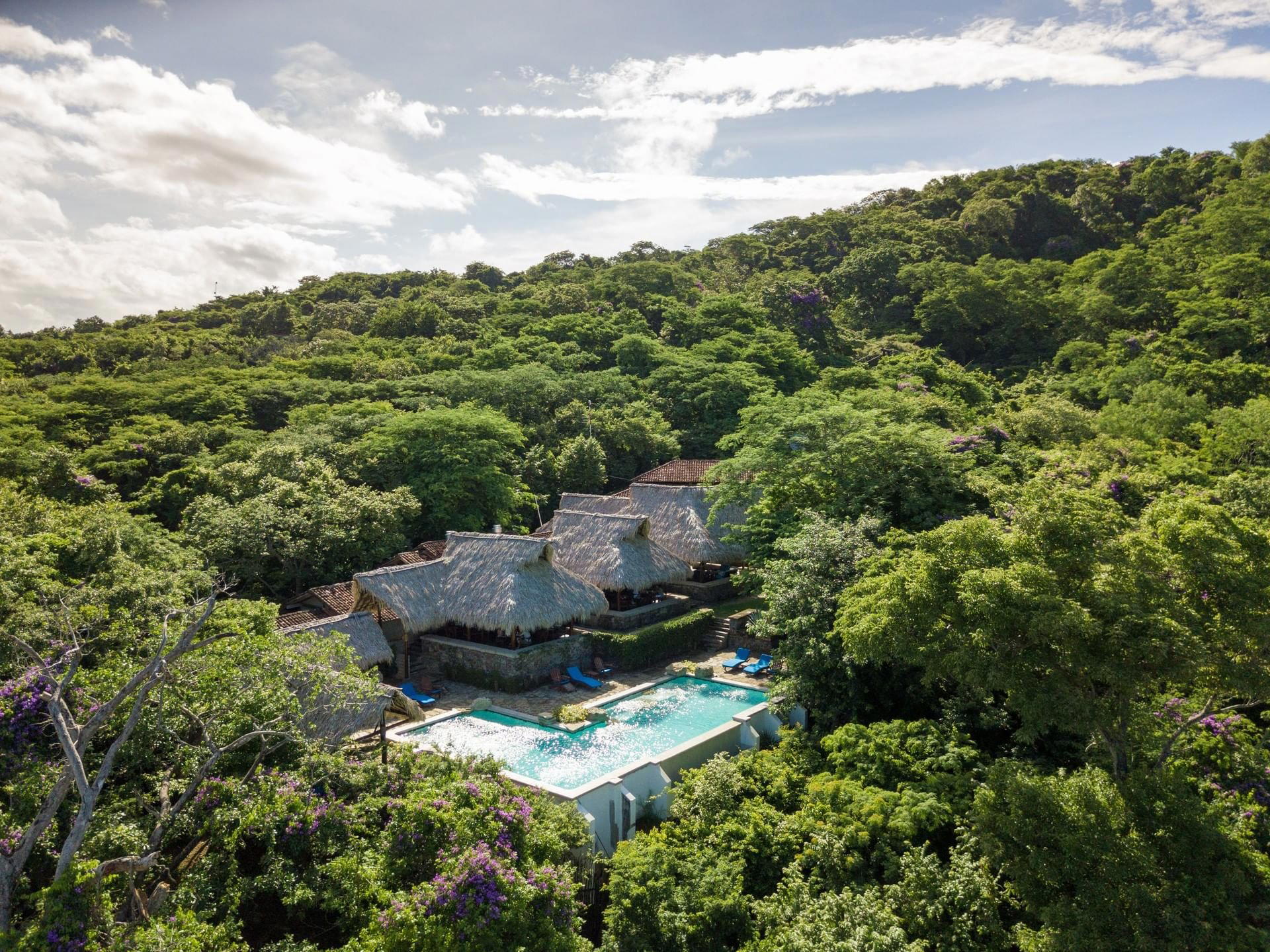
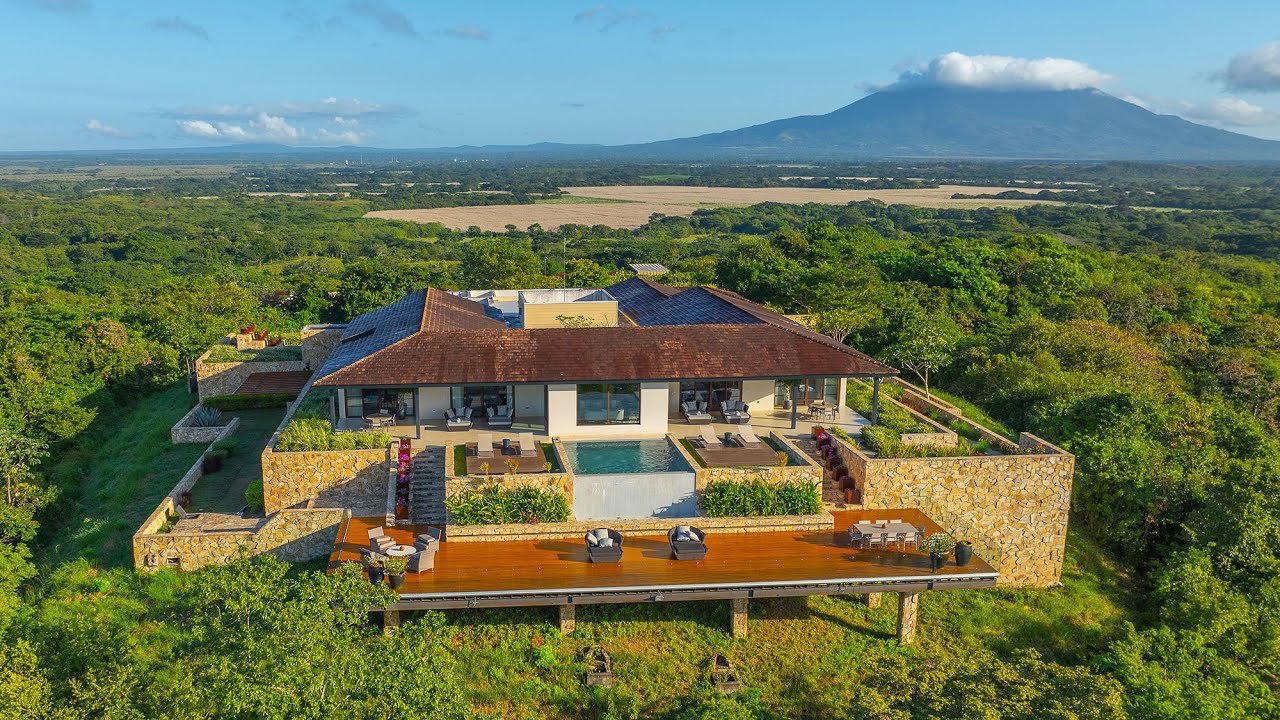
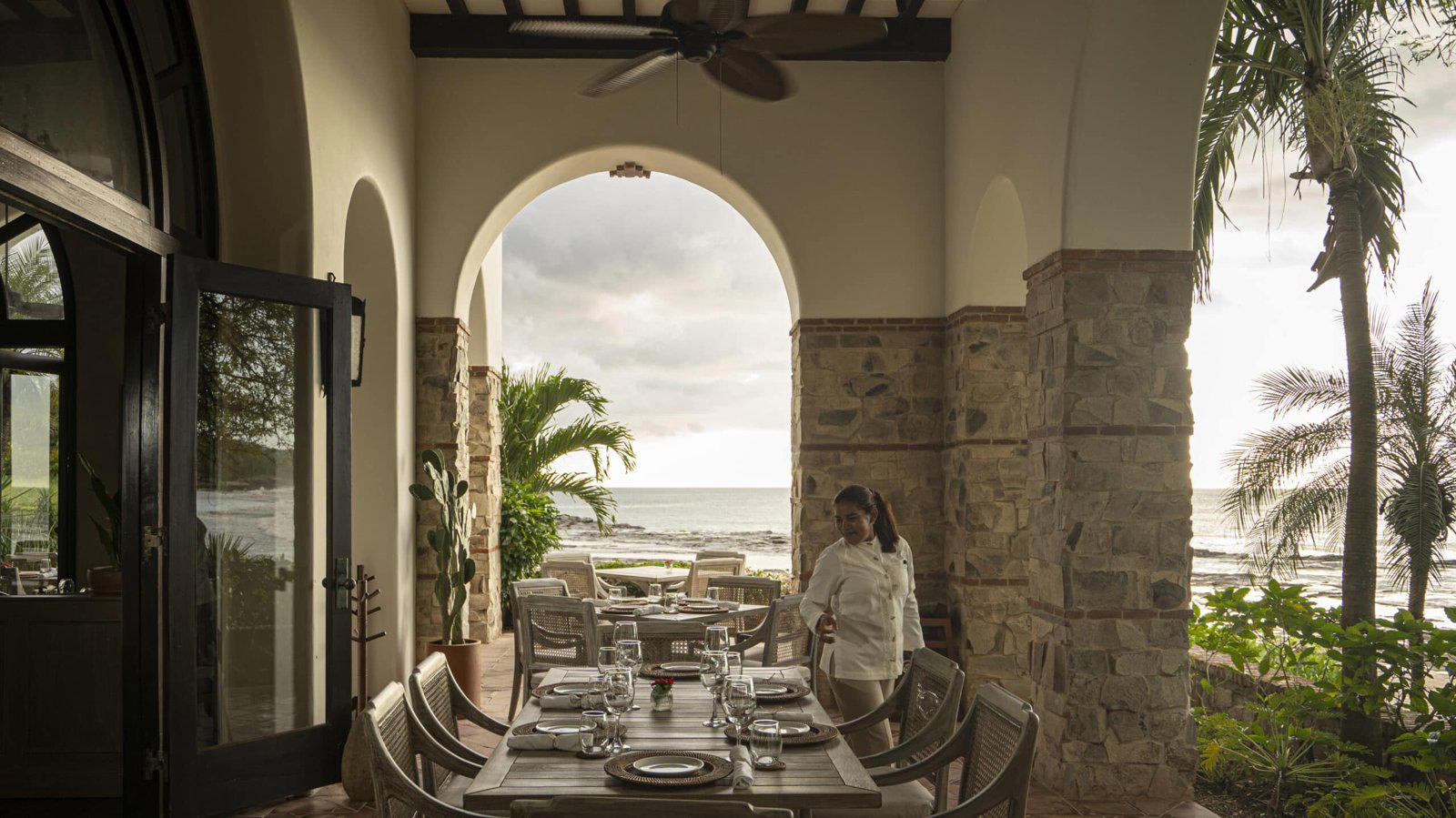
The road from Tola to Rancho Santana prepares you for what's coming: rutted single-lane track, cattle crossing without apology, and then an abrupt gate where the Pacific suddenly becomes visible below. That first sightline is a reasonable preview of how the property handles its physical setting. On 2,700 acres of Nicaragua's Emerald Coast, the architecture doesn't compete with the terrain so much as defer to it. Spanish Colonial structures in whitewash and terracotta hold the cliffsides, while the spa and yoga platform are absorbed into the tree cover rather than placed beside it. The design logic here is restraint through vernacular: materials and forms that read as regional, with scale that never overwhelms the ridge.
This approach places Rancho Santana in a specific tier of Latin American resort design, one that prioritises spatial dispersal and landscape integration over dense amenity concentration. Properties like One&Only Mandarina in Riviera Nayarit operate on a comparable logic of scattered pavilions and site-sensitive architecture, and Amangiri in Canyon Point demonstrates how desert terrain can be the dominant design element rather than backdrop. Rancho Santana follows that same discipline in a Pacific Coast context: the property is the experience, and the buildings facilitate access to it rather than substitute for it.
Where the Property Sits in Nicaragua's Coastal Tier
Nicaragua's Pacific coast has developed a recognisable category of design-led, low-density retreats that differentiate themselves from the Central American all-inclusive model. Morgans Rock Hotel San Juan del Sur works with a smaller footprint and ecolodge format further north along the coast. Nekupe Sporting Resort & Retreat in Nandaime draws a sport-focused clientele into the interior. Calala Island operates at ultra-private scale on the Caribbean side. Rancho Santana positions itself differently from all three: it is large enough to accommodate a residential community alongside resort guests, which means the infrastructure, the beach access, and the amenity depth are calibrated for long-stay and repeat use rather than short-format discovery.
That residential scale is worth understanding before booking. The 2,700-acre site means guests may drive or ride between beaches, amenities, and accommodation rather than walking a compact resort loop. For some, that dispersal is the draw. For guests accustomed to a tighter, more curated hotel circuit, it may require adjustment. The property's return to La Liste's Top 100 Hotels in 2026, scoring 90.5 points, confirms that those who engage with it on its own terms rank the experience highly. See our full Rivas restaurants guide for broader context on the Rivas region's hospitality offer.
The Farm Kitchen and What It Signals
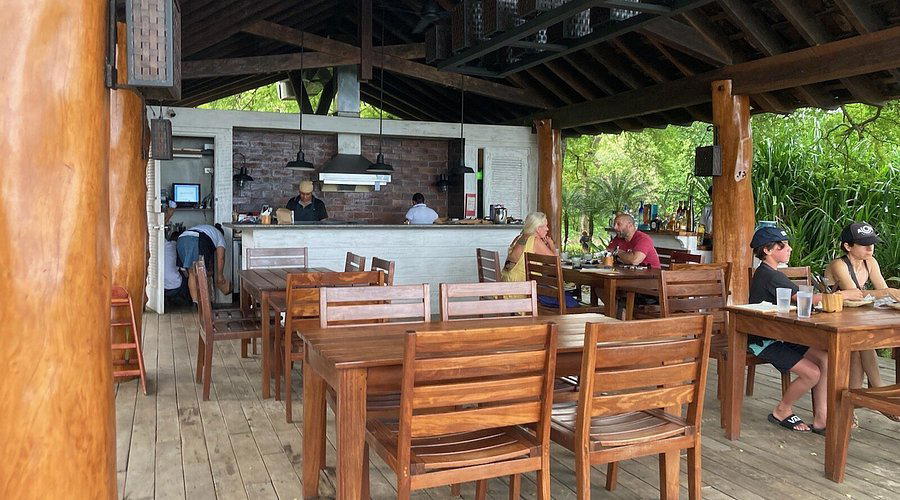
Farm-to-table has become a commonplace resort claim across Central America, but the execution varies considerably. At Rancho Santana, the kitchen operates with an on-site farm and garden supplying a significant portion of ingredients, and an executive chef from Brazil now leads the program. Brazil's culinary tradition brings a specific sensibility to produce-led cooking: an attentiveness to fermentation, fire, and the direct relationship between soil and plate that differs from European-trained farm kitchen approaches. The combination of a Nicaraguan growing environment and a Brazilian culinary perspective produces a kitchen that doesn't default to generic tropical resort fare.
What this means practically is that the dining offer is tied to the farm's seasonal output, which shifts the menu's authority from fixed standards to available ingredients. Guests expecting a static menu at every visit will find variation, which is precisely the point for the repeat visitors the property describes as part of its core audience. The ranch-grown ingredient sourcing also connects the food program to the property's broader land stewardship, which includes the sea turtle sanctuary, making the dining an extension of the property's relationship to its environment rather than a service amenity bolted on.
Three Pools, Jungle Spa, and the Sea Turtle Sanctuary
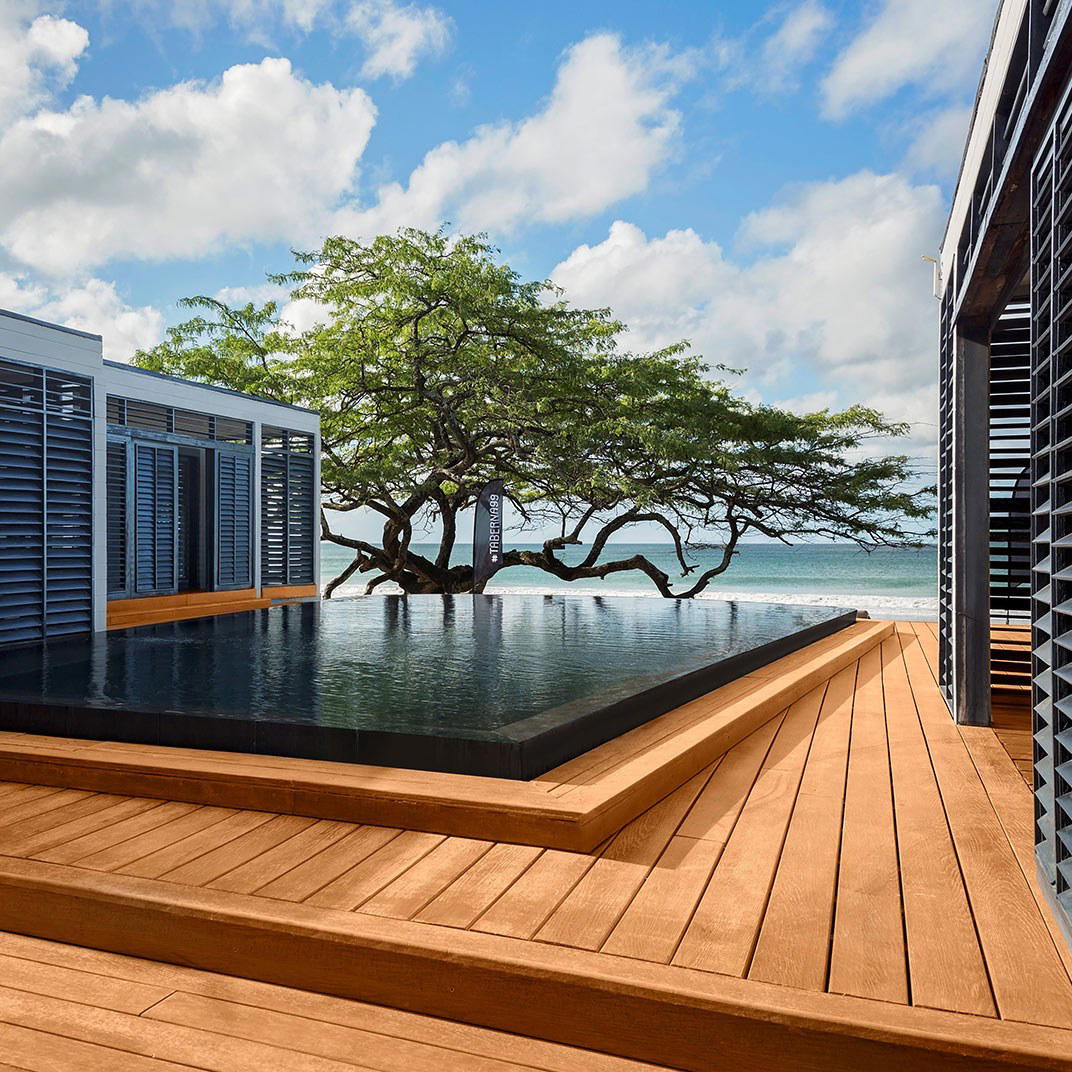
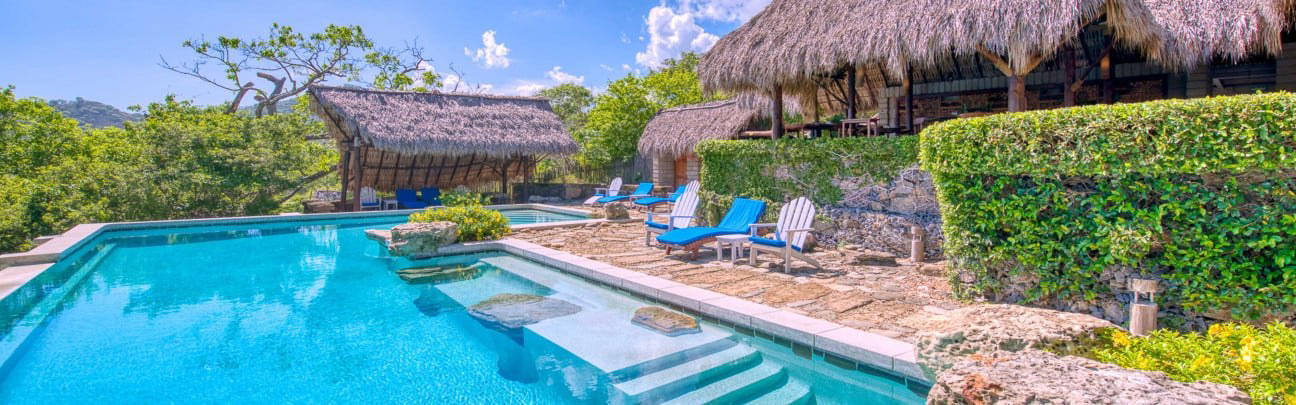
The amenity structure at Rancho Santana follows the dispersal logic of its design. Three pools serve different areas of the property rather than clustering at a central hub. The spa occupies a position within the jungle canopy, which means the treatment environment is determined by ambient sound and light rather than interior design alone. The yoga platform extends the same principle: the setting is part of the offering. These are structural choices, not incidental ones, and they distinguish the property from the resort model where amenities are stacked for visual density at a single point.
The sea turtle sanctuary represents one of the property's more distinctive anchors. Nicaragua's Pacific coast beaches serve as nesting grounds for several sea turtle species, and active sanctuary programs tied to resort properties have become an increasingly serious credential in the region. For guests with an interest in wildlife, the sanctuary provides direct, managed access to nesting activity during the appropriate season, which runs through the latter part of the year along this coastline.
What the Architecture Communicates About the Stay
Spanish Colonial architecture at resort scale carries specific implications. The form language, thick walls, shaded corridors, interior courtyards, and terracotta rooflines, is not merely aesthetic. It is a thermal and spatial strategy. These structures manage heat through mass and shade rather than mechanical cooling, and they create interior environments that feel settled rather than temporary. For a property positioned on Pacific-facing cliffs where the prevailing winds off the ocean are consistent, the architecture works with the climate rather than against it.
The event spaces at Rancho Santana deploy this Colonial vocabulary for weddings and private occasions, which is a common revenue stream for large-acreage resort properties in this region. The setting has an obvious draw for destination events: remote beaches, cliffsides, and Colonial architecture provide a visual and atmospheric logic that purpose-built event venues struggle to replicate. Properties in this category, from Castello di Reschio in Lisciano Niccone to Hotel Esencia in Tulum, have built event reputations on the same principle: authentic setting as the primary credential.
Planning Your Stay
Rancho Santana is located at Comarca Limon #1, Carretera Las Salinas, Tola-Rivas, Popoyo, Nicaragua. Access from Managua runs south through Rivas and then west toward the coast on roads that require patience and, in the wet season, a vehicle with reasonable clearance. The dry season, broadly December through April, offers the most reliable overland access and the clearest Pacific conditions for surfing and beach use. Sandboarding is tied to the same dry-season window when the coastal dunes are at their most accessible. The sea turtle nesting season, by contrast, draws guests later in the year, which means the property serves different audiences at different times depending on their primary interest.
For guests considering the property's residential ownership options, the combination of resort infrastructure and land scale creates a different calculus than a conventional hotel stay. The 2026 La Liste recognition at 90.5 points, framed as a return to the top 100 after a three-year absence, suggests the property has been through a period of reinvestment, with the new executive chef and continued development of the farm and garden program as visible signals of that trajectory.
Comparable properties for the purposes of benchmarking expectations include other design-integrated, land-heavy retreats: Morgans Rock for a tighter ecolodge format, Nekupe for a sports-led interior alternative, and further afield, properties like Hotel Bel-Air in Los Angeles or Mandarin Oriental Bangkok for how established destination resorts maintain relevance through consistent physical reinvestment. Rancho Santana's trajectory suggests it is in the middle of exactly that kind of cycle.
At-a-Glance Comparison
Comparable venues nearby, for context on price, style, and recognition.
| Venue | Cuisine | Price | Awards | Notes |
|---|---|---|---|---|
| Rancho SantanaThis venue — the venue you are viewing | luxury beach resort with rustic charm and colonial touches | Not listed | Michelin Selected · La Liste Top Hotels | Not listed |
| Morgan’s Rock Reserve & Ecolodge | rustic eco-hacienda blended into jungle hillside | Not listed | 1 Michelin Key · Mr & Mrs Smith Seal of Approval | Playa Ocotal |
| Nekupe Sporting Resort & Retreat | Sustainable luxury nature retreat with Nicaraguan cultural influences | Not listed | Virtuoso Luxury Hotel Partner | Nandaime |
| Morgan's Rock Hacienda & Ecolodge | Eco-luxury ecolodge set in rainforest with ocean-view bungalows | Not listed | 1 Michelin Key · Mr & Mrs Smith Seal of Approval | Playa Ocotal |
| Jicaro Island Ecolodge | eco-chic treehouse-style casitas on stilts | $300–500 | Michelin Selected | Isletas De Granada |
| Morgans Rock Hotel San Juan del Sur | Rustic luxury eco-lodge designed to harmonize with tropical forest surroundings, featuring sustainable architecture with locally-sourced materials and indigenous artisan craftsmanship. | $300–500 | Not listed | San Juan del Sur |
Recognition history
Dated appearances from independent guides and award organizations, with the underlying list record or original source where available.
Michelin Selected
Michelin
La Liste Top Hotels
La Liste
Virtuoso Luxury Hotel Partner
Virtuoso
Travel + Leisure 100 Favorite Hotels in the World #81
Travel + Leisure
Details
- Scenic
- Rustic
- Elegant
- Honeymoon
- Romantic Getaway
- Family Vacation
- Wellness Retreat
- Beachfront
- Infinity Pool
- Private Villa
- Destination Spa
- Wi Fi
- Pool
- Spa
- Fitness Center
- Concierge
- Restaurant
- Beach Access
- Waterfront
- Mountain
Cozy with warm wood décor, curated artwork, and far-reaching ocean views from terraces, blending rustic charm and elegance amid tropical nature.