Bar Équateur
Bar Équateur gives Abidjan’s bar scene a central, city-facing address on Boulevard de la République, with the mezzanine setting doing much of the editorial work before any drink is discussed. With no public awards, chef credit, pricing, or booking channel in the record, it is better read as an urban cocktail stop to assess by mood, access, and fit within Plateau’s after-dark rhythm.

Pearl is the En Primeur Club membership app, where members save venues, book tables and use the concierge.
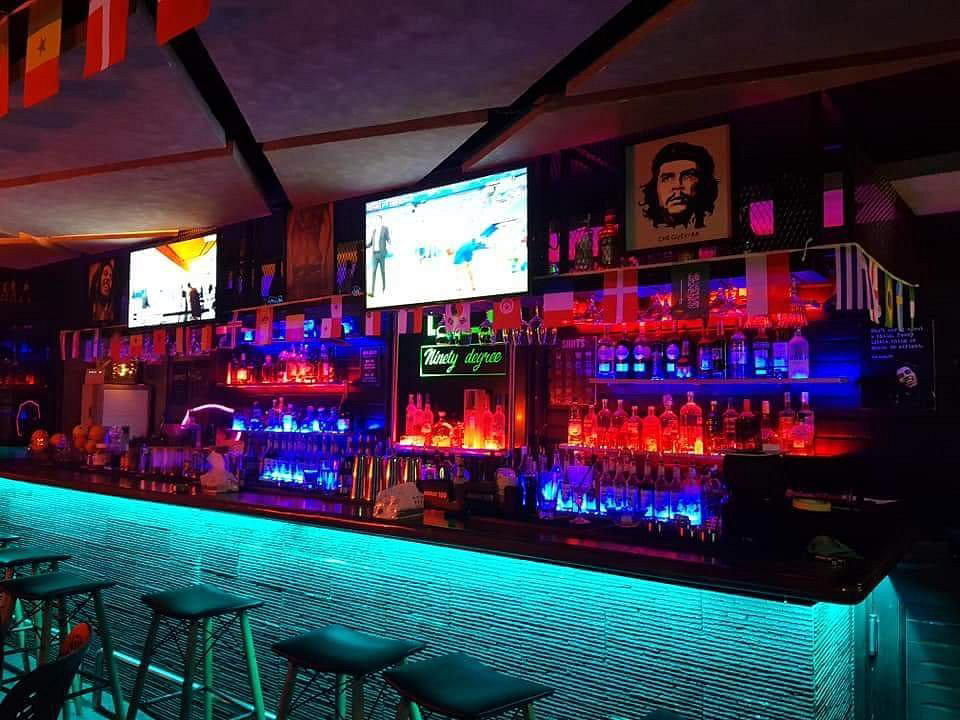
Above Boulevard de la République, the room starts with the city
The first useful fact about Bar Équateur is spatial: it sits on the mezzanine at 04 Boulevard de la République, one of Abidjan’s central civic and commercial arteries. That matters in a city where drinking culture often divides between hotel lounges, business-district addresses, waterside leisure zones, and late-night rooms that depend on neighbourhood momentum rather than guidebook fame. A mezzanine bar changes the pace. It is neither fully removed from the street nor fully absorbed by it; the format suggests an address designed for arrival, pause, and conversation above the movement of Plateau rather than a detached destination built around spectacle.
Abidjan’s cocktail scene is better understood through geography than through imported ranking language. Plateau brings offices, banks, embassies, and formal evening traffic; Cocody and Deux Plateaux lean more residential and social; Marcory and Zone 4 carry a stronger restaurant-and-nightlife pulse. A bar on Boulevard de la République belongs to the central-city register, where the drink is part of a wider evening: a meeting after work, a pre-dinner stop, a late conversation after a hotel lobby has become too polished. For a traveller, that makes the address useful before it becomes romantic. It places the experience inside Abidjan’s working capital energy, not on the edge of it.
That absence should shape expectations rather than weaken the editorial case. In cities with fast-moving bar cultures, public data often lags behind the room: cocktail lists change, booking habits are informal, and reputation travels through hotel concierges, business hosts, and neighbourhood regulars. The sensible reading is not to invent a programme, but to treat the bar as part of Abidjan’s emerging premium drinking map, where the strongest signal currently available is location and format.
The cocktail question in Abidjan is not only technique, it is context
Contemporary cocktail culture in West African capitals does not move in the same way as New York, London, or Paris. In older cocktail cities, the conversation has shifted from hidden entrances and bartender theatre toward clarified drinks, low-waste prep, freezer martinis, and rigorous ice programmes. In Abidjan, the more interesting question is how bars translate that global language into a city with its own social codes, climate, music, and hospitality expectations. Technique matters, but the room’s ability to hold different speeds of evening matters just as much.
That is why a central mezzanine setting is a credible frame for a cocktail programme even without published menu detail. A bar above the street can work as an observation deck for city life, a business-drinks address, or a soft landing before a later dinner. The cocktail programme, if it is to make sense in this setting, has to negotiate temperature, pacing, and sociability. Heavy, slow, stirred drinks read differently in a humid coastal city than they do in a winter cocktail room in Manhattan. Long drinks, citrus structures, aperitif formats, local fruit accents, and spirit-forward classics all have different roles depending on the hour, the crowd, and whether the bar is acting as a first stop or the centre of the night.
There is a useful comparison with international bars that have defined themselves through a clear technical lane. Café La Trova in Miami frames cocktails through Cuban cantinero tradition and performance. Thunderbolt in Los Angeles has been associated with a Southern-inflected, ingredient-conscious programme. Martiny’s in New York City belongs to a polished, reservation-minded cocktail tier where precision and setting are inseparable. Those examples matter not because Abidjan should copy them, but because they show what a bar becomes when the programme has a defined argument. At Bar Équateur, the public record does not yet give that argument in menu terms, so the editorial lens has to remain on how the address might function within the city’s cocktail rhythm.
What a mezzanine bar does differently
Mezzanine rooms have a particular social intelligence. They create separation without asking guests to leave the building’s pulse behind. In a premium drinking context, that middle layer can be more useful than a rooftop or a basement. Rooftops often turn into skyline rituals; basements often lean on concealment and mood. A mezzanine can keep the bar connected to the arrival sequence, which suits Abidjan’s formal and semi-formal evening culture: business shirts after office hours, hotel guests testing the city gently, couples making a first stop before dinner, and small groups who want conversation before volume takes over.
The lack of listed seat count means capacity should not be assumed. That is a practical point, but also an editorial one. Smaller cocktail rooms tend to reward early arrival and patience; larger lounges can absorb groups with less planning. Without published hours or a booking method, the cautious reader should treat the venue as a bar to verify before crossing town, especially on weekends or around public holidays. In Abidjan, as in many cities where formal online reservations are not universal across bars, logistics can depend on direct local confirmation through a hotel desk, a host, or a contact already in the city.
Price is also unlisted, so the room cannot be placed honestly in a precise value tier. The address, however, suggests a central-city rather than beach-casual frame. That distinction helps set expectations: visitors should not approach it as a market-stall drinking experience, nor should they assume the tariff structure of an internationally branded hotel bar. The right comparison is with urban cocktail addresses whose value depends on ambience, service rhythm, and drink execution rather than volume or novelty.
Where it fits in an Abidjan evening
Abidjan rewards sequencing. The city’s dining and drinking geography does not collapse into a single district, so a strong night often depends on choosing the right order: Plateau for business-facing drinks, Cocody for social dinners, Zone 4 for later energy, and hotel bars for controlled comfort. A mezzanine address on Boulevard de la République has a natural role early in that sequence. It suits a first drink after work, a meeting point before moving elsewhere, or a lower-friction stop for travellers based in central hotels.
For readers building a wider city plan, the most useful starting point is category mapping. Our full Abidjan bars guide gives the bar context across the city’s drinking rooms, while Our full Abidjan restaurants guide helps pair a central drink with dinner in another district. Travellers who want the evening to begin and end with minimal transit should also compare hotel geography through Our full Abidjan hotels guide. In Abidjan, the hotel decision often shapes the nightlife decision more than visitors expect.
The broader EP Club city framework also matters because bars do not operate alone. A drinking address gains meaning from what surrounds it: restaurants that extend the night, hotels that supply the early crowd, and cultural programming that changes who is in the city. Our full Abidjan experiences guide is useful for that daytime-to-evening bridge, while Our full Abidjan wineries guide covers a smaller category that is more about wine access and specialist interest than conventional vineyard travel. Together, these guides make the city easier to read as a set of overlapping circuits rather than isolated venues.
The global bar comparison: clarity beats theatrics
The strongest cocktail cities have moved away from vague luxury language. Serious drinkers now ask sharper questions: Is the bar built around classics or house recipes? Does the menu explain technique or hide behind names? Is the ice programme visible? Are local ingredients used with discipline or treated as decoration? Does the room support conversation, or does it become a music venue after one round? These are the questions that should be applied in Abidjan as the city’s premium bar culture becomes more visible to international travellers.
Several North American bars show how different answers can produce coherent identities. Happy Accidents in Albuquerque has drawn attention for a playful, technically aware format outside the expected coastal cocktail capitals. Roquette in Seattle sits in a city where aperitif culture, seafood dining, and neighbourhood bar habits overlap. Viceversa in Miami reflects Miami’s current move toward design-conscious, Italian-leaning drinking rooms. Jewel of the South in New Orleans draws from a city with deep cocktail history rather than a newly imported scene. These comparisons are useful because they define categories of intent. A bar can be historical, technical, neighbourhood-led, hotel-polished, or nightlife-driven. The critical task in Abidjan is to identify which lane a room occupies, then judge it on those terms.
That does not make the venue minor; it makes the editorial assessment more grounded. The draw lies in city placement, format, and the possibility of a composed drink in a central setting, not in trophy language.
How to read the drink programme without inventing it
The better approach is to describe what an informed guest should look for. A serious cocktail programme in this context should have a balanced relationship between international classics and drinks that acknowledge place. The classics test fundamentals: dilution, temperature, citrus balance, glassware, and speed. The local-facing drinks test judgment: restraint with fruit, clean integration of spice or herbs, and a refusal to turn regional ingredients into gimmicks.
In Abidjan, the climate gives long drinks and aperitif structures a practical advantage at the beginning of the evening. Spirit-forward drinks may be better later, once the room has settled and the guest is no longer arriving from heat and traffic. That is not a rule; it is a useful reading of how cocktail formats behave in a humid coastal city. The most revealing order at any bar of this kind is often simple: one classic to test technique, then one house drink to test point of view. If the menu is short, that can be a strength. If it is long, the question is whether the list has structure or merely range.
Service rhythm also matters. In a central business district, a bar has to serve guests who may want different things from the same room: a quick drink before a meeting, a slow conversation, a hotel-adjacent nightcap, or a table that becomes the evening’s anchor. The cocktail programme succeeds when it can accommodate those speeds without losing composure. That is the difference between a bar with drinks and a bar with a point of view.
Planning notes for Plateau and Boulevard de la République
The verified address is 04 Bd de la Republique, Abidjan, Côte d’Ivoire, on the mezzanine. Visitors should therefore confirm current operating details through a local contact, hotel concierge, or the building before making it the fixed centre of an evening. That is especially relevant for later nights, weekends, and periods when traffic or private events can change the rhythm of central Abidjan.
For dress, the absence of a published code argues for city-smart rather than resort-casual. Plateau is a business district, and bars in this part of the city often receive guests moving between offices, hotels, and dinner. For budget planning, the missing price field means no exact range should be inferred; the safest assumption is to compare it with other central cocktail bars rather than informal beer spots or luxury hotel lounges. For timing, an early-evening arrival makes sense if the goal is conversation and orientation.
Continue exploring
More in Abidjan
Restaurants in Abidjan
All restaurants in Abidjan →

Hotels in Abidjan
All hotels in Abidjan →
Bar Équateur
The drinks
- Craft cocktails
- Zero-proof drinks
Signature drinks: seasonal fruit cocktails, premium rum cocktails.
Details
- Classic
- Cozy
- After Work
- Group Outing
- Casual Hangout
- Hotel Bar
- Standalone
- Seated Bar
- Lounge Seating
- Craft Cocktails
- Rum
- Zero Proof
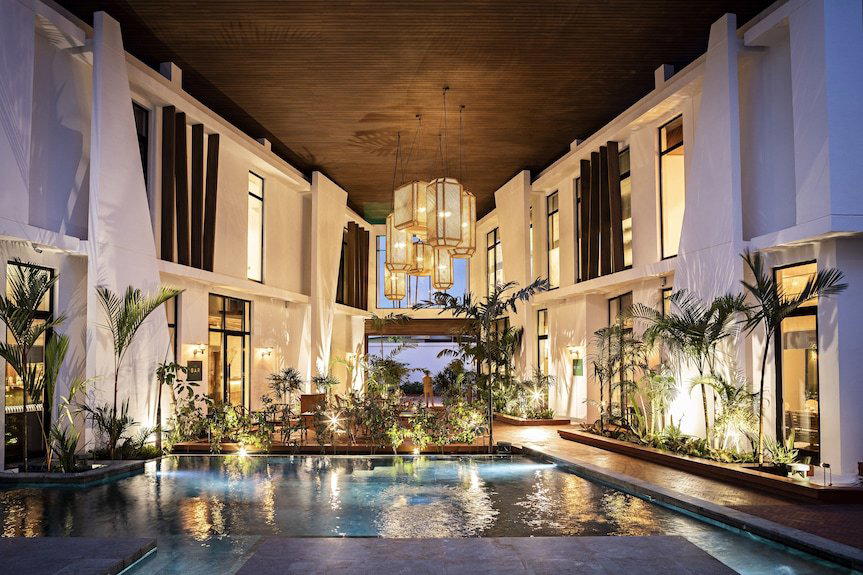
Lounge-bar atmosphere with soft music and a convivial, professional feel; reviews and venue copy suggest a relaxed setting with a different musical mood each day.