Lynch-Bages publishes a visitor program and welcomes public bookings. Château Pontet-Canet does not welcome general-public visits; access is reserved for wine professionals and the trade.
Lynch-Bages publishes a visitor program and welcomes public bookings. Château Pontet-Canet does not welcome general-public visits; access is reserved for wine professionals and the trade. Neither Lynch-Bages nor Pontet-Canet operates a walk-in cellar door; every visit requires advance arrangement,1 and particularly immersive formats at Lynch-Bages book out weeks ahead during the April, October peak season. For Lynch-Bages, the single best route is a direct booking through the estate's own website, where tasting formats and pricing are published. The village of Pauillac sits roughly 50 kilometres north of Bordeaux, making the two estates geographically easy to pair if a trade visit at Pontet-Canet can be arranged alongside a Lynch-Bages booking.
Why Two Pauillac Estates on the Same Day Is Harder Than It Looks
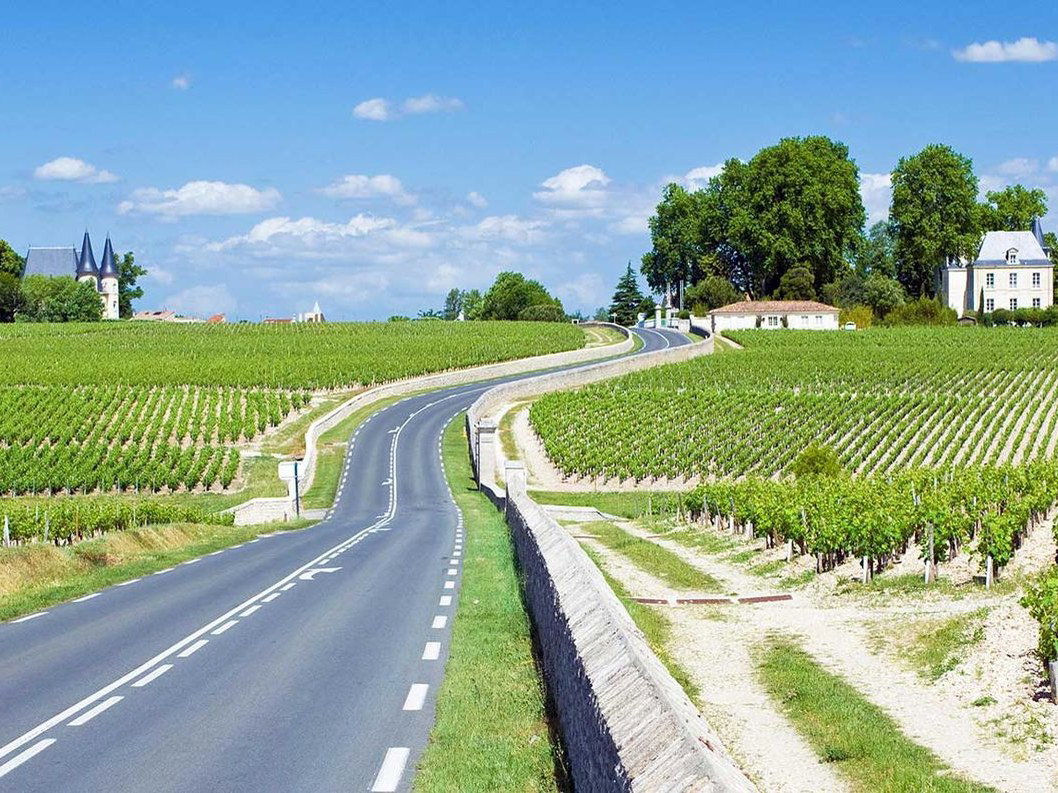
The Route des Châteaux, a two-lane rural road, winds through the densely planted vineyards of Pauillac. Pauillac's left-bank geography is compact, Lynch-Bages and Pontet-Canet sit within a few minutes of each other on the D2, but the logistics compress quickly. Lynch-Bages runs structured, guided visits rather than open tastings, which means you are locked into fixed time slots rather than drifting in when convenient. A Pontet-Canet appointment, when granted to the trade, is similarly scheduled rather than drop-in. Harvest season (late September through October) is the period when access tightens most sharply: staff are in the vineyard, private groups take priority, and the estates' own négociant and trade visitors fill the calendar. Spring, when the en primeur campaign runs, is similarly congested with trade. The crowd you will share a tasting room with at Lynch-Bages skews toward serious collectors, wine-trade professionals on buying trips, and well-prepared oenophile tourists; Pontet-Canet visits are reserved for wine professionals and the trade, people who have read the vintage notes and arrive with questions about the percentage of Cabernet Sauvignon in the grand vin. Casual drop-ins are rare; the format self-selects. At Pontet-Canet, where access is reserved for wine professionals and the trade, the biodynamic farming story is the focus of those appointments: someone who wants to walk the vines and understand why Alfred Tesseron moved away from conventional viticulture entirely, not just someone who wants to taste the 2018.
How to Actually Book: Direct, Agents, and the En Primeur Route
Direct with the estates is the right channel: public bookings at Lynch-Bages, and industry requests at Pontet-Canet. Lynch-Bages, the Cazes family estate, now part of the broader Bages village project that includes the Café Lavinal and the Cordeillan-Bages hotel, runs its visitor experience through the château's own booking system. Cellar tours run Monday through Saturday, 9AM to 12:30PM and 2PM to 6PM,2 and booking directly through the estate's website is the published route. The estate does not publish specific drop times or release windows for new slots, so if you find a date unavailable, the practical move is to email the estate directly and ask about cancellations or alternative formats. Pontet-Canet, owned by the Tesseron family and farmed biodynamically since Alfred Tesseron's conversion of the estate in the early 2000s, does not welcome general-public visits. Access is reserved for wine professionals and the trade, by appointment only. Industry requests go through the estate. Pontet-Canet does not publish a public visitor calendar; trade visitors should confirm availability directly with the estate before building an itinerary around a fixed date. Wine travel specialists, operators such as Bordeaux Wine Tours or Millesima's travel arm, can include Lynch-Bages in a guided day and handle the logistics of sequencing, transport, and translation if needed. They cannot turn Pontet-Canet into a public visit. This Lynch-Bages route costs more but removes the coordination burden, particularly useful if you are visiting during en primeur week when the region is at its most congested. The en primeur channel is a different kind of access entirely. Buying Pontet-Canet or Lynch-Bages futures through a négociant or merchant does not automatically grant cellar access, but it does establish a commercial relationship with the estate that can smooth future visit requests, particularly for the more private, owner-hosted formats that neither estate advertises publicly.
When Slots Open and What the Calendar Looks Like
Lynch-Bages does not publish a forward release schedule for visitor slots, and Pontet-Canet does not offer a public visitor program. The estates do not operate on a fixed "reservations open 30 days out at 10 a.m." model. The practical reality is that availability is managed on a rolling basis, and the estates' own staff are the only reliable source for current openings. Confirm directly with each property before committing to travel dates. What the calendar does show, broadly: April through June and September are the peak months for Lynch-Bages bookings, with the highest demand and greater competition for slots. July and August see some trade visitors thin out, which can open capacity. November through March is the quietest window, fewer tourists, more flexibility, and the chance to taste barrel samples from the recent vintage if you time it right.
The Money-vs-Time Tradeoff
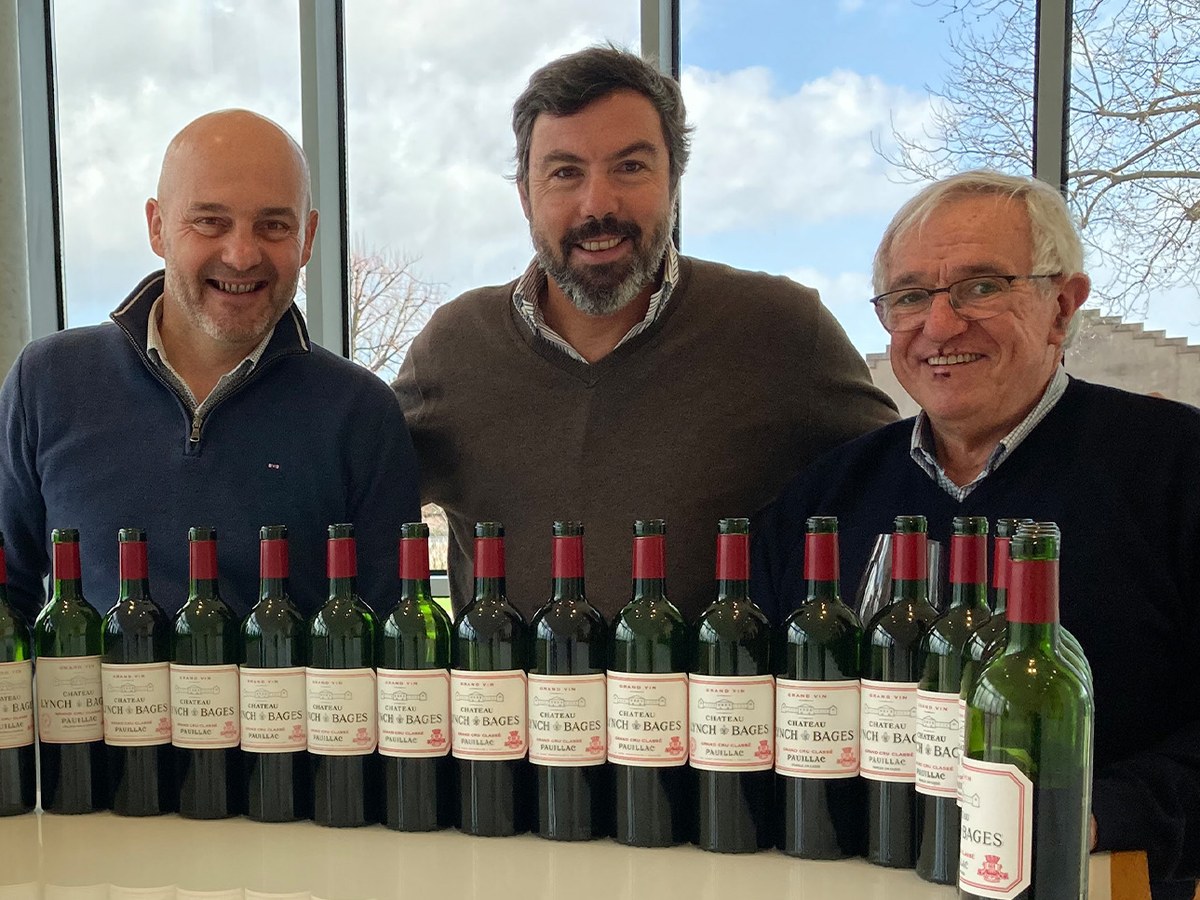
Three men stand behind bottles of Château Lynch-Bages in a winery. The expensive-but-instant route is a private guided visit arranged through a Bordeaux wine travel specialist. Operators typically charge a premium for same-day access to estates that take public bookings, but the logistics, transport, translation, sequencing, are handled, and the guide's existing relationships with estate staff can unlock formats not listed on the public booking pages. The patient, lower-cost route is a self-arranged direct booking made several weeks in advance. At Lynch-Bages, the standard cellar tour costs €25 per person2 and runs 90 minutes.2 For a more extended experience, tailor-made tasting activities start from €75 per person,2 run 2 hours 30 minutes, and require a minimum of two participants.2 These tailor-made sessions are available every day except Sunday.2 Pontet-Canet does not publish tasting fees, because it does not welcome general-public visits. The tradeoff is coordination time and the risk of unavailability during peak periods.
Strategy: How to Improve Your Odds at Both Estates
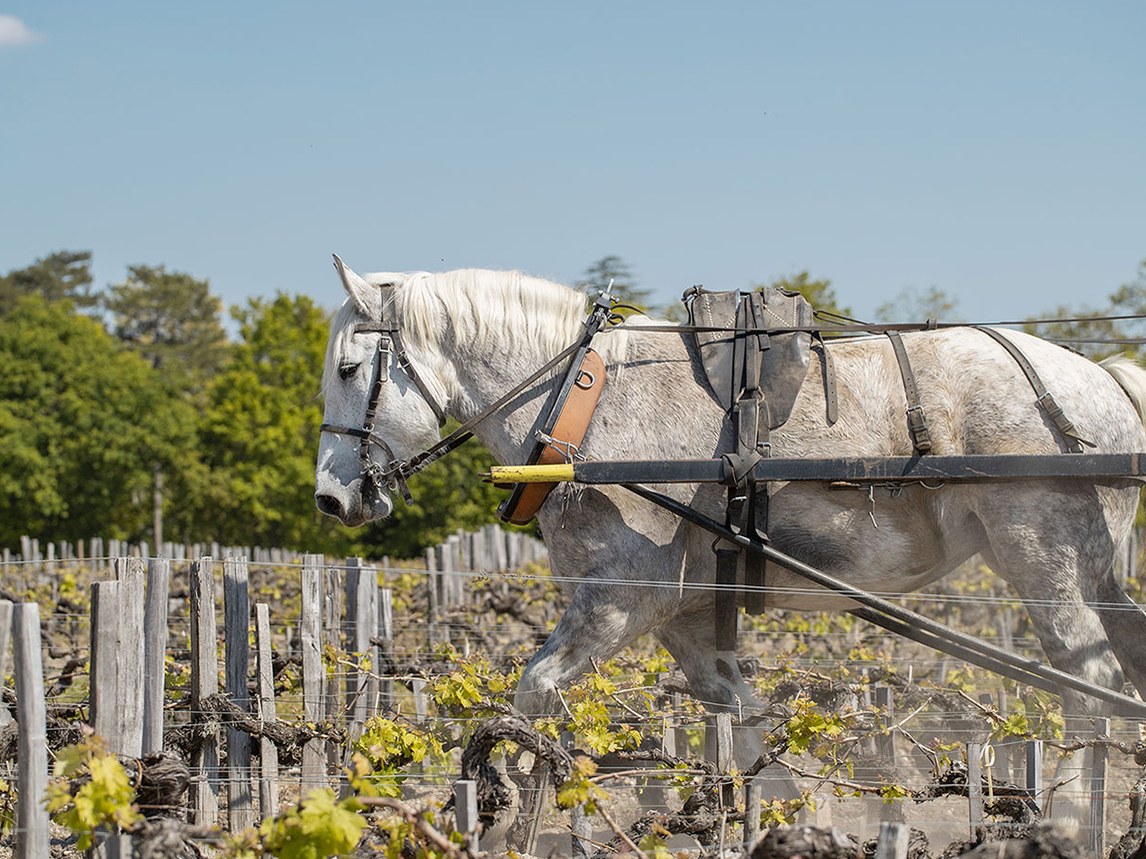
Pauillac's Pontet-Canet vineyard uses draft horses to plow between biodynamic vine rows.If a trade appointment at Pontet-Canet is confirmed, sequencing matters: visit Pontet-Canet first, in the morning, then Lynch-Bages in the afternoon. Pontet-Canet's vineyard walk is best in morning light, and the biodynamic farming context, the estate farms its vineyard without synthetic inputs, with horses used for plowing between vine rows, rewards unhurried attention. Lynch-Bages, with its connection to the broader Bages village (the Café Lavinal makes a natural lunch stop between visits), works well as an afternoon experience that flows into dinner at Cordeillan-Bages if your budget extends that far. Book Lynch-Bages as soon as dates are firm. A Pontet-Canet visit is only possible for wine professionals and the trade, by appointment with the estate; do not plan a public tourist slot there. If your primary interest is the grand vin rather than the vineyard story, off-vintage entry points are worth considering as a tasting strategy. Asking to taste the second wines, Echo de Lynch-Bages (formerly Haut-Bages Avérous) at Lynch-Bages, or Les Hauts de Pontet-Canet at Pontet-Canet, alongside the grand vin gives you a more complete picture of the estate's winemaking decisions in any given year, and estate staff generally welcome the question. For collectors tracking Pontet-Canet's trajectory since its biodynamic conversion, the 2009 and 2010 vintages are the reference points most often cited by critics, both earned a well-suited 100-point score from Robert Parker's Wine Advocate and established the estate's current reputation. Arriving with that context signals to your host that the visit is worth their time.
Inside the Cellars: What the Visit Actually Looks Like
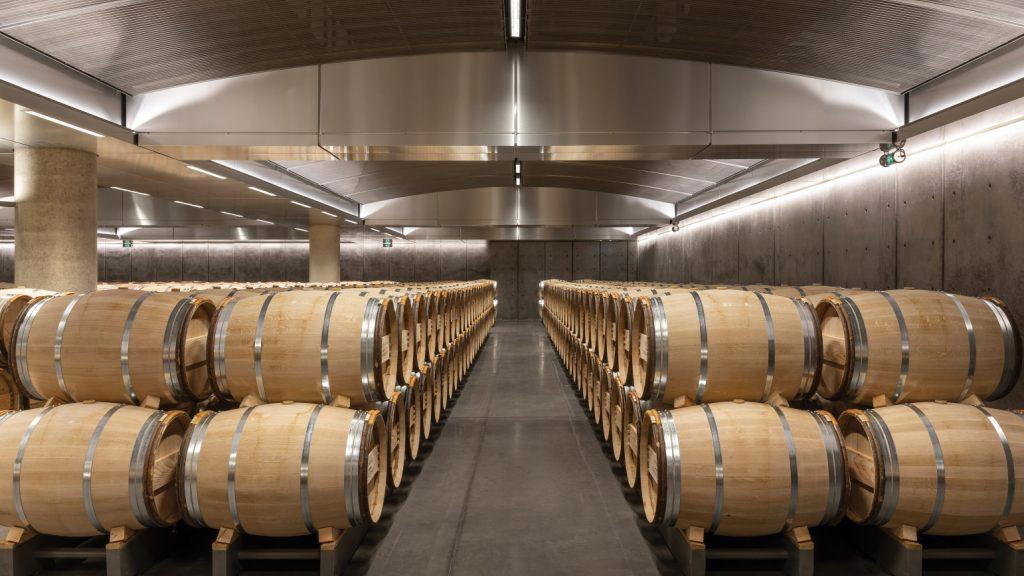
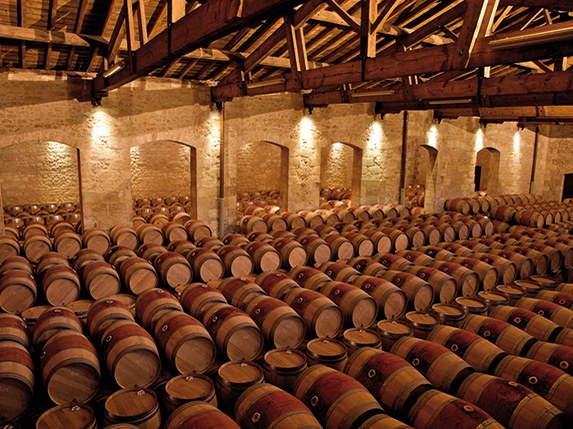
The barrel cellar at Pontet-Canet, showcasing rows of aging wine barrels under a wooden-beamed roof. At Lynch-Bages, the standard visit moves through the estate's working cellars, the barrel hall where the grand vin ages in French oak, the vat room where fermentation takes place in temperature-controlled stainless steel, before arriving at a seated tasting. Tours are conducted in French, English, and German, depending on availability.2 The estate's connection to the Cazes family's broader Bages village project gives the visit a slightly more polished, hospitality-oriented feel than a purely agricultural estate: the infrastructure for receiving visitors is well-developed, and the tasting room is set up for groups. What you taste depends on the format booked and the current release calendar; the grand vin, a blend dominated by Cabernet Sauvignon from the estate's parcels on the Pauillac plateau, is typically poured alongside at least one other wine from the portfolio. At Pontet-Canet, when a trade appointment is granted, the visit is more explicitly tied to the farming philosophy. Alfred Tesseron's decision to convert the estate to biodynamic viticulture, a process that unfolded over several years in the early 2000s, is woven into every part of the tour. The vineyard walk, where the absence of herbicides and the presence of cover crops between rows is visible, precedes the cellar visit. The cellar itself is notable for its use of gravity-flow winemaking: the estate's purpose-built facility minimizes pump-overs and mechanical intervention, which Tesseron argues preserves the aromatic integrity of the Cabernet Sauvignon and Merlot. The tasting typically includes the grand vin and Les Hauts de Pontet-Canet, and the conversation tends toward viticulture as much as vinification.
Alternatives Worth Considering
Pauillac and Médoc Classified Growth Visits: A Practical Comparison
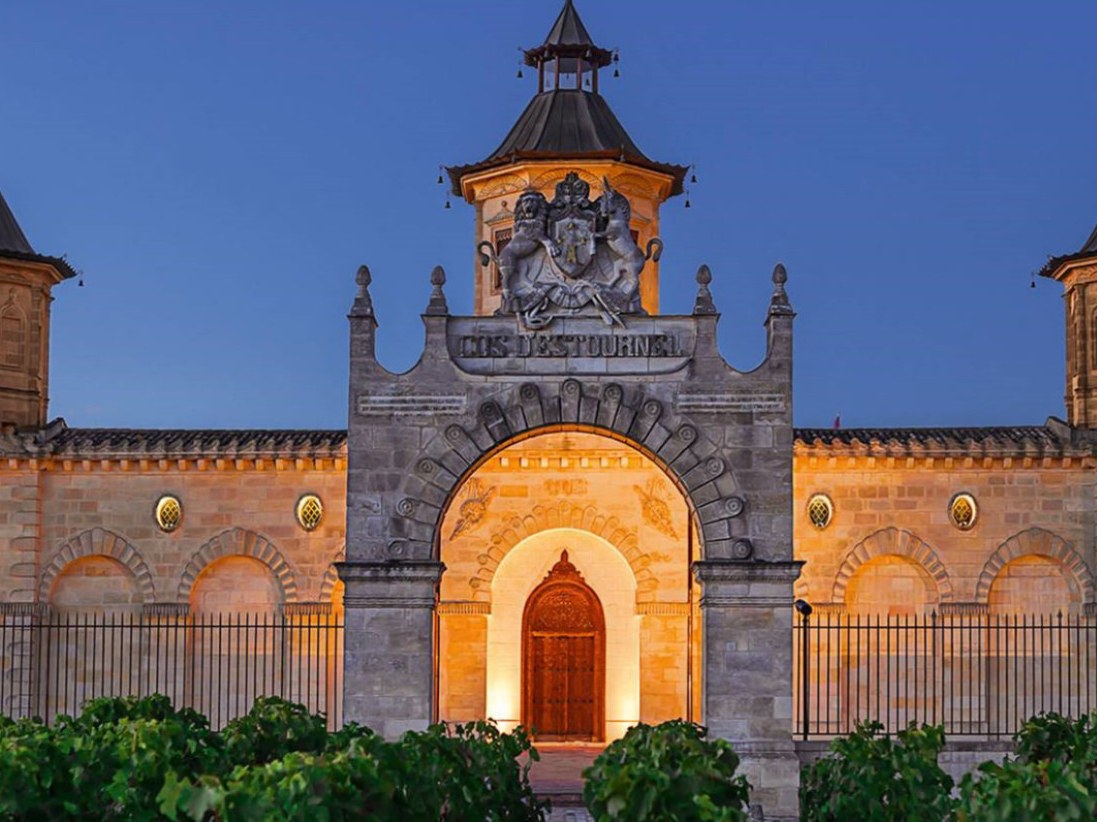
A Médoc château illuminated at dusk.
Estate
Appellation / Classification
Visit Difficulty
Booking Route
Distinctive Feature
Lynch-Bages
Pauillac, 5th Growth
Moderate, advance booking required
Direct via estate website
Bages village hospitality; adjacent Cordeillan-Bages Relais & Châteaux hotel; tours from €25pp
Pontet-Canet
Pauillac, 5th Growth
Not open to the general public; trade only, by appointment
Château architecture; strong trade visitor program
Léoville-Barton
Saint-Julien, 2nd Growth
Moderate, family-run, more personal
Direct with estate
Barton family ownership since 1826; no château on-site, pure working estate
Cos d'Estournel
Saint-Estèphe, 2nd Growth
Moderate to high
Direct / luxury wine tour operators
Orientalist architecture; one of the Médoc's most photographed estates
Pichon Baron, a few hundred metres south of Lynch-Bages on the D2, offers a comparable Pauillac experience with the institutional backing of AXA Millésimes, the visit infrastructure is polished and the 2nd Growth classification gives the tasting a different reference point. Léoville-Barton in Saint-Julien, still owned by the Barton family after nearly two centuries, is the closest thing the Médoc has to an unmediated family estate visit, no grand reception hall, just the working cellar and the wines. Cos d'Estournel in Saint-Estèphe is worth the detour if architecture interests you as much as wine; the pagoda-topped chai is unlike anything else on the left bank.
Who Should Make This Trip, and When
A Lynch-Bages visit, paired with a Pontet-Canet trade appointment if you have one, suits collectors who want to understand the 5th Growth tier of Pauillac from the inside, the wines that punch above their classification and have done so consistently for decades. It is also the right trip for anyone tracking Pontet-Canet's biodynamic evolution: the estate's trajectory since the mid-2000s, from conventional viticulture to full biodynamic certification, with the 2009 and 2010 vintages both earning a well-suited 100-point score from Robert Parker, is legible in the vineyard in a way that tasting notes alone do not convey. It is not the right trip if your primary goal is tasting first-growth Pauillac. Château Latour receives visitors only by appointment, primarily wine-trade professionals; Mouton Rothschild and Lafite Rothschild have their own visit programs but operate on different terms and with different access dynamics. The Lynch-Bages and Pontet-Canet pairing is the Pauillac visit for people who want depth over prestige signaling. A useful time to go is late spring (May, June) or early autumn (September), when the vines are at their most photogenic and the estates are in full operation without the harvest disruption of October.
Worth the Drive from Bordeaux?
Yes, with the caveat that the visit rewards preparation. Lynch-Bages is genuinely open to visitors in a way that many classified growths are not. Château Pontet-Canet does not welcome general-public visits; access is reserved for wine professionals and the trade. The Lynch-Bages direct booking route works; the estate's staff are accustomed to serious visitors and respond accordingly. If a trade appointment at Pontet-Canet can be arranged on the same day as Lynch-Bages, the pairing is the right move for anyone who wants to understand what 5th Growth Pauillac actually means in practice, two estates, same appellation, same classification, radically different philosophies. Lynch-Bages under the Cazes family is the Médoc as polished hospitality; Pontet-Canet under Alfred Tesseron is the Médoc as agrarian conviction. Tasting both on the same afternoon makes the contrast legible. Confirm pricing and format details directly, and build the day around the Bages village for lunch. For anyone willing to plan a few weeks ahead, Lynch-Bages remains one of the left bank's more accessible classified-growth visits; Pontet-Canet is not a general-public pairing.
Frequently Asked Questions
Can you walk into Lynch-Bages or Pontet-Canet without a reservation?
Neither estate operates a walk-in tasting room. Lynch-Bages requires advance booking through its website or by direct contact. Pontet-Canet does not welcome general-public visits; access is reserved for wine professionals and the trade, by appointment only.
Does Pontet-Canet welcome general-public visits?
No. Château Pontet-Canet does not welcome general-public visits. Access is reserved for wine professionals and the trade, by appointment only. Industry requests go through the estate.
Does a Lynch-Bages cellar tour include access to the Cordeillan-Bages hotel or Café Lavinal?
The Cordeillan-Bages hotel and Café Lavinal are separate operations within the Bages village project associated with the Cazes family. A standard château visit does not automatically include hotel access or a restaurant reservation, but the proximity makes combining a cellar visit with lunch at the Café Lavinal entirely practical, book the restaurant separately.
Is a vineyard walk included if a trade visit at Pontet-Canet is arranged?
Pontet-Canet does not offer a general-public visit format. For wine professionals and the trade, the vineyard component varies by appointment and season. The estate's biodynamic farming, including horse-plowed vine rows, is central to the visit narrative. Confirm the specific itinerary with the estate, as harvest season may affect vineyard access.
Does buying Lynch-Bages en primeur help secure a private cellar visit?
Purchasing Lynch-Bages futures through a négociant or merchant establishes a commercial relationship with the estate but does not automatically grant visit access. It can, however, provide a useful introduction when requesting a private or extended format visit, particularly for the less publicly advertised options. Contact the estate directly to discuss.