← Guides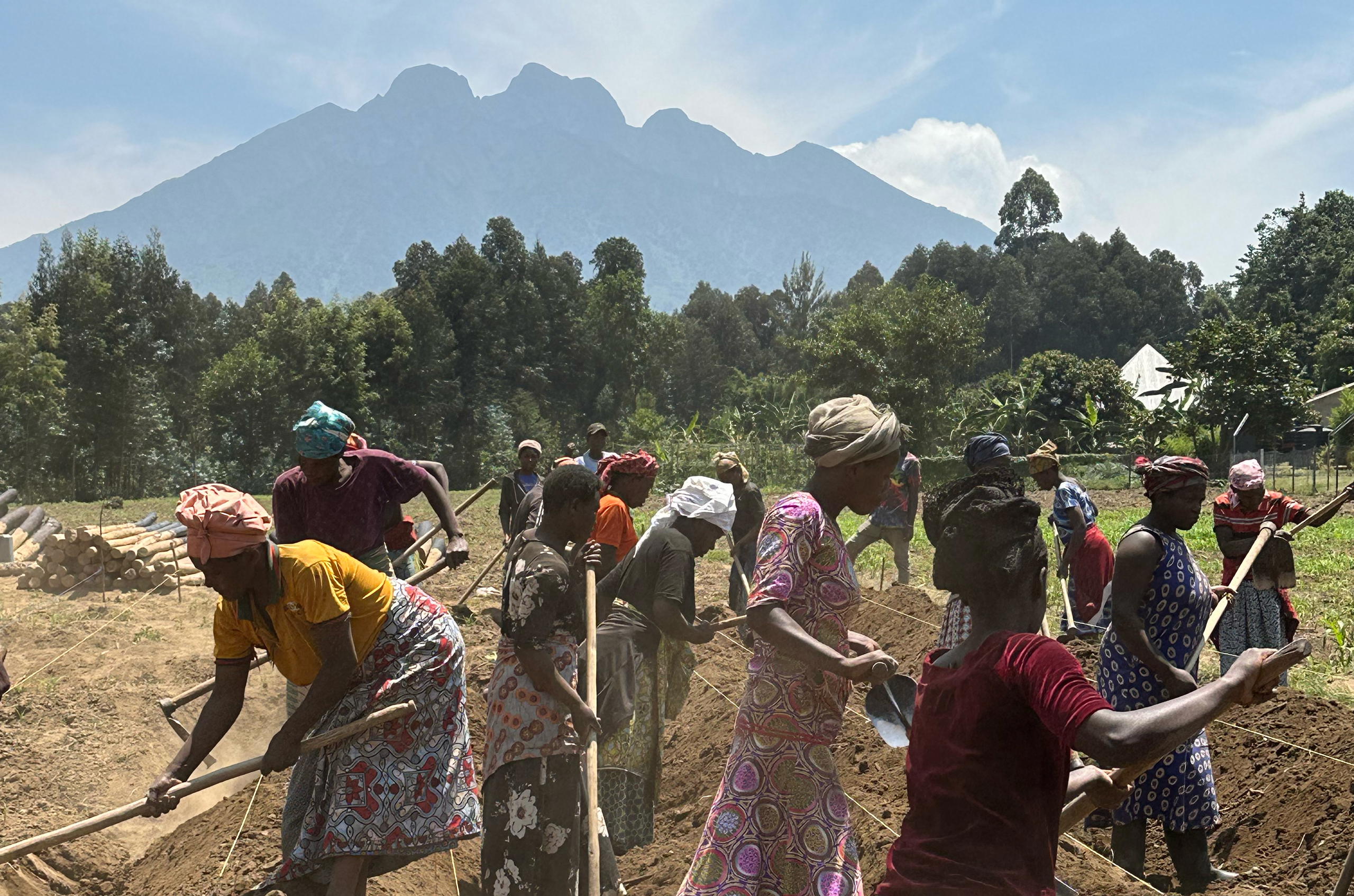
Rwanda’s Vinmusa project puts Sauvignon Blanc at 2,700m on Mount Karisimbi, with Chenin Blanc, ROC ambitions and retreats due in 2028.
Rwanda’s Vinmusa project puts Sauvignon Blanc at 2,700m on Mount Karisimbi, with Chenin Blanc, ROC ambitions and retreats due in 2028.
Vinmusa Rwanda vineyards put Chenin Blanc at 2,100m in Kinigi and Sauvignon Blanc at 2,700m on Mount Karisimbi, where Decanter identifies Rwanda as the site of Africa’s highest vineyard. The US$22 million Vinmusa project in the Virunga Highlands is testing whether a fine-wine region can be built from altitude, climate adaptation, hospitality revenue and cultural storytelling before the first traditional-method sparkling Chenin Blanc, Poppy, is expected in 2030 (Decanter1).
The timing matters because high-altitude viticulture has moved from romantic travel copy into practical viticultural strategy. Growers looking for cooler temperatures, diurnal shift and longer ripening windows now study mountain sites with the same seriousness once reserved for inherited grands crus. Rwanda’s fine-wine test will succeed or fail through volcanic basalt-derived soils at Kinigi, an 11.11°C average diurnal shift in the Virunga Highlands, hospitality-led revenue, and gorilla-linked cuvée names that place Poppy before collectors in 2030.
The Vinmusa Rwanda vineyards start with an operating model rather than a finished wine. Decanter reports that Vinmusa broke ground in September 2026 with the ceremonial planting of 150 Chenin Blanc vines at Kinigi, a site at 2,100m that Vinmusa plans as its flagship estate and hospitality hub. A further 4,661 vines followed across three sites, with 28,000 more planned for the next year (Decanter1).
The first vineyard retreats are scheduled for June 2028, and debut wines are expected in 2030. The watchlist case rests on site selection, technical advisers, vineyard survival and the quality of the first bottled statement (Decanter1).
The three sites give the project its first serious argument. Kinigi carries Chenin Blanc on volcanic basalt-derived soils and is planned with accommodation, a tasting gallery, the distillery and Kinigi Table restaurant. Mount Karisimbi reaches 2,700m and is planted with Sauvignon Blanc, with Chardonnay and Riesling under consideration. The Lake Burera site sits at 2,000m, where rocky red shale soils and warmer conditions have led Vinmusa to trial Pinotage and other red varieties (Decanter1).
Chenin Blanc at Kinigi gives the project a versatile white variety with a long record in South Africa, a useful reference point given the South African specialists involved through Vinpro. Sauvignon Blanc on Mount Karisimbi sets up a sharper test of aromatic retention and acidity at elevation. Lake Burera’s red-variety trials acknowledge that one Rwandan highland mesoclimate will not settle every question.
The altitude claim will bring the first wave of attention, especially for travelers who already know Volcanoes National Park through gorilla trekking. The longer question is whether Vinmusa can convert attention into a wine identity that outlives the novelty of a 2,700m vineyard. That is why the planned Rwanda Origin Control, or ROC, matters. Vinmusa aims to establish an appellation system before Rwanda has the accumulated vintages that usually give an appellation its grammar.
Vinpro’s feasibility studies give the Vinmusa Rwanda vineyards a technical spine. The studies found a mean annual temperature of 16.49°C in the Virunga Highlands, inside the 13°C to 17°C range described for cool- to moderate-climate viticulture. The same work found an average diurnal shift of 11.11°C, a number that points toward acidity retention and aromatic freshness if the vines can ripen healthy fruit.
Mount Karisimbi and Kinigi have a cool mean temperature and a double-digit diurnal range. At 2,700m, Mount Karisimbi gives Vinmusa a site whose elevation forces a technical conversation about ripening, canopy management, disease and harvest timing.
High rainfall, humidity, fungal disease pressure and the lack of real winter dormancy sit at the center of the viticultural risk. Liam T Dall, Vinmusa’s co-founder, has said there is no real winter, making dormancy an issue. Proposed responses include controlled dormancy, raised rows for drainage, vertical trellising, rain covers and pruning timed for an August harvest during the drier period.
Raised rows are a drainage decision in a wet place. Rain covers are a response to fungal pressure. Pruning for an August harvest gives the project calendar discipline.
Traditional regions with rising temperatures look uphill because altitude can slow ripening and preserve acidity. Rwanda’s Virunga Highlands introduce a different equation: elevation helps, but humidity and dormancy complicate the usual high-altitude script. A 16.49°C mean annual temperature cannot carry the project if disease pressure defeats the fruit before harvest.
Vinmusa has disclosed climate data, local labor, disease management, water movement, hospitality infrastructure and long-term patience. The next serious wine regions will not emerge because a consultant finds a scenic slope and plants fashionable varieties. They will emerge where climate data, local labor, disease management, water movement, hospitality infrastructure and long-term patience align. Vinmusa has disclosed enough of the challenge to make the project more interesting than a novelty vineyard at altitude.
Vinmusa is described as a US$22 million wine and hospitality development, and that structure gives the vineyards a financial runway that a bottle-only project would struggle to secure. Most of the revenue is expected to come from hospitality. Andrés de la Roche has said Vinmusa would be crazy to do only a winery, and the estate is envisaged with accommodation, gastronomy, art and cultural experiences.
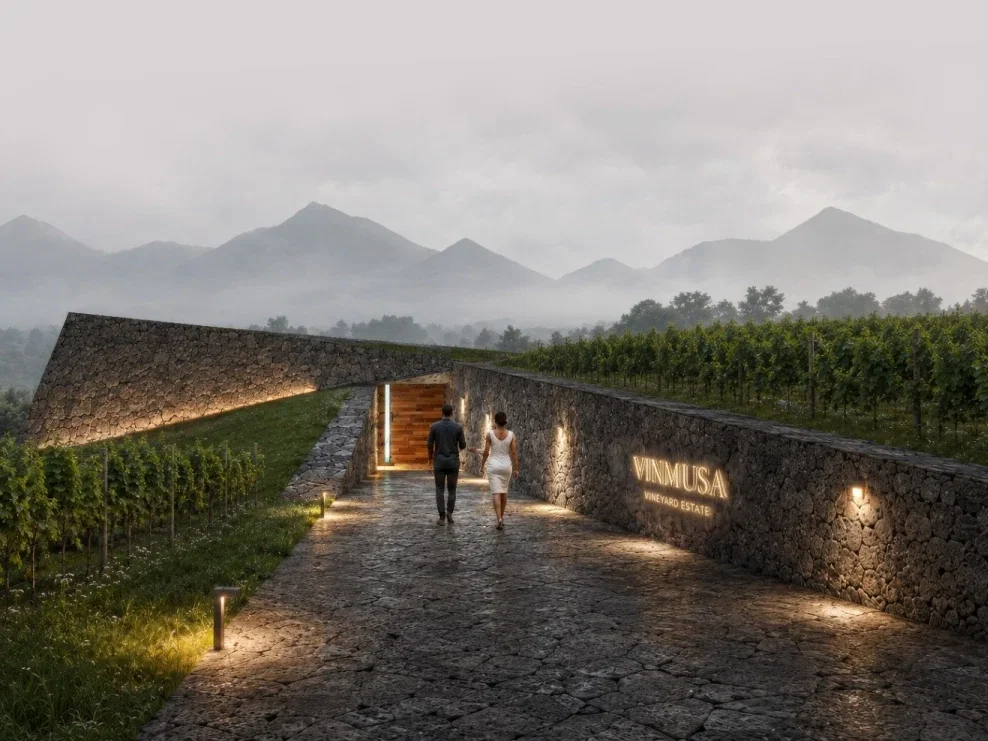
Kinigi is already planned as the hospitality hub, with accommodation, a tasting gallery, the distillery and Kinigi Table restaurant. The vineyard retreats scheduled for June 2028 arrive before the debut wines expected in 2030, which means Vinmusa plans to bring guests into the project while the wine story is still forming.
That sequence is unusual by traditional wine-region standards, but it fits Rwanda’s tourism reality. The Virunga Highlands and Volcanoes National Park already draw visitors for gorilla trekking. Vinmusa’s founders identified a pattern in which travelers often leave soon after that experience, while lodges in the area command high rates. Vinmusa aims to encourage longer stays by combining wine, gastronomy, art and cultural experiences around the vineyards.
That view deserves respect. Wine history includes properties where architecture outran agriculture, and the first bottle exposed the imbalance.
Vinmusa’s answer has to be practical rather than rhetorical. The project assembled South African specialists through Vinpro, including viticulturist Gert Engelbrecht and winery engineer Gerard de Villiers, who is associated in Decanter’s report with Babylonstoren and Delaire Graff. Philip Jonker, fourth-generation winemaker at Weltevrede and founder of AFRI.CAN, is designing the winery infrastructure. Those names matter because hospitality cannot solve fungal pressure, dormancy or harvest timing.
A 2030 debut wine means there is no mature vertical, no secondary-market record and no critic consensus. The first signal will come from the way the project manages its sites, its retreats and its early communication with guests. Kinigi can show Chenin Blanc on basalt-derived soils, Rwandan food at Kinigi Table and Poppy made by the traditional method.
Andrés de la Roche has said, “We’re naming our wines after the gorillas.” The first planned wine, Poppy, is a traditional-method sparkling Chenin Blanc named after a famous Rwandan gorilla. That choice links the wine to Rwanda’s best-known conservation and tourism narrative, and it gives the cuvée a cultural reference before anyone has tasted the mousse, dosage or acid line.
Here, the stronger reading is that Vinmusa understands provenance as cultural as well as geological. Kinigi’s basalt-derived soils matter. Mount Karisimbi’s 2,700m elevation matters. Lake Burera’s rocky red shale soils matter. The gorilla names matter because Rwanda’s visitors already encounter the country through conservation, mountain tourism and the annual Kwita Izina gorilla-naming ceremony, which coincided with the ceremonial planting at Kinigi.
Rwanda Origin Control is abbreviated ROC.
The strongest appellation systems do two things for drinkers. The strongest appellation systems identify where the wine comes from and narrow expectations without reducing the wine to a formula. ROC will need that discipline if it develops beyond an internal framework for Vinmusa. The three sites already offer Chenin Blanc on volcanic basalt-derived soils at Kinigi, Sauvignon Blanc at the highest Mount Karisimbi site, and red-variety trials at warmer Lake Burera on rocky red shale.
Poppy also clarifies the project’s first stylistic bet. Chenin Blanc gives the project a grape with enough range to handle sparkling ambition if the base wine can deliver precision. The 2030 debut date keeps judgment on Poppy suspended.
The naming strategy will show in the bottle, the farming and the way Vinmusa explains each site to guests. The difference will show in the bottle, the farming and the way Vinmusa explains each site to guests. If Poppy tastes like a serious sparkling Chenin Blanc shaped by Kinigi rather than a tourism keepsake with a gorilla label, the cultural storytelling will strengthen the wine rather than decorate it.
The convincing objection to the Vinmusa Rwanda vineyards is simple: new wine regions are difficult even without high rainfall, humidity, fungal disease pressure and irregular dormancy. Mount Karisimbi’s 2,700m elevation supplies attention, but it also sharpens risk. Sauvignon Blanc can carry acidity and aromatic lift in cool sites, yet no grape variety removes the need for clean fruit and consistent ripening.
The lack of a true winter dormancy period may prove more difficult than altitude. Dormancy gives vines a seasonal reset in many established regions. In the Virunga Highlands, Vinmusa is considering controlled dormancy and pruning for an August harvest. That means the project must create viticultural order in a climate that does not naturally follow the temperate-cycle assumptions behind much European winegrowing.
Rain covers and raised rows add another layer of complexity. They may protect fruit and improve drainage, but they also change labor requirements, vineyard appearance and farming rhythms. Vertical trellising can help manage canopy structure, but canopy decisions in humid conditions demand precision. If Vinmusa wants collectors to take the 2030 wines seriously, the first bottles must show that the team turned these interventions into clarity rather than compromise.
The second objection concerns appellation timing. Rwanda Origin Control is an ambitious aim before the market has tasted a first vintage. Appellation language can sound premature when the vineyards have only begun their work. Burgundy, Barolo and the Mosel did not become reference points because someone named a control system early; they became reference points because generations of growers repeated decisions across sites and vintages.
Vinmusa can answer that objection by treating ROC as a discipline, not a badge. The project has already separated its three sites by elevation, soil and variety trial. That is the right starting point. A future ROC with credibility would need to preserve those distinctions rather than smooth them into a single Rwandan highland story.
The third objection is commercial. When most revenue is expected to come from hospitality, wine can become an amenity unless the estate protects vineyard seriousness. Here, the June 2028 retreats will matter. The pre-debut retreats can present the hard parts of the project: the 11.11°C diurnal shift, disease-pressure management and the logic behind Poppy as a traditional-method Chenin Blanc. A polished tasting gallery without that content would undersell the real work.
The Vinmusa Rwanda vineyards combine site specificity, climate data, specialist input and a hospitality model tied to an existing travel circuit in Volcanoes National Park. Poppy and the other debut wines are expected in 2030. The project’s next markers are the 2028 retreats, the next planned 28,000 vines, the performance of Chenin Blanc at Kinigi and Sauvignon Blanc on Mount Karisimbi, and the way Vinmusa defines Rwanda Origin Control.
The first vineyard retreats are scheduled for June 2028. The retreats are scheduled before the debut bottles. The project includes Chenin Blanc planted at 2,100m, a Mount Karisimbi site at 2,700m, Lake Burera red-variety trials at 2,000m, and a hospitality plan that places wine beside gastronomy, art and conservation-linked storytelling.
Vinmusa is testing whether its combination of altitude, data and culture can produce wines with identifiable origin. If the first wine shows the acidity and line implied by the Virunga Highlands’ 11.11°C diurnal shift, Poppy will become the first serious reference point. If the wine leans on the story without the structure, the market will notice quickly.
Rwanda adds rainfall, humidity and dormancy challenges to the question of climate adaptation. Fine wine has always rewarded place, but the definition of viable place is changing as growers seek cooler exposures and higher elevations. Rwanda adds a harder version of that question because elevation comes with rainfall, humidity and dormancy challenges. Vinmusa’s value lies in how publicly those variables are being tested across three sites.
Dall has framed Rwanda as a small nation thinking expansively about its future, and that is the correct scale for this project. Vinmusa’s Rwanda vineyards will matter if the 2030 wines show disciplined farming rather than altitude alone, and the next signal comes in 2028 when travelers step into Kinigi before the first bottles are released.
Get the App
Take the shortlist into the En Primeur Club app for concierge access, saved places, and the next step after discovery.
Get Exclusive AccessMore from the editors