← Guides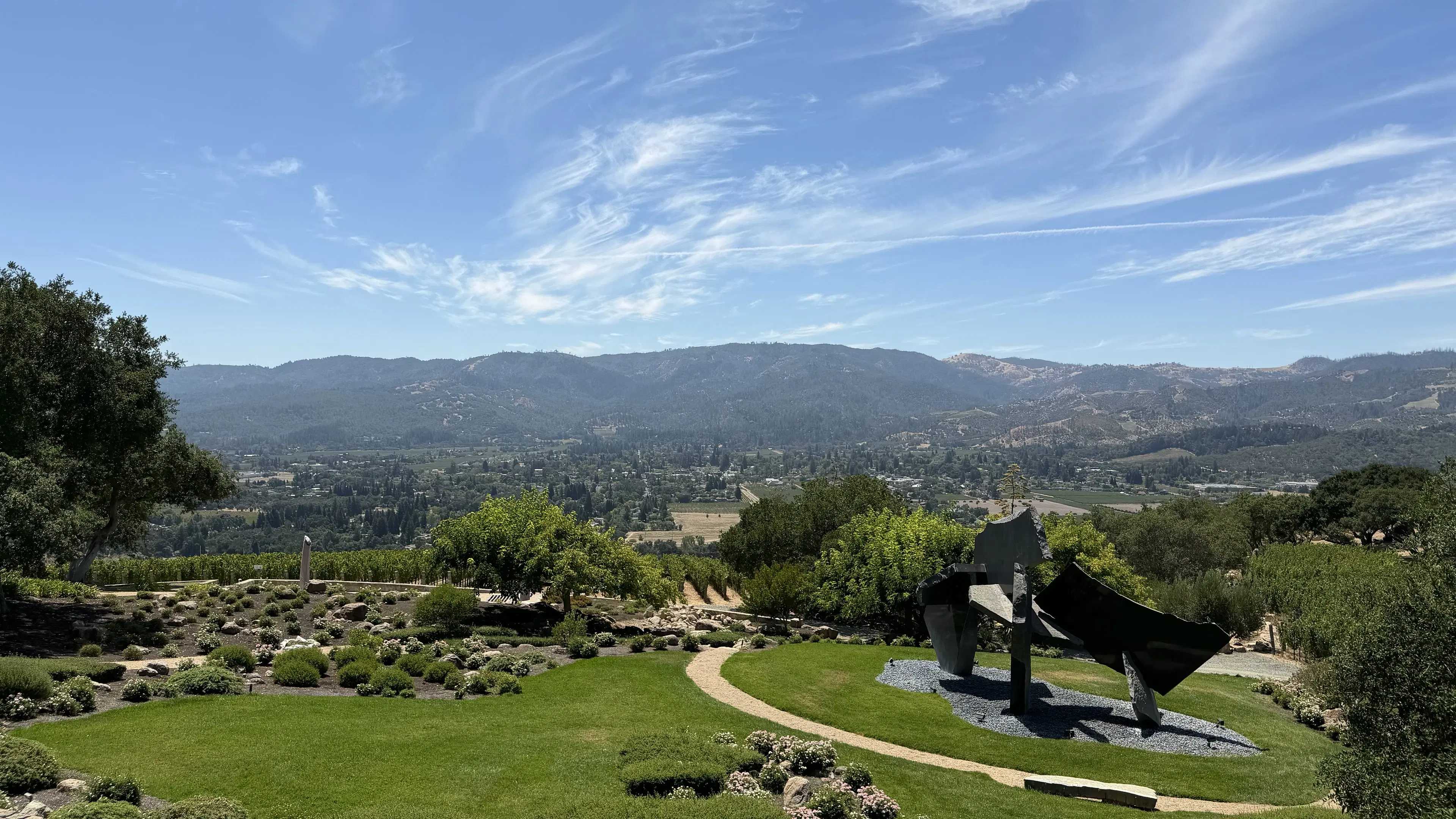
Our private Seven Stones visit above Meadowood paired Napa Valley’s most astonishing winery view with a major contemporary-art collection and tiny-production Cabernet by Aaron Pott.
Our private Seven Stones visit above Meadowood paired Napa Valley’s most astonishing winery view with a major contemporary-art collection and tiny-production Cabernet by Aaron Pott.
Seven Stones sits privately above Meadowood, in a location that made us stop and ask: How did we not know this was here? The art collection is unlike anything we have seen at another winery. Then there are the wines: tiny-production Cabernet made by Aaron Pott, powerful enough to feel unmistakably Napa yet elegant enough that the landscape never becomes the only reason to remember the visit.
The first glass made the point before we ever sat at a tasting table. We were handed Vilmart & Cie Grand Cellier Champagne on a covered terrace. Below us, seven enormous slabs of granite appeared to balance against the valley, with gardens, vines and the Mayacamas stretching across the horizon. The sculpture was there before the commercial wine and ultimately gave Seven Stones its name. That sequence says almost everything about the estate. Art is not decoration added around a tasting program here. Art, land, hospitality and wine are the program.
Collectors seeking a Seven Stones-focused appointment can request a visit through the estate or email concierge@enprimeurclub.com.
Yes, enthusiastically, if you can secure the appointment.
Seven Stones is for the collector who would rather spend a few unhurried hours inside one intensely personal world than move through three conventional tasting rooms in a day. It is also one of Napa's strongest visits for someone who cares as much about contemporary craft and sculpture as Cabernet Sauvignon. The wines are notable, but what makes the appointment rare is the way a 50-ton sculpture, a shelf of small wood objects, a glass of Champagne and a tiny-production estate wine all feel like parts of the same conversation.
| Detail | What to know |
|---|---|
| Location | In the eastern hills of St. Helena, behind the Meadowood gate and above the resort |
| Style | Private, art-led, intimate and highly tailored |
| Visit format | By advance appointment; estate, art and bespoke wine tasting |
| Our arrival glass | Vilmart & Cie Grand Cellier Champagne on the overlook |
| Wines tasted | 2023 The Collection by Seven Stones Napa Valley and 2022 Seven Stones Estate |
| Winemaker | Aaron Pott, the estate's day-to-day winemaker since 2007 |
| Art centerpiece | Richard Deutsch's monumental Seven Stones, installed before the first commercial vintage |
| Best for | Serious wine collectors, contemporary-art lovers, private hospitality and special Napa occasions |
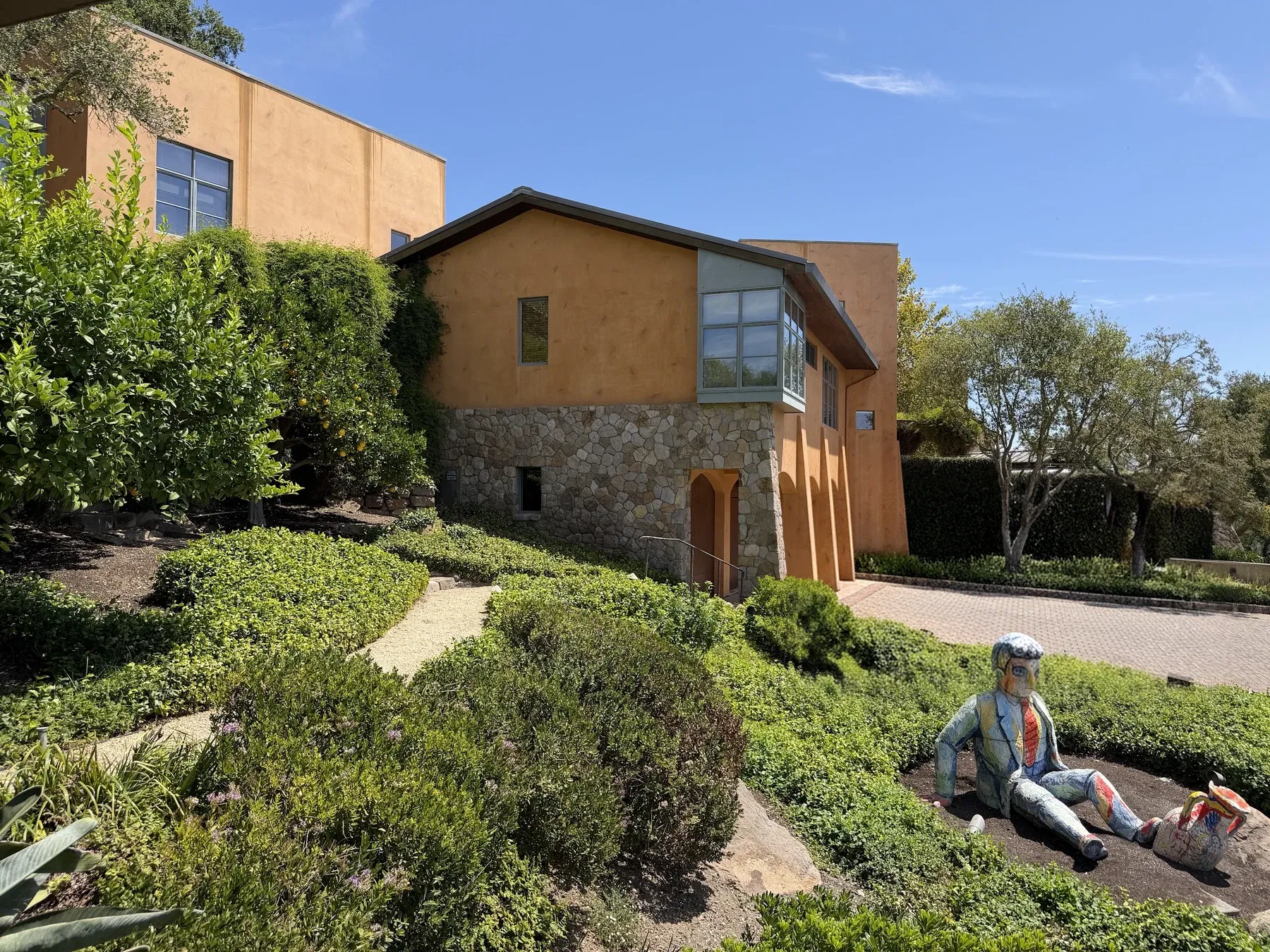
The privacy begins with geography. Seven Stones sits in the eastern hills above St. Helena, reached through the Meadowood gate rather than from a public tasting-room entrance on Highway 29 or Silverado Trail. The approach immediately changes the pace. You leave behind the signs, buses and roadside traffic that can make a busy Napa day feel like a circuit, then climb toward a residence that reveals itself gradually through trees, stonework and thick ivy.
That intimacy is genuine. The estate encompasses roughly 45 acres, but the official wine page identifies just three organically farmed hillside vineyard acres. The scale is tiny even by Napa's allocation-driven standards.
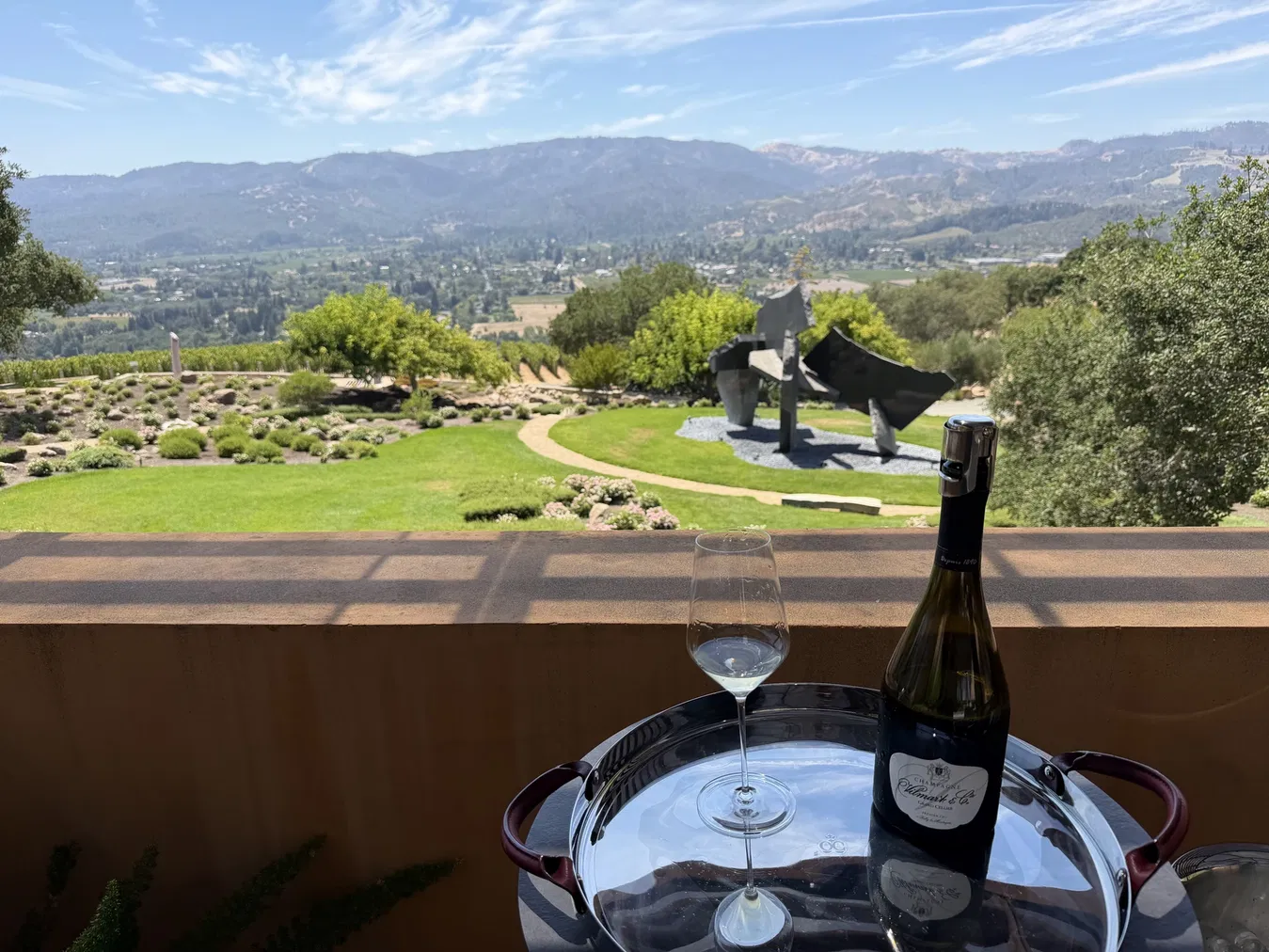
The service was simple and polished: a chilled bottle, one glass, a silver tray and an uninterrupted view across the garden. It was exactly the right way to arrive. Champagne made the first few minutes celebratory without forcing us immediately into Cabernet analysis, and the terrace let the property explain itself visually.
The valley opened in layers. Formal planting and soft garden paths sat closest to us. Richard Deutsch's black-and-silver granite composition anchored the lawn below. Beyond it were vineyard rows, the St. Helena floor and the ridges of the Mayacamas. The sky seemed to occupy half the frame. Even after many Napa visits, the scale felt startling.
This is our favorite winery view in Napa Valley. It combines elevation, breadth and a strong foreground rather than offering a distant panorama alone. You do not just look over vineyards. You look through a complete composition of garden, sculpture, vines, town and mountain.
The visit could have coasted on that setting. It did not. Once we began walking, the art inside the residence became every bit as compelling as the outlook.
The property has unusually serious Napa provenance. Ron and Anita Wornick acquired the 45-acre estate from Bill Harlan in 1995. It grew from a private hillside residence and family-scale wine project into the singular art-and-Cabernet destination it is today.
Ron Wornick's biography was as unexpected as the estate. He trained at MIT, worked in food science and built a company whose military rations became part of the modern MRE program. He was also a woodworker and an obsessive collector of contemporary craft. Anita shared that commitment, and together they began assembling what became one of the country's most important private collections of post-1980 craft.
Wine initially came on a family scale. The Wornicks planted about an acre and made private wine, with their son Kevin producing vintages from 1999 through 2004. Encouragement from friends in Napa helped push the project into commercial life. Brad Grimes made the first two commercial vintages, 2005 and 2006, before Aaron Pott took over in 2007.
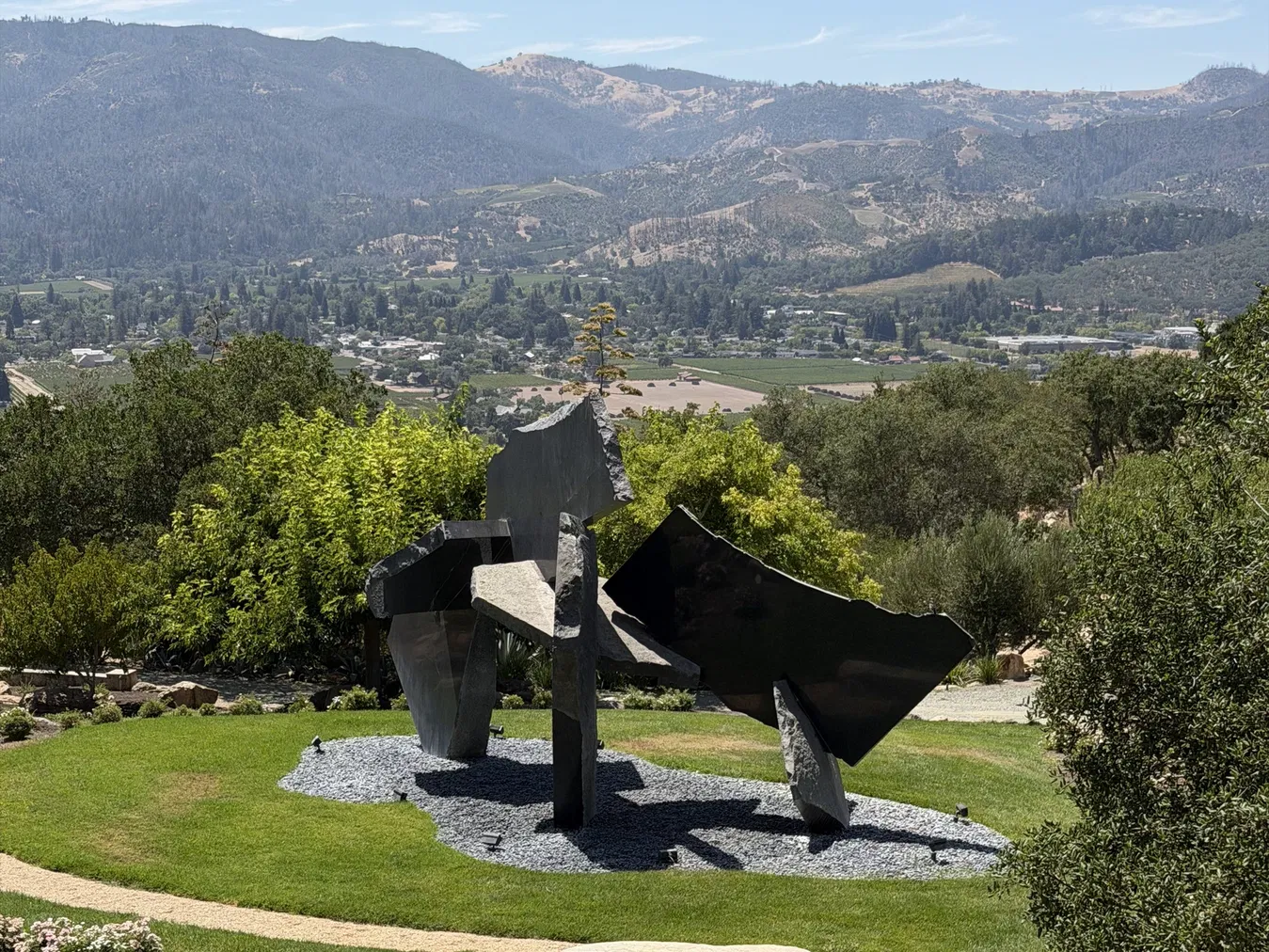
The namesake work is Richard Deutsch's Seven Stones, installed in 1999. Seven massive black-and-silver granite slabs are joined by steel in a composition measuring approximately 20 by 36 by 17 feet and weighing about 50 tons.
Deutsch has connected it to the ruins he studied in Italy: broken columns, collapsing arches and porticoes that retain emotional force precisely because they are incomplete. From the terrace, the sculpture can read almost like a black abstract animal. Up close, the mass and delicacy become clearer. Each slab is unquestionably heavy, yet the composition feels suspended in the instant before movement.
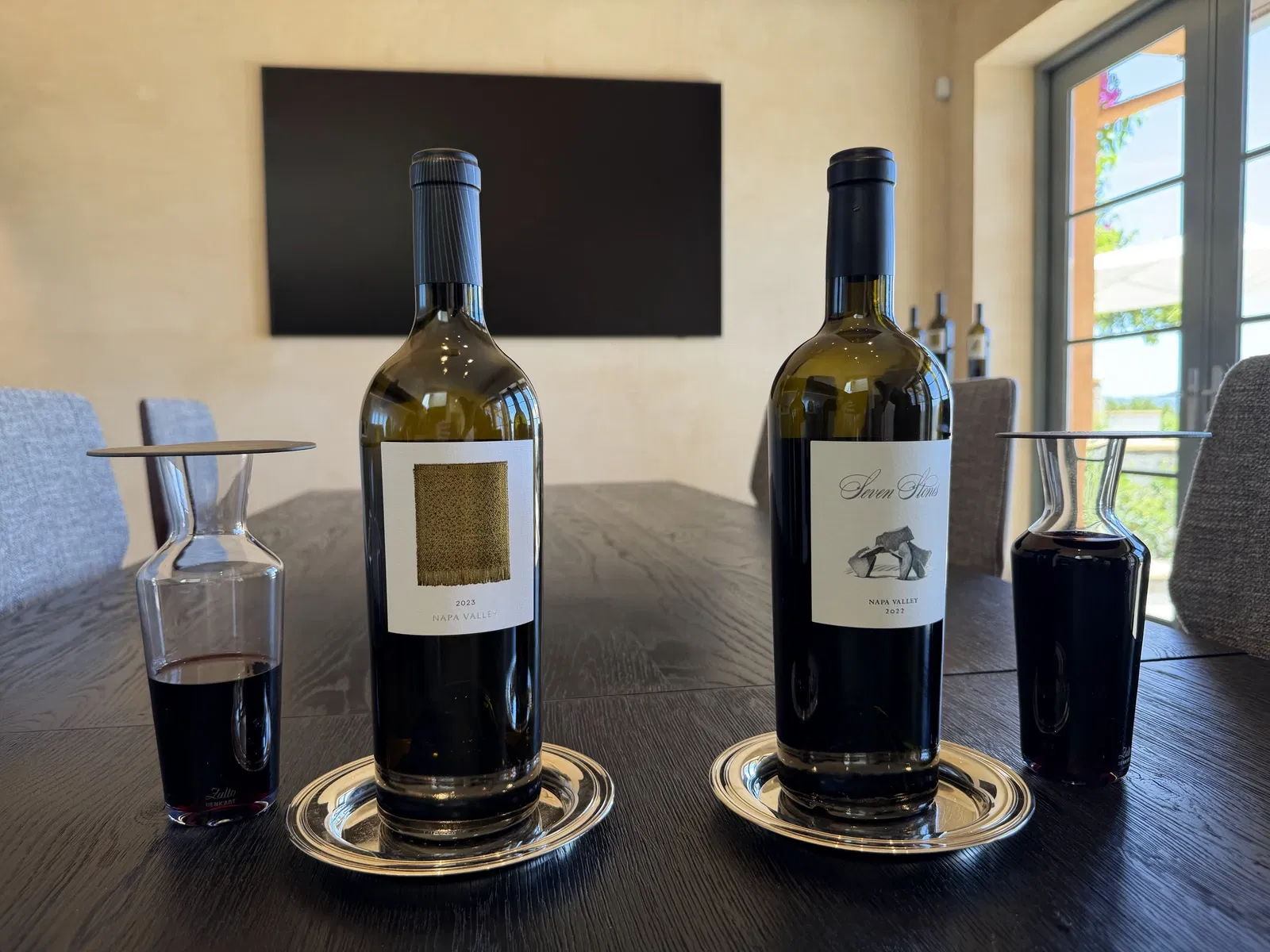
The 2022 Estate label we tasted reproduces the sculpture in a fine, almost sketch-like image. Seeing the bottle indoors after walking around the work outside turned the label from branding into a reference point. It was a concise reminder that Seven Stones' visual identity is rooted in an actual place and object.
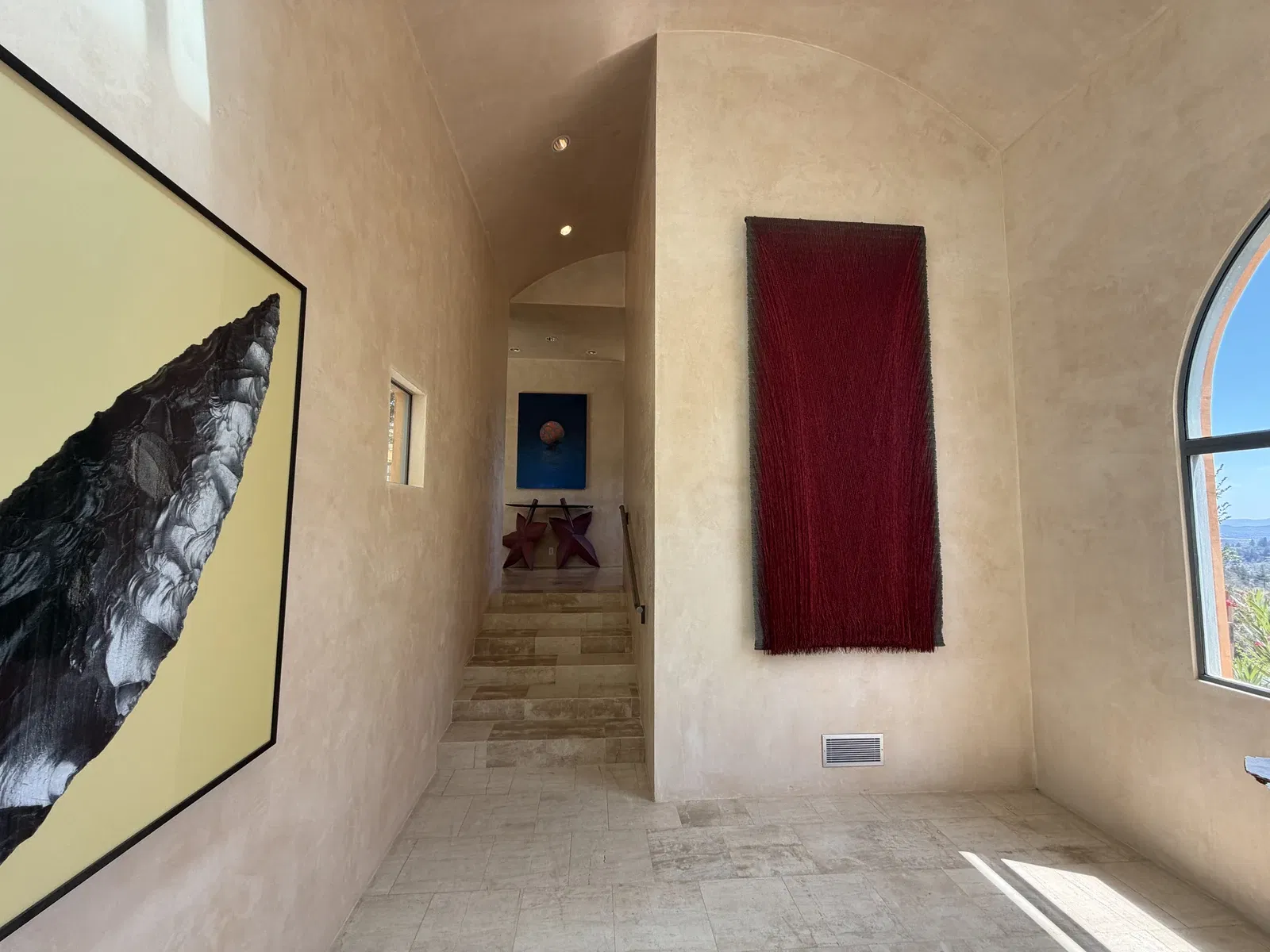
The art collection is one surprising part of the visit. Napa has many wineries with sculpture gardens, commissioned installations or expensive paintings. Seven Stones feels different because the collection is domestic, dense and personal. You move from a large outdoor piece into rooms where art sits at human scale: a textile filling a wall, a sculptural table under a painting, turned vessels on open shelves, a suspended wood sphere, ceramics, furniture and objects that reward looking from several angles.
Ron and Anita Wornick began collecting contemporary decorative arts in 1985. Wood was an early focus, but the collection grew to include ceramics, glass, metal, fiber and furniture. The Museum of Fine Arts, Boston presented nearly 120 highlights in its 2007 exhibition Shy Boy, She Devil, and Isis, and the Wornicks promised a much larger body of work to the museum.
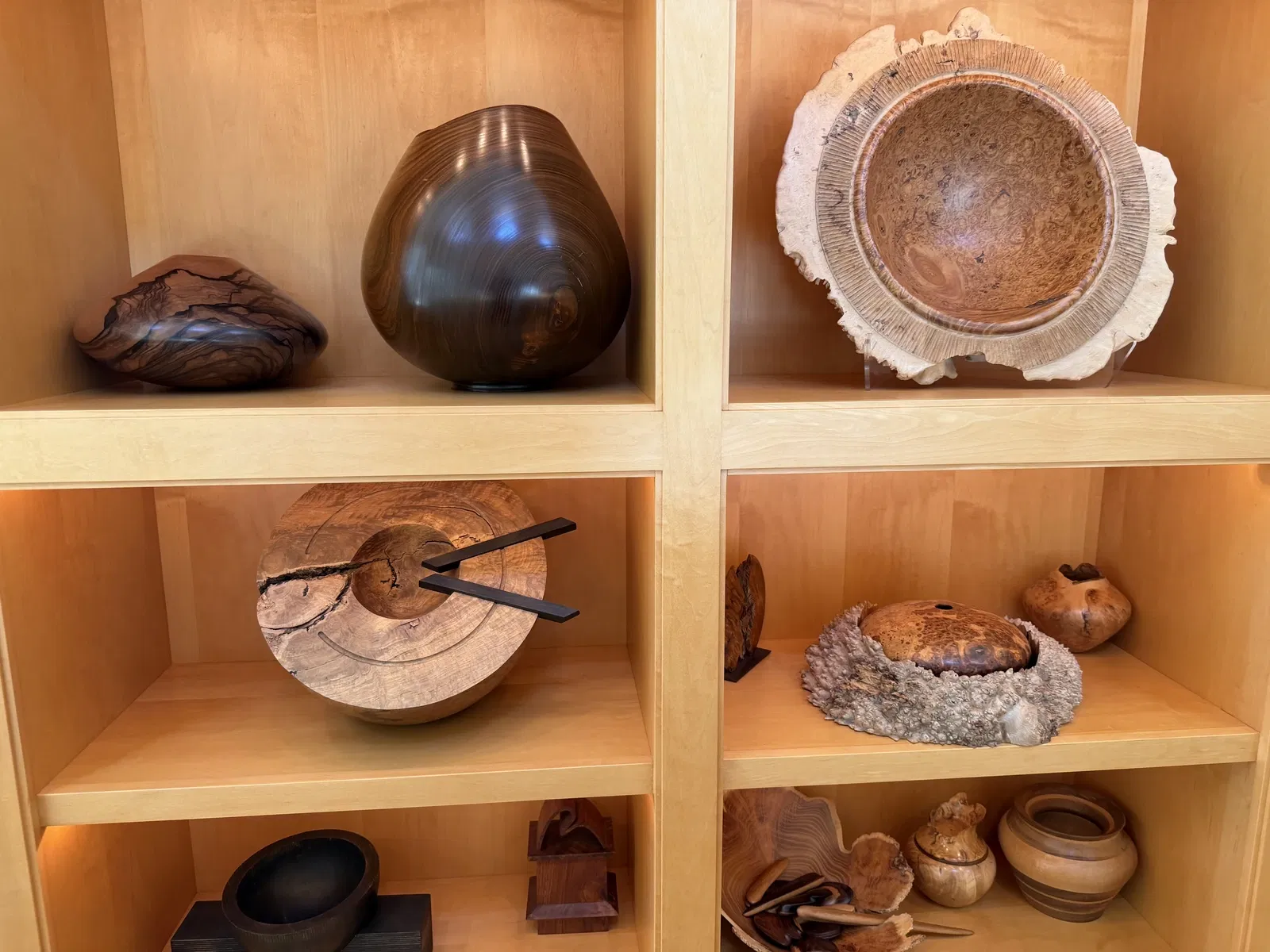
That institutional recognition is useful context, but the visit makes the collection legible without a museum label. The shelves of small sculptural vessels were among our favorite moments. From a distance, they look like a beautifully arranged library of bowls and boxes. Closer inspection reveals that no two objects solve shape, grain, void and balance in the same way. The display is generous rather than precious. The objects have space, but they remain part of a room designed for people.
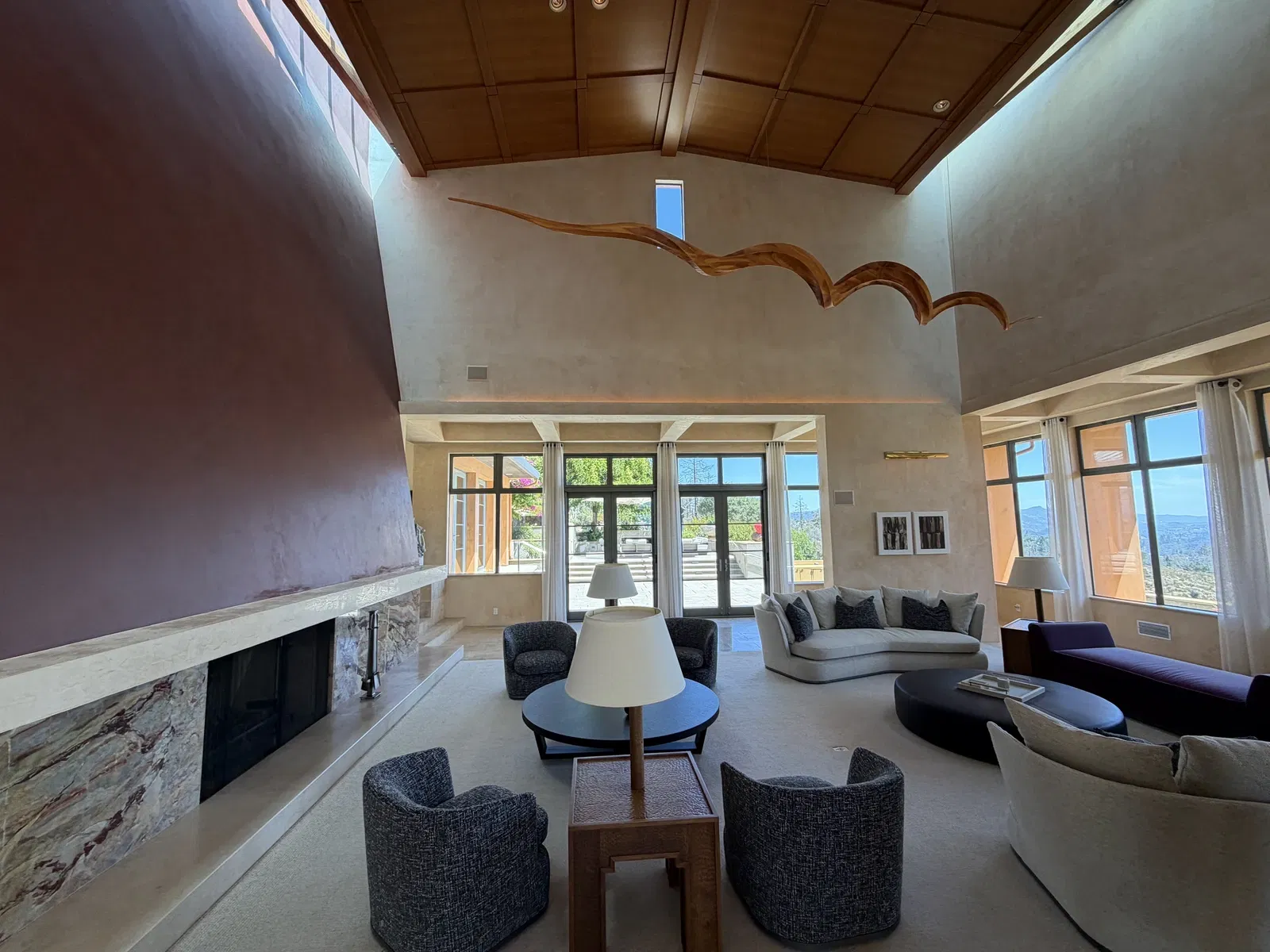
The architecture supports that domestic feeling. Pale stone and plaster hold the light. Warm wood ceilings and floors keep the large rooms from becoming gallery-white. Windows frame gardens as if the landscape were another artwork. A red textile climbs a high wall near an arched window. A sinuous line runs across the great room above the fireplace like a drawing loosened from paper.
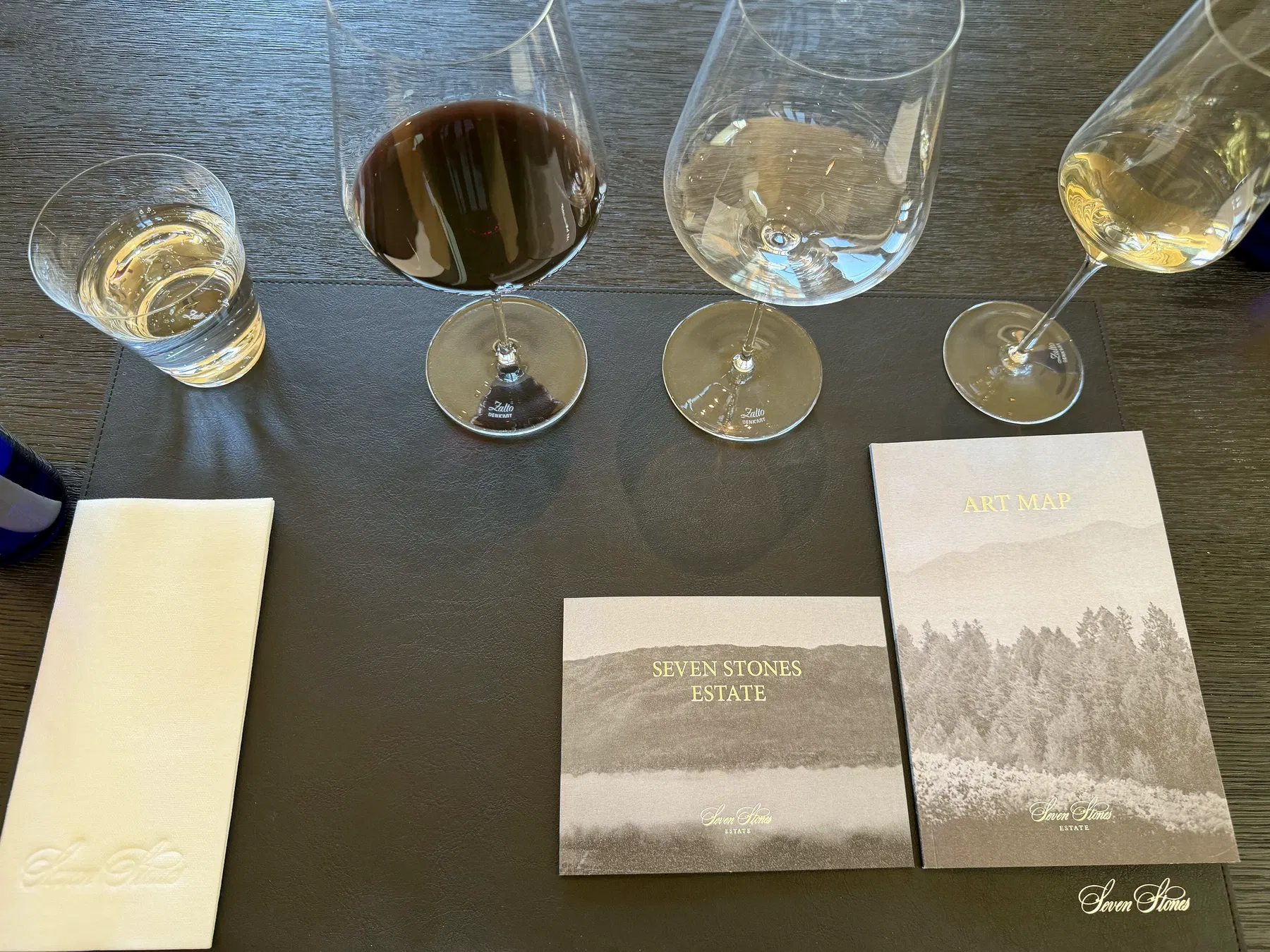
Current official materials identify outdoor works by Richard Deutsch, David L. Phelps, Viola Frey, Glenna Goodacre, Guy Dill, Dan Haynie, Natalie Clark, Hans Van de Bovenkamp and Bruce Mitchell. We carried a separate art map during the tasting, which made the collection feel like a second itinerary running alongside the wine.
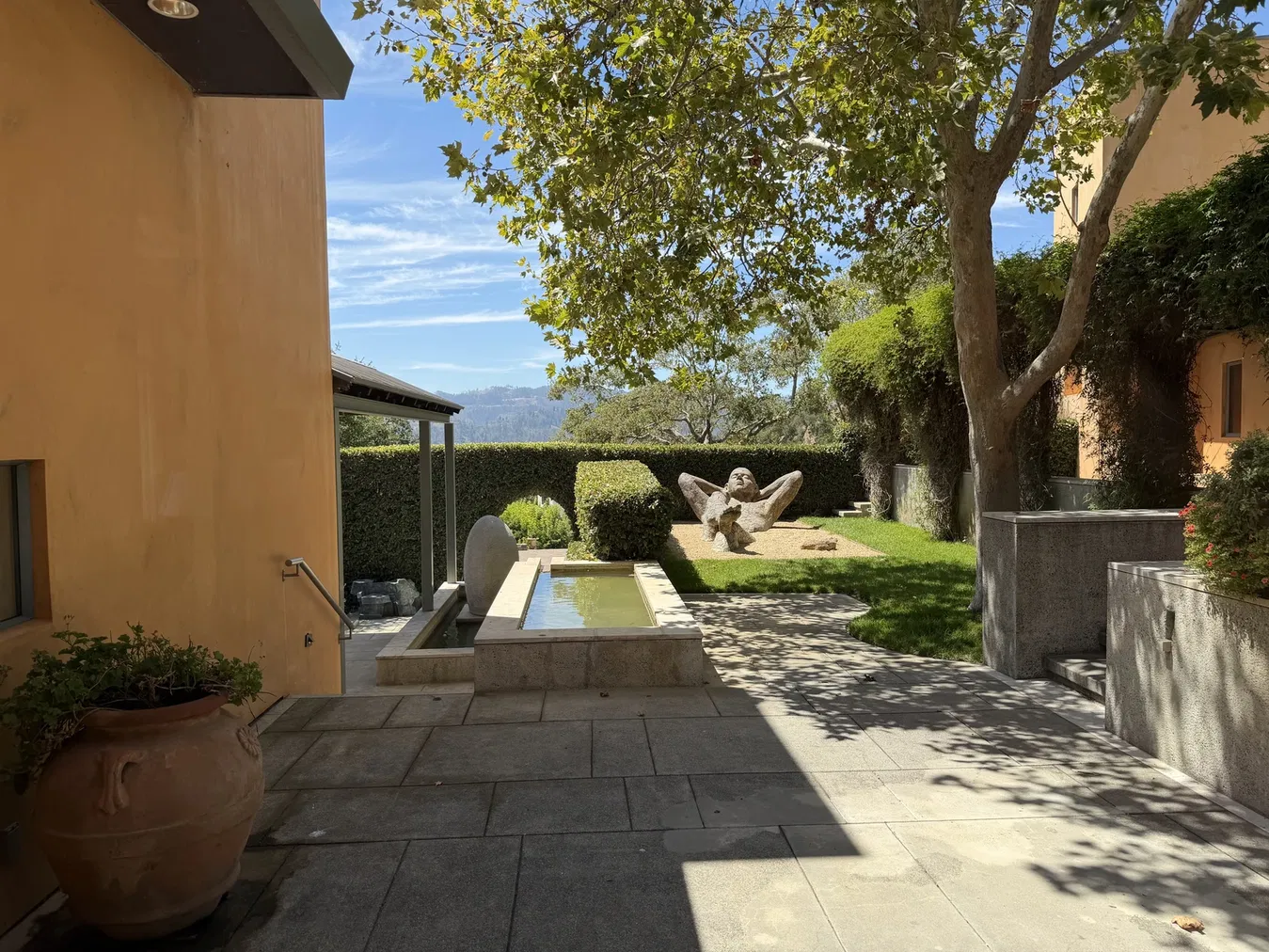
The pieces outdoors are especially effective because they are not confined to a single sculpture court. A figure appears from clipped planting as though the garden has grown around it. Another work sits beside water. Paths shift between formal edges and looser rock gardens. The namesake sculpture commands the long view, but smaller discoveries keep the walk from becoming a march toward one icon.
Seven Stones was acquired in 2022 by an affiliate of South Korea's Hanwha Group for a reported $34 million. The current program reflects active investment while preserving the estate's private, art-centered character.
The new ownership has continued to place art at the center. Seven Stones launched an artist-in-residence program in 2024 with Seoul-based photographer Kyoungtae Kim; participating artists have included Tae Im Ha, Lydia Park and Myoung Wook Huh, among others.
The 2023 The Collection label in our tasting also connects wine to art. It reproduces Cesta Lunar 64 by Colombian artist Olga de Amaral, whose woven work treats fiber almost like architecture. The restrained gold field on the bottle is easy to overlook until you have walked past the estate's own wall-size textiles and craft objects. Then it feels completely coherent.
Seven Stones currently describes three acres of organically farmed hillside vineyard in low-yielding volcanic soils. Estate conversations placed total planted acreage closer to four, with only part of it contributing to wine while fire-damaged and replanted blocks mature. At this scale, every row and barrel has consequence.
The 2020 Glass Fire reached the property. Walking the grounds in 2026, we could still see the event in the wider landscape: living vines and gardens against stands of blackened or dead trees, with recovering hills beyond. The visit did not feel somber, but it did make the long time horizon of winegrowing visible.
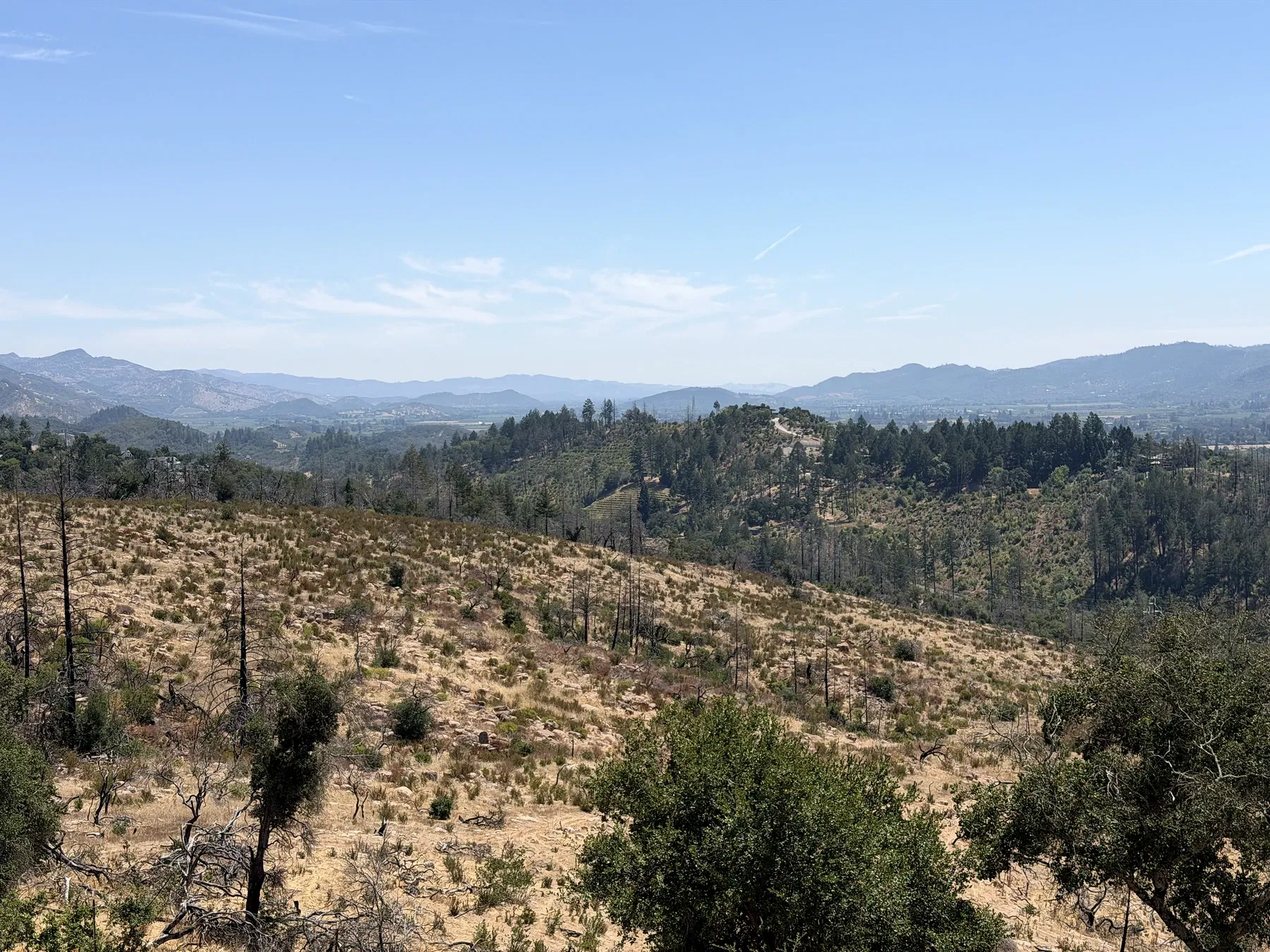
According to our host, David Abreu's team developed the original hillside blocks, primarily Cabernet Sauvignon with Cabernet Franc in an upper section. The terrain changes quickly, with color and rock content shifting across short distances.
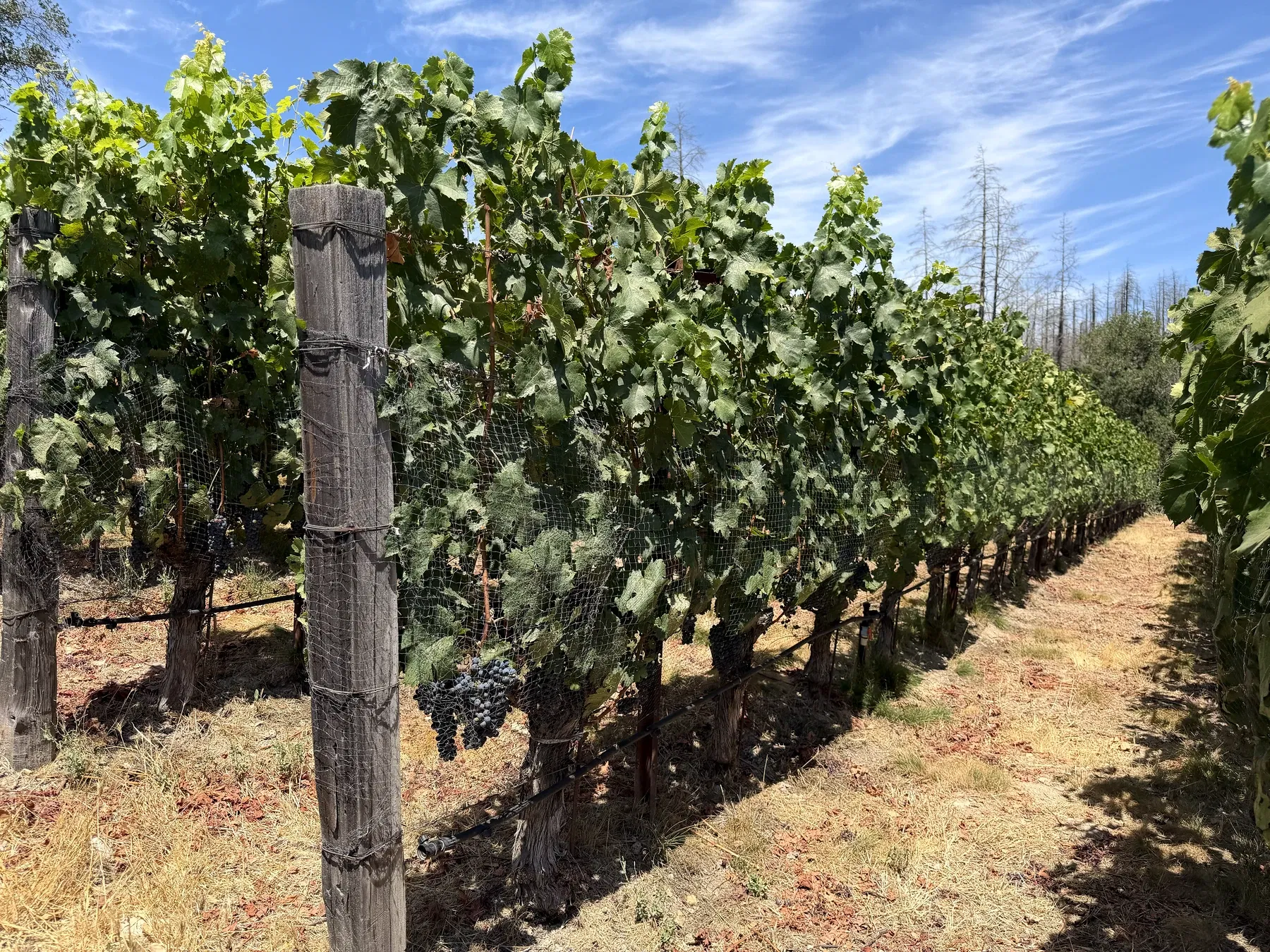
The view can make the vineyard feel secondary, but the scale is central to the wine's identity. Here, “Estate” is not an abstract sourcing claim; it is a small patch of hillside visible from the rooms where the wine is poured.
Aaron Pott has made Seven Stones since 2007 and is now described by the estate as its exclusive day-to-day winemaker. His résumé bridges Napa and Bordeaux in a way that fits these wines. He studied fermentation science at UC Davis, completed viticulture studies in Dijon, worked under John Kongsgaard at Newton and held roles at Château Troplong Mondot and Château La Tour Figeac before returning to California.
Pott's wines are often associated with density and dramatic fruit, but the two glasses at Seven Stones were more useful than that shorthand. Both had power. Neither felt heavy for power's sake. Acidity, savory detail and tannin shape kept the fruit moving. They were modern Napa Cabernets with a clear sense of proportion.
The barrel program also differed between the two wines. The 2023 Collection spent 21 months in French oak, 50 percent new, across six coopers. The 2022 Estate spent 22 months in barrels from Bossuet, Darnajou, Sylvain and Taransaud. Together, the exact programs help explain the Collection's polish and the Estate wine's tighter, more concentrated frame.
The tasting took place at a long dark table in a pale stone room. Bottles and small objects lined a shelf above blue-gray cabinetry. The valley remained visible through the doors, but the room narrowed our attention after the visual abundance outside.
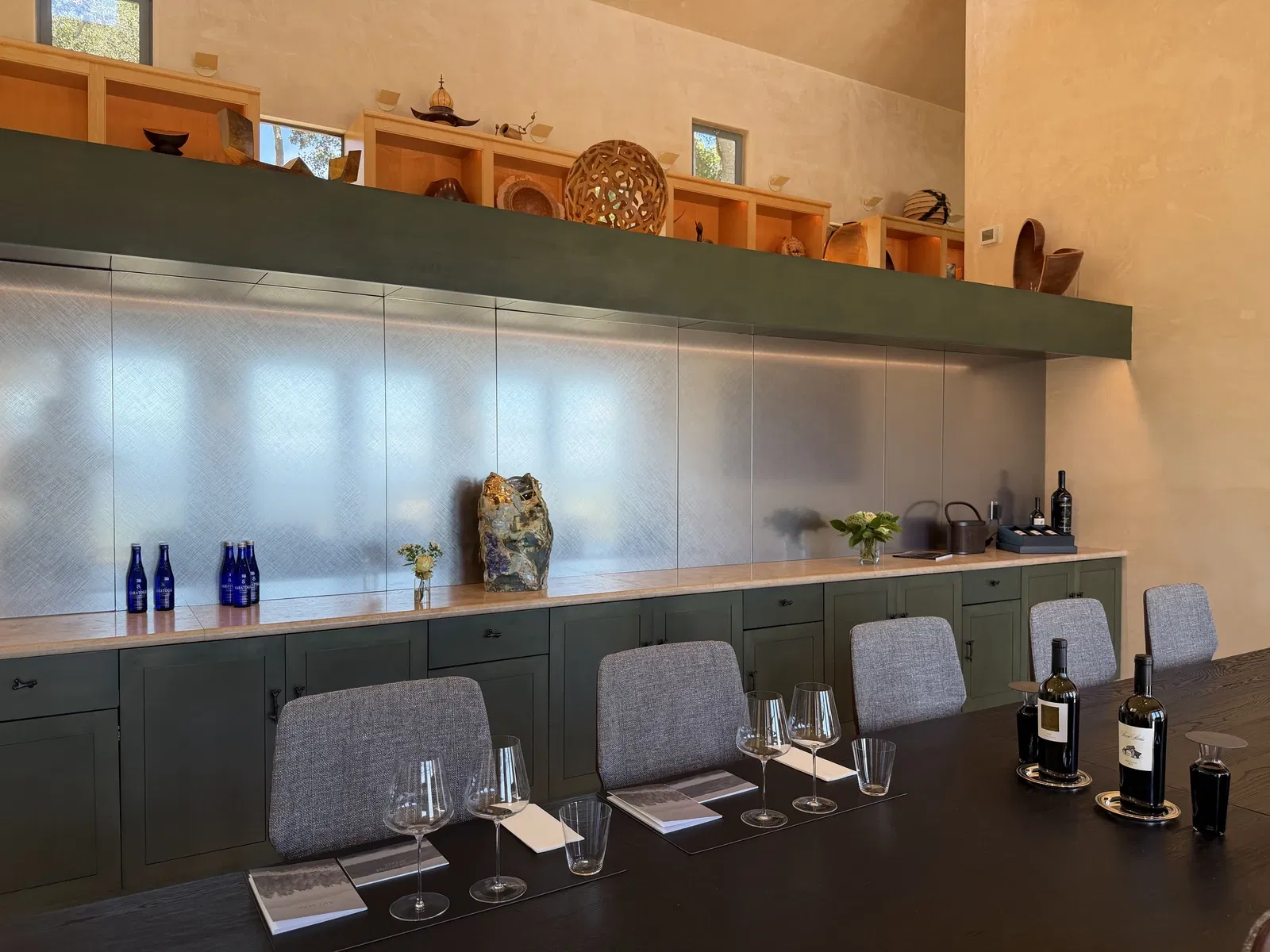
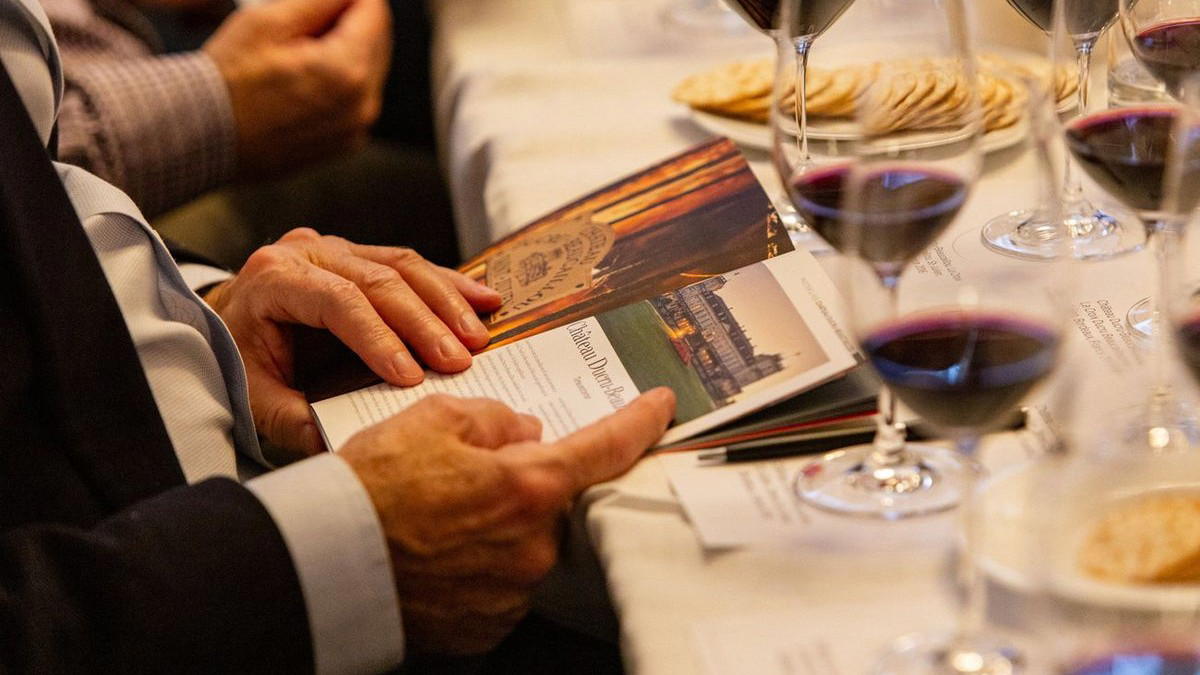
Each place had water, stemware, a folded napkin, a booklet and an art map. Breadsticks and cheeses arrived as quiet accompaniments rather than a staged pairing menu. Wine was served from Zalto decanters. There were no flights of five small pours arriving on a fixed script and no sense that another group was waiting for our chairs.
This is where the estate's claim of a bespoke tasting became believable. The team described appointments that could be shaped around the guest: more time with the art, a picnic, food, a bottle enjoyed slowly or a deeper wine conversation. Those are possibilities by arrangement, not guaranteed inclusions. The important point is that Seven Stones has the scale and setting to respond to the people at the table.
Our two-wine comparison was exactly the right size. The Collection showed what Aaron Pott and Seven Stones could do with a broader Napa Valley canvas. The Estate then narrowed the lens to the small hillside outside. Tasted side by side, they made the estate's current evolution easy to understand.
| Wine | 2023 The Collection by Seven Stones | 2022 Seven Stones Estate |
|---|---|---|
| Origin | Napa Valley | Seven Stones' hillside estate |
| Blend | 76% Cabernet Sauvignon, 22% Cabernet Franc, 2% Malbec | 88% Cabernet Sauvignon, 12% Cabernet Franc |
| Élevage | 21 months in French oak, 50% new | 22 months in French oak |
| Alcohol | 14.5% | 14.9% |
| Production | 1,200 cases | 200 cases |
| Personality in our tasting | Open, expressive, polished and immediately generous | Denser, more savory, more mineral and longer |
| Label connection | Olga de Amaral's Cesta Lunar 64 | Richard Deutsch's namesake sculpture |
The Collection was the more immediately extroverted wine. The official blend is 76 percent Cabernet Sauvignon, 22 percent Cabernet Franc and 2 percent Malbec. That substantial Cabernet Franc component brought lift and shape to the Cabernet Sauvignon rather than reading as a separate green or floral layer.
Dark plum and black cherry came first, followed by tobacco, cocoa and a cooler violet note. The tannins were polished enough that the wine felt open in the room, but they still gave the finish definition. This is where “powerful and elegant” felt most useful as a shorthand. The wine had broad Napa fruit and real volume, then resolved cleanly instead of becoming sweet or thick.
The Estate Cabernet was the more profound of the two. Its blend is 88 percent Cabernet Sauvignon and 12 percent Cabernet Franc, with only 200 cases produced. Seven Stones calls 2022 its earliest harvest, beginning September 7, and says Pott reduced fermentation temperature and extraction to protect fruit and softness during the hot vintage.
The glass still had richness, but the center of gravity shifted from obvious fruit toward earth, spice and length. Plum, black cherry and fig moved into truffle, tobacco, cocoa, fennel and a darker savory quality. The tannins were substantial but fine. The wine felt built for time, yet not punishing in its youth.
Particularly memorable contrast was not “big versus restrained.” Both wines carried intensity. The Estate simply gathered that intensity more tightly. It felt connected to rock, shade and small berries, with a longer, quieter finish. After standing among the vineyard rows and then seeing the sculpture repeated on the label, it was impossible to separate the wine from the place.
There is a risk with a property this beautiful that the wine becomes a souvenir of access. Seven Stones avoids it. These are serious Cabernets that would remain compelling if poured in a blank room. The art and view deepen the tasting, but they do not excuse the wine.
Pott's balance of Cabernet Sauvignon and Cabernet Franc is especially important. Cabernet Sauvignon provides the dark fruit, breadth and structural authority expected from Napa. Cabernet Franc brings aromatic lift, savory complexity and motion. The Collection amplifies that second voice with 22 percent Cabernet Franc. The Estate uses 12 percent, allowing the tiny property's Cabernet Sauvignon to remain the center.
Oak is present, as the 21- and 22-month élevage suggests, but it does not flatten the distinction between the bottlings. The Collection's 50 percent new-oak program supports polish and accessibility. The Estate carries more depth and concentration, with its own fruit able to absorb the élevage. Neither wine tasted designed around vanilla or toast.
Seven Stones now presents three Cabernet programs: the tiny Estate bottling, The Collection Napa Valley and The Collection Spring Mountain. The 110-case 2023 Spring Mountain Cabernet was not part of our tasting, but its addition makes this a three-part portfolio.
The service style matched the setting: personal, informed and never hurried. We could stop in front of an artwork, change the subject, return to the glass or simply look outside. That sounds effortless, but it requires a host who can read the room and an estate willing to protect enough time around each appointment.
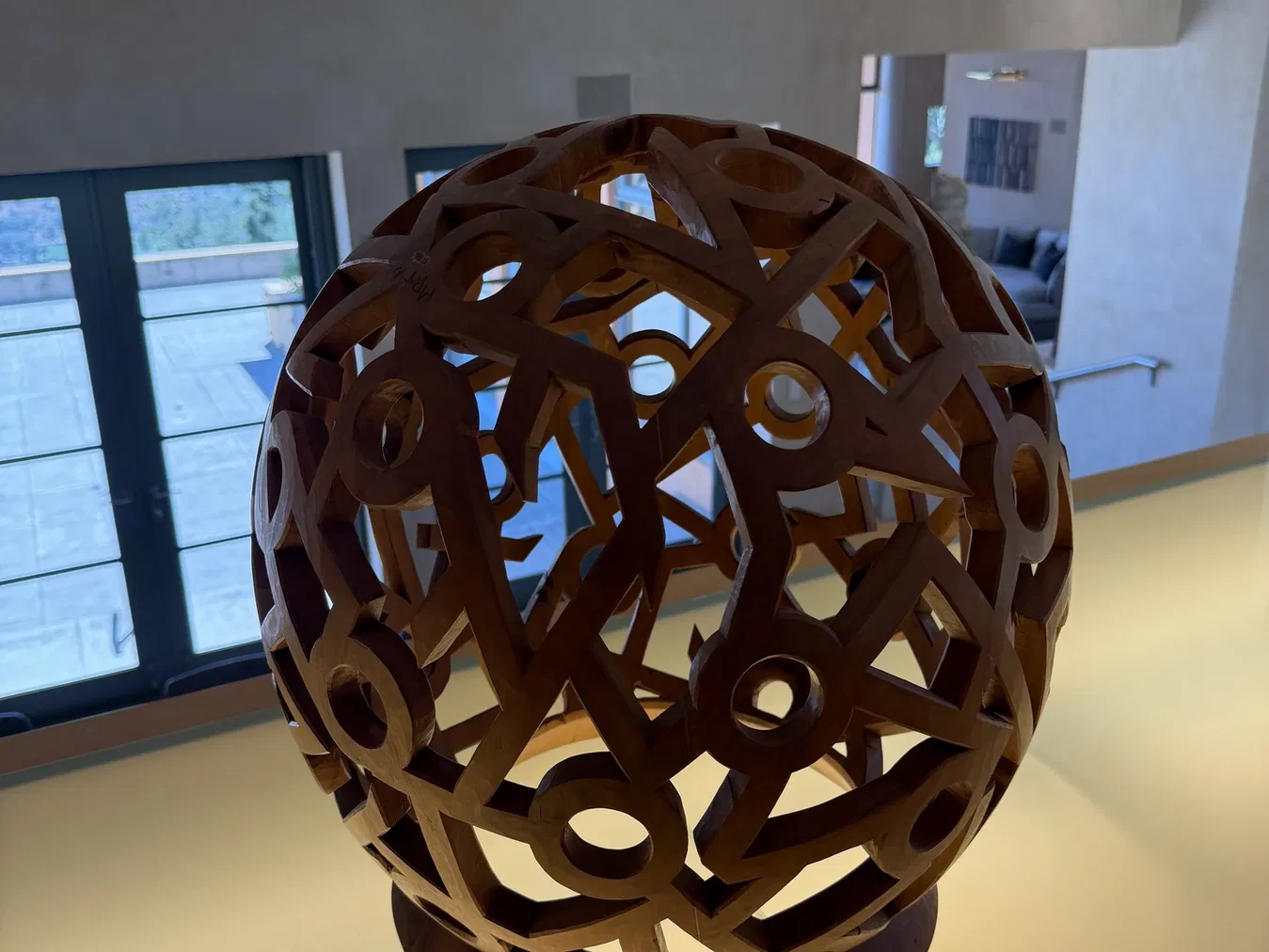
The art map was a particularly thoughtful touch. It acknowledged that guests might want to understand the collection rather than absorb it as ambiance. It also gave the visit structure without turning the walk into a lecture. We could identify a work, hear its story and keep moving at our own pace.
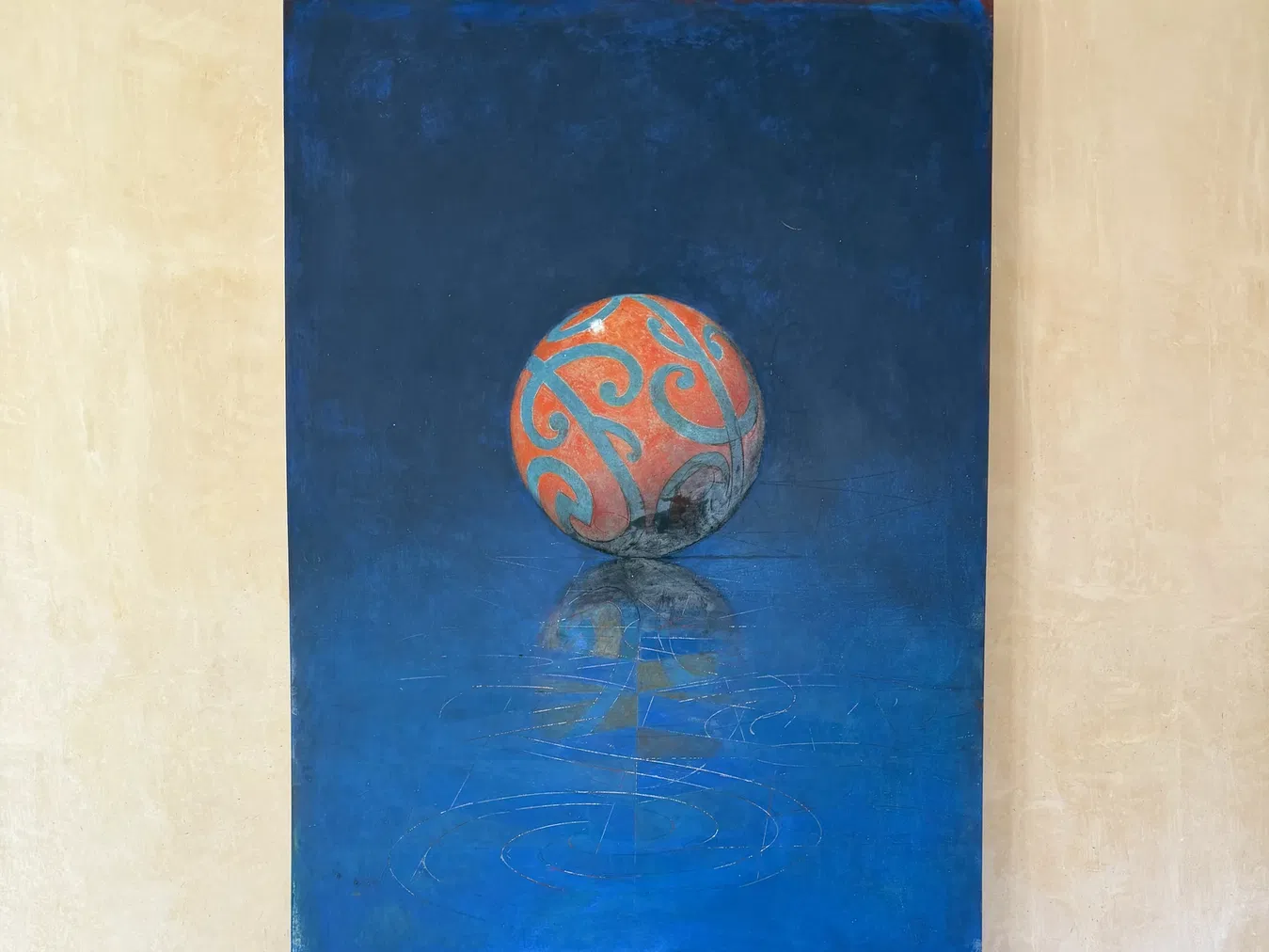
Use the official Seven Stones visit page and join the allocation list or log in before requesting a date. The estate says appointments include a private tour, art collection and bespoke wine tasting. Because it does not publish a standard schedule or price, expect direct communication before confirmation.
We would protect at least two hours and avoid booking something immediately afterward. The estate can be appreciated more quickly, but the entire point is the ability to move slowly through the art, gardens and wine. A tailored picnic, food component or bottle service would require more time and advance arrangement.
Smart casual works, with shoes comfortable enough for sloped garden paths and vineyard ground. The interiors are refined, but a strong visit includes walking outside.
Give it the afternoon. Seven Stones is a better day's anchor than a stop between two conventional tasting rooms. We would protect at least two hours and avoid booking something immediately afterward.
Seven Stones is an immediate yes for serious Napa collectors who have already visited the famous estates and want somewhere private. It is equally strong for a contemporary-art lover who may not normally plan a trip around Cabernet. The collection is substantial enough to support its own visit, while the wine gives the afternoon shape and purpose.
It is also ideal for a couple or small group celebrating something important. The estate feels intimate without feeling staged as romantic. There is room to have a real conversation, but enough art and landscape that silence never becomes awkward.
Seven Stones is among the more memorable winery visits we have made in California. The headline is specific: a private estate above Meadowood, a serious contemporary craft collection, and a singular view across Napa Valley. The more important verdict is that the experience remains coherent after the initial visual shock.
The sculpture explains the name. The Wornick collection explains the rooms. The current artist residencies show that the art program is alive. The tiny vineyard explains the scarcity. The 2023 Collection and 2022 Estate show how Seven Stones can expand without blurring the meaning of estate wine. Aaron Pott gives both bottlings power and polish, then enough savory detail to keep them from feeling interchangeable.
We would return immediately. We would ask for more time with the craft collection, walk the vineyard again and happily repeat the two-wine comparison as the next vintages arrive. If the estate offered the chance to turn the afternoon into a picnic or to sit with one full bottle, we would take it. Seven Stones is not merely a beautiful backdrop for Cabernet. It is one of those rare places where the art, wine, landscape and hospitality make each other more vivid.
Seven Stones Estate is at 840 Meadowood Lane in St. Helena, California, in the eastern hills above Meadowood. Access is through the Meadowood gate and requires a confirmed appointment.
Seven Stones is not a walk-in tasting room. Visits are private and arranged in advance through the estate's allocation login or visit-request process.
Our August 2026 appointment was quoted at $250 per guest, but the estate does not currently publish a fixed fee online. Confirm current pricing, duration and inclusions directly when requesting a visit.
Aaron Pott is Seven Stones' day-to-day winemaker and has made the wine since 2007. His background includes UC Davis, viticulture study in Dijon, work at Newton with John Kongsgaard and winemaking roles in Bordeaux.
Production varies by wine and vintage. Seven Stones currently presents the Estate Cabernet alongside The Collection Napa Valley and The Collection Spring Mountain; confirm current release quantities directly.
We tasted the 2023 The Collection by Seven Stones Napa Valley, a Cabernet Sauvignon-led blend with Cabernet Franc and Malbec, and the 2022 Seven Stones Estate, a blend of Cabernet Sauvignon and Cabernet Franc from the tiny hillside property.
The estate takes its name from Richard Deutsch's Seven Stones sculpture, installed in 1999. Its seven granite slabs became the visual and literal foundation of the brand before the first commercial wine.
No. Seven Stones is a separate 45-acre estate above Meadowood and reached through its gate. Ron and Anita Wornick acquired it from Bill Harlan in 1995; an affiliate of South Korea's Hanwha Group acquired it in 2022.
Yes. The sculpture garden, contemporary craft collection, interior works and artist-in-residence program make Seven Stones one of Napa's most compelling art visits. The serious Cabernet program gives the experience an equally strong wine foundation.
Fact-check note: Estate, ownership, wine, art and visit details were last checked August 24, 2026 against official Seven Stones materials, transaction reporting and institutional collection records. Tasting impressions and photographs come from our firsthand August 2026 visit.
Get the App
Take the shortlist into the En Primeur Club app for concierge access, saved places, and the next step after discovery.
Get Exclusive AccessMore from the editors