← Guides
Sam Neill was named a 2026 Fellow of New Zealand Winegrowers days before his death at 78, honouring 35 years building Two Paddocks in Central Otago.
Sam Neill was named a 2026 Fellow of New Zealand Winegrowers days before his death at 78, honouring 35 years building Two Paddocks in Central Otago.
Five names go on the Fellows list each year, chosen by peer nomination from within New Zealand's wine trade: not a public vote, not a marketing panel, but growers and winemakers deciding who among them has done the for the industry. Sam Neill was one of the five named for 2026.
He died at age 78 shortly after the announcement, before he could be formally inducted. The honour that closes this story arrived just before the story itself ended.
The timing gives the Fellow title a weight no publicity campaign could have arranged: the industry's own verdict on more than three decades of unpaid advocacy, delivered in what turned out to be Neill's final chapter.
For an actor best known to global audiences as a paleontologist outrunning velociraptors, the Fellow title marks something different. Not a film credit, but a peer judgment from New Zealand's wine trade on decades of work most of his fans never saw. It closes a loop that began in 1991, when Neill bought his first vineyard block in Central Otago, two years before he opened Two Paddocks itself.
Sam Neill was named among the five new Fellows of New Zealand Winegrowers for 2026, an honour awarded through peer nomination to people whose leadership, innovation and service have made an outstanding contribution to the country's wine industry. For readers, the practical point is simple: this was not a marketing accolade or a competition medal, but the wine trade naming one of its own.

New Zealand Winegrowers said Neill was recognised for promoting New Zealand wine and for the warmth and authenticity with which he told the industry's story. The organisation's tribute was direct about what set his advocacy apart from typical celebrity involvement in wine:
"Sam generously used his profile, talents and distinctive voice to promote New Zealand wine, bringing authenticity, warmth and global attention to the people, places and stories of the wine community"
, New Zealand Winegrowers, industry organisation statement, The Drinks Business1
Fabian Yukich, chair of New Zealand Winegrowers, framed the 2026 Fellows cohort as a group defined by contribution rather than celebrity, a distinction that mattered, given who was on the list. Yukich said the Fellows programme recognises those who have helped shape the success of the industry, adding that the 2026 Fellows have each helped strengthen New Zealand wine in their own way, through their commitment to excellence, generosity of knowledge and service to the wider wine community.
The 2026 Fellows were due to be inducted at the New Zealand Wine 2026 Celebration Dinner in Pōneke Wellington at the end of August, a ceremony Neill did not live to attend. If you follow New Zealand wine, that date explains why the announcement now reads as both industry recognition and farewell. New Zealand Winegrowers said he had already spoken about what the recognition meant to him before his death:
"He spoke warmly of what the honour meant to him, recognising not only his more than 35 years in New Zealand wine, but also the dedicated Two Paddocks team and the Central Otago region that shared in that journey."
, New Zealand Winegrowers, industry organisation statement, The Drinks Business1
That line, team and region, not just himself, tells you something about how Neill understood the honour. He did not treat it as a personal capstone. He treated it as recognition shared with the people who farmed the vines and poured the glasses long after the cameras left.
Neill established Two Paddocks in Central Otago in 1993, two years after purchasing his first vineyard block in the region. New Zealand Winegrowers described the beginning as modest: what began as a desire to share those ethereal Pinot Noir moments with family and friends grew into one of New Zealand's most respected wine brands, the organisation said. There was no five-year plan to build an export label off the back of his acting career. The winery grew out of a personal habit that became a business, then a reputation, then an industry credential.
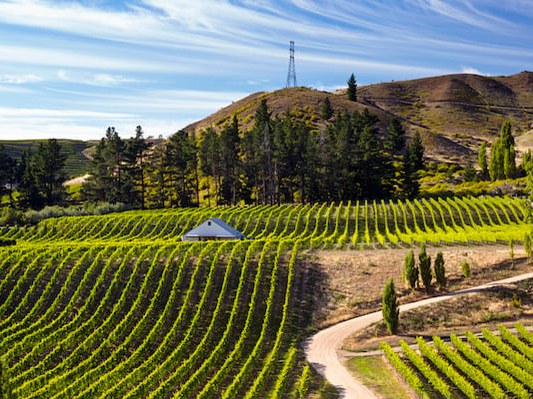
Central Otago in the early 1990s was not the pinot noir destination it is today. The region's cool climate, schist and gravel soils, and high-altitude sites, some of the southernmost commercial vineyards on earth, were still being proven out by a handful of growers willing to bet on a variety that most of the country's wine industry had not yet embraced at scale. Neill's arrival as a vineyard owner in 1991, and as a winery founder two years later, put him among the region's earlier wave of pinot noir believers, at a point when Central Otago's international reputation was still being built rather than inherited.
Two Paddocks today makes pinot noir, rosé and Riesling in Central Otago. If you are choosing from the label, the pinot noir sits at its centre, offered across two bottlings that retail for $49 and $73 respectively. That range makes the estate a serious, if not flagship-priced, Central Otago producer rather than a cult allocation label chasing secondary-market attention.
New Zealand Winegrowers credited Neill's stewardship partly to the use he made of his own visibility on the estate's behalf: along the way, Sam helped introduce our wines, regions and people to audiences around the world, the organisation said. That is a specific kind of ambassadorship, not paid endorsement, not a celebrity label slapped on a négociant blend, but a working vineyard owner who happened to have a global platform and used it to point at his region rather than only at his own bottle.
Collectors who track New Zealand pinot noir will recognise the shape of this story even without the Hollywood name attached to it. Central Otago's reputation as a serious cool-climate pinot region did not arrive overnight. Growers built it by planting at elevation, in terrain better known for stone fruit and tourism than fine wine, and by waiting years for the market to catch up to what was in the glass.
Two Paddocks became part of that story not because it was the largest or the awarded producer in the region, but because its founder had a reach that most Central Otago wineries simply did not. A magazine profile, a television interview, a casual mention on a press junket: these are not typical marketing tools available to a boutique regional winery. New Zealand Winegrowers' tribute makes clear that Neill's willingness to use them, consistently, over more than three decades, is what earned him a peer nomination rather than a courtesy mention.
For the wine traveler, that history matters practically as well as sentimentally. Central Otago remains one of the more compact fine-wine regions to visit, a cluster of sub-regions including Bannockburn, Gibbston, and the Cromwell Basin, each with its own mesoclimate, within a manageable drive of Queenstown. If you are planning the south, treat Two Paddocks as part of a wider Central Otago pinot noir itinerary, especially if your default New Zealand route might otherwise run straight to Marlborough for Sauvignon Blanc.
Jacqui Murphy, general manager of Two Paddocks, offered the clearest window into what wine actually meant to Neill, beyond the marketing value of his name on a label. Murphy said Neill believed the sign of living well was sitting around a table with the people you loved and a great wine. That idea tracks with the New Zealand Winegrowers tribute describing the winery's origins as a desire to share ethereal Pinot Noir moments with family and friends: the same instinct, scaled up over 35 years into a commercial estate, but never fully losing its original, convivial purpose.
That philosophy also explains why the Fellow nomination reads as earned rather than ceremonial. New Zealand Winegrowers' tribute did not describe Neill as a spokesperson reciting talking points about export volumes or vintage conditions. It described someone who used his distinctive voice to bring authenticity and warmth to the people, places and stories of the wine community. If you open a bottle of Two Paddocks, that context is worth keeping in the room: the estate began with the pleasure of sharing pinot noir at a table.
For collectors, the Fellow honour adds a layer of context to any bottle of Two Paddocks pinot noir already in the cellar, or any considered for future purchase. This is not a celebrity vanity label being reassessed after a headline. It is a working Central Otago estate whose founder was independently recognised by his industry peers for three-plus decades of involvement, not for the novelty of a famous name on a wine list. The two bottlings, at $49 and $73, sit at a price point collectors can act on rather than chase at auction.
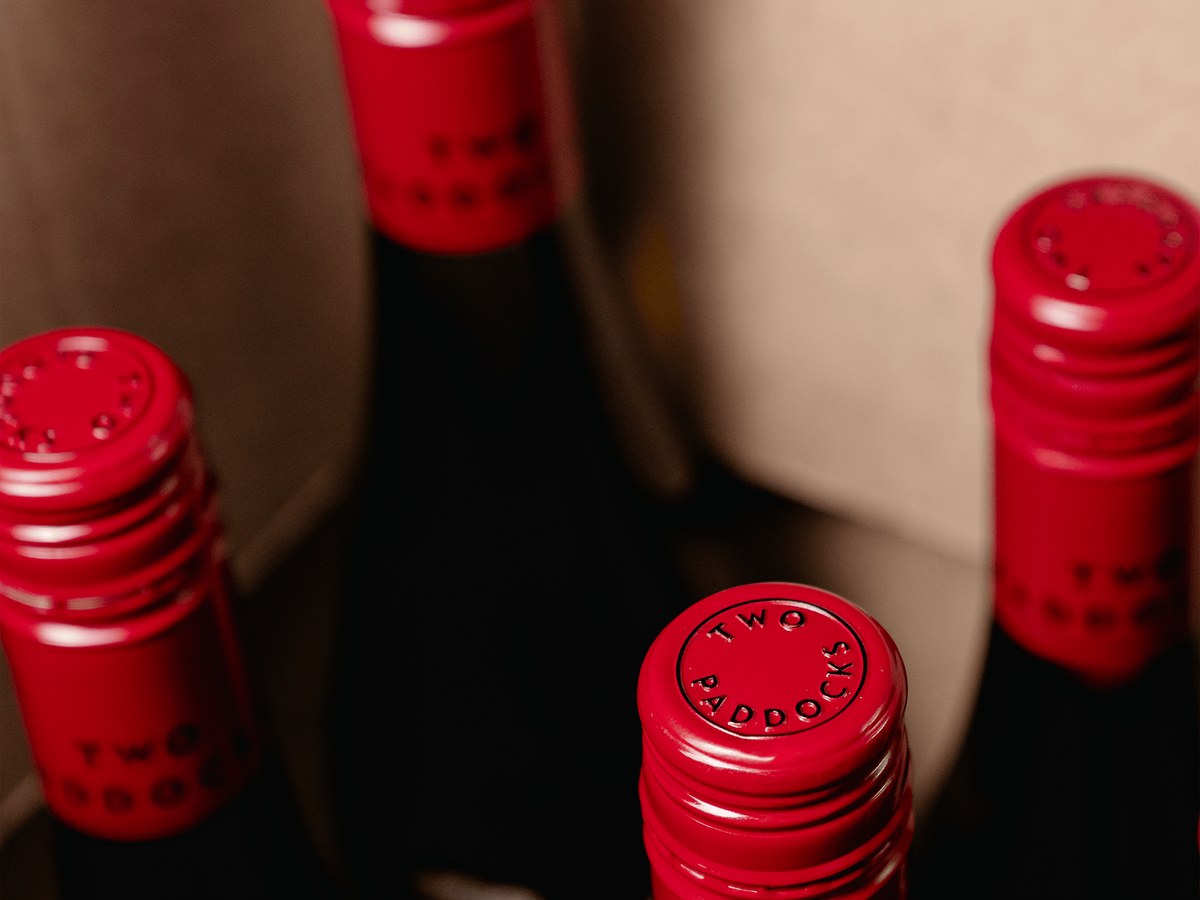
For travelers planning time in Central Otago, Two Paddocks sits within a region that rewards a slower, multi-stop visit rather than a single tasting-room detour. Neill's own account of what wine meant to him, a table, people you love, a great bottle, is close to the available advice for how to experience the region itself: unhurried, in company, and paired with whatever is being cooked nearby, rather than rushed through as a checklist of cellar doors.
The 2026 Fellow honour did not make Sam Neill an important figure in New Zealand wine. It confirmed what had already been true for years, through peer nomination rather than public vote, with an industry body looking at more than 35 years of one person's advocacy and deciding, formally, that it counted as leadership. New Zealand Winegrowers' tribute called him not only a beloved Kiwi film legend, but also an well-known figure in the New Zealand wine industry. For anyone who follows Central Otago pinot noir, the lasting image is simpler: a table, good company, and a glass of something he had grown himself.
Get the App
Take the shortlist into the En Primeur Club app for concierge access, saved places, and the next step after discovery.
Get Exclusive AccessMore from the editors