← Guides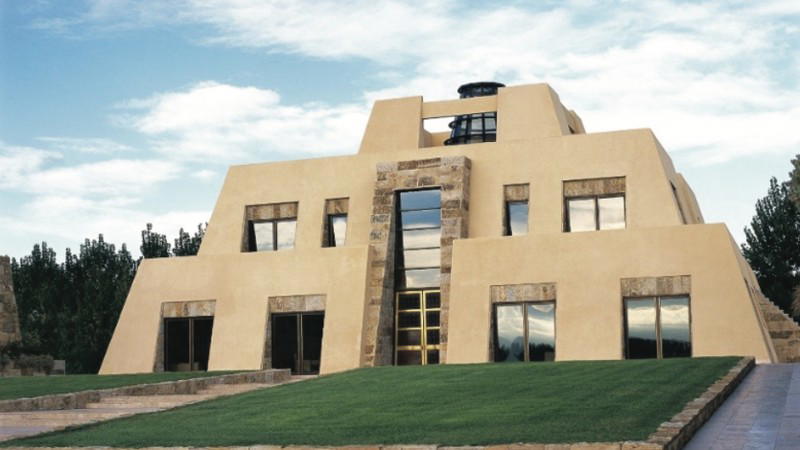
Discover the allure of a Catena Zapata winery visit in 2026, where far-reaching views and notable wines await. Plan your memorable experience at this well-known Argentine vineyard.
Discover the allure of a Catena Zapata winery visit in 2026, where far-reaching views and notable wines await. Plan your memorable experience at this well-known Argentine vineyard.
The pyramid rises from the Agrelo vineyard floor before you reach the gate, a Mayan-inspired stone structure about 45 minutes south of Mendoza city,1 housing one of Argentina's most visited estate wineries. Catena Zapata does accept visitors, and the short answer is: yes, you can get in, but you will not walk up unannounced. Walk-ins are essentially impossible.1 Visits are by appointment only, booked directly through the estate's website. Demand from international collectors and wine tourists means slots fill weeks to months ahead during peak harvest season and the southern-hemisphere summer. The single most reliable route for most readers is booking directly via the estate's online reservation system as far in advance as your travel dates allow.
Catena Zapata is not a large-production négociant house running coach tours on the hour. The estate sits within a working vineyard in Agrelo, and the tasting experiences are structured, guided, and deliberately small-group. That combination, a globally recognised name, a photogenic building that circulates endlessly on wine-travel feeds, and a limited number of guided slots per day, creates a bottleneck that tightens sharply between February and May, when harvest activity draws collectors and journalists to Mendoza simultaneously.
The estate's reputation compounds the pressure. The work of the Catena family in elevating high-altitude Malbec to international attention, and the subsequent critical recognition of wines like the Adrianna Vineyard single-parcel cuvées, means the winery attracts not just casual tourists but serious collectors who treat the visit as a pilgrimage. Those collectors book early, book the upper experience tiers, and often return. That repeat-visitor behaviour absorbs a substantial share of available slots before the casual traveller even starts planning.
The estate does not publish a fixed release window for visit slots, there is no announced drop time or rolling 30-day calendar in the manner of a restaurant reservation platform. The booking system on the estate's website appears to operate on a rolling basis, with slots becoming available as the calendar extends. The estate does not publish specific lead-time guidance publicly, so the further out you book, the better your odds; confirm current availability and any seasonal closures directly with the estate before building your Mendoza itinerary around a specific date.
During Mendoza's high season (October, April) and especially during Vendimia in February and March, the estate books up two to three months in advance.1 What is also documented is that the estate is closed on Sundays and on Argentine public holidays. If your travel window is narrow, build in a buffer day and have a backup winery on your list.
There are three realistic routes to a visit, and they are not equal.
Direct booking via the estate website. The estate's own booking page is the primary channel. Visit the Catena Zapata visit page to see current experience options and availability. This is where most international visitors will start and, for most, where they will finish, the estate does not appear to operate a separate trade or collector allocation list for visits in the way that some Bordeaux châteaux manage cellar-door access.
Through a Mendoza wine tour operator. Several Mendoza-based operators, including Ampora Wine Tours and Trout & Wine, include Catena Zapata as part of curated multi-winery itineraries. The practical advantage is that an established operator may have a standing relationship with the estate and can sometimes secure slots that appear unavailable on the public calendar. The trade-off is cost: a full-day guided tour with transport adds a layer of operator margin on top of the tasting fee, and you share the experience with other guests on the operator's schedule rather than your own.
Through your hotel concierge. In Mendoza's upper hotel tier, Park Hyatt Mendoza, Cavas Wine Lodge, Entre Cielos, the concierge desk maintains working relationships with the major estates. For guests staying at these properties, a concierge request is worth making, particularly if your dates are within a few weeks and the public calendar looks full. This is not a guaranteed route, but it is a real one.
The estate offers several different types of tours and wine tastings,2 and the pricing reflects the level of access. The estate does not list a fixed price publicly; confirm current pricing on its booking page before budgeting.
What the tiered structure means in practice: the entry-level visit is especially accessible in both price and availability. The upper experiences, particularly anything involving the Adrianna Vineyard cuvées, which include parcels like White Bones and River Stones, are more limited in slot count and carry a higher per-person cost. If your primary interest is tasting the wines that appear on Vinous and Wine Advocate score sheets, budget for the upper tier and book it first; those slots move faster than the standard tour.
The time-vs-money equation here is relatively clean. Booking direct costs only your time and the tasting fee. Booking through an operator costs more but saves planning effort and may unlock otherwise unavailable slots. There is no membership, deposit, or en primeur commitment required to visit, this is not an allocation-list situation.
Book as far in advance as your travel dates allow. Bookings are filling up over a month in advance3 even outside the harvest rush, during March and April, the pressure is considerably sharper. For the quieter winter months (June through August), you may find availability with shorter notice, though Mendoza winters are cold and some estates reduce their visitor programmes.
If the experience tier you want is showing as unavailable, check back. Cancellations happen, and the estate's calendar does not appear to operate a waitlist in the way that some restaurants do, which means the slot simply reappears when someone cancels, and the first person to check the calendar at that moment gets it.
If you are travelling with a group of four or more, contact the estate directly by email rather than relying solely on the online booking tool. Larger groups sometimes have different logistics requirements, and a direct conversation with the estate's visitor team may surface options that the public calendar does not show.
Finally: do not conflate visiting the estate with accessing the Adrianna Vineyard itself. The Adrianna Vineyard is located in Gualtallary, Tupungato, a separate, higher-altitude site from the Agrelo pyramid. Adrianna sits at roughly 1,450 metres (about 4,757 feet) of elevation. Visits to Adrianna are not part of the standard visitor programme and are not publicly bookable. If access to the vineyard itself is your goal, that is a trade or press relationship question, not a consumer booking question.
| Estate | Booking Difficulty | Experience Style | How to Book | Adrianna-level wines available? |
|---|---|---|---|---|
| Catena Zapata (Agrelo) | Moderate, High (harvest season) | Guided tour + tiered tastings | Direct via estate website | Yes (upper tier) |
| Achaval Ferrer | Moderate | Intimate cellar visit, single-vineyard Malbec focus | Direct or via operator | N/A |
| Zuccardi Valle de Uco | Low, Moderate | Architecture-forward, Valle de Uco terroir focus | Direct via estate website | N/A |
| Clos de los Siete (Michel Rolland) | Low | Guided tour, Rolland-influenced blends | Direct or via operator | N/A |
Zuccardi Valle de Uco is the strongest alternative for collectors who want a serious tasting in a considered architectural setting. The Zuccardi family's work in Paraje Altamira, mapping limestone and alluvial soils at altitude, produces wines that hold their own against any Mendoza benchmark, and the visitor experience is well-organised with more available slots than Catena Zapata during peak season.
Achaval Ferrer suits visitors whose primary interest is single-vineyard Malbec in a less theatrical setting. The winery is smaller, the tasting more conversational, and the wines, particularly the Finca Bella Vista and Finca Mirador, reward the kind of focused attention that a quieter visit allows.
Clos de los Siete offers the easiest access of the group and a useful introduction to the Valle de Uco's cooler-climate profile, though the experience skews more toward the educational than the collector-grade.
The building announces itself before you reach the door. The Mayan-inspired pyramid structure rises from the Agrelo vineyard floor in a way that reads as deliberate provocation: this is not a converted farmhouse or a glass-and-steel modernist statement, it is something older in its references. Inside, the architecture gives way to working winery infrastructure: fermentation tanks, barrel rooms, and the kind of organised cellar that handles production across multiple vineyard sites.
The guided visit moves through the production areas before arriving at the tasting.
Depending on the experience tier booked, the wines poured range from the estate's Catena and Catena Alta ranges through to the Adrianna Vineyard single-parcel bottlings, White Bones (Chardonnay from calcareous soils), River Stones (Malbec from alluvial gravel), and Mundus Bacillus Terrae (a Malbec named for the beneficial soil rhizobacteria that nourish the Adrianna vines).
These are not wines you encounter casually; the Adrianna cuvées are produced in small quantities and allocated primarily through the estate's export channels and a small number of specialist merchants.
The tasting itself is seated and guided by a member of the estate team. The format is structured rather than freeform, this is not a drop-in bar where you point at bottles. The guides are knowledgeable about the estate's history, the Catena family's research into high-altitude viticulture, and the specific soil and climate conditions of each vineyard parcel. The standard guided tour with classic-tier tasting runs about 75 minutes.1 For visitors who want to go deeper, the upper tiers allow for more extended conversation and a wider range of wines.
The on-site restaurant is a separate booking from the winery visit itself. Angélica Cocina Maestra seats about 38 to 40 people and faces the winery pyramid,3 a room that size fills quickly, and lunch reservations are a separate booking from the winery visit itself. If a meal is part of your plan, treat it as its own logistical task and confirm availability when you arrange the tasting.
The visit rewards collectors and enthusiasts who already have some familiarity with the Catena portfolio and want to understand the altitude and soil logic behind the Adrianna Vineyard wines. If you have opened a bottle of the Adrianna White Bones and wondered what Gualtallary limestone actually looks like, the visit answers that question, even if it does so from the Agrelo estate rather than the vineyard itself.
It is less suited to visitors who want a casual, drop-in wine-bar experience, or who are new to Malbec and looking for an introductory tasting. For that audience, Zuccardi's visitor centre or one of Mendoza's city-based wine bars will serve better and require less advance planning.
The stronger occasions: a dedicated wine trip to Mendoza with at least three days in the region, a harvest-season visit timed to coincide with the energy of March and April, or a trip structured around the Valle de Uco's cooler-climate producers with Catena Zapata as the Agrelo anchor.
Yes, with the caveat that the visit rewards preparation. Catena Zapata is not a difficult estate to visit by the standards of, say, a Burgundy domaine that receives only négociant clients and the occasional journalist. The booking system is public, the estate is genuinely set up for visitors, and the experience, particularly at the upper tier with the Adrianna cuvées, delivers something you cannot replicate by opening a bottle at home: the context of altitude, soil, and the specific ambition that drives the estate's research programme.
The practical discipline required is simply booking early. During high season, the estate books up two to three months in advance,1 for the Adrianna-tier tasting specifically, that slot should be the first thing you confirm, with the rest of your Mendoza itinerary built around it rather than treated as an add-on.
The clear limitation: you will not see the Adrianna Vineyard itself. That parcel in Gualtallary is not on the standard visitor circuit, and no amount of advance booking changes that. If the vineyard visit is the goal, the estate visit remains the closest publicly accessible point, and the wines poured there make the case for the altitude more directly than a drive past the vines would.
For most visitors, the direct booking route is the only one that reliably works; the operator and concierge channels are useful fallbacks, not primary strategies. The estate is set up to receive you, the only variable is whether you planned far enough ahead to claim the slot you actually want.
No. Walk-ins are essentially impossible at Catena Zapata.1 All visits must be booked in advance through the estate's website or via an authorised tour operator. Arriving without a booking will result in being turned away at the gate.
The estate does not publish a specific booking window, but during Mendoza's high season (October, April) and especially during Vendimia in February and March, the estate books up two to three months in advance.1 Outside harvest season, shorter lead times may be sufficient, confirm current availability directly with the estate when planning your trip.
The Adrianna Vineyard cuvées, including White Bones, River Stones, and Mundus Bacillus Terrae, are available at the upper experience tiers. The standard entry-level visit may not include these wines. Check the current experience options on the estate's booking page and select the tier that matches your interest before confirming.
No. The pyramid estate is located in Agrelo, Luján de Cuyo, about 45 minutes south of Mendoza city.1 The Adrianna Vineyard is a separate, higher-altitude site in Gualtallary, Tupungato. The Adrianna Vineyard is not part of the standard visitor programme and is not publicly bookable for consumer visits.
The estate is closed on Sundays and on Argentine public holidays, confirm the opening schedule directly before finalising your itinerary. Angélica Cocina Maestra seats about 38 to 40 people,3 and lunch reservations are a separate booking from the winery visit itself. Treat both as independent logistics tasks when planning your day.
Get the App
Take the shortlist into the En Primeur Club app for concierge access, saved places, and the next step after discovery.
Get Exclusive AccessMore from the editors