Few addresses in Stockholm carry as much atmospheric weight as Café Opera, the grand 19th-century venue at Karl XII:s torg in the heart of the city. Part late-night bar, part dining room, part storied institution, it sits in a tier of Stockholm nightlife that prizes spectacle and history over minimalist cool. The space alone earns the visit.
Pearl is the En Primeur Club membership app — saves, bookings, and concierge access live there. Same editors, same standards.
- Address
- Karl XII:s torg 5, 111 47 Stockholm, Sweden
- Phone
- +46 8 676 58 07
- Website
- cafeopera.se
- Directions
- Get directions
 Saves & bookings on Pearl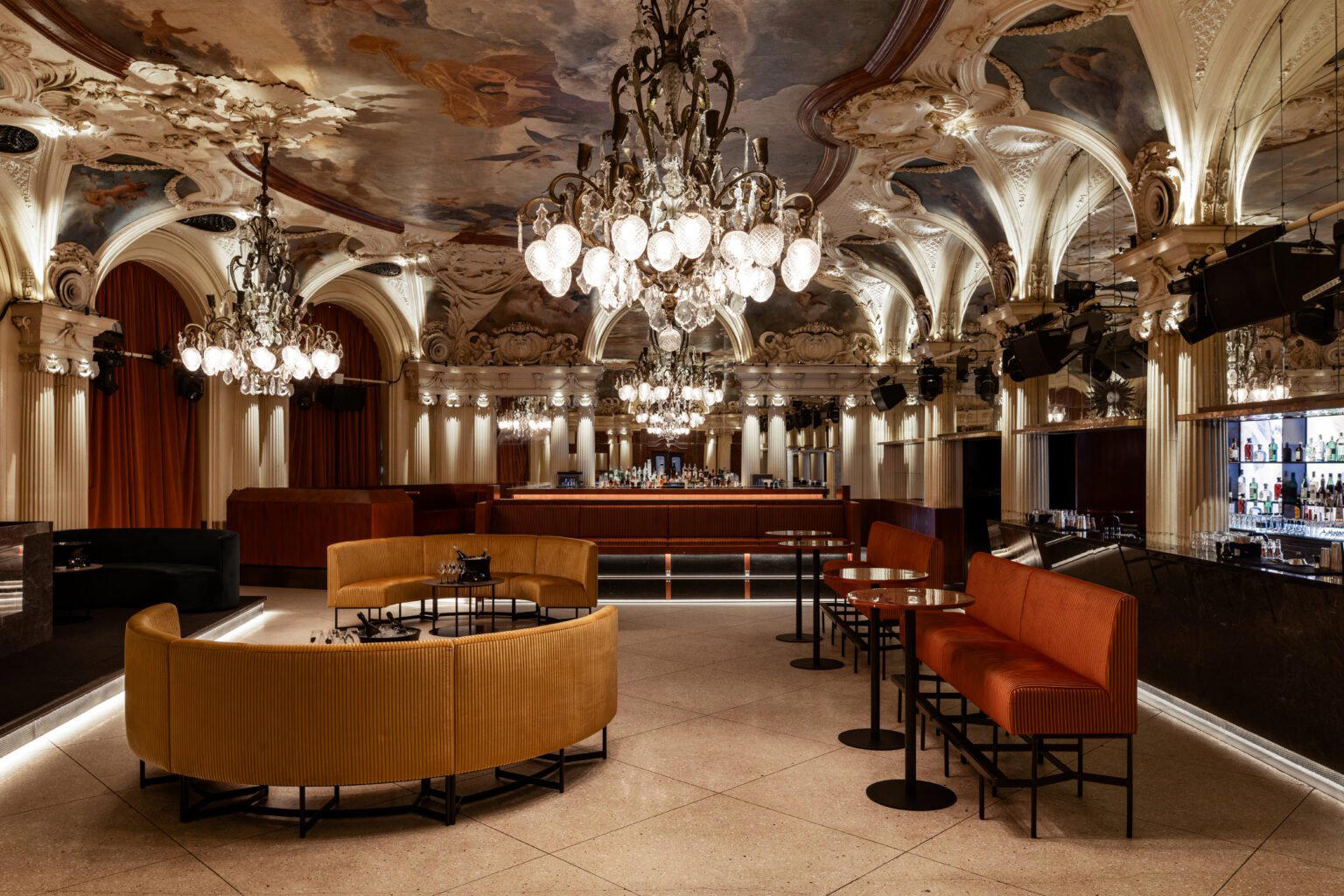
A Room That Sets the Terms
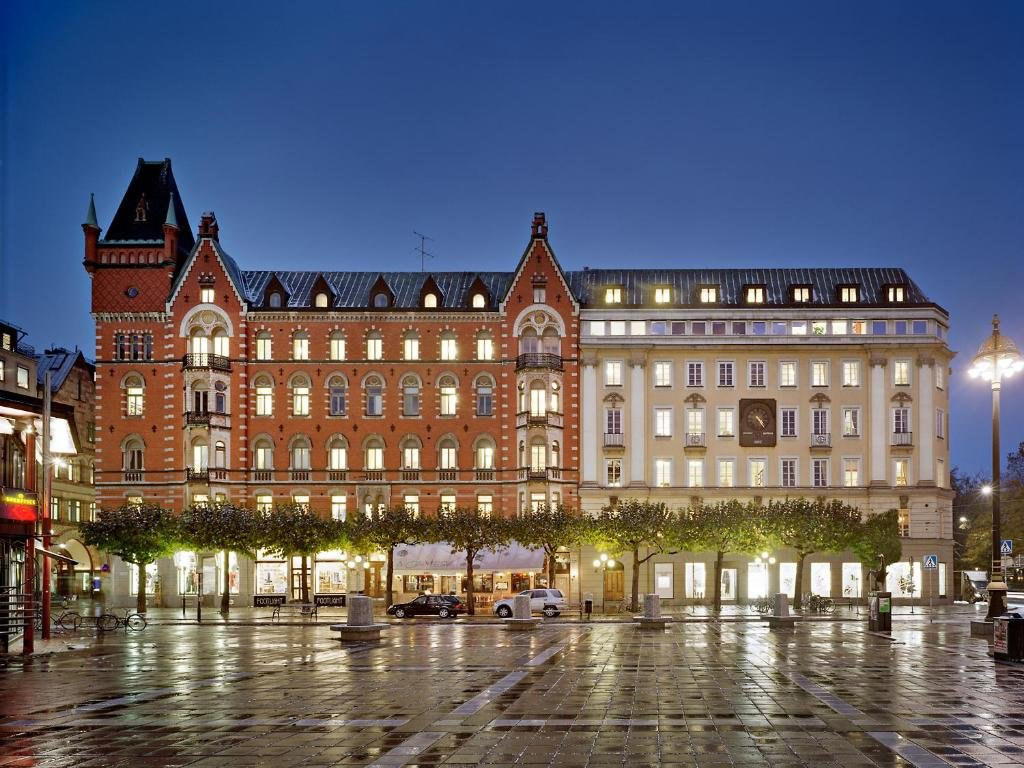
Stockholm has a well-developed habit of stripping things back: muted palettes, clean lines, the studied restraint of Scandinavian design doctrine. Café Opera occupies the opposite end of that spectrum. Positioned at Karl XII:s torg, steps from the Royal Opera House and facing the water of Strömmen, the building arrives with the full weight of 19th-century architecture behind it. The gilded ceilings, the grand archways, the operatic scale of the interior — none of it is decorative irony. This is the original room, the original ambition, and the effect on arrival is immediate and deliberate.
That physical environment shapes everything about how Café Opera functions as a destination. Cities with a strong heritage venue tradition — Vienna, Paris, Budapest, understand that certain rooms don't compete on trend cycles. They compete on accumulated authority. Café Opera belongs to that category within Stockholm: a space that earns its position through architectural mass rather than seasonal reinvention. The room is the argument.
Night Logic: How the Space Shifts After Dark
The particular intelligence of Café Opera as a format is how the space transforms across the evening. What functions as a restaurant in the earlier hours transitions into one of Stockholm's most established late-night bar and club addresses. This kind of dual-phase operation is harder to sustain than it looks, the room must work at dinner pace and then absorb a different crowd and energy as the night progresses. The operatic interior, which might seem like a constraint, actually scales well. High ceilings carry sound differently than low-ceiling nightlife venues, the bar areas have the depth to hold volume without compression, and the grandeur of the surroundings gives the late-night energy a context it doesn't have in a stripped-back club.
Stockholm's nightlife geography has shifted considerably in recent years. Södermalm venues like Tjoget and Lucy's Flower Shop have pulled considerable attention toward a more cocktail-focused, lower-key bar culture, while Röda Huset and A Bar Called Gemma operate in a more intimate register. Café Opera sits in a different position entirely, not chasing the craft cocktail bar conversation, but occupying a tier of scale and heritage that those venues are neither trying nor positioned to contest.
The Heritage Venue Tier in European Cities
Across European capitals, grand historic venues that have survived into active contemporary use tend to bifurcate in interesting ways. Some become preservation projects, museums of hospitality that attract tourists but lose local relevance. Others maintain genuine dual lives, serving both the ceremonial dining occasion and the late-night crowd without collapsing into either category. The latter is a difficult position to hold over decades, and it requires a room with enough architectural authority to lend credibility to both modes.
In Stockholm terms, the location reinforces that positioning. Karl XII:s torg is not a nightlife district in the conventional sense, it's a formal civic address adjacent to royal and cultural institutions. The choice to operate a late-night venue from that address is itself a statement about what kind of establishment this is. It's the kind of positioning that smaller or newer venues in Stockholm's bar scene are structurally unable to replicate, regardless of program quality. For broader context on how Café Opera fits within Stockholm's wider dining and drinking scene, the full Stockholm guide maps the city's different venue tiers and neighbourhoods in more detail.
Reading the Room: What the Space Signals
The design logic of Café Opera, the ornate plasterwork, the scale of the main hall, the quality of the architectural detailing, communicates a specific set of social expectations before anything is ordered or consumed. Heritage European venues of this calibre tend to attract a clientele that is comfortable with formality, at least at the surface level, and Café Opera's after-dark reputation sits alongside that. The late-night crowd the venue draws is not the same demographic that fills Södermalm's quieter bars. The address, the dress calibre, the architectural spectacle all act as filters.
This is worth understanding for anyone approaching the venue as a planning decision rather than a spontaneous stop. The experience of Café Opera at 8pm and at midnight are genuinely different propositions, and the architecture mediates both. That kind of range within a single venue is relatively rare in any city's hospitality offer. Sweden's wider hospitality scene, from Vyn Restaurant in Östra Nöbbelöv to Dorsia Hotel in Gothenburg, contains strong individual voices, but few carry architectural weight at this scale. Even looking further afield within Sweden, from Ångbryggeriet in Piteå to Bageriet Mat and Bar in Visby or Ölkaféet in Malmö, the grand historic room operating at active nightlife pace is a genuinely uncommon format.
Planning Your Visit
Café Opera is located at Karl XII:s torg 5 in central Stockholm, a short walk from the Royal Opera House and easily reached from most of the city's central hotels and transport connections. Given its late-night function, the venue operates on a schedule that extends well past conventional dining hours on weekend nights, though specific hours should be confirmed in advance as they vary by format and season. The bar and club element of the operation means that entry on busier nights, particularly Fridays and Saturdays, may involve queuing, and the experience is materially different from a restaurant booking. Arriving earlier in the evening, closer to the dining service rather than the late-night peak, gives access to the architectural spectacle without the crowd pressure of peak hours. For those visiting Stockholm on a broader bar itinerary, Koster Islands in Tjärno and Bar Leather Apron in Honolulu offer interesting international points of comparison for venue-led hospitality experiences at very different scales and latitudes.
Continue exploring
More in Stockholm
Bars in Stockholm
Browse all →
Restaurants in Stockholm
Browse all →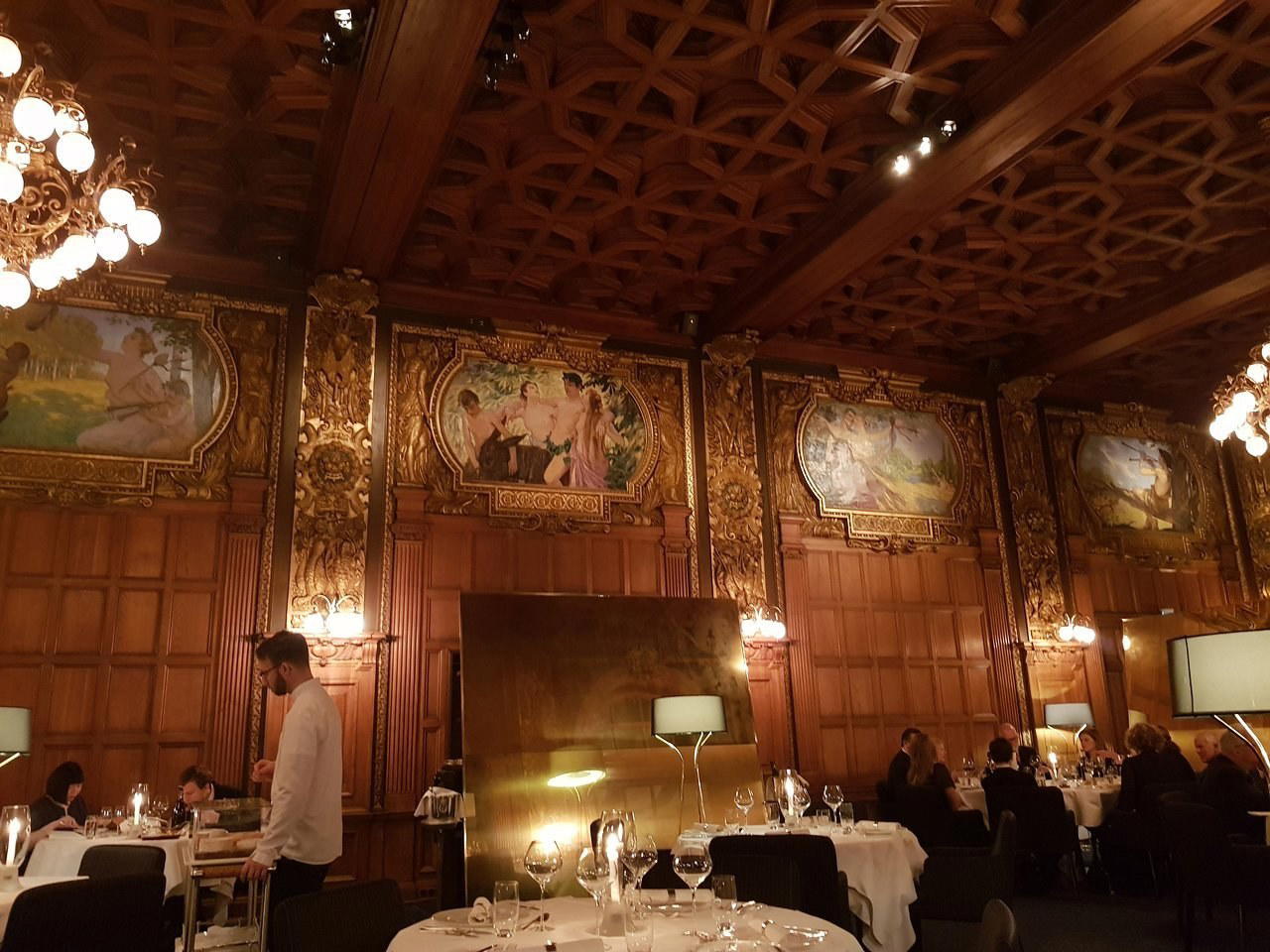
At a Glance
- Elegant
- Energetic
- Well Known
- Sophisticated
- Ornate
- After Work
- Late Night
- Group Outing
- Celebration
- Special Occasion
- Private Event
- Live Music
- Historic Building
- Design Destination
- Standalone
- Standing Room
- Lounge Seating
- Private Rooms
- Booth Seating
- Classic Cocktails
- Craft Cocktails
- Bottle Service
Current opening hours
- Monday
- Closed
- Tuesday
- Closed
- Wednesday
- 10 PM–3 AM
- Thursday
- Closed
- Friday
- 11 PM–3 AM
- Saturday
- 11 PM–3 AM
- Sunday
- Closed
Hours can change for holidays and private events. Last verified .
Grand and luxurious with ornate crystal chandeliers, 19th-century ceiling paintings, and state-of-the-art lighting creating an atmosphere of hedonism and sophistication blending historic elegance with modern nightlife energy.
Know Before You Go
- Getting there
- Karl XII:s torg 5, 111 47 Stockholm, Sweden