Monastery Tvrdos

Falstaff Winery - Listed
Monastery Tvrdos brings Herzegovinian wine culture into a living Serbian Orthodox monastery outside Trebinje, where stone cellars, vineyards and olive groves frame the tasting experience. The point here is terroir as much as heritage: Vranac and Žilavka meet karst soils, hot summers, mild winters and a cellar program that spans century-old oak barrels and modern gravity-flow production.

Pearl is the En Primeur Club membership app — saves, bookings, and concierge access live there. Same editors, same standards.
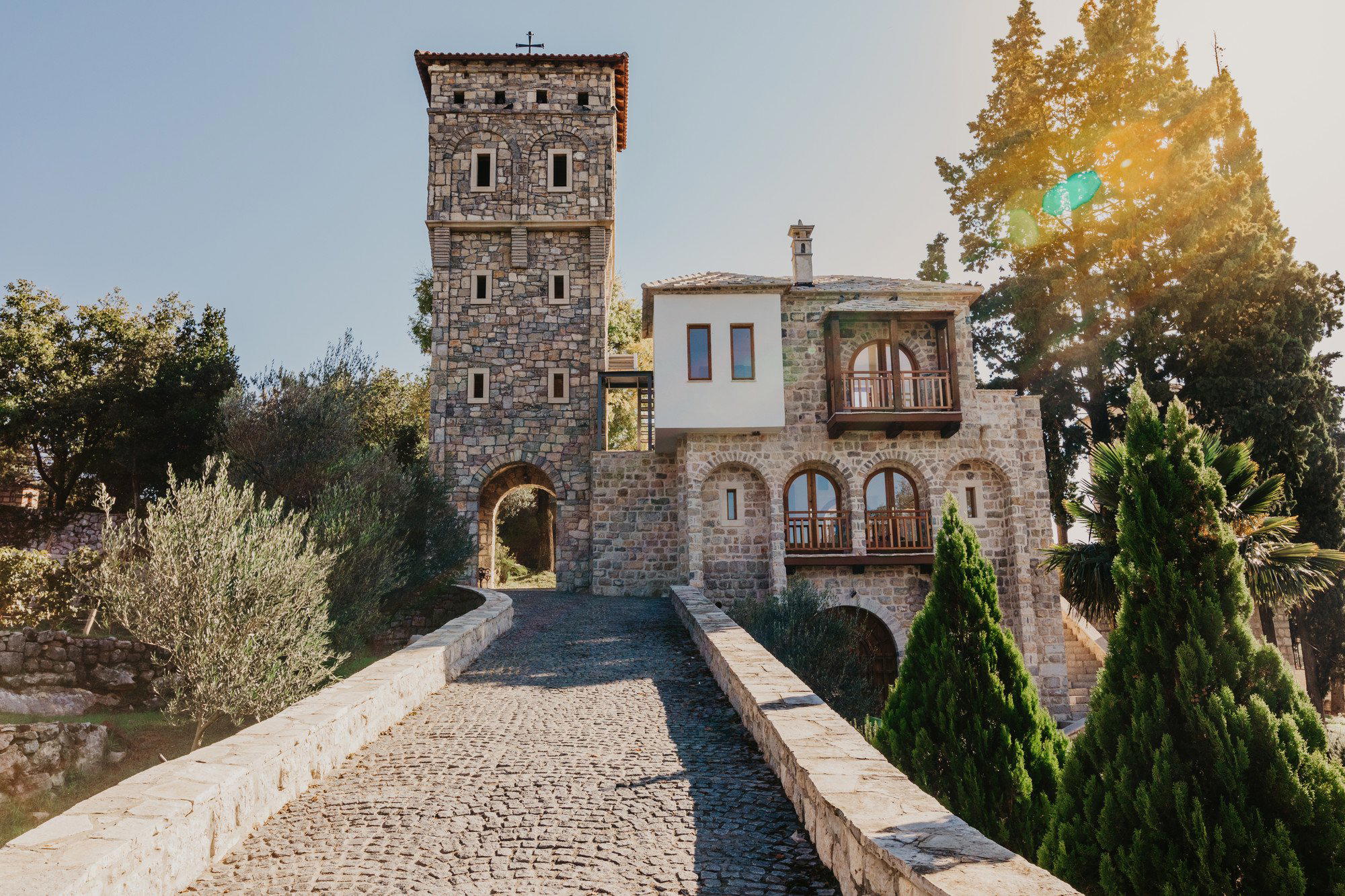
Monastery Tvrdos in Trebinje is best approached as a historic Serbian Orthodox monastery setting rather than as a conventional polished tasting room. The appeal is the atmosphere: stone cellars, cool subterranean spaces, a tranquil spiritual mood, and a range of vineyards and olive groves around the site. Tastings take place in a large but calm cellar and tasting room, so the experience is shaped as much by the setting as by whatever is in the glass.
For EP Club planning purposes, the safest way to describe Monastery Tvrdos is as a moderate-price Trebinje stop with a strong sense of place. The confirmed price level is $$, and the confirmed context is monastic, historic and cellar-led. Specific claims about grape varieties, production scale, named winemaking personnel, awards, cellar age, tour structure, food pairings, reservation rules or sustainability certifications are not part of the available information, so they should not be treated as fixed details when planning a visit.
Karst soils, native grapes and a monastery cellar define the glass
The draw here is the cellar environment itself: stone, cool underground space and a calm tasting room inside a religious setting. That makes Monastery Tvrdos different from a purely commercial wine bar or a city tasting counter. The monastery context changes the pace. Visitors should expect the mood to be quieter, more reflective and more connected to heritage than to nightlife or high-design hospitality.
What can be stated confidently is that the tasting experience is rooted in the monastery’s cellar spaces and in the surrounding vineyard landscape.
That does not weaken the essential reason to go. Monastery Tvrdos is valuable because the setting is coherent: a historic Serbian Orthodox monastery, stone cellars, subterranean coolness, vineyards and olive groves. In a Trebinje itinerary, it offers a slower and more contemplative wine-related stop than a standard urban venue. The cellar and the monastic atmosphere are the core facts to build around.
A tasting room where religious continuity changes the tempo
The tasting room is described as large but calm, which matters for expectations. This is not a venue to frame around loud social energy, elaborate service choreography or a tightly documented fine-dining format. The tone is tranquil and spiritual, with the stone-cellar setting doing much of the work. Visitors who value atmosphere, heritage and a sense of place are the natural audience.
Because the available facts do not verify specific service features, it is better not to promise food pairings, outdoor seating, child suitability, dog policies, guided tours, private events, take-out, delivery, dietary accommodations or a particular reservation procedure. Those details may vary or require direct confirmation. The grounded description is simpler: tastings take place in a calm cellar and tasting room within a historic monastery environment in Trebinje.
The price marker is $$, so EP Club readers can treat the venue as moderate rather than luxury-priced on the information available. Price symbols are not the same as a menu or tasting tariff, so they should be read as a broad planning cue only. For exact current costs, inclusions and availability, visitors should confirm directly before going.
How to place it within a Trebinje wine itinerary
Monastery Tvrdos fits best as a place-centered stop in Trebinje: part heritage site, part cellar visit, and part quiet landscape experience. The confirmed surroundings of vineyards and olive groves help frame the visit, but the page should not overextend into claims about regional climate, soil, production philosophy or named varieties. The most reliable planning advice is to give the site enough time for its atmosphere to register.
Use Monastery Tvrdos as an anchor for a calmer side of Trebinje, then build the rest of the trip around other dining, lodging, bar, winery and experience options in the city as appropriate. Comparisons should stay generic unless another venue has been separately verified; Monastery Tvrdos is the only named venue that should be used. That keeps the guide focused and avoids implying unsupported relationships with other places.
The critical case for Monastery Tvrdos is therefore direct. It offers a historic Serbian Orthodox monastery setting in Trebinje, with stone cellars, cool subterranean tasting spaces, a tranquil spiritual atmosphere, vineyards and olive groves. Those elements are enough to make it a distinctive stop without adding unconfirmed claims. For travelers who care about atmosphere and heritage, the appeal lies in the calm cellar experience and the monastery context rather than in fabricated detail.
Recognition history
Dated appearances from independent guides and award organizations, with the underlying list record or original source where available.
Falstaff Winery - Listed
Falstaff
Details
- Scenic
- Classic
- Rustic
- Well Known
- Group Outing
- Wine Education
- Special Occasion
- Romantic Getaway
- Solo Exploration
- Barrel Room
- Estate Grounds
- Vineyard Tour
- Historic Building
- Private Tasting
- Organic
- Vineyard
- Garden
- Vranac
- Žilavka
- Chardonnay
- Cabernet Sauvignon
- Merlot
- Still Red
- Still White
- Still Rosé
- Cellar Tasting
- Guided Tasting
- Tasting With Monastery Tour
Historic Serbian Orthodox monastery setting with stone cellars, cool subterranean spaces and a tranquil, spiritual atmosphere surrounded by vineyards and olive groves; tastings take place in a large but calm cellar and tasting room that feels classic and rustic rather than modern.