Lornano

Falstaff Winery - 3 Stars
Lornano is a low-key Chianti Classico estate in Monteriggioni, shaped by Sangiovese, calcareous soils, underground cellars, and more than a century of family stewardship. The draw is not spectacle but place: a 180-hectare Tuscan property where vineyard, olive grove, historic stonework, and agriturismo hospitality sit close to the wine itself.

Pearl is the En Primeur Club membership app, where members save venues, book tables and use the concierge.

Approaching a Tuscan wine estate of this kind, the visual grammar matters: stone buildings, working vineyards, olive groves, garden edges, and the cooling promise of underground cellars. In Monteriggioni, that setting carries a specific weight because Chianti Classico is not just a postcard category; it is an appellation built on land, altitude, Sangiovese, and long institutional memory. Lornano fits that register quietly, with a countryside mood that suits travelers looking for cellar time and vineyard context rather than a high-volume tasting-room circuit.
The estate’s importance begins with place. Its vineyards sit in the southwest hills between Castellina in Chianti and Monteriggioni, inside Chianti Classico DOCG, with a single vineyard plot of roughly 50 to 51 hectares set within a 180-hectare property. The average altitude is 350 meters, and the soils bring together calcareous earth, sandstone, silt, clay, and marine sediments. Those details are not decorative. In Chianti Classico, they explain why Sangiovese remains the structural language of the estate: acidity, tannin, savory edge, and site definition matter more than sheer ripeness.
A Sangiovese-first Chianti Classico estate with institutional roots
Chianti Classico has spent the past decade sharpening its hierarchy, especially around Gran Selezione, while also defending the identity of Sangiovese against more internationalized Tuscan red-wine styles. Lornano sits on the appellation side of that argument. Its Chianti Classico Annata, Riserva, and Gran Selezione are made from 100% Sangiovese, and 80% of the vineyard is planted to 15 selected Sangiovese clones. That is a clear statement of priority: the estate’s serious wines are built around grape and place before embellishment.
The portfolio still leaves room for the broader Tuscan conversation. Merlot and Cabernet Sauvignon account for part of the remaining vineyard area and feed IGT Toscana wines, including Commendator Enrico, while Trebbiano and Malvasia support VinSanto del Chianti Classico DOC. Etél, an IGT Toscana rosato introduced in 2014 and made from Sangiovese, shows a more contemporary branch of the same core identity. The result is a range that follows a familiar Tuscan pattern: appellation Sangiovese at the center, international varieties at the margins, and Vin Santo as the heritage counterpoint.
The institutional credentials are stronger than any medal count. The estate has belonged to the same family since 1904, was a founding member of the Consorzio del Chianti Classico, and has belonged to the historic Gallo Nero consortium since its foundation in 1924. It was also among the first 30 Chianti Classico wineries to join the Gran Selezione denomination in 2013. For travelers trying to read the difference between a scenic Tuscan stop and a property tied to the region’s governing tradition, those signals matter.
Underground cellars, dry farming, and a production model tied to one estate
Production model is estate-led rather than assembled from broad sourcing. Grapes come from the property’s own vineyards, harvested mostly by hand from late September to mid-October, then vinified in stainless steel tanks at controlled temperatures. Aging takes place in an underground cellar protected from sudden temperature shifts, with French oak barrels forming part of the maturation framework. This is the useful middle ground in contemporary Chianti Classico: technical control in fermentation, older cellar logic for aging, and Sangiovese kept as the central lens.
Scale also tells part of the story. Annual production is around 350,000 bottles, which places the estate beyond micro-production but far from anonymous volume. That size can support a complete Chianti Classico ladder, accommodation, direct sales, and visitor programming while keeping the wines anchored to a defined property. Matteo Bernabei is named as oenologist, with Silvio Campatelli as general director and agronomist, giving the estate a technical structure alongside family ownership.
Sustainability is unusually concrete here. The estate works under SQNPI certification, avoids chemical fertilizers and herbicides, does not irrigate the vineyards, and uses a weather-station-driven decision system to monitor vineyard conditions. Treatments are reduced by nearly 20%, sulfite use is kept below 50% of the legal limit, and photovoltaic systems generate 60 kW for production processes. The estate also maintains woods on the property and has aimed to move 90% of wines into lightweight glass by 2025. In a region where sustainability language can become vague, these operational details give the claim substance.
How to think about the visit in Monteriggioni
The experience is better understood as estate immersion than bar-counter tasting. Lornano offers estate tastings, tour-and-tasting formats, food-pairing tastings, private tastings, vineyard and barrel-room elements, and accommodation within an agriturismo-style setting. The mood is quiet, casual, and rural, with outdoor space, vineyard and garden views, and a format suited to couples, families, small groups, and travelers using wine as a way to understand this part of Tuscany. Italian and English are listed for tours, and a typical tour duration is one hour.
For a broader Monteriggioni itinerary, pair winery time with the area’s dining and lodging research rather than treating the tasting as an isolated stop. EP Club’s local planning pages cover Our full Monteriggioni restaurants guide, Our full Monteriggioni hotels guide, Our full Monteriggioni bars guide, Our full Monteriggioni wineries guide, and Our full Monteriggioni experiences guide. Nearby wine-country planning can also include Stomennano, while wider Italian and European winery research continues through 3GP SRL in Treviso, 47 Anno Domini in Trebaseleghe, A Mano Wine in Noci, a6mani in Fragagnano, Abbadia Ardenga in Torrenieri, Abbazia di Crapolla in Neapel, Abbazia Monte Oliveto in Asciano, »der Steiner« Hans Steiner in Podersdorf am See, and & Handwein in Mannheim.
The editorial case is simple: this is a Chianti Classico address for readers who care about land-use, Sangiovese hierarchy, and estate continuity. The appeal is not built on showmanship. It comes from the alignment of a single vineyard plot, dry-farmed sustainable practice, underground aging, Gallo Nero history, and a hospitality format that keeps the countryside in view.
Recognition history
Dated appearances from independent guides and award organizations, with the underlying list record or original source where available.
Falstaff Winery - 3 Stars
Falstaff
Continue exploring
More in Monteriggioni
Wineries in Monteriggioni
All wineries in Monteriggioni →Restaurants in Monteriggioni
All restaurants in Monteriggioni →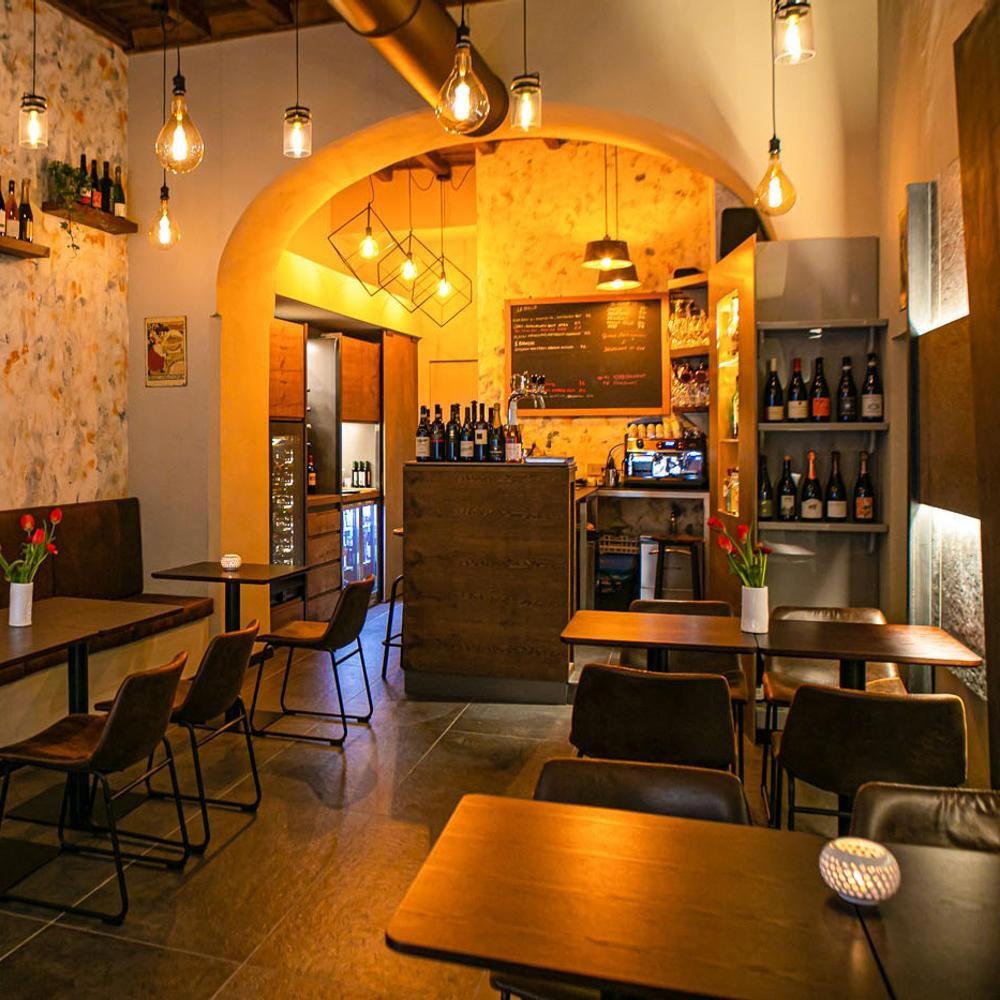
Hotels in Monteriggioni
All hotels in Monteriggioni →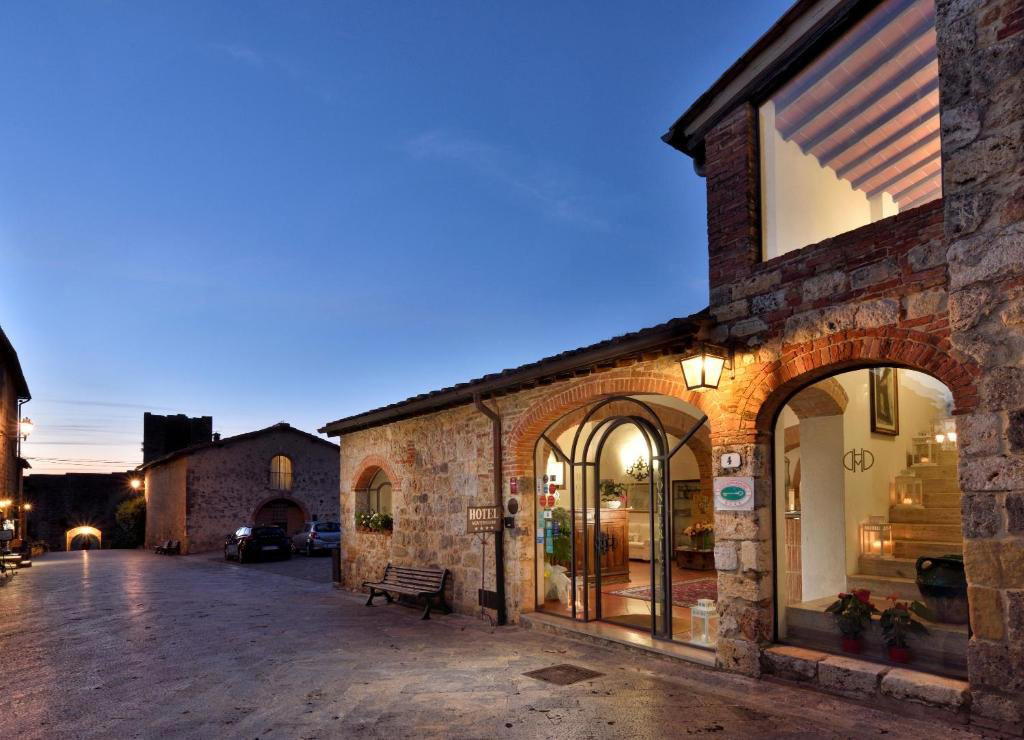
Details
- Scenic
- Rustic
- Classic
- Romantic
- Intimate
- Romantic Getaway
- Group Outing
- Family
- Wine Education
- Special Occasion
- Solo Exploration
- Estate Grounds
- Vineyard Tour
- Barrel Room
- Historic Building
- Panoramic View
- Private Tasting
- Sustainable
- Dry Farmed
- Vineyard
- Garden
- Mountain
- Sangiovese
- Merlot
- Cabernet Sauvignon
- Trebbiano
- Malvasia
- Still Red
- Still Rosé
- Dessert
- Estate Tasting
- Tour And Tasting
- Food Pairing Tasting
- Private Tasting
- Italian
- English
Historic family estate with traditional stone buildings, underground cellars, and surrounding vineyards and olive groves, offering a quiet, classic Tuscan countryside feel with scenic views and a relaxed, welcoming atmosphere.