Clos Henri

Falstaff Winery - 4 Stars
Clos Henri brings a Sancerre family’s soil-first discipline to Marlborough’s Wairau Valley, focusing on organic Sauvignon Blanc and Pinot Noir from a vineyard shaped by clay, river stone, and a diagonal fault line. The converted chapel cellar door gives the estate a quiet, grounded character, but the real subject is the land: dry-farmed vines, estate fruit, and labels that make geology legible in the glass.

Pearl is the En Primeur Club membership app — saves, bookings, and concierge access live there. Same editors, same standards.
- Address
- Blenheim, Marlborough, Neuseeland
- Directions
- Get directions
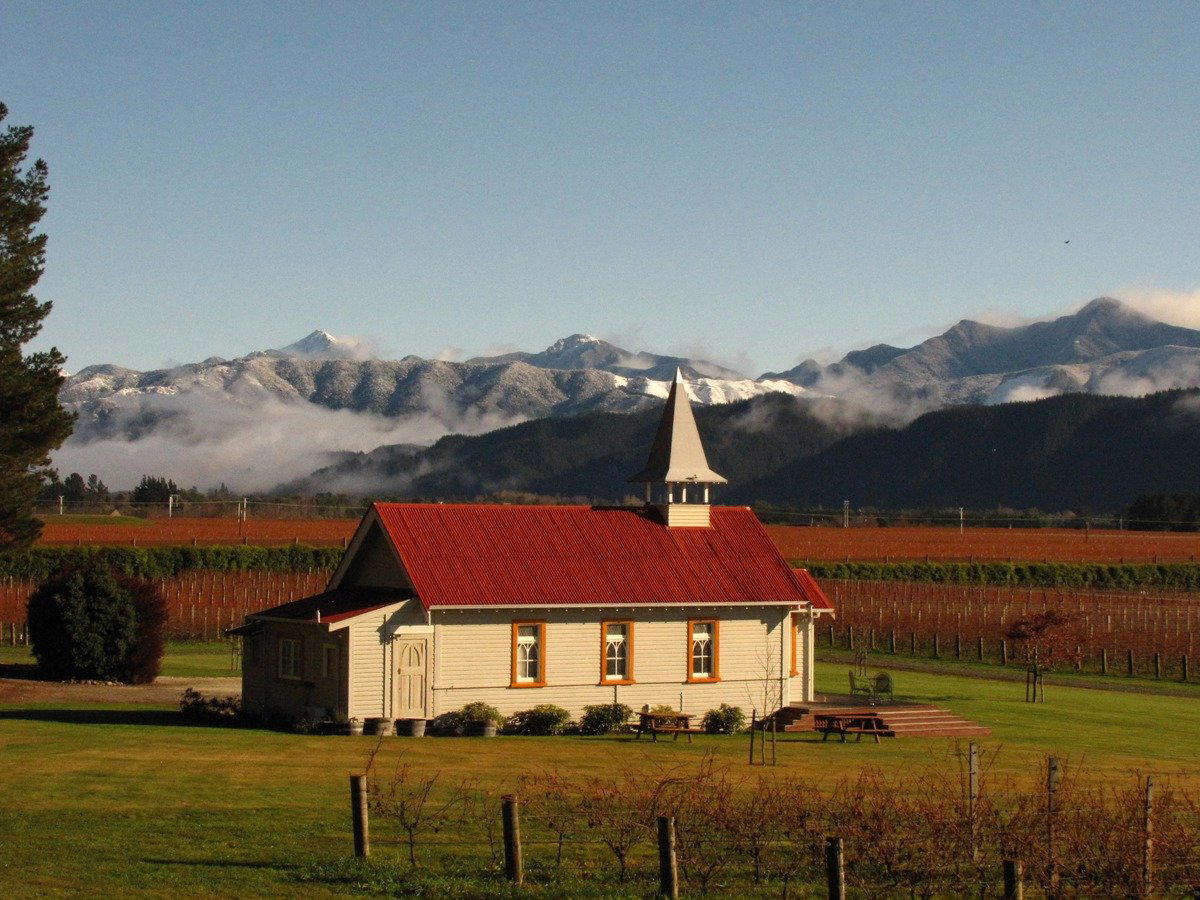
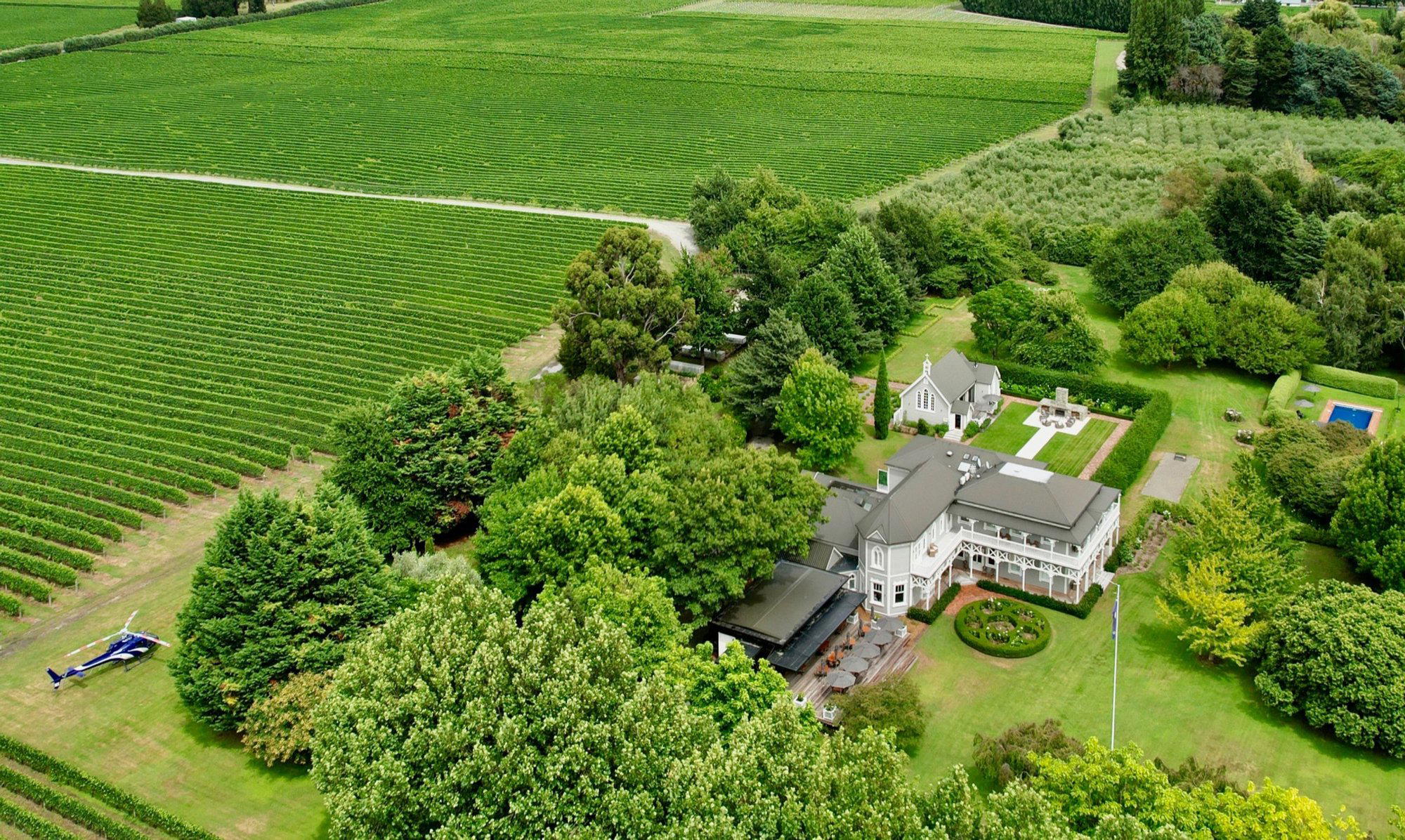
Approaching the cellar door, the first impression is not spectacle but restraint: vineyard rows, southern foothills, and a converted chapel set inside the estate rather than a hospitality room detached from the farming. That matters in Marlborough, where the region’s international reputation has often been simplified into a single Sauvignon Blanc shorthand. Clos Henri asks for a slower reading of the Wairau Valley, one based on soil, slope, farming method, and the tension between Loire inheritance and New Zealand sunlight.
The estate sits in Blenheim’s Wairau Valley, a part of Marlborough where long dry seasons, strong sun, and cool nights give Sauvignon Blanc and Pinot Noir a wide technical range. The Bourgeois family, associated with Sancerre winegrowing across 10 generations, established the property in 2000 after a long search for New World land that could speak in a familiar but not imitative register. That origin story is useful only because it explains the discipline here: Sauvignon Blanc and Pinot Noir are not treated as broad regional categories, but as vehicles for a site divided by geology.
Wairau Valley through a Loire lens
Marlborough’s commercial success made Sauvignon Blanc globally legible, but that same success can flatten the conversation. The more interesting estates now try to prove that the region is not just about aroma and immediacy. Clos Henri belongs to that narrower group, with an organic estate model, dry farming, and a portfolio built around soil distinction rather than range expansion. Its focus is narrow by design: Sauvignon Blanc and Pinot Noir, the two varieties tied to the family’s Sancerre reference point.
The vineyard is the argument. Across roughly 109 hectares, with 47 hectares planted to vines, a fault line cuts through the property and creates three named soil types: Wither clay, Broadbridge clay, and Greywacke river stone. Those soils are not left as back-label poetry. They structure the labels, including Petit Clos, Bel Écho, and the Clos Henri range, with single-vineyard expressions such as Otira Sauvignon Blanc from stony ground and Waimaunga Sauvignon Blanc from clay. For drinkers used to Marlborough as a regional flavor profile, the estate turns the visit into a comparative study of texture, line, and structure.
Dry farming is a serious commitment in a region where irrigation has often supported scale. Here, the absence of irrigation is part of the style: vines work harder for water, yields are directed toward concentration, and farming becomes inseparable from taste. Organic and biodynamic practices add another layer of intent, but the point is not virtue-signalling. The point is control of the full chain from vine to bottle, since the wines are made from estate-grown fruit rather than purchased grapes.
Soil-specific wines, not a broad cellar-door catalogue
The cellar-door experience is strongest for visitors who want to compare expressions rather than simply sample a regional category. Classic tastings and vineyard tastings make sense here because the estate’s distinctions are conceptual as much as sensory: clay against stone, Sauvignon Blanc against Pinot Noir, New World ripeness against a French-trained preference for shape and restraint. A Blanc de Noirs sparkling wine made from Pinot Noir adds another angle without turning the portfolio into a grab bag.
Production choices reinforce the soil-led message. The winery sits among the vines, so harvested fruit travels only a short way before processing. Small harvest trailers are used to reduce compaction, with hand-sorting in the vineyard and winery. Sauvignon Blanc handling is designed to limit skin contact and protect finer mineral expression; Pinot Noir extraction is kept gentle through pump-overs and limited plunging. None of this is decorative technique. It is the practical infrastructure behind an estate trying to make distinctions between blocks readable.
The converted chapel gives the visit a rustic, quiet intimacy, but the room should not distract from the more important question: how much patience does the visitor bring? This is a stronger stop for wine education, special occasions, small-group tastings, or a slower romantic detour than for anyone seeking a high-volume tasting trail. The setting is scenic, with vineyard and mountain views, yet the estate’s value lies in the chance to taste Marlborough through a narrower, more exacting frame.
How to place it within a Blenheim wine itinerary
Blenheim rewards curation because the surrounding wine country can be approached in several ways: family-run cellar doors, larger regional names, small-production specialists, and design-led tasting rooms. For a broader view of the area, the full Blenheim wineries guide is the natural anchor. Travellers building a wine-focused day can also cross-reference nearby producer styles through Allan Scott Family Winemakers, Auntsfield Estate, Black Canvas, Black Cottage, and Blank Canvas Wines, each useful for understanding how varied the region becomes once the conversation moves beyond a single grape stereotype.
Planning should stay simple and deliberate. Clos Henri is a vineyard-estate visit with a casual dress code, on-site parking, and a reservation-recommended format. It is not built around food pairing, outdoor seating, children’s programming, dog-friendly facilities, or shipping as the main draw. That makes it better as a focused tasting stop than as an all-afternoon leisure compound. If the day extends beyond wine, keep the wider Blenheim edit close: restaurants, hotels, bars, and experiences will shape the rest of the trip more effectively than adding another cellar door by default.
For travellers using Marlborough as part of a wider New Zealand wine route, the contrast is instructive. Central Otago and Canterbury producers such as Akarua Winery in Nevis, Akitu in Wānaka, and Alan McCorkindale Limited in Christchurch frame different climates and Pinot Noir conversations. International references such as »der Steiner« Hans Steiner in Podersdorf am See and & Handwein in Mannheim widen the lens again. Clos Henri’s role in that larger map is clear: it is a Marlborough estate that treats terroir as a working method, not a tasting-room slogan.
Recognition history
Dated appearances from independent guides and award organizations, with the underlying list record or original source where available.
Falstaff Winery - 4 Stars
Falstaff
Continue exploring
More in Blenheim
Wineries in Blenheim
Browse all →
Bars in Blenheim
Browse all →
Restaurants in Blenheim
Browse all →
Details
- Scenic
- Rustic
- Quiet
- Intimate
- Classic
- Group Outing
- Wine Education
- Special Occasion
- Romantic Getaway
- Estate Grounds
- Vineyard Tour
- Private Tasting
- Historic Building
- Organic
- Dry Farmed
- Mountain
- Vineyard
- Sauvignon Blanc
- Pinot Noir
- Still White
- Still Red
- Classic Tasting
- Vineyard Tasting
Organic estate winery in a scenic Wairau Valley setting, with a cellar door housed in the vineyard and a focus on terroir-driven, hand-crafted wines.