
Michelin Plate
Our verdict
Villa Greta occupies a cluster of converted farm buildings in rural Dobków, blending a pottery workshop, shop, and guest rooms with a red-brick bistro. Named for the owners' grandmother, the restaurant delivers hearty Polish classics—wild-game bigos, slow-cooked pork, rye-bread accompaniments—framed by a wood-burning stove and a garden terrace that opens onto farmland and forest.

Pearl is the En Primeur Club membership app, where members save venues, book tables and use the concierge.
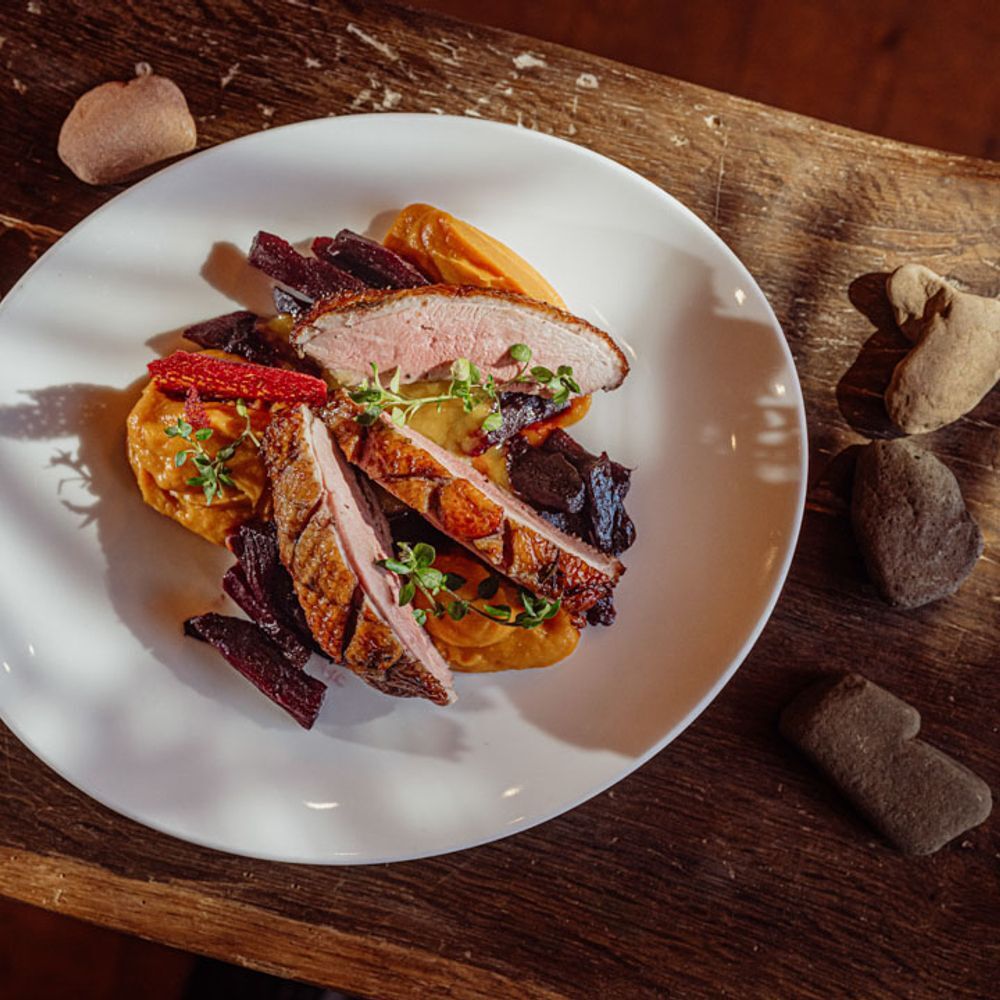
The menu
What to order
- Seasonal Polish classics (e.g. potatoes with dill and kefir with fried egg)
- Regional Lower Silesian specialties using local farm produce
Poland's agri-tourism corridor, running through Lower Silesia's southern hills, has shifted over the past decade from guesthouse-and-breakfast simplicity to multi-use rural hospitality estates that incorporate dining, retail, and workshop programming. Villa Greta belongs to that second wave. The property, named after the grandmother of the current generation of owners, anchors a working pottery studio, a small shop selling ceramics and preserves, a handful of overnight rooms, and a restaurant built around the vocabulary of nineteenth-century farm architecture, vaulted red-brick ceilings, whitewashed plaster, wide plank floors, and a wood stove that runs year-round. The setting sits 12 kilometres from Kamienna Góra in low-density countryside, which means access by car is the default, and the dining room competes for attention with the terrace and garden, both of which open onto fields and forest edge.
The menu draws on the regional lexicon of game, pork, root vegetables, and fermented cabbage, a category that finds parallel in scattered farm-to-table spots across Lower Silesia but distinguishes itself here through execution depth and ingredient sourcing. Wild venison from the surrounding forest appears in the bigos, a dish that functions as the kitchen's clearest signature. The stew layers meat, deer in this instance, rather than the more common pork or mixed-game approach, with aged sauerkraut, smoked bacon, dried plum, and mushroom, simmered long enough that the flavours collapse into a unified, acidic, slightly sweet base. The dish is served with dense rye bread, baked daily, which provides the structural counterweight to the stew's richness. The kitchen sources meat from local hunters and wild-game processors, a model that locks availability to seasonal supply rather than fixed year-round menus.
The Dining Room and Garden
The interior splits into two zones: a 30-seat main dining room under the brick vaults, warmed by the wood stove and lit by iron chandeliers, and a smaller adjacent space that doubles as overflow seating and pottery display. The tables are unfinished oak, the chairs a mix of vintage farmhouse wood and newer reproductions. Acoustics are live, particularly when the room fills on weekends, which means conversation carries. The garden terrace, active from April through September, offers 20 additional seats at metal bistro tables shaded by linden trees. Service is family-run, with the owners rotating between front-of-house and the pottery workshop next door, a format that delivers warmth but occasionally slows pacing when the room is at capacity.
Wine list skews toward Polish producers, Winnica Turnau, Winnica Jaworek, a handful of Lower Silesian micro-vineyards, alongside entry-level European bottles in the €20–€30 bracket. Beer selection leans local: Browar Zamkowy in Cieszyn, Pinta from Wieprz, and rotating taps from smaller breweries in the Sudetes. There is no cocktail program; the focus is fermented and cellar-stored, with a short list of fruit liqueurs and herbal vodkas that align with the kitchen's ingredient sourcing.
What to Eat
Beyond the bigos, the menu holds six to eight mains that rotate by season and ingredient availability. Slow-braised pork shoulder, cooked with apple and juniper, arrives with buckwheat groats and roasted beets in autumn and winter. Spring sees trout from nearby streams, pan-fried and served with sorrel cream and new potatoes. Summer brings zucchini and cabbage dishes, often built around fermented dairy and dill. Portions are generous; appetiser plates, pickled mushrooms, herring in oil, house-made pâté, are shareable, and desserts trend toward fruit compote, cheesecake, and poppy-seed roll, all made in-house.
Pricing sits in the mid-range for rural Poland: mains run 40–70 PLN, appetisers 15–30 PLN, desserts 15–20 PLN. A full meal with wine or beer typically lands between 100 and 140 PLN per person, a bracket that undercuts urban bistros in Wrocław or Kraków but reflects the estate's multi-channel revenue model, pottery sales, overnight stays, and event bookings supplement restaurant income, allowing the kitchen to hold prices below single-use dining venues at comparable quality.
Villa Greta has attracted recognition from the Michelin Guide, which noted the restaurant's integration of craft, hospitality, and cooking in a single-family operation. The citation emphasises the homely atmosphere, the garden setting, and the depth of flavour in the bigos, a dish that encapsulates the kitchen's approach: locally sourced, technique-driven, and rooted in Polish culinary tradition without veering into nostalgia or theme-park rusticity. That recognition has increased weekend demand, particularly from diners driving out from Wrocław, Jelenia Góra, and the Czech border region, which means advance booking is advisable from May through September.
The property's location in Dobków, population under 500, places it outside the standard dining circuits that cluster around Lower Silesia's spa towns and ski resorts. Visitors typically combine a meal with a pottery workshop booking, an overnight stay, or a walk through the surrounding Sowie Mountains. The nearest restaurant concentration is in Dobków's broader dining scene, which remains sparse; most diners arrive with Villa Greta as the primary destination rather than a stop within a larger itinerary. For broader context on accommodation options, Dobków's hotel offerings are limited, and overnight stays at Villa Greta itself require separate advance booking. The estate does not operate as a full-service inn; rooms are available on a case-by-case basis, often tied to multi-day pottery courses.
For those exploring Poland's evolving rural dining landscape, Villa Greta offers a clear case study in agri-hospitality diversification, ingredient transparency, and the integration of craft and cooking. The restaurant does not aim for spectacle or conceptual innovation; instead, it delivers consistency within a narrow but well-defined repertoire. Comparisons can be drawn to other farm-based dining projects across Poland, Szyszka, Babinicz, and Biblioteka operate in similar formats, but Villa Greta distinguishes itself through the pottery component, which functions as both economic diversification and thematic coherence, reinforcing the estate's identity as a working creative space rather than a themed dining venue. For visitors seeking urban Polish dining alternatives, Acquario in Wrocław and Amfora in Katowice offer more polished, city-centre formats, while 3 Rybki in Kraków and A nóż widelec in Poznań provide higher-intensity tasting-menu experiences. Villa Greta sits in a different tier: lower formality, higher ingredient traceability, and a hospitality model that blends dining with broader cultural engagement.
The verdict: Villa Greta is worth the drive for diners interested in ingredient-forward Polish cooking, rural hospitality integration, and the convergence of craft and food. The bigos alone justifies the trip, but the broader estate experience, pottery, garden, overnight option, adds depth that single-use restaurants cannot match. Leading visited April through September when the terrace is open, though the winter dining room, with the wood stove running, offers its own appeal. Book ahead for weekends; weekday lunches remain easier to secure.
Frequently asked questions
Is Villa Greta a family-friendly restaurant?
The garden, terrace, and pottery workshop make Villa Greta suitable for families looking for a rural outing. The menu includes hearty, recognizable dishes like slow-braised pork and bigos, which appeal to a range of ages.
Is Villa Greta better for a quiet night or a lively one?
The setting is designed for quiet rural peace. The vaulted-brick dining room and wood-burning stove create a relaxed, contemplative atmosphere rather than a buzzing social scene.
Is Villa Greta award-winning?
Villa Greta has received recognition including: This collection of former farm buildings is named after the grandmother of the current generation of owners and incorporates a pottery workshop, shop, characterful bedrooms and this homely bistro. The vaulted red-brick ceiling and wood-burn….
Where is Villa Greta in Dobkow?
Villa Greta is located at Dobków 59, Dobków, Lower Silesian, 59-540, POL, Dobkow.
Is Villa Greta reservation-only?
Reservation details are not publicly listed. Given the rural location in Dobków and the small-scale nature of a converted farm operation, calling ahead or checking availability through local tourism channels is advisable.
What makes Villa Greta worth seeking out?
The combination of a working pottery shop, characterful bedrooms, and a bistro serving full-flavored bigos with deer and rye bread distinguishes Villa Greta. It functions as both a dining destination and a rural craft experience in Lower Silesian countryside.
Quick Comparison
Comparable venues by cuisine and price in the same metro.
| Venue | Cuisine | Price | Awards |
|---|---|---|---|
| Villa GretaThis venue (the venue you are viewing) | Slow-food Polish & regional Lower Silesian | $20–30 | Michelin Plate |
Recognition history
Dated appearances from independent guides and award organizations, with the underlying list record or original source where available.
Michelin Plate
Michelin
Continue exploring
More in Dobkow
Restaurants in Dobkow
All restaurants in Dobkow →
Hotels in Dobkow
Browse all →
Details
- Rustic
- Cozy
- Scenic
- Family
- Group Dining
- Date Night
- Celebration
- Casual Hangout
- Private Event
- Garden
- Courtyard
- Historic Building
- Design Destination
- Hotel Restaurant
- Beer Program
- Farm To Table
- Local Sourcing
- Organic
- Garden
- Mountain
- A La Carte
- Beer
- Wine
- Non Alcoholic
- Vegetarian Friendly
- Vegan Options
- Gluten Free Options
- Organic Focus
Warm, rustic farmhouse interiors with vaulted dining rooms and homely decor, surrounded by gardens and countryside; the atmosphere is relaxed and family-friendly, with an emphasis on slow dining and quiet rural charm rather than urban buzz.