
Tabelog 100 #72
Our verdict
Shunka Rou Hirokoji ten gives Obihiro a serious Chinese address in a city better known to travelers for Tokachi dairy, pork bowls, wheat, and wide agricultural horizons. Its 2026 Tabelog Chinese EAST “Tabelog 100” selection and 3.59 score place it in a narrower conversation: regional Chinese cooking that has earned attention beyond Hokkaido’s usual food shorthand.

Pearl is the En Primeur Club membership app, where members save venues, book tables and use the concierge.
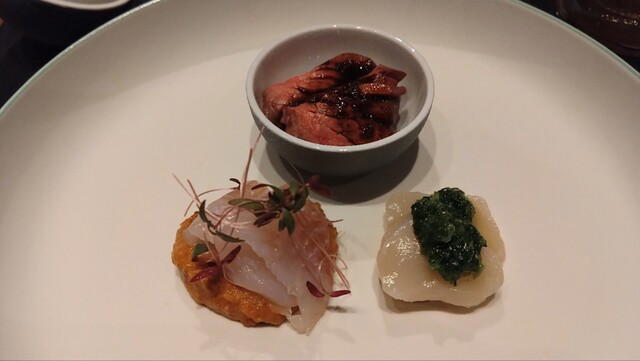
Obihiro gives northern Japan dining a practical rhythm: low evening light, compact blocks, and restaurants that serve residents before they serve itineraries. In that setting, Chinese cooking carries a different weight from the neon banquet clichés of larger cities. It becomes a test of supply lines, restraint, and whether a kitchen can translate Tokachi’s agricultural confidence into a cuisine built on heat, timing, and sauce work.
Shunka Rou Hirokoji ten belongs in that conversation because it has moved beyond local convenience into national food-list recognition. Its selection for Tabelog Chinese EAST “Tabelog 100” 2026, alongside a 3.59 Tabelog score, signals a restaurant judged within an eastern Japan Chinese category rather than only against Obihiro’s neighborhood dining field. That distinction matters in Hokkaido, where praise often defaults to seafood, dairy, ramen, and farm produce. Chinese cuisine here has to argue for attention in a crowded regional identity.
Tokachi produce changes the Chinese dining equation
Obihiro sits at the center of Tokachi, one of Japan’s major agricultural regions, and that fact shapes how serious restaurants in the city are read. The surrounding plain is associated with wheat, beans, potatoes, dairy, beef, and pork; these are not luxury signifiers in the abstract, but working ingredients that define local eating. A Chinese restaurant operating at this level is interesting because the cuisine is technique-forward, yet the regional advantage is ingredient-forward. The tension between those two forces is the point.
In larger Japanese dining cities, Chinese dining often competes through lineage, regional specialization, cellar depth, or polished formal service. In Obihiro, the stronger editorial question is how a kitchen uses a rural supply context without turning into a generic local-produce showcase. The cuisine rewards control: wok heat, braising time, aromatic layering, and the disciplined use of starch, oil, and stock. Tokachi’s raw materials give the kitchen a base; Chinese technique decides whether those materials become dinner with structure rather than a map of nearby farms.
The Tabelog Chinese EAST recognition gives Shunka Rou Hirokoji ten a useful external marker because it places an Obihiro restaurant in the same broad judging field as eastern Japan addresses with denser dining ecosystems. That does not make it a metropolitan-style destination transplanted north. It makes the opposite case: regional Chinese cooking can be compelling when it is not trying to mimic big-city luxury cues.
Where it sits in Obihiro's tighter dining circuit
Obihiro rewards travelers who think beyond a single dinner. The city’s appeal is not breadth for its own sake, but the way several categories reveal different versions of Tokachi. A meal at Uemons Heart points toward another end of the local spectrum, while æ¥æ¬æç å «å¯¸ and マリヨンヌ show how Japanese and Western-leaning formats sit beside Chinese cooking in the same compact city. Read together, these restaurants describe Obihiro better than any single plate can.
That is also why Shunka Rou Hirokoji ten is more useful as a city lens than as a stand-alone trophy stop. Chinese cuisine in Hokkaido is often treated as a secondary category by visitors chasing seafood markets or pastoral dairy imagery. Here, the award signal corrects that bias. It says the category has enough local seriousness to warrant planning around, especially for travelers already building a food-led route through eastern Hokkaido.
For broader planning, Our full Obihiro restaurants guide gives the dining frame, while Our full Obihiro hotels guide, Our full Obihiro bars guide, Our full Obihiro wineries guide, and Our full Obihiro experiences guide help separate a quick stop from a proper Tokachi stay. The city works better when dinner is paired with the region’s agricultural context rather than treated as an afterthought between transport legs.
The useful comparison is category, not glamour
Japan’s serious restaurant culture can over-reward scarcity, ceremony, and metropolitan address. Obihiro pushes against that habit. A Chinese restaurant earning national category recognition here is not trading on the same signals as a counter in a major shopping district or a polished hotel dining room. Its relevance comes from a different equation: regional demand, local ingredients, and recognition within a cuisine category that is often under-discussed in Hokkaido travel writing.
That makes the restaurant a sharper choice for travelers who already understand Japan beyond the obvious circuits. Someone mapping a broader Japan dining itinerary might compare it not by cuisine alone, but by what each stop says about place: other regional dining rooms, casual counters, cafe culture, or contemporary local cooking in cities beyond Hokkaido. The more useful question is not which city has the louder reputation, but which meal tells the clearest story about its surroundings.
That same logic extends across less predictable routes: unnamed dining rooms in other Japanese cities can each frame a different relationship between cuisine and locality. Even outside Japan, Japanese foodways change when distance, audience, and sourcing shift. Obihiro’s Chinese scene earns its interest from the same kind of specificity.
The practical reading is simple: Shunka Rou Hirokoji ten suits travelers who want one dinner in Obihiro that does more than confirm the city’s familiar food reputation. The draw is not novelty. It is the chance to see Chinese technique filtered through Tokachi’s ingredient economy and validated by a 2026 category award. In a region where the obvious orders are easy, that makes for the more intelligent choice.
Frequently asked questions
What does dinner at Shunka Rou Hirokoji ten typically cost?
Pricing at Shunka Rou Hirokoji ten is listed as JPY 10,000 - JPY 14,999 View spending breakdown.
Where is Shunka Rou Hirokoji ten in Obihiro?
Obihiro.
What time does Shunka Rou Hirokoji ten open and close?
Specific opening hours are not provided in the verified venue information for Shunka Rou Hirokoji ten.
What makes Shunka Rou Hirokoji ten worth seeking out?
Its strongest credential is the Tabelog 100 Chinese cuisine EAST 2026 selection, which places it in a tightly watched group rather than the city’s general dining pool. The price band of JPY 10,000–JPY 14,999 and the Obihiro location make it a measured dinner choice.
At-a-Glance Comparison
Comparable venues by cuisine and price in the same metro.
| Venue | Cuisine | Price | Awards | Notes |
|---|---|---|---|---|
| Shunka Rou Hirokoji tenThis venue (the venue you are viewing) | Chinese | $50–100 | Tabelog 100 #72 | Not listed |
| マリヨンヌ | French with Tokachi ingredients | Not listed | Tabelog 100 #41 | Obihiro city center |
| Uemons Heart | Farm gelato & ice cream café | $1–10 | Tabelog 100 #29 | Nishi 23-jo Minami |
| æ¥æ¬æç å «å¯¸ | Japanese Robatayaki | Not listed | Not listed | Obihiro |
| 琉華菜苑 | Cantonese Chinese with Okinawan influences | Not listed | Not listed | Nago City |
| 中国めしや 竹竹 | Chinese Mapo Yakisoba Specialist | Not listed | Not listed | Aoba-ku |
Recognition history
Dated appearances from independent guides and award organizations, with the underlying list record or original source where available.
Tabelog 100 #72 · No. 72
Tabelog · Tabelog 100 - Chinese cuisine - EAST - 2026
Continue exploring
More in Obihiro
Details
- Standalone
Current opening hours
- Monday
- 6–10 PM
- Tuesday
- 6–10 PM
- Wednesday
- 6–10 PM
- Thursday
- 6–10 PM
- Friday
- 6–10 PM
- Saturday
- 6–10 PM
- Sunday
- Closed
Hours can change for holidays and private events. Hours as of .