
Michelin Plate
Our verdict
Chef-owner Martyn Meid opened Elēno in late 2025, marrying classical French technique with Japanese precision in a monochrome dining room framed by vivid jars of house pickles. The chicken liver pâté on Hokkaido milk bread, an updated family recipe, signals the kitchen's willingness to root innovation in tradition and cross-cultural sourcing.

Pearl is the En Primeur Club membership app, where members save venues, book tables and use the concierge.
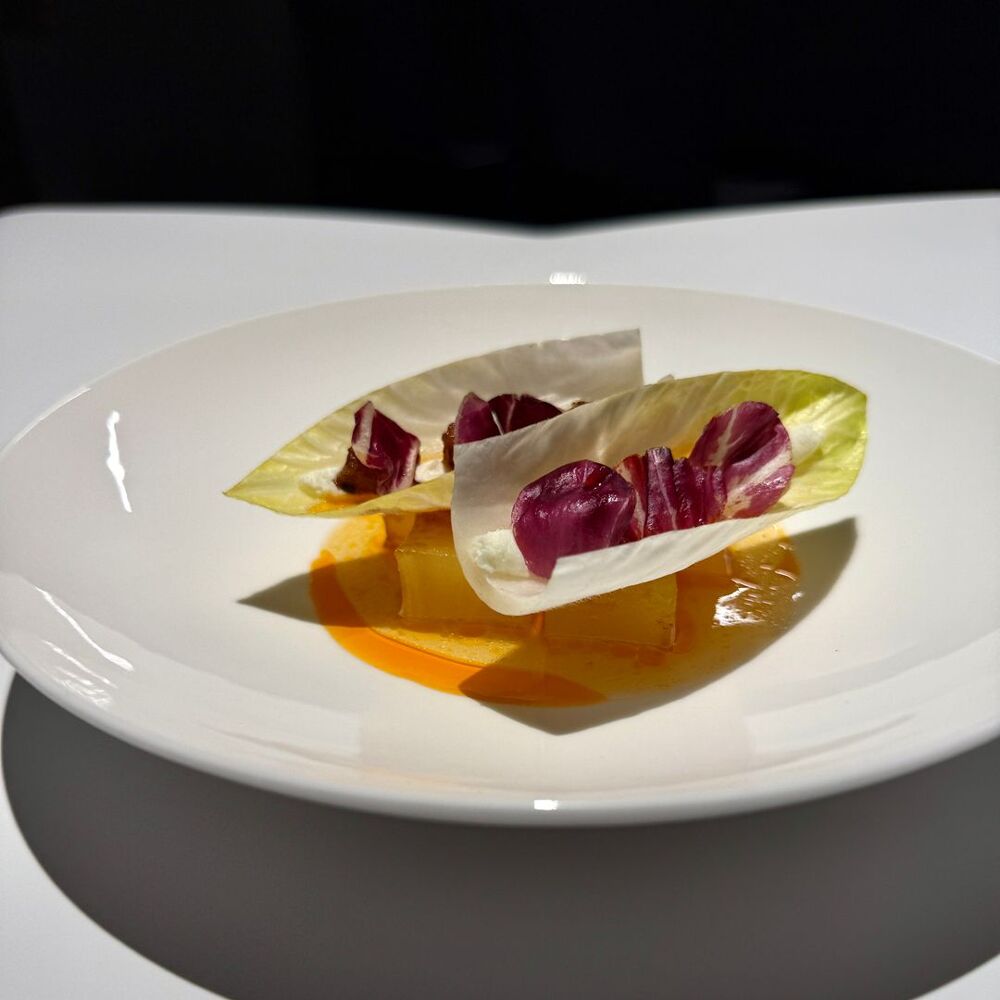
The first thing visible through Elēno's windows is a wall of bright-coloured preserving jars, pickled vegetables, fermented fruit, house-made condiments, rising in neat rows around an open kitchen. The monochrome palette of the dining room, white walls, black chairs, pale timber, throws the rainbow of jarred produce into sharp relief, and the arrangement is deliberate: this is a kitchen that treats preservation and ingredient preparation as part of the performance. Chef-owner Martyn Meid takes centre stage at the pass, orchestrating a cooking style that fuses classical French foundations with Japanese technique and flavour.
Vilnius has seen a steady rise in hybrid-cuisine formats over the past two years, but Elēno occupies a smaller niche: French-Japanese fusion that prioritises craft over spectacle. The menu borrows from Japanese fermentation, knife skills, and umami layering, then applies them to European proteins and produce. The chicken liver pâté on Hokkaido milk bread exemplifies the approach, a family recipe reworked with Japanese milk bread and precision balance, served as an amuse or starter depending on the evening's composition. It's the kind of dish that looks elegant on the plate and delivers innovation in texture and flavour without shouting about it. Other plates follow a similar logic: French structure, Japanese accent, local or imported ingredients chosen for their role in a specific technique.
Ingredient Curation and Kitchen Method
Elēno's sourcing strategy leans on both Lithuanian suppliers and select imported Japanese staples. The kitchen pickles in-house, ages proteins where the technique suits the cut, and relies on fermentation to build depth in sauces and garnishes. The jars lining the kitchen aren't decorative, they represent weeks of prep work, and many of the dishes on the menu depend on those preparations. Hokkaido milk bread is imported; it's flown in to support the signature pâté course and occasional dessert applications. The reliance on Japanese ingredients extends to soy, miso, sake, and mirin, all of which appear as accent layers rather than dominant flavours.
The French base is most visible in protein cookery: slow-poached fish, roasted meats with pan sauces, and butter-enriched emulsions. Japanese influence shows in plating discipline, the use of rice vinegar and dashi reductions, and a preference for lighter seasoning that lets ingredient quality carry the dish. The result is a menu that reads as Franco-Japanese on paper and tastes balanced on the plate, without the clash of competing traditions that sometimes marks fusion cooking.
Martyn Meid's background informs the kitchen's confidence with cross-cultural technique, and the open-kitchen format allows diners to watch the process unfold. The cooking is precise but not precious, dishes arrive composed and deliberate, with minimal garnish and a clear hierarchy of flavour. The menu changes with seasonal availability and the chef's ongoing experimentation, so repeat visits will likely encounter new iterations of the same ingredient-led approach.
Room Design and Service Format
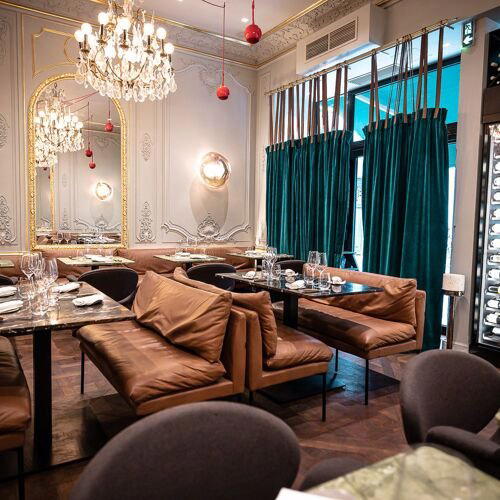
The dining room seats a modest number and maintains a minimalist aesthetic. Black-and-white tones dominate: white-painted brick, dark timber floors, black bentwood chairs, and minimal tableware. The only colour comes from the preserving jars, which frame the kitchen and act as a visual cue to the restaurant's ingredient-driven identity. The space is intimate without feeling cramped, and the open kitchen ensures that cooking noise and movement become part of the ambient texture.
Service follows a composed, explanatory style. Dishes are described briefly at the table, with emphasis on technique or sourcing when relevant. The pace is steady rather than rushed, and courses arrive with enough spacing to allow conversation between plates. Wine pairings are available, though the list skews European with a small selection of sake to complement the Japanese elements in the cooking. The monochrome room and the jarred-produce backdrop create a visual coherence that mirrors the menu's balance between restraint and colour.
Vilnius dining has grown more international in format and ambition since 2023, and Elēno joins a cohort of chef-owned venues, including Augustin, Amandus, and 14Horses, that prioritise ingredient provenance, technique precision, and personal creative voice over volume or trend-chasing. The city's modern-cuisine scene now operates at a level that draws comparison to larger Baltic capitals, and the concentration of ambitious kitchens along Gedimino Prospektas and nearby streets has created a recognisable dining corridor. Elēno sits within that geography, a short walk from the Old Town core and accessible by foot from most central hotels.
The restaurant opened in late 2025, so it remains early in its lifecycle. Reputation is building through word-of-mouth and the chef's established network, and the kitchen's output suggests longevity if the concept finds its audience. The Franco-Japanese format is narrow enough to attract diners seeking cross-cultural technique and broad enough to allow menu evolution without identity drift. For visitors exploring Vilnius beyond Blue Lotus or B'ARN Bistro, Elēno offers a different kind of precision, quieter, more ingredient-focused, and rooted in the chef's particular interpretation of two culinary traditions.
The chicken liver pâté on Hokkaido milk bread remains the clearest signal of the restaurant's identity: a dish that updates a family recipe with imported technique and ingredient, presented with restraint and executed with clarity. It's a small plate that encapsulates the broader ambition, French training, Japanese discipline, Lithuanian context, and a willingness to let craft speak louder than decoration. For a deeper look at Vilnius dining across formats and price tiers, consult our full Vilnius restaurants guide.
Frequently asked questions
Can I bring kids to Elēno?
Elēno operates as a chef-driven dining room with an open kitchen and creative French-Japanese menu centred on Martyn Meid's cooking. The monochrome design and tasting-focused format suggest a quieter setting more suited to adult diners, though no formal policy has been published. Families planning a visit should check the venue's official channels via Gedimino Pr. 37 to confirm seating arrangements.
What's the vibe at Elēno?
The room is minimalist and monochrome: white-painted brick walls, dark timber floors, and vividly coloured jars of house-pickled produce framing the open kitchen. Chef Martyn Meid works centre stage, and the space remains calm and focused. The design and format lean toward a quiet, kitchen-led dining experience rather than a social-dining scene.
Does Elēno have a Michelin star or similar recognition?
Elēno has received recognition including: Martyn Meid is the experienced chef-owner behind this crisply decorated restaurant, which opened at the end of 2025. His creative cooking adds Japanese techniques and flavours to a classical French base to create dishes that are elegant in ….
What part of town is Elēno in?
Elēno is located at Gedimino Pr. 37, Vilnius, Vilnius Region, 01110, LTU, Vilnius.
Comparable venues by cuisine and price in the same metro.
| Venue | Cuisine | Price | Awards |
|---|---|---|---|
| ElēnoThis venue (the venue you are viewing) | Modern French–Nordic–Japanese Fine Dining | $150–200 | Michelin Plate |
| Dine | Modern European Fine Dining | $50–100 | Michelin Plate · Star Wine List |
| HeJi | East-West Fusion Fine Dining | $150–200 | Michelin Plate · Star Wine List |
| Saigon | Authentic Vietnamese | $10–20 | Not listed |
| Da Antonio | Modern Italian Fine Dining | Not listed | Michelin Plate |
| Farmer & The Ocean | Lithuanian-Mediterranean Seafood | $30–50 | Michelin Plate |
Recognition history
Dated appearances from independent guides and award organizations, with the underlying list record or original source where available.
Michelin Plate
Michelin
Continue exploring
More in Vilnius
Restaurants in Vilnius
All restaurants in Vilnius →


Bars in Vilnius
All bars in Vilnius →
Elēno
The wine
- Wine program
- Deep wine list
- Extensive wine list
- Sommelier-led
Details
- Modern
- Elegant
- Intimate
- Sophisticated
- Date Night
- Business Dinner
- Celebration
- Special Occasion
- Private Event
- Design Destination
- Standalone
- Private Dining
- Extensive Wine List
- Sommelier Led
- Tasting Menu
- Wine
Current opening hours
- Monday
- Closed
- Tuesday
- 6–11 PM
- Wednesday
- 6–11 PM
- Thursday
- 6–11 PM
- Friday
- 6–11 PM
- Saturday
- 6–11 PM
- Sunday
- Closed
Hours can change for holidays and private events. Hours as of .
The room is sleek, crisply decorated, and modern, with an intimate fine dining feel; the atmosphere is refined and sophisticated but not stiff, focusing guests’ attention on a carefully choreographed, thought‑provoking tasting menu experience.