
Guía Repsol 1 Sol
Our verdict
El Poli gives Águilas a serious regional dining marker rather than another anonymous coastal table. Its 1 Sol recognition in Guía Repsol 2026 matters because Murcia’s southeastern coast is often read through beach-season simplicity, while the stronger cooking here is about local supply, disciplined product handling, and a restaurant culture tied to the port, the market, and the inland pantry.

Pearl is the En Primeur Club membership app, where members save venues, book tables and use the concierge.
The menu
What to order
- Fresh fish of the day
- Grilled seafood
- Menu del día seafood specials
Águilas does not announce its restaurants with the theatrical confidence of Spain’s larger dining cities. The appeal is quieter: a working coastal town, low-rise streets, the sea close enough to shape the appetite, and a dining rhythm that still bends around lunch, late dinners, and the local calendar. In that setting, El Poli reads as part of a broader Murcian argument: serious eating on the southeastern coast depends less on spectacle than on timing, restraint, and a clear sense of place.
The 1 Sol recognition from Guía Repsol in 2026 places the restaurant in a national Spanish guide that tends to reward regional identity as much as technical polish. That matters in Águilas, where the strongest tables are expected to justify themselves through the market rather than through imported luxury cues. For travellers comparing the town with larger Murcian and Mediterranean dining centres, this is the useful distinction: the cooking culture here is coastal without being generic, regional without needing nostalgia as a crutch.
Murcia's coast rewards restaurants that know the supply chain
The ingredient story in Águilas begins with geography. This corner of Murcia sits between fishing waters, irrigated agriculture, and a dry interior that has long shaped the region’s preference for direct flavours and preservation-minded cooking. A restaurant in this context is judged by how clearly it handles the local pantry, not by how many techniques it can stack onto a plate.
That is why national recognition has a different meaning here than it does in Madrid or Barcelona. In the larger cities, awards can signal ambition, price tier, or international positioning. On this stretch of coast, a Guía Repsol Sol points to something more grounded: a restaurant that has entered Spain’s quality conversation while remaining tied to its immediate region. The comparison within the wider Murcian context is instructive. Magoga occupies a different lane; Terraza Carmona offers another regional point of reference. El Poli belongs to the smaller-town coastal register, where a sense of place carries more weight than room theatre.
Spain has many seaside restaurants that trade on location alone. The more convincing ones understand that the local table does not need grand explanation, but it does need discipline. Águilas’ advantage is proximity: the town’s food identity is not abstract Mediterranean branding but a working relationship between coast, market, and kitchen. That is the lens through which this table makes sense.
A regional restaurant, not a destination costume
The current Spanish dining scene often splits between tasting-menu ambition and renewed confidence in regional restaurants. The latter category can be harder to assess from abroad because it rarely announces itself through grand design or internationally famous names. It asks a simpler question: does the restaurant make its place legible? In Águilas, that means avoiding the trap of interchangeable coastal dining and giving the local context enough precision to feel specific.
El Poli’s 2026 Guía Repsol recognition supplies the clearest trust signal. It does not turn the room into a luxury temple, and it should not be read that way. It does place the restaurant above the casual-seafront default and into the more selective tier of Spanish regional dining, where guide attention usually follows consistency and a clear sense of territory. For an EP Club reader, the appeal is not rarity for its own sake. It is the chance to understand Águilas through a table that has been noticed by Spain’s own regional dining establishment.
The useful comparison is not with trophy counters or urban tasting rooms. It is with the restaurants that anchor smaller Spanish cities and coastal towns: places where the cooking may be technically measured, but the real test is whether the meal feels rooted in the surrounding economy. That is also why the absence of a need for elaborate public mythology is not a weakness. In this category, the protagonist is the region, and the restaurant’s role is to keep the place in focus.
How to place it in an Águilas trip
Águilas works well for travellers who prefer a slower coastal base over a city dining sprint. A meal here fits naturally into a route built around the Murcian shoreline, Cartagena, and the less-hurried beach towns to the south. The town’s restaurant rhythm is Spanish rather than tourist-synchronised, with lunch and late dinner carrying more weight than early-evening grazing, so planning should follow local timing rather than hotel habits imported from northern Europe or the United States.
For a broader map of the area, start with the full Aguilas restaurants guide, then use the full Aguilas hotels guide, the full Aguilas bars guide, the full Aguilas wineries guide, and Our full Aguilas experiences guide to build the rest of the stay. Readers tracking how regional Spanish restaurants differ across the country can also compare the broader editorial pattern through other Spanish dining rooms and coastal or city restaurants. For a sharper contrast outside Spain’s regional-restaurant grammar, format-driven dining in other countries shows how a very different city culture changes the way a meal is read.
The editorial case is clear: this is the Águilas restaurant to consider when the point of the meal is not just eating near the coast, but understanding how the coast feeds the town. The Repsol Sol gives it national validation; the stronger reason to go is more local, a Murcian table that lets the surrounding place set the terms.
Frequently asked questions
Does El Poli work for a family meal?
Yes, especially for a meal in Águilas. The Guía Repsol 2026 1 Sol adds a clear quality marker, making it a useful choice for travellers planning around the town rather than a quick dining sprint.
What is the atmosphere like at El Poli?
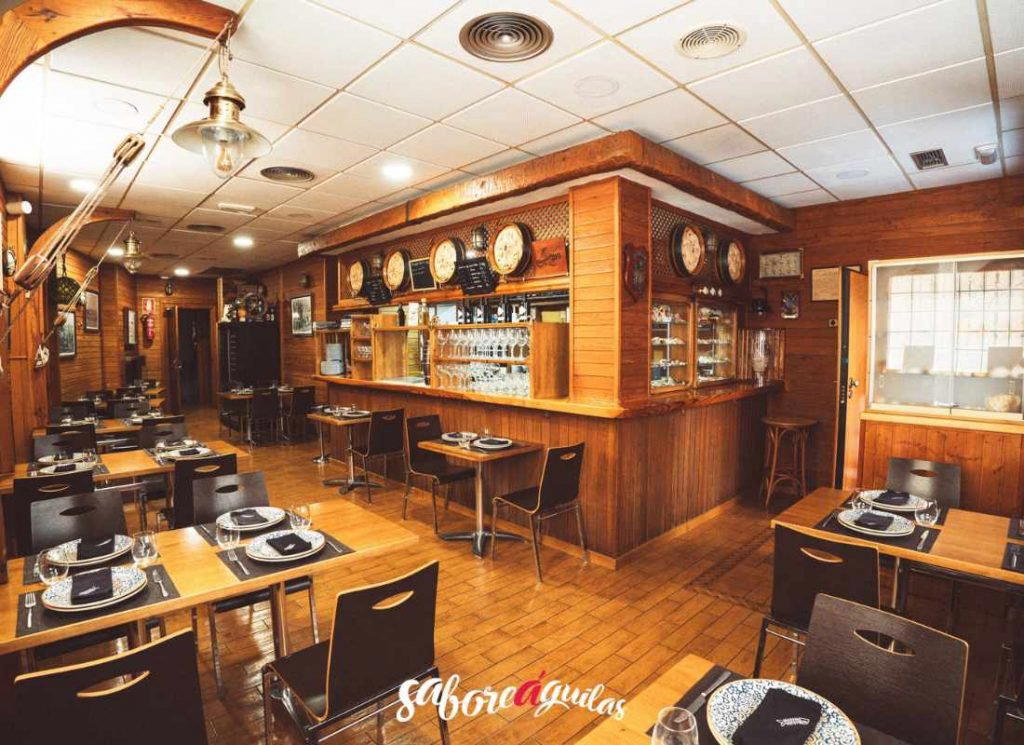
Expect a restaurant setting in Águilas, with the tone best understood through the town’s practical, unshowy dining rhythm rather than spectacle. Its Guía Repsol 1 Sol supplies the clearest public quality signal.
What days is El Poli closed?
Check directly with El Poli for current opening days and hours before planning a visit, as schedules can change. Its confirmed guide recognition is the Guía Repsol 2026 1 Sol.
What is El Poli known for?
El Poli is known as an Águilas restaurant recognised with 1 Sol in the Guía Repsol Soles 2026.
A Quick Peer Check
Comparable venues by cuisine and price in the same metro.
| Venue | Cuisine | Price | Awards | Notes |
|---|---|---|---|---|
| El PoliThis venue (the venue you are viewing) | Traditional seafood restaurant | $20–30 | Guía Repsol 1 Sol | Not listed |
| Terraza Carmona | Traditional Andalusian Regional | Not listed | Michelin Bib Gourmand · Guía Repsol 1 Sol | Regional Cuisine |
| Magoga | Contemporary Mediterranean with Murcian Roots | $100–150 | 1 Michelin Star · Macarfi 8.7 Food Rating | Contemporary |
| Magoga | Contemporary Mediterranean with Murcian Roots | $100–150 | 1 Michelin Star · Macarfi 8.7 Food Rating | Not listed |
Recognition history
Dated appearances from independent guides and award organizations, with the underlying list record or original source where available.
Guía Repsol 1 Sol
Guía Repsol
Continue exploring
More in Aguilas
Details
- Cozy
- Classic
- Casual Hangout
- Family
- Group Dining
- Solo
- Standalone
- Beer Program
- A La Carte
- Small Plates
- Beer
- House Wine
- Pescatarian Friendly
Current opening hours
- Monday
- Closed
- Tuesday
- 1:30–5 PM, 8:30 PM–12 AM
- Wednesday
- 1:30–5 PM, 8:30 PM–12 AM
- Thursday
- 1:30–5 PM, 8:30 PM–12 AM
- Friday
- 1:30–5 PM, 8:30 PM–12 AM
- Saturday
- 1:30–5 PM, 8:30 PM–12 AM
- Sunday
- Closed
Hours can change for holidays and private events. Hours as of .
A modest, classic mariner-style dining room with simple decor, relaxed local atmosphere, and a cozy, unpretentious feel where guests linger over seafood and daily menus.