Makara Bird View Lodge
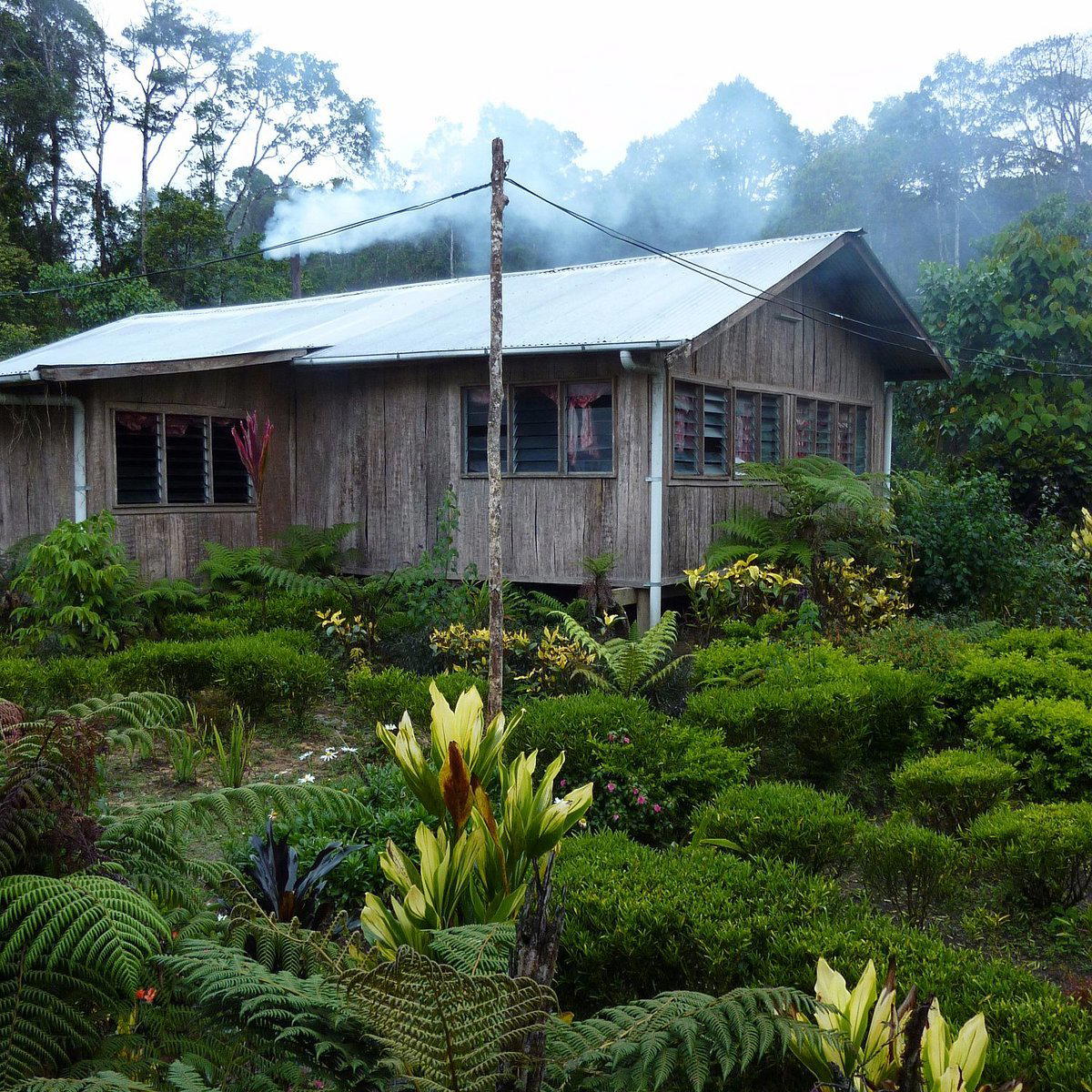
Makara Lodge sits in the Southern Highlands of Papua New Guinea, outside the small highland town of Tari, in one of the most remote and ecologically dense corners of the Pacific. The lodge places travellers within reach of Huli wigmen territory and the Tari basin's extraordinary bird-of-paradise habitat, making it a rare point of access to a region few lodges serve at all.

Pearl is the En Primeur Club membership app — saves, bookings, and concierge access live there. Same editors, same standards.
Where the Highlands Begin
The Southern Highlands of Papua New Guinea occupy a category of their own in the geography of remote lodge accommodation. At elevations that keep temperatures cooler than the coastal lowlands, surrounded by montane forest that supports more species of bird-of-paradise than anywhere else on the planet, this is terrain where the physical environment does most of the editorial work. Makara Lodge, positioned outside Tari in the heart of Huli country, sits inside that context. The lodge is not competing with the international design properties that define premium travel elsewhere — properties like Amangiri in Canyon Point or Castello di Reschio in Lisciano Niccone, where architectural intention is the primary offering. Here, the surrounding landscape sets the terms, and the lodge exists to give travellers a functional, situated base from which to engage it.
Tari itself is a small highlands town that serves as the main access point for this part of the Southern Highlands Province. The broader region around it has historically attracted serious birdwatchers and anthropologists more than leisure travellers, which has kept the accommodation tier narrow and the visitor numbers correspondingly low. That dynamic shapes what lodges here are and what they are not: they are access vehicles, not destination products in the sense that a Cheval Blanc Paris or Aman Venice would be. The distinction is worth naming because it recalibrates the right frame of evaluation entirely.
The Physical Setting as Primary Architecture
Remote lodge design in PNG follows a logic different from the design-led properties that have come to define high-end hospitality in Asia, Europe, or the Americas. Where a property like One&Only; Mandarina in Riviera Nayarit or Hotel Esencia in Tulum deploys designed landscaping and curated materiality as part of the guest proposition, lodges in the Tari basin work with and against the environment's own overwhelming presence. The montane forest presses close. The air at this altitude carries a specific quality — cooler and thinner than the coastal lowlands, often mist-laden in the mornings. The sound environment is the lodge's most legible design element: the forest canopy produces a density of birdcall that no constructed audio program could approximate.
Accommodation in this part of the highlands has historically been built to complement that environment rather than compete with it. Local materials, open ventilation, and orientation toward forest views are the structural conventions that make sense in this context. The design philosophy, such as it exists, is one of minimal interference, lodges that step back from the spectacle rather than insert themselves into it. Here, the architecture is the frame, and the forest fills it.
Access and the Logistics of Getting There
Reaching Tari requires routing through Port Moresby, where Airways Hotel & Residences provides a practical overnight stopover before onward domestic connections. PNG Air and Air Niugini both serve Tari from Port Moresby, though schedules are limited and subject to weather-related disruption at highland airstrips. Travellers planning around specific birdwatching windows, the dry season months from May through October tend to produce more reliable light and trail conditions, should build schedule flexibility into any itinerary. The domestic flight from Port Moresby to Tari runs roughly an hour and lands at a small airstrip that places guests close to the lodge without the overland distances that characterise access to some other highland properties.
The nearest comparator in the region with a more established international profile is Ambua Lodge in Tigibi, which sits at a higher elevation above the Tari basin and has historically drawn serious birding expeditions. The two properties occupy broadly the same geographic niche, and itineraries that combine them are common among travellers making a dedicated trip to the Southern Highlands.
The Huli Context
The cultural dimension of the Tari basin is as significant as the ecological one, and any serious account of lodge stays in this area has to address it. The Huli people are one of the largest ethnic groups in PNG, and their territory encompasses the land surrounding Tari. The practice of Huli wigmen, men who cultivate and wear elaborate ceremonial wigs grown from their own hair, decorated with bird-of-paradise plumes and other materials, has made this region one of the most recognisable cultural destinations in the Pacific for travellers with an interest in living tradition rather than reconstructed heritage. Lodge stays in Tari typically include access to cultural encounters or demonstrations, positioning the experience as much around anthropological engagement as ecological observation. This dual offering separates the Southern Highlands from purely birdwatching-focused destinations and broadens the relevant traveller profile considerably.
Planning a Stay
Given the absence of confirmed booking infrastructure online, travellers interested in Makara Lodge should approach reservation through a specialist PNG ground operator or an adventure travel agency with established highlands contacts. This is standard practice for remote highland properties across PNG, where direct-book platforms are less common than in more developed tourism markets. For those building a broader PNG itinerary that might begin in the capital, our full Tari restaurants and hotels guide provides additional context on the destination. Travellers accustomed to the immediate confirmation systems of properties like Mandarin Oriental Bangkok or Le Bristol Paris should expect a slower, more correspondence-based booking process, a feature of remote lodge travel globally, not a limitation specific to this property.
The Southern Highlands are not a market defined by price transparency or competitive amenity disclosure in the way that urban luxury hotel markets are. Rate structures for lodges in this region are typically inclusive of meals and guided activities, reflecting the self-contained nature of remote operations where guests cannot independently source food or guiding services. Budget expectations should align with remote wilderness lodge pricing conventions rather than urban hotel comparisons.
| Venue | Cuisine | Price | Awards |
|---|---|---|---|
| Makara LodgeThis venue (the venue you are viewing) | This venue | $1–100 | Not listed |
| Airways Hotel & Residences | Not listed | $100–200 | World Travel Awards |
Details
- Scenic
- Rustic
- Quiet
- Romantic Getaway
- Weekend Escape
- Panoramic View
- Restaurant
- Airport Transfer
- Mountain
Serene rainforest paradise with far-reaching landscape views, ideal for nature lovers.