← Guides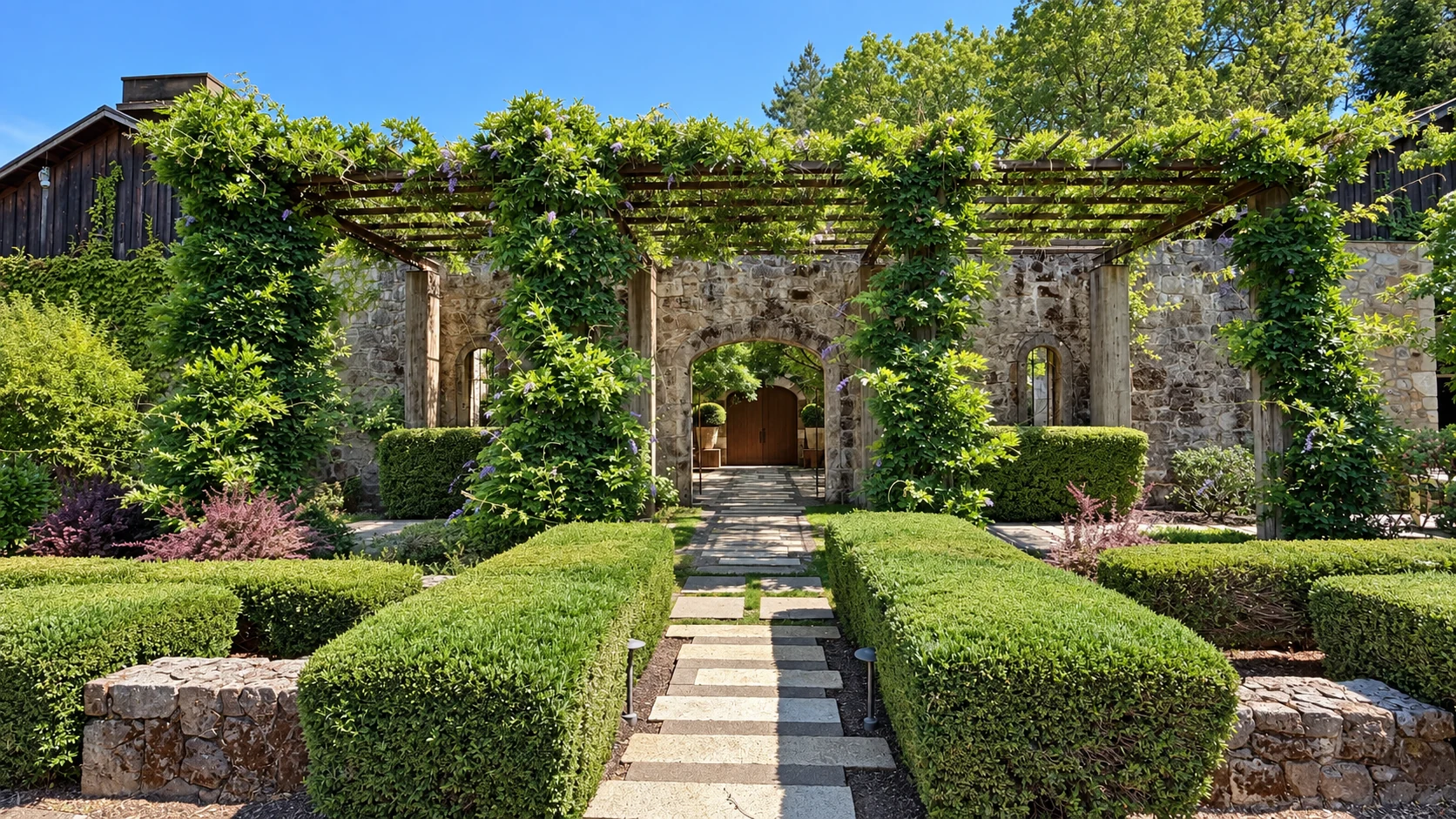
We arrived to classical music and fountain water among Dana's 1880s stone ruins, then sat with Maura Johnson and Jae Chun over VASO Sauvignon Blanc and 2023 Lotus.
We arrived to classical music and fountain water among Dana's 1880s stone ruins, then sat with Maura Johnson and Jae Chun over VASO Sauvignon Blanc and 2023 Lotus.
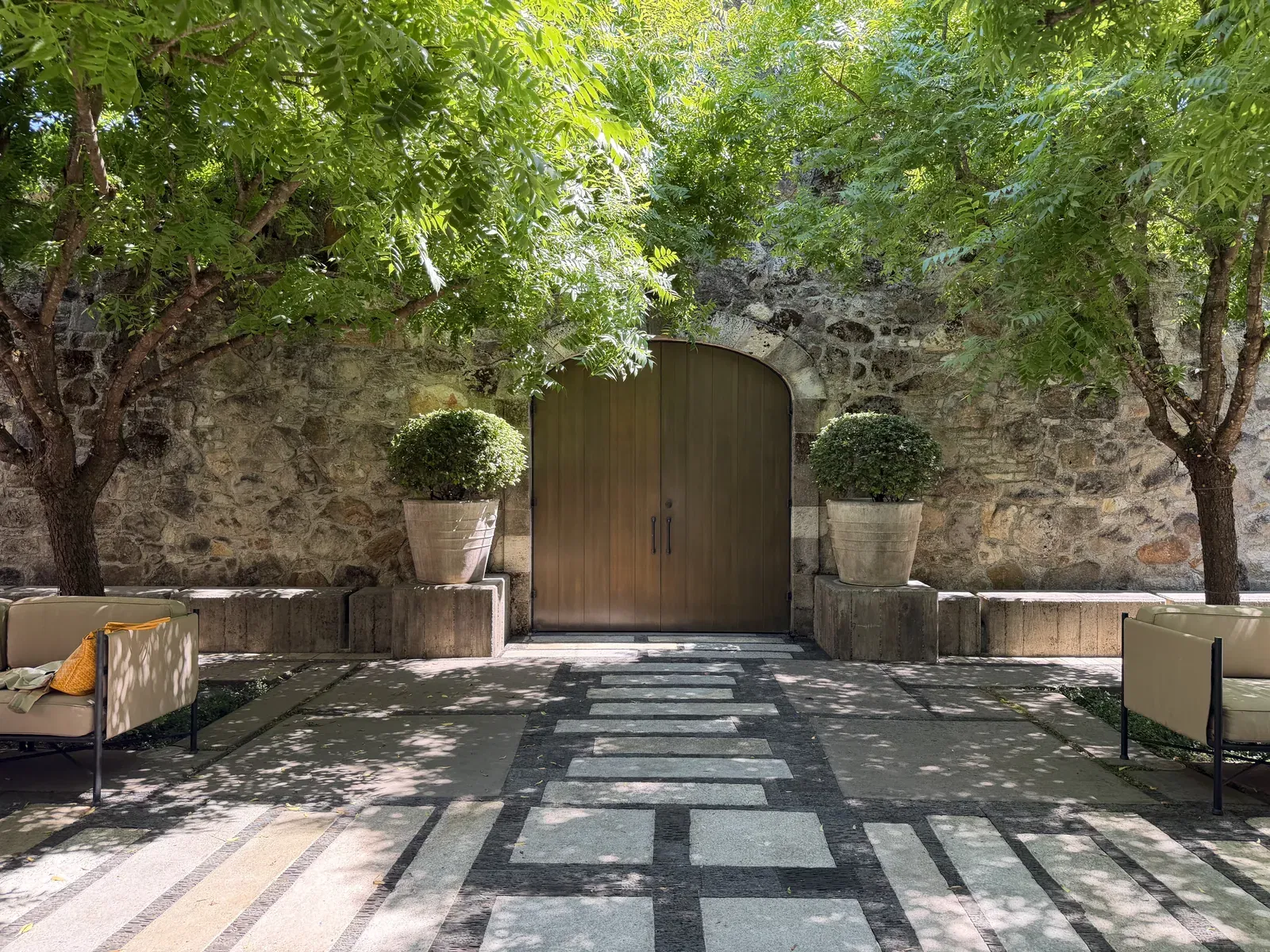
We heard Dana Estates before we fully saw it. Classical music drifted through the vines and the 1880s stone ruins, while running water from the courtyard fountain softened the quiet between each note. The soundtrack followed us inside, through rooms that no longer had to pretend their age. Original stone, worn wood, modern ironwork and warm light made the property feel preserved without feeling frozen.
That first walk explained why Dana Estates is especially elegant winery property we have visited in Napa Valley. It is not elegance built from scale or spectacle. It comes from restraint and continuity: a 19th-century ghost winery restored by Howard Backen, an intimate hospitality program, a cellar that changes its methods for each vineyard, and a team willing to spend an afternoon talking through not only what has worked, but what they are still testing.
Our August 13, 2026 visit brought together Master of Wine Vanessa Conlin, Director Sales & Events Jessica Case, Director of Winemaking Maura Johnson and DANA principal and president Jae Chun. We toured the historic estate, fermentation rooms, cave, reclaimed barn and gardens, then sat down to a five-wine flight moving from VASO Sauvignon Blanc and Cabernet Sauvignon to ONDA Cabernet Sauvignon and two 2023 single-vineyard DANA wines, Helms and Lotus.
Visit Dana Estates if you want one of Napa Valley’s most personal, beautiful and intellectually rewarding private winery experiences. The wines are serious enough for collectors, but the property and people make the afternoon memorable even before the first Cabernet reaches the table.
Absolutely. Dana Estates is the kind of Napa visit that reminds you why private appointments can be so special. Nothing felt rushed or rehearsed. The conversation moved naturally between the history of the ruins, the practical differences among fermenters, the team’s latest trials and the personalities of individual vineyard sites. By the time we sat down, it felt less like entering a tasting room and more like joining friends at a country estate.
It is especially compelling for serious Cabernet drinkers, architecture and design travelers, and anyone who would rather have one deep winery appointment than three quick stops. The production is tiny, the setting is secluded and the experience is built around attention rather than throughput.
Our appointment was tailored and included unusual access to multiple members of the estate team. A standard reservation should not be expected to reproduce that exact group or flight. The publicly offered Dana Estates Portfolio Exploration includes both ONDA and DANA, is $250 per person, and is currently described as a private, 90-minute tour and tasting at the historic DANA property, with reservations handled through Tock. The all DANA flight, Terroir Collection Tasting, is $500 per person. For access focused specifically on the single-vineyard DANA wines, inquire with the estate about its current private formats when booking.
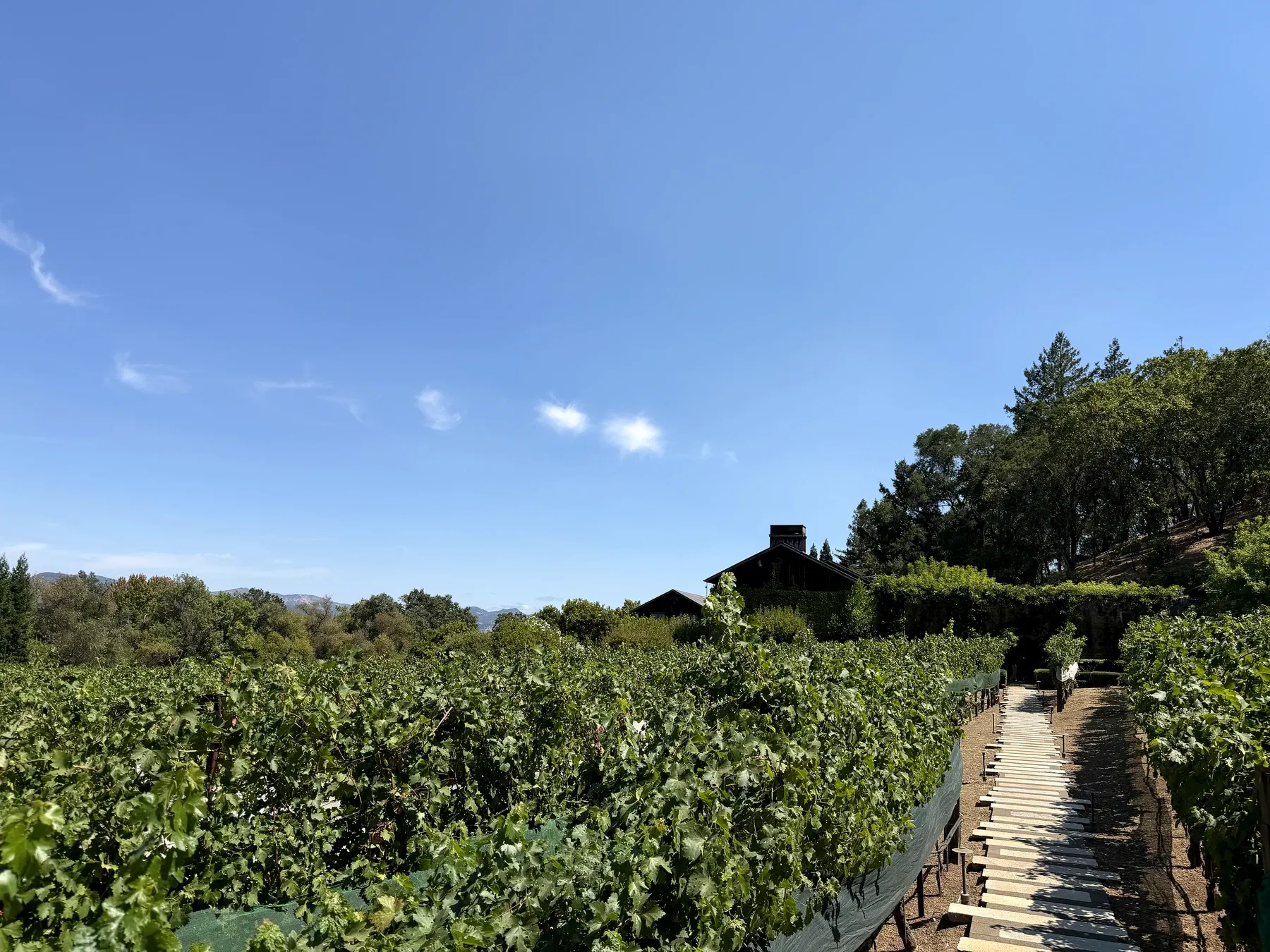
The approach is the first act of the experience. A narrow lane passes vines at the base of the Mayacamas Mountains before the winery appears behind clipped hedges, mature wisteria and the open walls of the old H.W. Helms property. There is no large public tasting-room facade. The building reveals itself gradually, which makes the music feel almost mysterious when it reaches you before the courtyard does.
H.W. Helms, a German viticulturist, built the original stone winery in 1883. Like other Napa ghost wineries, it fell quiet during Prohibition and survived in fragments. When the modern DANA project began in 2005 under proprietor Hi Sang Lee, the ruins could have been cleared for a blank-sheet facility. Howard Backen took the more difficult route. His firm preserved the old stone and made it the foundation of the hospitality spaces, then designed a working production area that nearly disappears into the hillside.
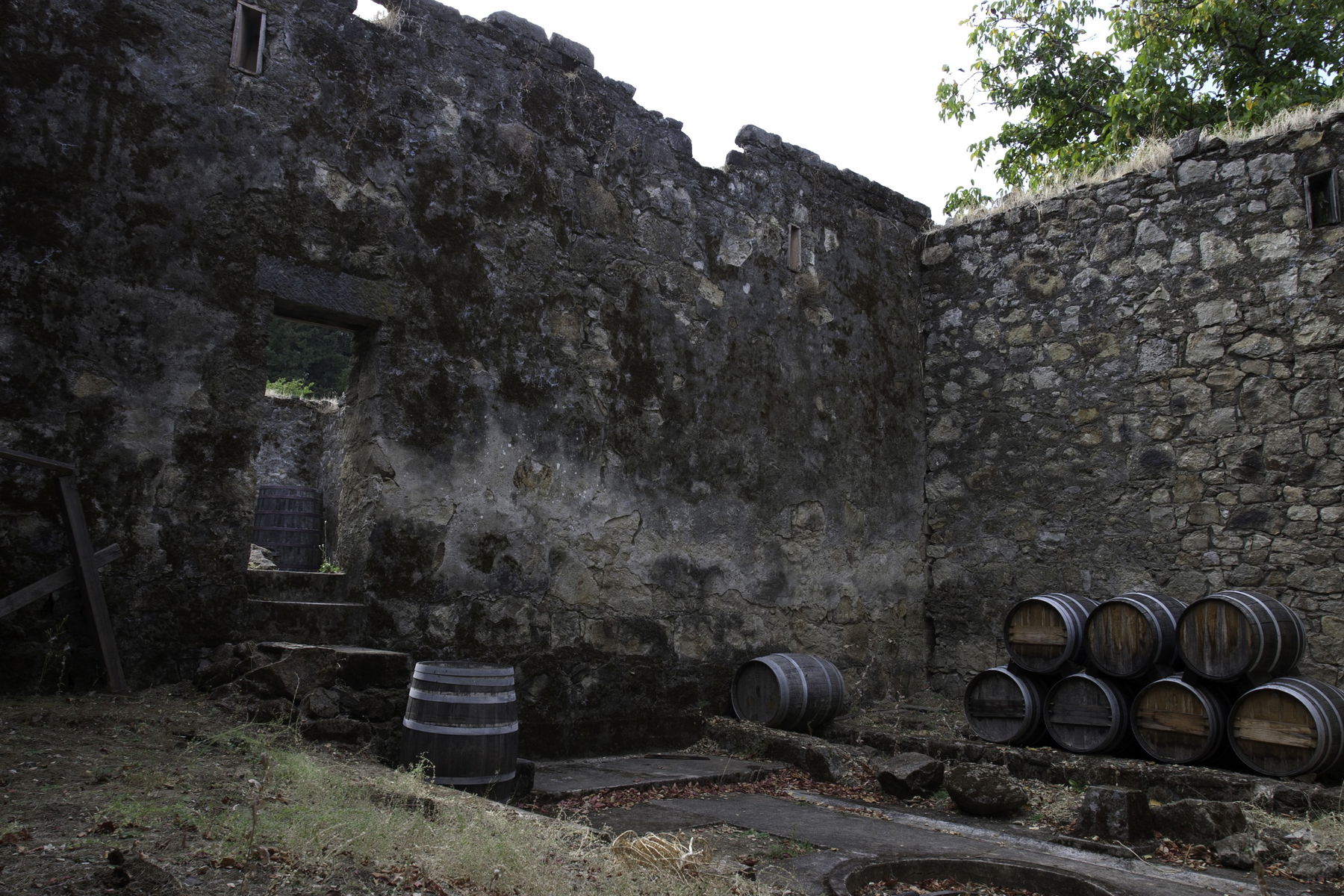
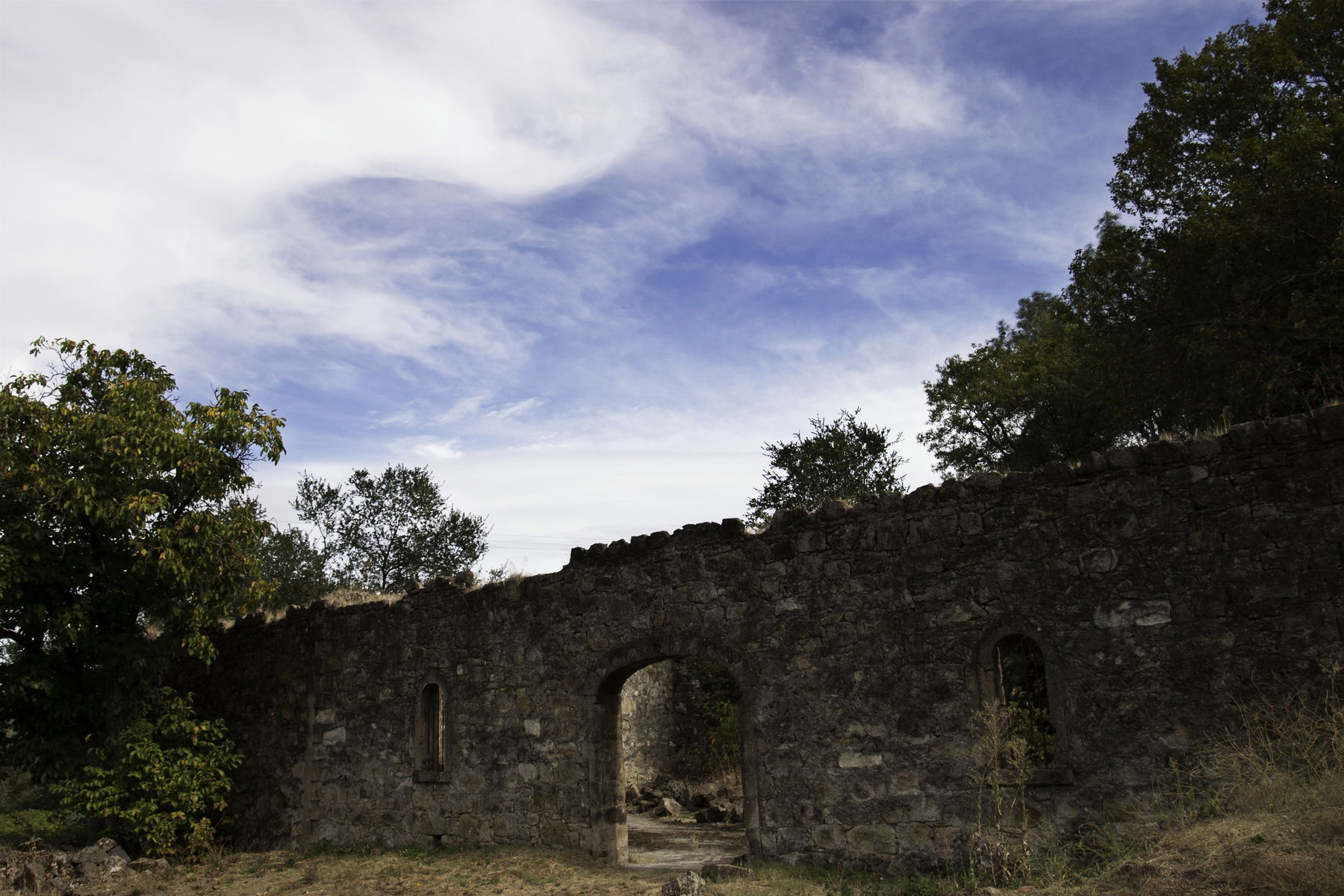
That decision is the soul of the property. The architecture does not use history as decoration. Doorways still feel thick and cool. Vine-covered openings frame the courtyard instead of sealing it. The oldest surfaces remain visibly old, while modern beams, chandeliers, glass and furniture supply comfort without imitating the past.
Backen & Backen describes the project as a restored ruin, reclaimed barn and 20,000-gallon winery. Those facts are accurate, but they do not capture the sensory continuity. Water and music keep moving as the spaces change. The result is cinematic without feeling staged.
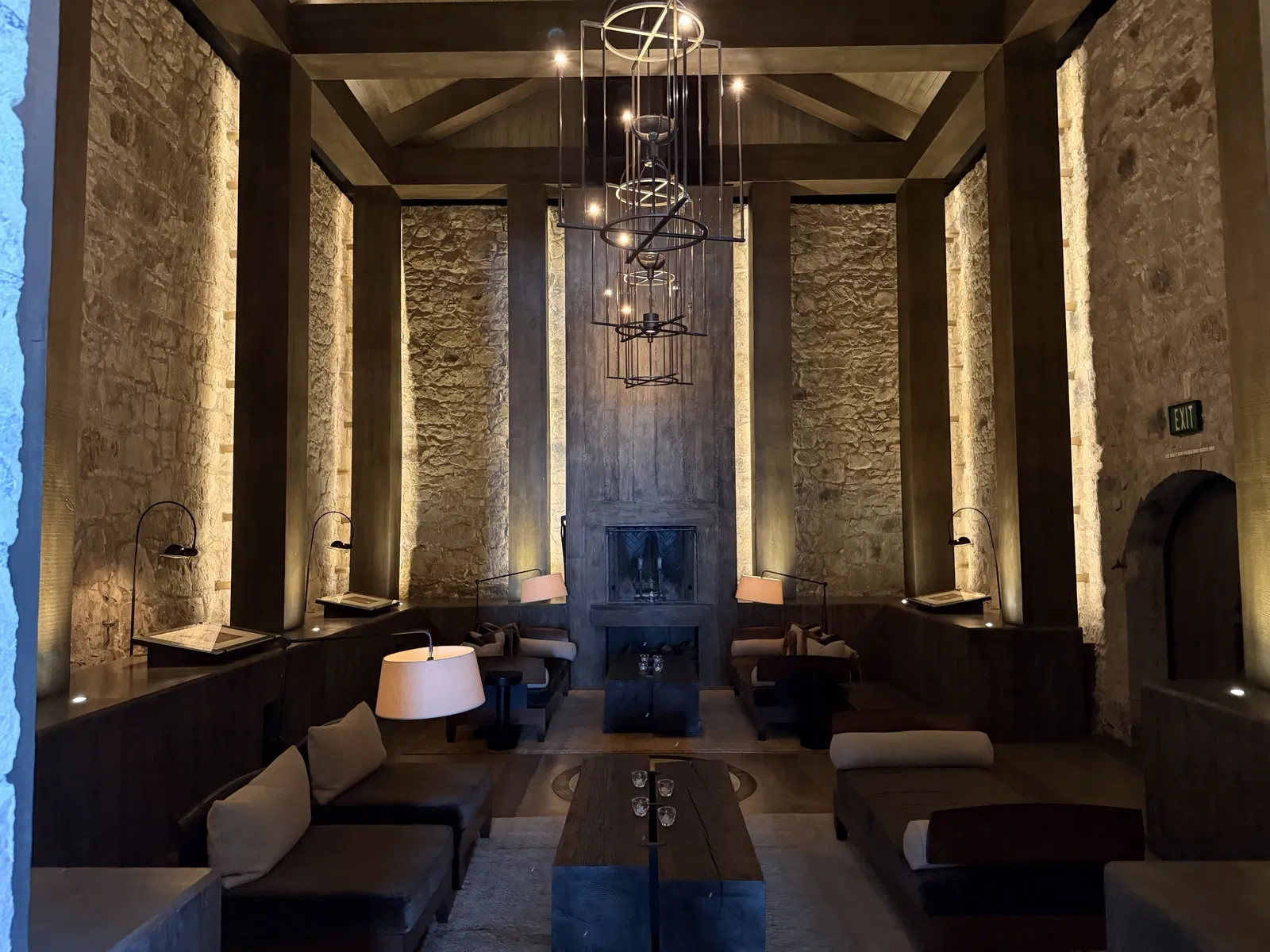
The tall salon makes the scale of the ruins legible. Stone walls rise toward exposed timber framing, a dark fireplace anchors the far end and a sequence of sculptural chandeliers draws the eye through the center of the room. Low sofas and lamps keep the immense volume from becoming cold.
This was where the classical soundtrack made the strongest impression. It did not behave like background music piped into a generic hospitality system. It seemed to belong to the stone, continuing from the courtyard into the remaining rooms and giving the whole estate one emotional register.
There is a temptation at a property this photogenic to let the design become the story. DANA avoids that because the production spaces are just as deliberate. Backen worked with the winemaking team on a facility in which vessel choice, gravity, access and lot separation serve the wine. The architecture is beautiful because function, material and mood keep reinforcing one another.
DANA explains that in Sanskrit, “dana” means the spirit of generosity. The label’s twelve lotuses represent the months of the vine’s annual lifecycle as well as the twelve symbolic animals of the Lunar Zodiac. DANA also connects the lotus to adversity, rebirth and purity: farming in harmony with nature, reviving an old ghost winery and pursuing a clear expression of each site.
The name suits the hospitality, but the winemaking side of DANA depends on severe selection. Only the strongest barrels from a vineyard become its single-vineyard bottling. The estate’s winemaking overview says that just a few dozen barrels in total receive the DANA label in a typical year. Our printed menu showed how small the individual lots can be: 386 cases of 2023 Helms and only 273 cases of 2023 Lotus.
The broader portfolio creates a useful hierarchy. VASO is especially accessible entry, drawing from a wider Napa source base and, depending on the wine, some non-estate fruit. ONDA assembles Cabernet across sites to create a Napa Valley composition. DANA moves in the opposite direction, isolating single vineyards and asking what each one can say when the cellar follows its character rather than a fixed house recipe.
Jae described the long view in almost Burgundian terms. The ambition is to develop six vineyards worthy of being treated like grand-cru sites, each with its own voice and a shared standard of quality. That vision remains in progress. DANA’s current vineyard portfolio presents Helms, Lotus, Hershey and Montagna as its core Cabernet sites, while the team continues building toward the larger estate idea.
This is the central tension that makes the project interesting. ONDA uses blending in a broadly Bordeaux-like way to find harmony across places. DANA uses a Burgundy-like focus on individual sites. They are not competing philosophies. They are two lenses on Napa Valley fruit.
The caliber of the group at our table could have made the visit formal. It had the opposite effect.
Vanessa Conlin became a Master of Wine in 2020 and has an unusually wide perspective on the business. Before consulting for DANA, she held a sales and marketing leadership role at the estate, then spent six years as Chief Wine Officer at Wine Access and later served as Global Head of Wine Retail at Sotheby’s. She is also a former professional musician, which made the estate’s classical soundtrack feel like more than an aesthetic coincidence.
Jessica Case hosted the tasting and connected the tour to the glass with the ease of someone who understands both the details and the guests in front of her. Maura brought the winemaking questions into focus, and Jae supplied the long-term institutional perspective. He has helped lead DANA from its modern beginning, overseeing operations, finance, strategy and brand direction.
What mattered most was not the résumés. It was the generosity of the conversation. We did not simply receive polished conclusions. We heard about trials, choices that change by vineyard, and the reasons a technique may be appropriate in one room but wrong in another. That openness made the visit feel immersive rather than promotional.
Maura joined DANA in 2018 as Assistant Winemaker and now leads the cellar as Director of Winemaking. She studied viticulture and enology at UC Davis after an earlier mathematics path, then built experience in Germany, New Zealand, Australia and Napa Valley. Philippe Melka has consulted for DANA since its inaugural vintage, giving the project continuity as Maura leads the current team.
One revealing phrase from our conversation was that the winemaking is holistic and natural, but not dogmatic. DANA farms its vineyards organically and works to preserve the identity of each place. That does not mean refusing intervention as a matter of ideology. The team will act when a lot needs protection or when a vessel can help translate a vineyard more faithfully.
This is why the cellar does not look like a production line built around one preferred fermenter. Vessel and technique change with the site. The question is not “What is the DANA method?” It is “What does this vineyard need?”
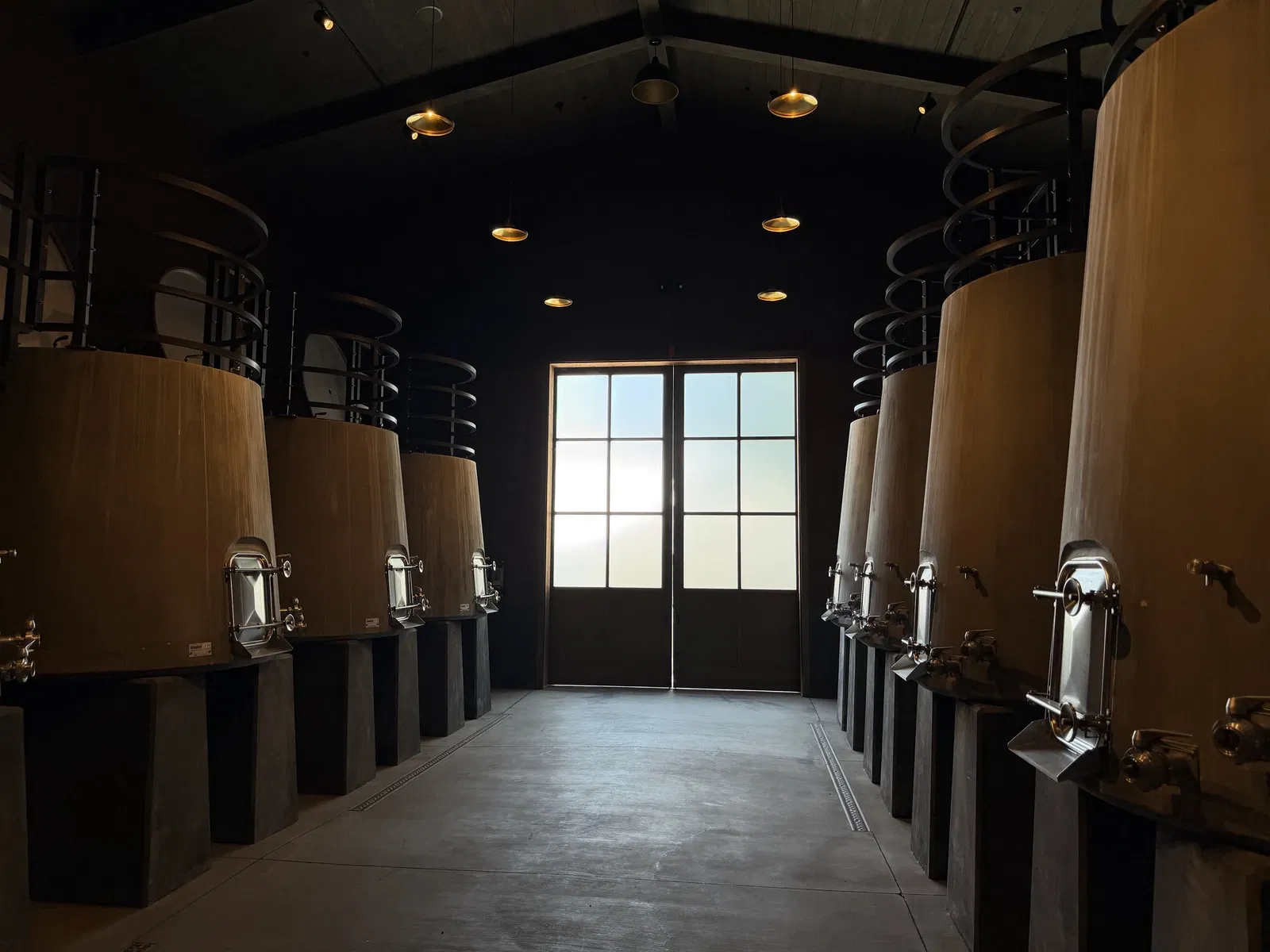
The Helms fermentation room is among the more striking working spaces on the property. Upright oak tanks line both sides beneath a dark ceiling, ending at a frosted set of doors. The symmetry is beautiful, but the choice is functional.
Helms sits beside the winery on the western side of Rutherford. Its eight acres lie in deep soils with riverbed gravel and remnants of ancient seabed. DANA describes it as especially classically styled among the single-vineyard wines: perfumed and plummy, with the dusty cocoa-powder tannin associated with Rutherford.
The upright Taransaud oak fermenters help draw out the site’s floral character, reinforce its structure and carry that Rutherford dust without sanding away its elegance. They are not deployed merely because oak looks traditional in a historic room. They are paired with Helms because the team believes the vessel serves that fruit.
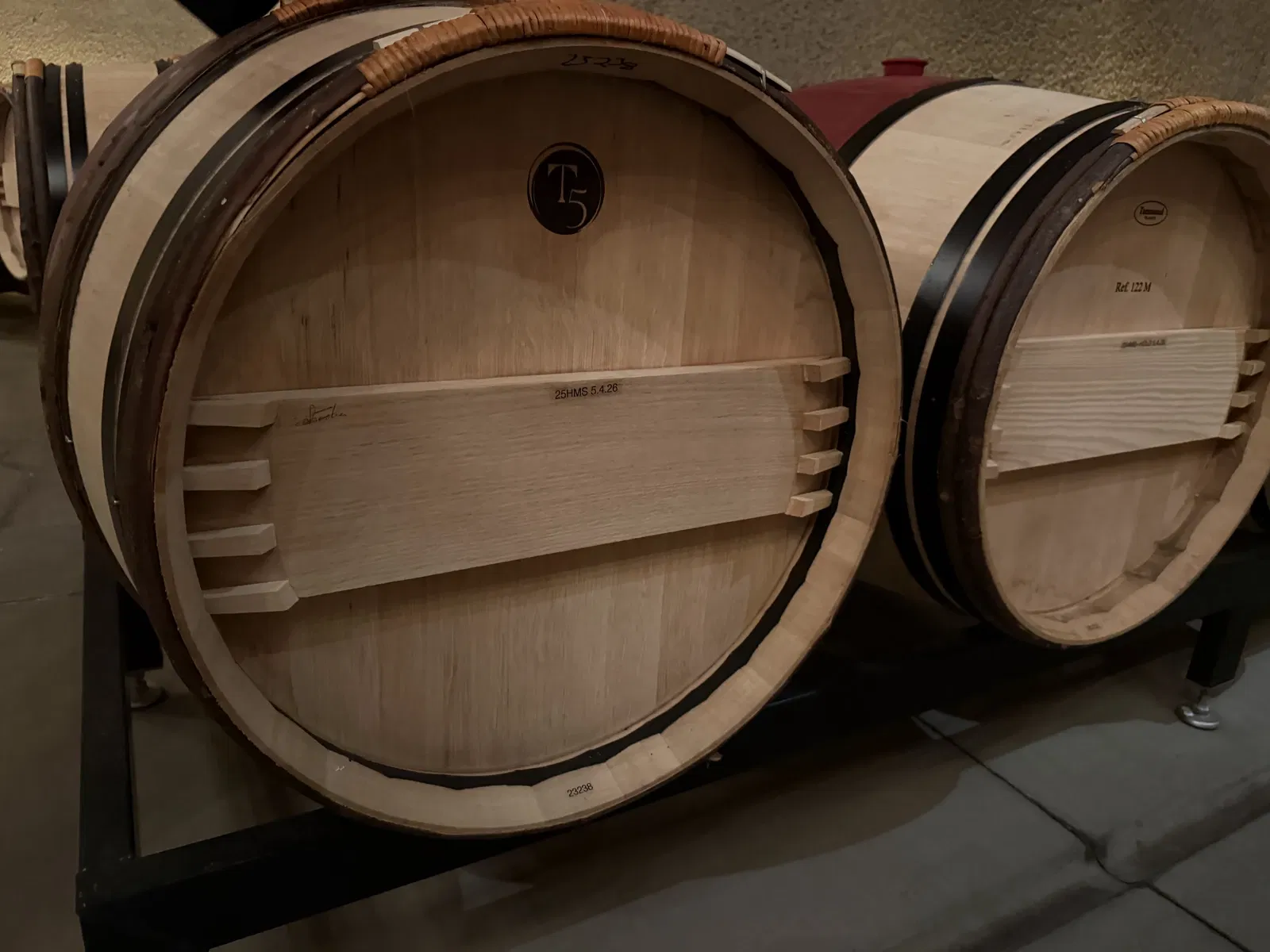
The barrel program continues the same scrutiny. We discussed trials across different sizes, nine or ten coopers, multiple toast levels and selected forests. The cellar included Taransaud T5 barrels, made from exceptionally fine-grained Tronçais oak seasoned in open air for five years and signed by the master cooper.
One line from the afternoon stayed with us: “There is no over-oak, only under-fruit.” It sounds provocative until the second half of the idea lands. If the fruit has the concentration, balance and structure to carry a particular élevage, oak can extend the wine instead of masking it. If the fruit cannot, the problem is not solved by pretending every barrel choice is neutral.
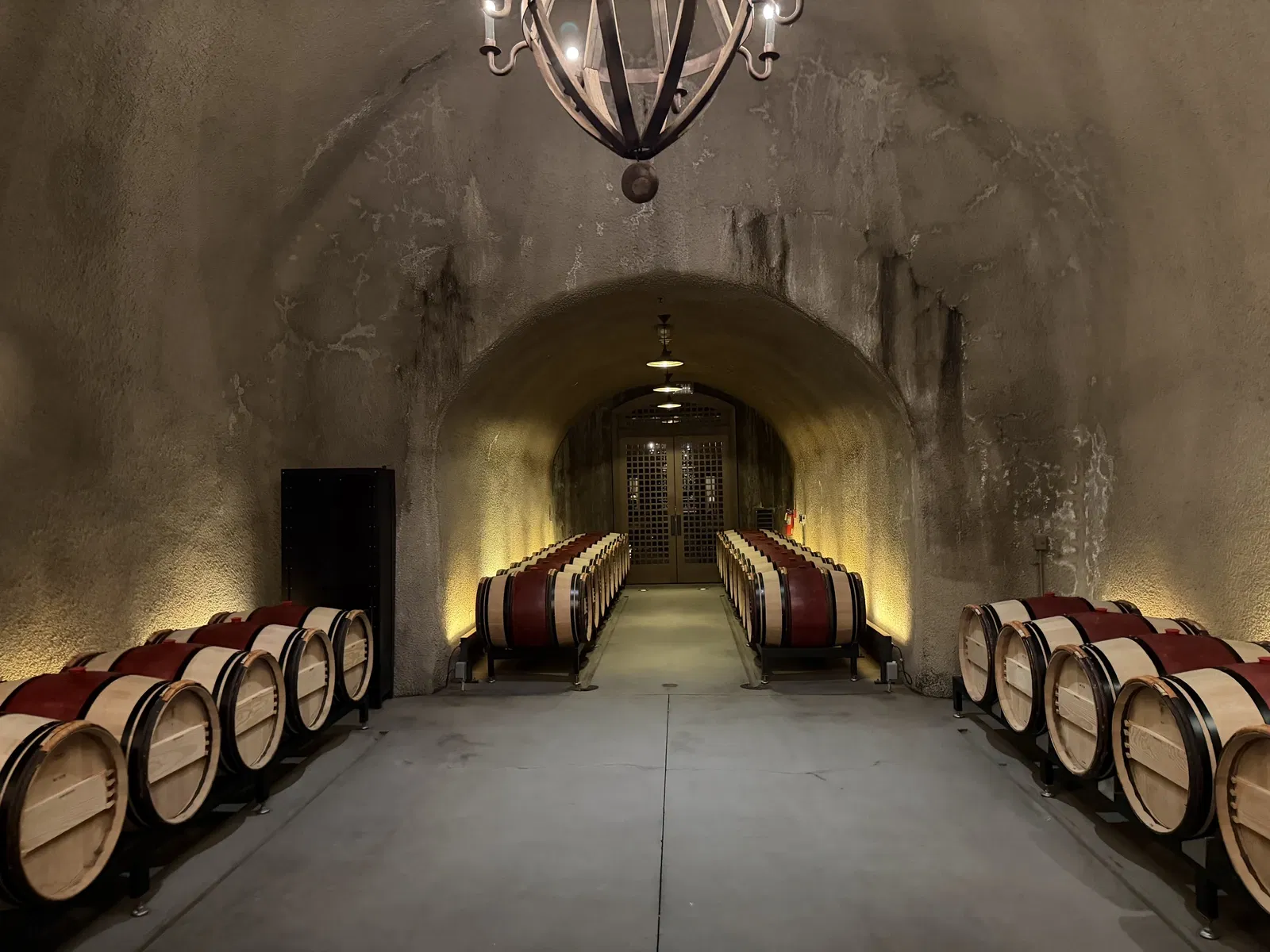
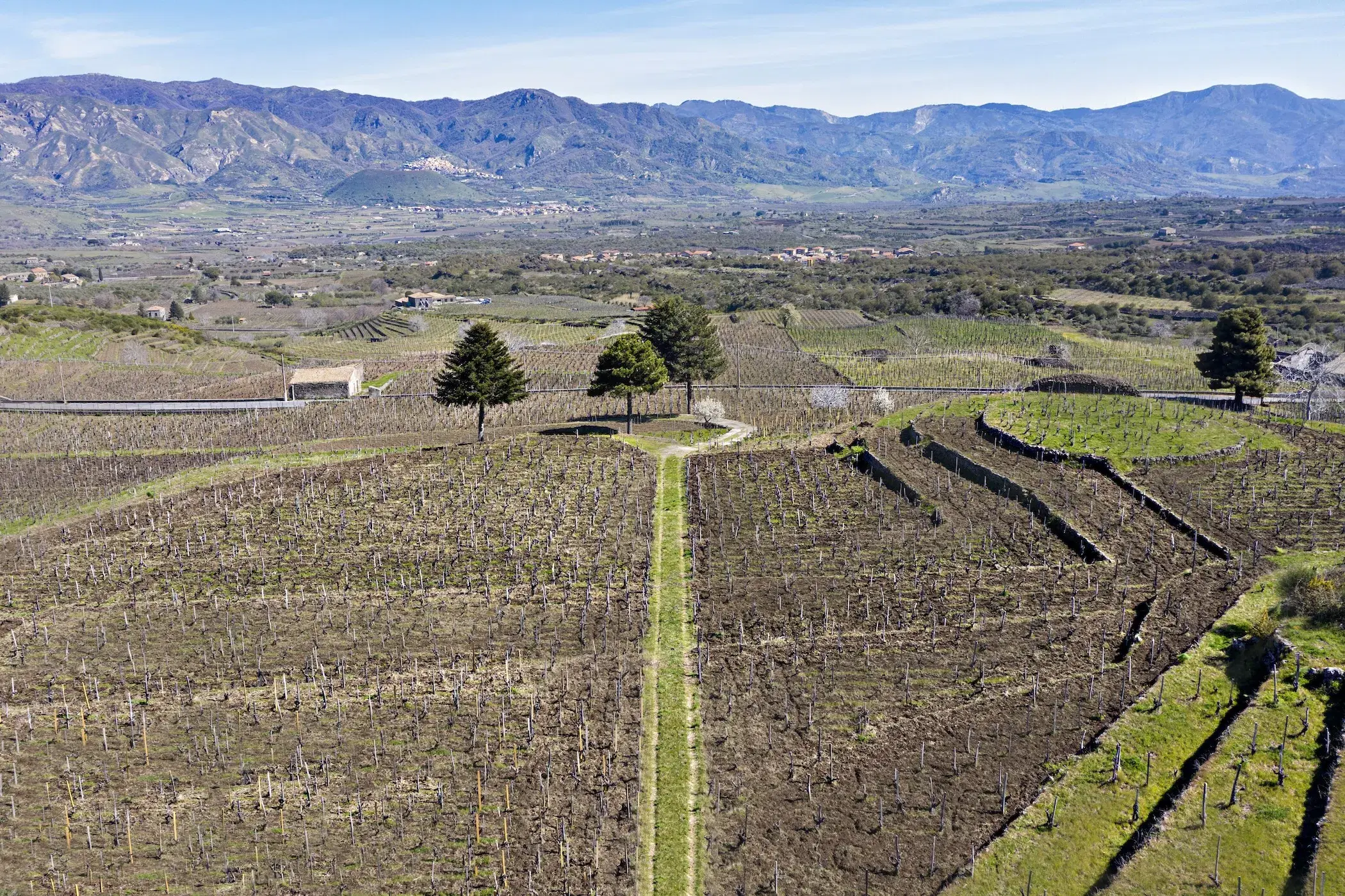
Lotus requires a different answer. The five-acre vineyard sits on the eastern side of the valley below Howell Mountain, within the new Crystal Springs appellation. It has almost no topsoil. Vines push into iron-rich fractured bedrock across slopes that reach 45 degrees, producing DANA’s most powerful Cabernet fruit.
Concrete fermentation helps emphasize the site’s mineral character and round the edges of its forceful tannins without adding another aromatic layer. The winery room identified with Lotus holds the concrete fermenters, while the cave supports the longer élevage and selection process.
The difference between Helms and Lotus is therefore built into the winery before either wine reaches barrel. Helms gets upright oak to encourage perfume, structure and Rutherford dust. Lotus gets concrete to hold onto rock, breadth and power while softening particularly muscular edges. The team remains the same. The intention remains purity. The method changes.
Our favorite red of the printed flight was the 2023 Lotus. “Powerful” is accurate but incomplete. The wine had a velvet quality that kept its size from feeling blunt, and a deep chocolate register ran through the dark fruit and structure. It was the wine we kept returning to after the formal sequence had moved on.
The white-wine program may be the clearest proof that DANA is not simply a Cabernet estate with a token Sauvignon Blanc. Hershey Vineyard includes roughly two acres of estate Sauvignon Blanc at 1,800 feet on Howell Mountain. VASO can also draw on Napa fruit beyond the estate, including Coombsville.
The 2023 VASO Sauvignon Blanc on our printed flight began with a foot press and was then finished by mechanical pressing. Interns put on protective booties and used a foot press before the fruit was pressed. It is an almost comic image until you understand the purpose: gentle, tactile control before pressing rather than forcing the fruit harder through a machine.
For the Sauvignon Blanc, DANA uses elongated cigar-shaped barrels, which give a different relationship between wine, lees and oak than a standard barrique. The technique draws inspiration from serious Sauvignon Blanc work in Sancerre and the Loire, where cigar barrels are associated with texture and finesse rather than obvious wood flavor.
It is not a decorative experiment. The elongated format changes surface contact and the way the wine develops on its lees.
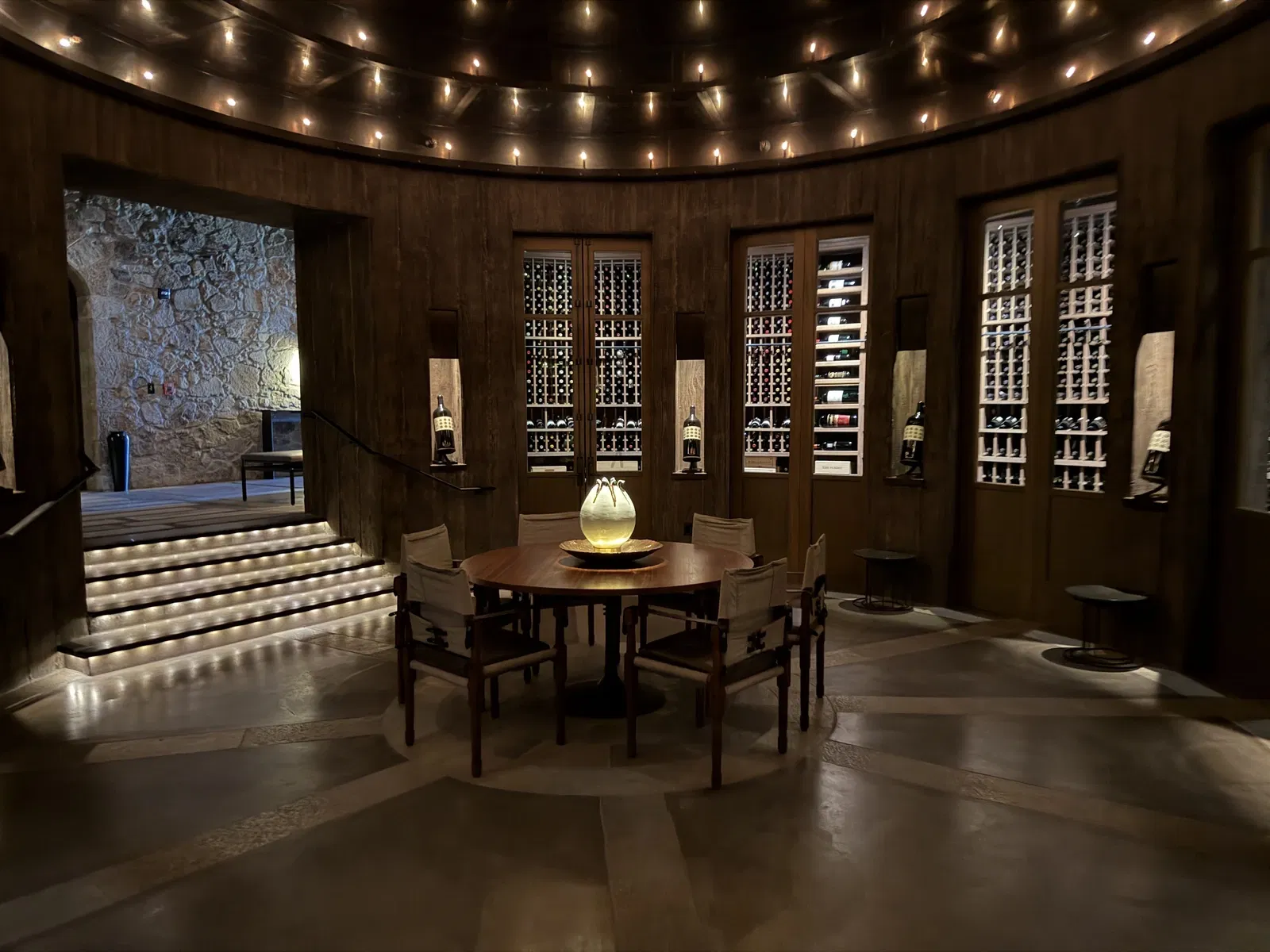
The circular library is the property’s most immersive interior after the salon. Bottle lattices line dark wood walls, small lights repeat across the ceiling and a white lotus sculpture glows at the center of a round table. The room could have become overly symbolic. Instead, the low light and bottle-lined walls give it a meditative stillness.
Here, the label imagery, the meaning of DANA and the estate’s long horizon all become physical. The lotus is not only a graphic on a bottle. It becomes a way of organizing the property: rebirth in the restored ruins, purity in the selection process and patience in a library built to follow the wines across decades.
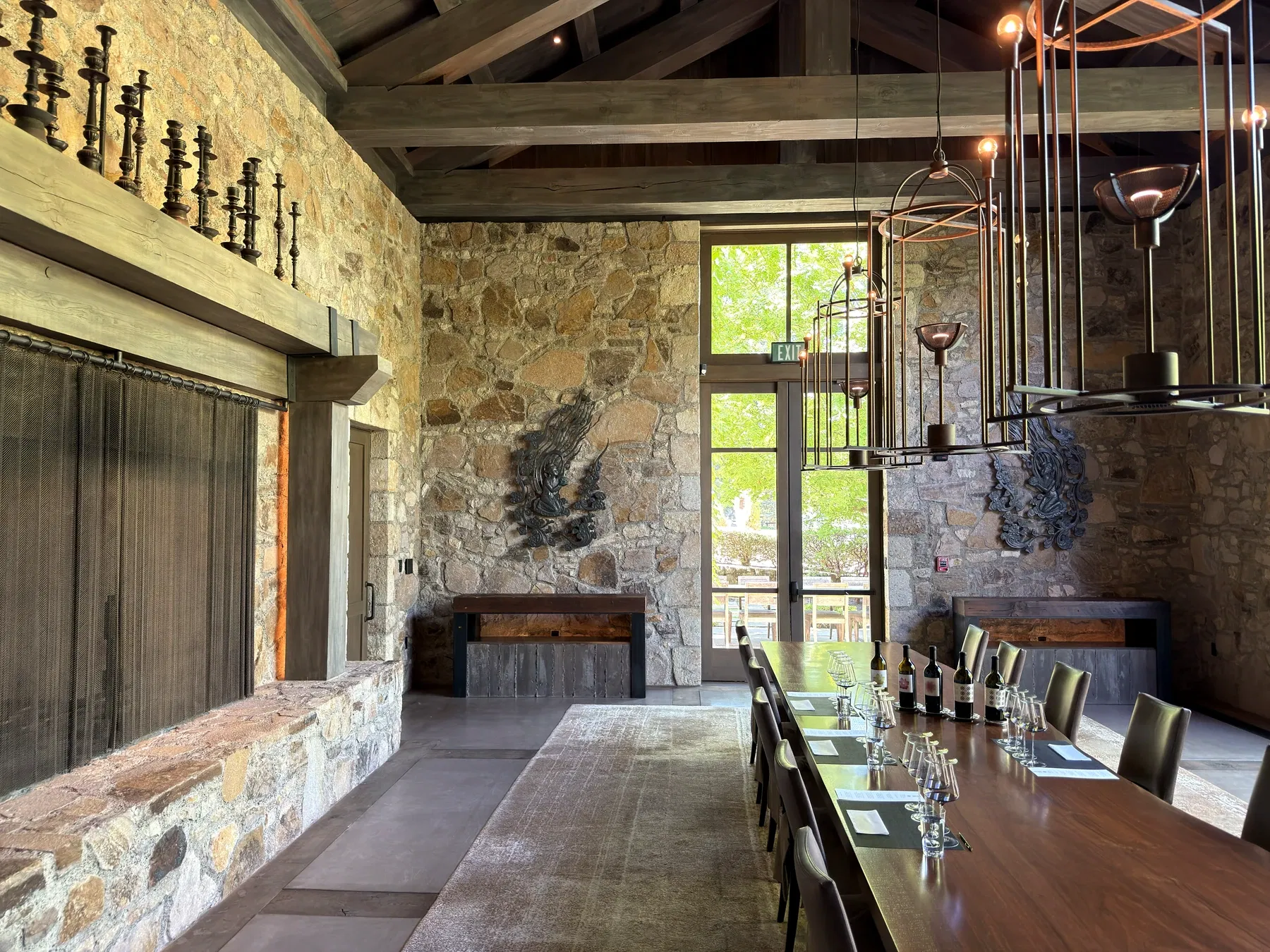
We tasted in a long stone room where a wall of glass looked back into the courtyard. The table was set with four red-wine stems at each place, and the five bottles were arranged in a progression that made the portfolio easy to understand: white before red, VASO before ONDA, then Helms and Lotus as the single-vineyard summit.
The printed menu is unusually useful because it includes exact blend and production information, not only labels and vintages.
| Wine | Origin and blend | Production | Role in the flight |
|---|---|---|---|
| 2023 VASO Sauvignon Blanc | Napa Valley Sauvignon Blanc | 566 cases | A textured, detailed opening that introduced the estate’s white-wine methods |
| 2021 VASO Cabernet Sauvignon | Napa Valley; 96% Cabernet Sauvignon with Merlot and Petit Verdot | Not listed on menu | One accessible Cabernet lens before moving into ONDA and DANA |
| 2022 ONDA Cabernet Sauvignon | Napa Valley; 100% Cabernet Sauvignon | 1,500 cases / 60 barrels | A cross-site Napa composition with greater depth and structure |
| 2023 DANA Helms Vineyard Cabernet Sauvignon | Rutherford; 100% Cabernet Sauvignon | 386 cases / 15 barrels | The elegant, perfumed and classically Rutherford single-vineyard expression |
| 2023 DANA Lotus Vineyard Cabernet Sauvignon | Crystal Springs; Cabernet Sauvignon | 273 cases / 11 barrels | The powerful wine in the flight and our favorite red |
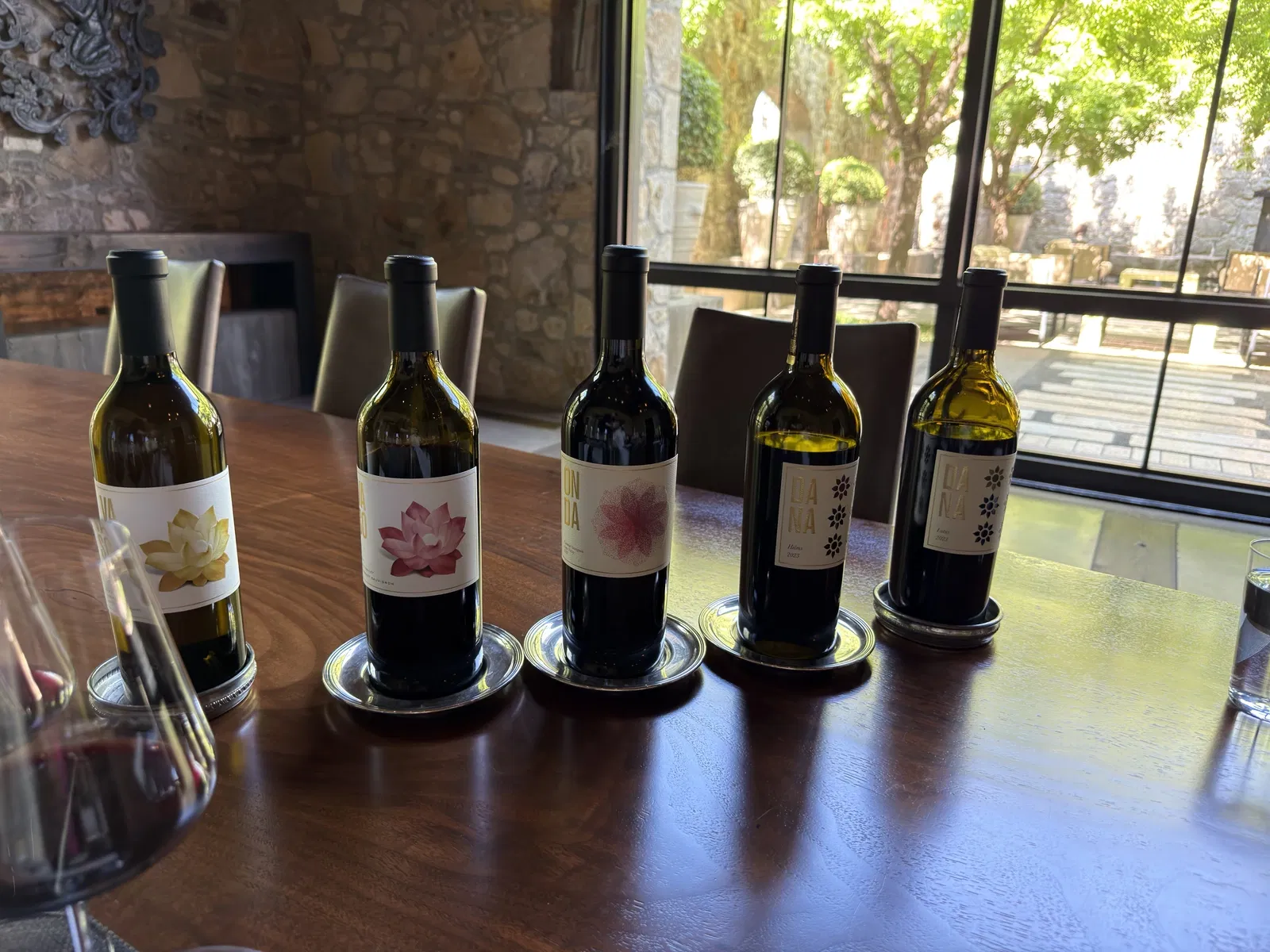
The VASO Sauvignon Blanc established immediately that the flight would not treat the white as a welcome pour to hurry past. Its value was textural. The pressing work and cigar-barrel inspiration gave the wine enough breadth to feel complete, while the freshness kept it from becoming heavy.
The menu listed only 566 cases. That scale matters because it makes labor-intensive choices such as stomping before the press plausible. The wine also created a bridge into the rest of the visit: a reminder that DANA’s attention to vessel shape and extraction starts before Cabernet.
At 96 percent Cabernet Sauvignon with smaller portions of Merlot and Petit Verdot, the 2021 VASO Cabernet was the broadest and most immediately legible red. It carried the shape of Napa Cabernet without asking the drinker to decode one vineyard’s geology first.
That accessibility should not be confused with simplicity. VASO is useful because it establishes the family resemblance: polished fruit, controlled tannin and enough savory structure to keep ripeness in balance. From there, ONDA and DANA become changes in focus rather than entirely different languages.
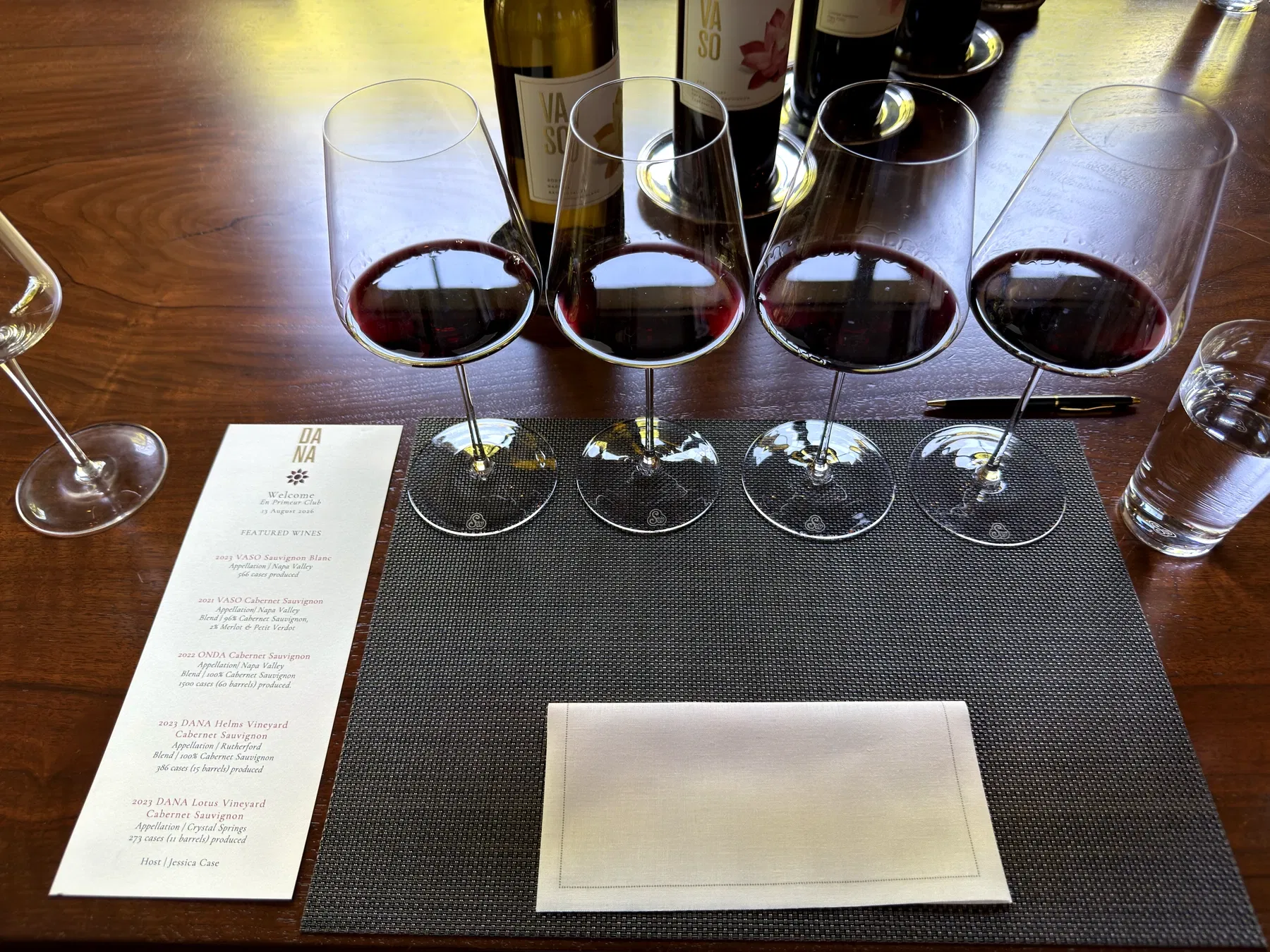
The 2022 ONDA was the largest-production wine on the card at 1,500 cases, yet that is still tiny by Napa standards. Made from 100 percent Cabernet Sauvignon, it showed how blending across vineyards can build dimension without relying on multiple grape varieties.
This is where the comparison to Bordeaux is conceptual rather than literal. ONDA draws pieces together to find a complete expression, while the single-vineyard DANA wines preserve separation. The 2022 vintage brought dark, generous fruit, but the wine retained enough lift and grip to prepare the palate for Helms and Lotus.
The 2023 Helms was especially elegant Cabernet in the sequence. Its power arrived through perfume, line and fine texture rather than mass. DANA’s own site description points toward plummy fruit, heady aromatics and dusty cocoa-powder tannin. Those ideas made sense after seeing the Helms rows beside the winery and the upright oak room designed for their fruit.
This was the wine that most closely matched the property itself: historic, polished and controlled, with richness held inside a clear structure. At 386 cases, it is already a narrow selection from an eight-acre vineyard.
Lotus was our favorite. It was more forceful than Helms but never coarse. Dark fruit, graphite-like structure and an unmistakable chocolate depth unfolded through a texture that felt almost velvet. The concrete fermentation made intellectual sense on the tour; in the glass, it made sensory sense.
The wine also illustrates the scarcity of the DANA tier. Eleven barrels produced 273 cases. When people talk casually about cult Napa production, numbers can become abstract. Seeing the entire lot expressed as eleven barrels makes the scale tangible.
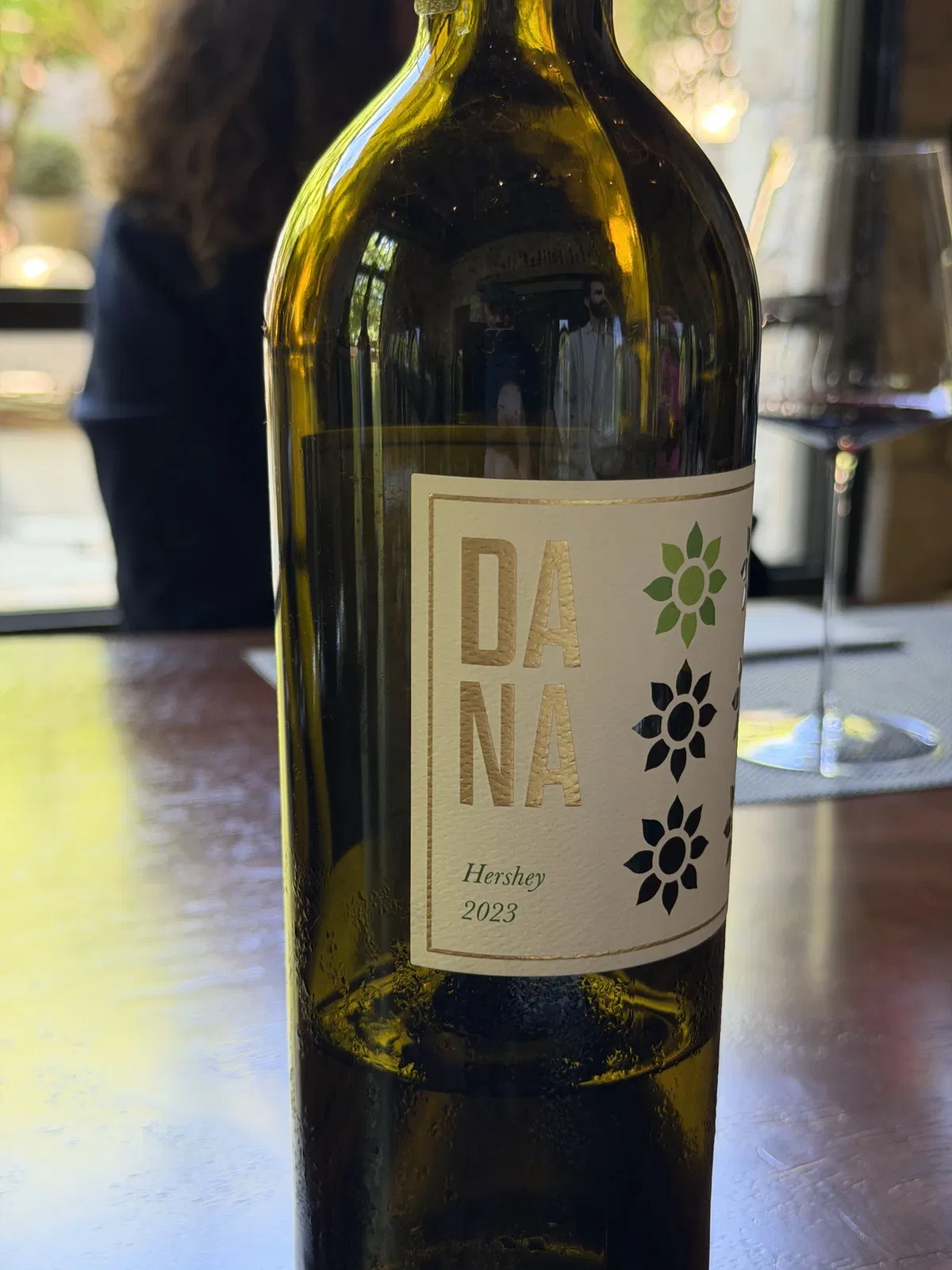
The pacing allowed conversation to loop back. We could compare a finished wine with a fermenter we had just seen, or return to Lotus after Helms clarified the contrast. Vanessa, Jessica, Maura and Jae each brought a different perspective, so the tasting became part technical seminar, part estate history and part the easy getting-to-know-you conversation that usually takes more than one visit to achieve.
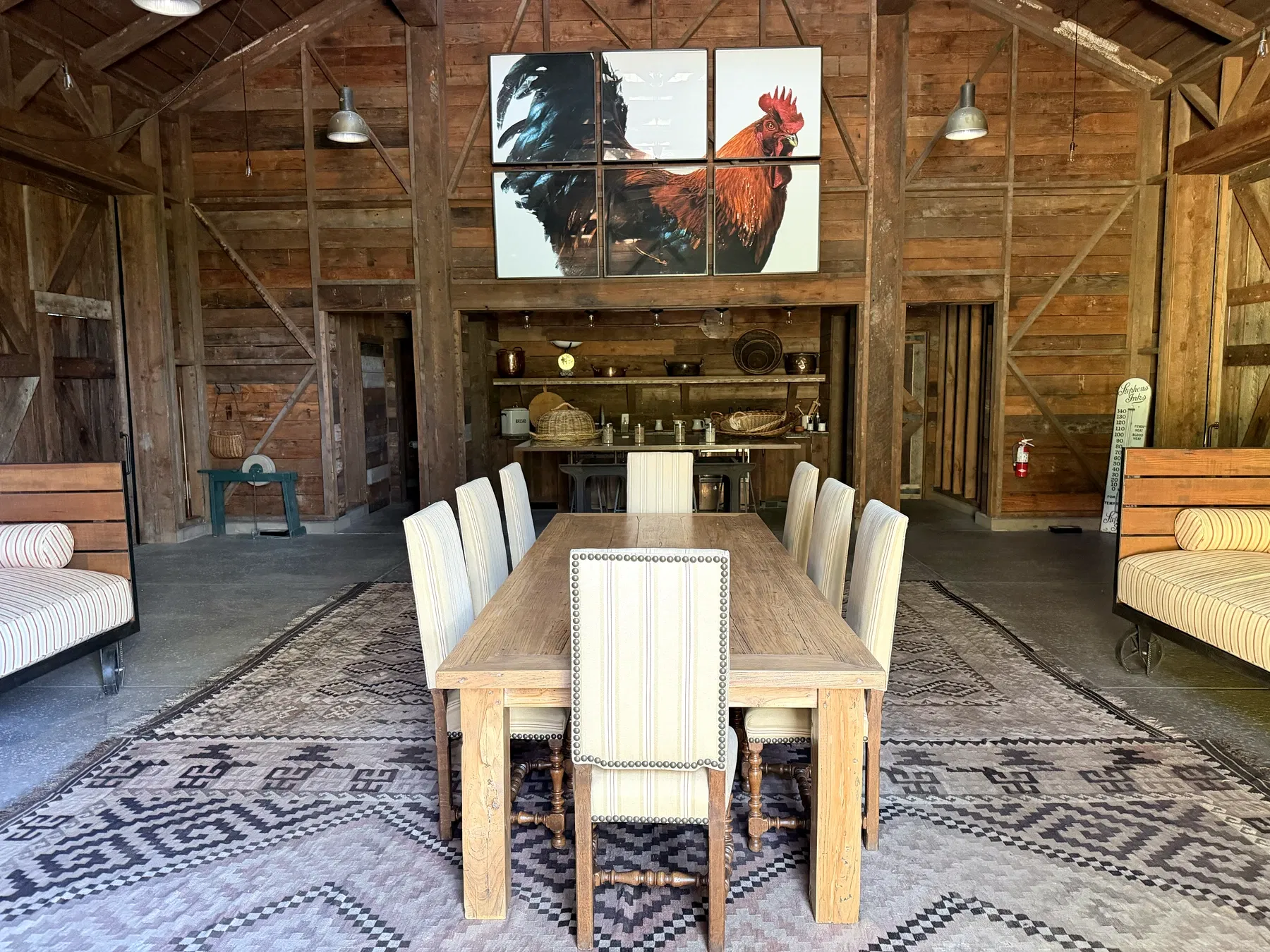
The tour did not end in the cellar. A reclaimed barn sits beyond the main winery, its weathered boards left visible around a long dining table, large rugs and an oversized rooster artwork. It is rustic in material but fully considered in use, the sort of room that makes you imagine a harvest lunch or a long dinner before anyone tells you whether such an event is on the calendar.
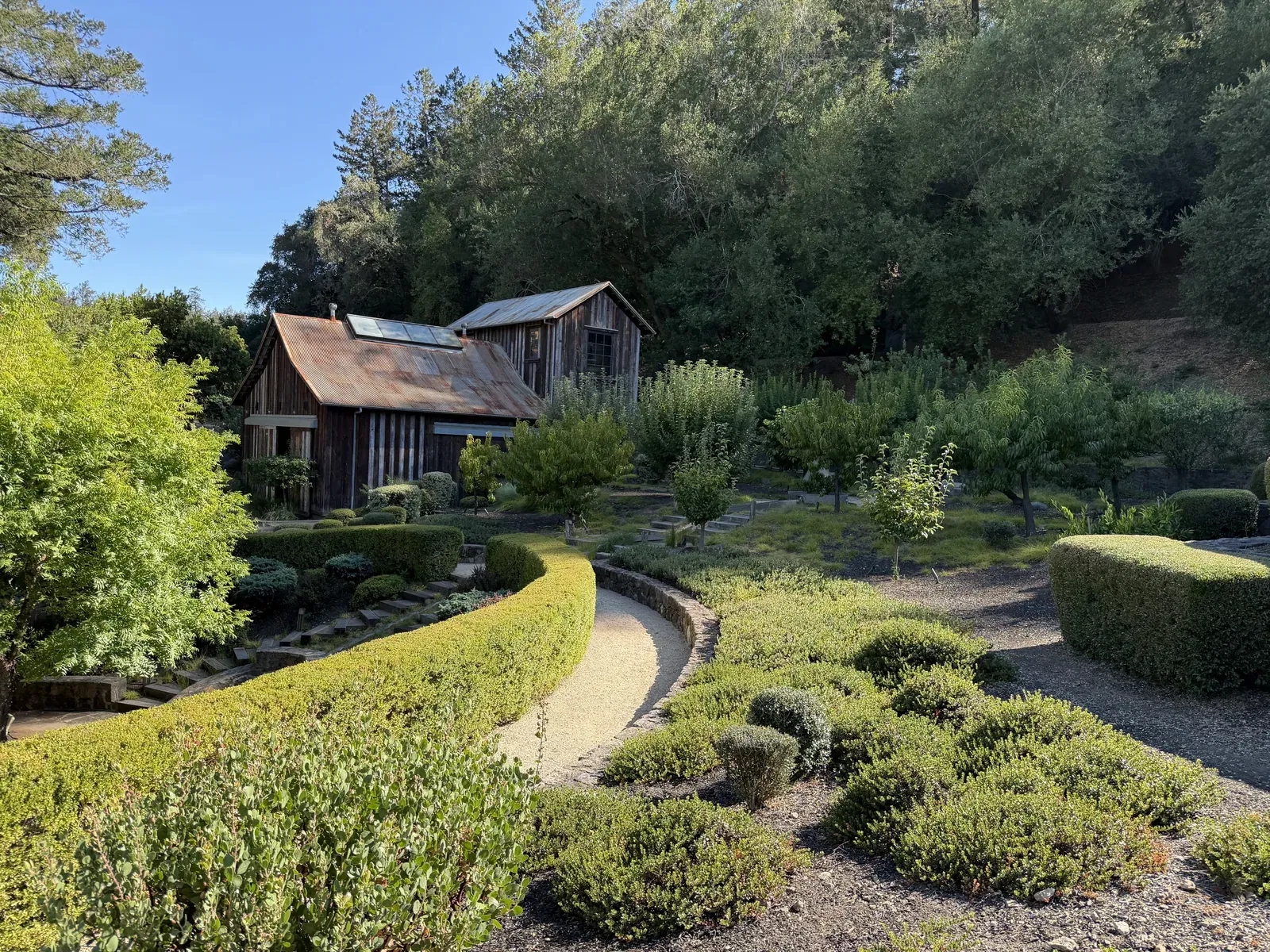
Outside, paths move through raised beds, citrus trees, clipped hedges and old shade trees. The gardens feel productive and residential at the same time. A pool opens toward the valley, while the barn and stone winery remain partly concealed by the slope and plantings.
The grounds matter because they extend the same idea as the cellar. Nothing is treated as a generic luxury amenity. Old buildings keep their age, gardens keep their informality and modern interventions stay quiet enough to support the landscape.
Dana Estates is not a casual walk-in stop. Visits are private and by appointment, and the precise format depends on the wines and access available when you inquire.
During our August 2026 visit, the team described two principal directions. A Portfolio tasting moved between ONDA and DANA, allowing guests to compare the cross-site blend with single-vineyard wines. A more intensive Terroir Collection Tasting was described as the all DANA flight, quoted to us at $500 per person. Exact names, lineups and pricing can change, so confirm the current details directly before building an itinerary around them.
The publicly listed Dana Estates Portfolio Exploration includes both ONDA and DANA, is $250 per person, currently allows 90 minutes for a private tour and tasting at the historic property, and can be reserved through Tock. The all DANA flight, Terroir Collection Tasting, is $500 per person. Collectors seeking a DANA-focused appointment should contact the estate or email concierge@enprimeurclub.com.
Unequivocally, yes. Dana Estates is not only worth visiting; it belongs near the upper end of a serious Napa itinerary.
The property is especially elegant estate we have experienced in the valley. Classical music in the 1880s ruins, fountain water in the courtyard, Howard Backen’s restraint, the lotus library, the tailored fermentation rooms, the reclaimed barn and gardens all create atmosphere. But beauty alone would not make the visit notable.
What elevates it is the combination of place and people. Vanessa, Jessica, Maura and Jae made the afternoon personal. They shared the settled parts of the DANA philosophy and the experiments still in motion. We saw a team willing to give Helms oak, Lotus concrete and Sauvignon Blanc cigar barrels because fidelity to place matters more than repeating one house method.
Then the wines completed the argument. Helms carried Rutherford elegance. Lotus delivered power, velvet and chocolate without losing balance. Production figures measured in eleven or fifteen barrels made the estate’s scarcity real.
DANA wants to remain a low-profile address. We understand why. The intimacy is part of its magic. Book the deepest format available, leave space for the architecture and conversation, and expect an afternoon you will keep replaying long after the classical music fades.
Dana Estates is a small-production Napa Valley winery focused on terroir-driven Cabernet Sauvignon from individual vineyard sites, supported by ONDA, VASO and a limited Sauvignon Blanc program. The modern project began in 2005 at a restored 1883 H.W. Helms ghost winery in Rutherford.
Dana Estates is private and requires an appointment. The Dana Estates Portfolio Exploration includes both ONDA and DANA, is $250 per person, and allows 90 minutes for a private tour and tasting at the historic property, reservable through Tock. The all DANA flight, Terroir Collection Tasting, is $500 per person. DANA-focused access should be requested directly from the estate or through concierge@enprimeurclub.com.
The modern estate was founded under South Korean proprietor Hi Sang Lee. Jae Chun serves as principal and president, overseeing business operations, finance, strategy and brand direction.
Maura Johnson is Director of Winemaking. She joined DANA in 2018 as Assistant Winemaker. Philippe Melka has served as consulting winemaker since the inaugural vintage.
DANA says that in Sanskrit, “dana” means the spirit of generosity. The twelve lotuses on the label also reference the vine’s twelve-month lifecycle and the twelve animals of the Lunar Zodiac.
DANA is the estate’s highly selected single-vineyard tier. ONDA brings Cabernet from multiple Napa sites together into a broader composition. VASO is especially accessible introduction to the portfolio and can use both estate and selected non-estate Napa Valley fruit.
DANA’s official vineyard portfolio currently highlights Helms in Rutherford, Lotus in Crystal Springs, Hershey on Howell Mountain and Montagna on Pritchard Hill.
Our printed August 13, 2026 menu listed 2023 VASO Sauvignon Blanc, 2021 VASO Cabernet Sauvignon, 2022 ONDA Cabernet Sauvignon, 2023 DANA Helms Vineyard Cabernet Sauvignon and 2023 DANA Lotus Vineyard Cabernet Sauvignon.
The 2023 DANA Lotus Vineyard Cabernet Sauvignon was our favorite red. It combined muscular dark fruit and chocolate depth with a velvet texture, making it powerful without feeling blunt.
Helms Cabernet ferments in upright Taransaud oak tanks to support perfume, structure and Rutherford’s dusty tannin. Lotus ferments in concrete to preserve minerality and round the edges of the vineyard’s powerful tannins.
The all DANA flight, Terroir Collection Tasting, is $500 per person. The Dana Estates Portfolio Exploration includes both ONDA and DANA and is $250 per person. Experiences and pricing can change, so confirm the current format directly with the estate before booking.
Dana Estates is at the base of the Mayacamas Mountains on the western side of Rutherford in Napa Valley. Our appointment confirmation used 1500 Whitehall Lane, St. Helena, California 94574.
Current vineyard, winemaking, team, architectural and public-visit details were checked against DANA Estates, ONDA Wines, the Institute of Masters of Wine, Napa Valley Vintners and DANA's July 2025 winemaking announcement on August 17, 2026. The flight, production figures, quoted private-visit pricing, observations and photographs reflect our firsthand August 13, 2026 visit. Experiences and prices can change, so confirm current details directly before booking.
Get the App
Take the shortlist into the En Primeur Club app for concierge access, saved places, and the next step after discovery.
Get Exclusive AccessMore from the editors