Neudorf Vineyards

Falstaff Winery - 5 Stars
Neudorf Vineyards is a Nelson cellar-door address for readers who care about soil, farming and cool-climate structure as much as scenery. The family-owned Upper Moutere property dates to 1978 and works organically with dry-farmed Moutere clay-gravel soils, with Chardonnay and Pinot Noir carrying the main weight of its reputation.

Pearl is the En Primeur Club membership app — saves, bookings, and concierge access live there. Same editors, same standards.
- Address
- 138 Neudorf Rd Upper Moutere, Nelson 7175, New Zealand
- Phone
- +64 3 543 2643
- Hours
- Mon–Fri 11 AM–4 PMSat–Sun Closed
- Website
- neudorf.co.nz
- Directions
- Get directions
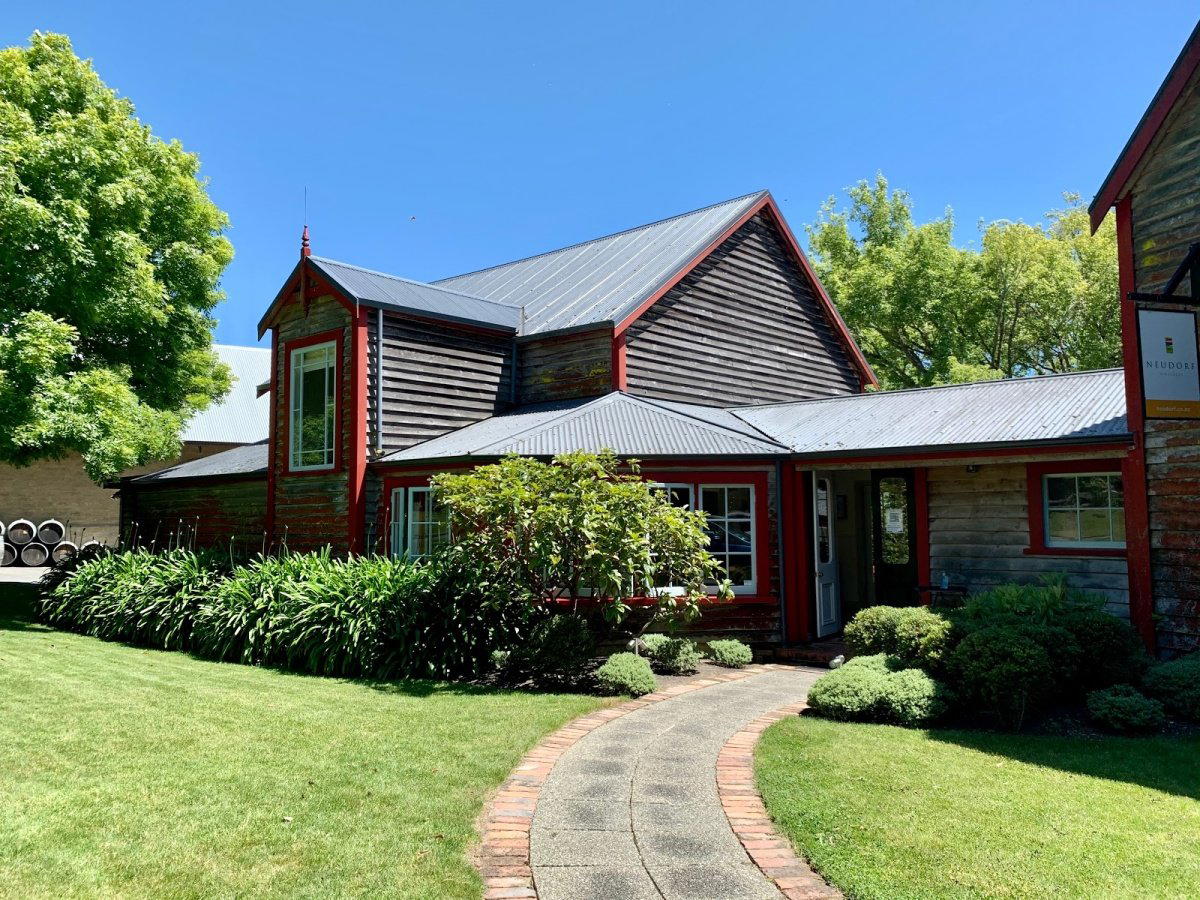
The approach to Neudorf Vineyards is part of the argument: garden, driveway, vineyard outlook, and the quieter tempo of Upper Moutere rather than a high-gloss tasting-room circuit. Nelson wine country often works at a softer pitch than New Zealand’s louder destination regions, and that suits a cellar door built around conversation, slope, soil and restraint. The setting is scenic without needing theatrical architecture; the point is the land in front of the glass.
For travellers using Nelson as a base, the estate belongs to the region’s more serious wine itinerary rather than a casual add-on between lunch and the beach. Its profile is anchored by family ownership, an origin date of 1978, organic winegrowing and dry-farmed Moutere clay-gravel soils. Those details matter because Nelson’s premium identity is not built on scale. It is built on small estates making a case for cool-climate precision, especially in Chardonnay, Pinot Noir and aromatic whites.
Moutere clay, dry farming and the Nelson argument for Chardonnay
New Zealand Chardonnay has moved well beyond a supporting role, and Nelson’s contribution is most persuasive when producers use texture and acidity rather than obvious weight. Neudorf Vineyards sits firmly in that conversation. The estate’s named place markers, Upper Moutere and ancient Moutere clay-gravel soils, give its wines a clear regional frame: clay can support concentration and texture, while gravel assists drainage and vine stress in a way that often suits structured whites and Pinot Noir.
The portfolio makes the regional thesis readable. Chardonnay and Pinot Noir form the core, with Albariño, Pinot Gris and Riesling adding a cooler-climate white-wine register. Albariño is the interesting outlier, a variety that signals openness to contemporary New Zealand planting choices without pulling the estate away from its main Burgundian-variety identity. The cellar-door experience should be read through that lens: not as a general tasting stop, but as a chance to understand how Nelson’s sunshine, maritime moderation and Moutere soils translate into still white and still red wines.
The clearest current flag in the range is the Home Block Moutere Chardonnay 2024, priced at NZD $95 and named New Zealand White Wine of the Year 2026 by The Real Review. That recognition is useful because it puts a specific bottle, vintage and national award behind the broader reputation. In a country where Chardonnay now competes for serious collector attention, that kind of accolade places the wine in a premium bracket without requiring grand language.
A cellar door shaped by gardens, quiet service and direct wine buying
Hospitality format is cellar-door led: guided tasting, estate grounds, vineyard outlook, outdoor seating and a quiet, rustic register rather than a restaurant-led production. The tone suits visitors who want to ask about farming, blocks and varietal choices rather than move through a scripted luxury sequence. Todd Stevens is listed as winemaker, but the more useful editorial point is not biography; it is that the wines are presented through a production philosophy of organic farming, dry farming and site expression.
That makes the visit different from wine tourism built around dining rooms, large event lawns or architectural spectacle. Here, the practical appeal is narrower and stronger: a garden-style tasting, a medium-capacity setting, on-site parking, wheelchair accessibility, dog-friendly and child-friendly attributes, and a format that works for solo exploration, group outings and wine education. There is no food-pairing program attached to the core offering, which keeps attention on the glass rather than plate choreography.
The direct-to-consumer side also matters. Wine-club availability, shipping and open allocation status position the estate as accessible to visitors who want to continue buying after the tasting. Category-led packs around Chardonnay and aromatics make sense for a producer whose identity is split between a flagship white-wine lane and a broader Nelson aromatic register. For a traveller, the smart move is to treat the cellar door as a buying opportunity as much as a tasting stop, particularly if the current Chardonnay release is available.
How to place it within a Nelson wine trip
Nelson rewards a slower itinerary. Its wine scene is compact enough for focused tasting, but the distinctions are in farming choices, soil references and varietal emphasis rather than dramatic regional scale. Neudorf Vineyards is strongest for travellers who want a quiet, land-led visit and a clear read on Upper Moutere’s place in New Zealand Chardonnay. Those building a wider regional plan can pair the stop with the broader EP Club Nelson wine map, including Aronui Wines, Blackenbrook Vineyard, Seifried Estate, Tohu Wines and Waimea Estates.
For the rest of the trip, keep the wine day connected to the city rather than treating it as a separate countryside excursion. Use Our full Nelson restaurants guide for post-tasting dining, Our full Nelson hotels guide for where to stay, Our full Nelson bars guide for later drinking, Our full Nelson wineries guide for regional planning and Our full Nelson experiences guide for non-wine time. Readers comparing New Zealand wine travel more broadly can also look at Akarua Winery in Nevis, Akitu in Wānaka and Alan McCorkindale Limited in Christchurch, while international cellar-door context sits far afield at »der Steiner« Hans Steiner in Podersdorf am See and & Handwein in Mannheim.
The verdict is clear enough without overstatement: this is a Nelson visit for drinkers who put farming and place ahead of spectacle. The combination of a 1978 family-owned estate, organic and dry-farmed viticulture, Moutere clay-gravel soils and a nationally recognised 2024 Home Block Chardonnay gives the cellar door a sharper reason to exist than scenery alone.
Recognition history
Dated appearances from independent guides and award organizations, with the underlying list record or original source where available.
Falstaff Winery - 5 Stars
Falstaff
Continue exploring
More in Nelson

Bars in Nelson
Browse all →
Restaurants in Nelson
Browse all →
Hotels in Nelson
Browse all →
Details
- Scenic
- Quiet
- Classic
- Rustic
- Solo Exploration
- Wine Education
- Group Outing
- Family
- Special Occasion
- Garden
- Vineyard Tour
- Estate Grounds
- Picnic Area
- Organic
- Dry Farmed
- Garden
- Vineyard
- Chardonnay
- Pinot Noir
- Albariño
- Pinot Gris
- Riesling
- Still White
- Still Red
- Cellar Door Tasting
- Guided Tasting
Current opening hours
- Monday
- 11 AM–4 PM
- Tuesday
- 11 AM–4 PM
- Wednesday
- 11 AM–4 PM
- Thursday
- 11 AM–4 PM
- Friday
- 11 AM–4 PM
- Saturday
- Closed
- Sunday
- Closed
Hours can change for holidays and private events. Last verified .
A scenic, garden-like cellar door setting with a beautiful driveway and vineyard views; guests describe it as lovely, relaxed, and host-driven.