
La Cheteau belongs to the production side of Vallet’s Loire wine economy rather than the polished tasting-room circuit. The draw is scale and context: an industrial wine and food-industry operation at Château du Cléray, useful for understanding how Muscadet country also works beyond small cellar-door hospitality.
Pearl is the En Primeur Club membership app — saves, bookings, and concierge access live there. Same editors, same standards.
- Address
- Vallet, Center-Val de Loire, Frankreich
 Saves & bookings on Pearl
Approaching La Cheteau is less about visitor-estate romance than about the working grammar of wine country: production scale, infrastructure, and the quiet efficiency of a Loire operation understood through output rather than spectacle. Vallet sits within the Loire wine region, where wine is not only presented through hospitality but also handled through larger production systems. This is that side of the region: practical, industrial, and useful for readers interested in how wine operations can function beyond the tasting-room image. It asks for a different kind of attention, one focused less on the picturesque surface of wine travel and more on the mechanisms that allow a wine region to operate at scale.
Vallet wine country seen through production, not cellar-door theatre
The Loire is often described through scenery, estates, and visitor experiences. Around Vallet, another reading is available: agricultural and industrial. La Cheteau fits that broader pattern as an industrial-scale wine production facility, with an emphasis on production rather than traditional visitor-focused estate hospitality. The point is not that one version of wine country is more authentic than another, but that the region contains more than the familiar script of vines, cellars, and guided conversation.
That distinction matters. A visitor-focused estate might tell its story through tastings, cellar tours, or hospitality design. A production-led site teaches a different lesson: wine regions are sustained by infrastructure as much as by romance. Scale and operational needs can sit beside vineyard language, even when they are less photogenic. For travellers, that can be a useful corrective, because the bottle encountered in a shop, restaurant, or home is often the endpoint of systems that remain mostly out of view.
The terroir lens here should be applied carefully. The setting places La Cheteau inside the Loire wine region, but the public details do not establish estate parcels, farming practice, appellation-specific bottlings, or a tasting portfolio. What can be said with confidence is narrower and more useful: this is a Loire-region operation in Vallet where the visitor should read place through industry as well as vineyard scenery. In that sense, its importance is interpretive rather than romantic; it helps explain the wider landscape without asking to be treated like a classic cellar-door stop.
What the format says about the Loire's less visible wine economy
France’s prestige wine conversation often privileges small domaines, named sites, and scarcity. The Loire has those stories, but it also has a production backbone. The winery’s industrial character places it in that second category, where scale and wine production carry more weight than intimate hospitality cues. For a traveller used to estates built around visitor experience, the contrast is instructive. It widens the frame from the narrative of individual craftsmanship alone to the broader reality that wine regions also depend on coordination, capacity, and practical facilities.
The site’s value is contextual rather than sensory. Its interest lies in how it complicates the idea of Vallet as merely a vineyard destination. Wine regions can include both visible hospitality and larger operational structures. Seeing the place in that way makes the industrial tone less of an absence and more of the subject itself: a reminder that the culture of wine is supported by work that is not always staged for visitors.
That makes the winery a better fit for readers who care about production systems than for those seeking a conventional afternoon of pours and cellar anecdotes. The atmosphere is workmanlike and industrial in character. It is not a château fantasy dressed for tourism; it is a reminder that Loire wine is also connected to scale and infrastructure behind the bottle. The appeal, then, is analytical rather than leisurely: it belongs to the part of a wine trip where the visitor wants to understand how the region functions, not simply how it presents itself.
How to place it within a Vallet itinerary
Use the winery as a reference point for the production side of Vallet, then build the rest of the day around the city’s broader hospitality map. If you are comparing it with other local stops, treat it as a different kind of venue: less a traditional visitor estate and more an industrial wine-production facility within the Loire wine region. That framing helps set expectations correctly and prevents the site from being judged by criteria that belong to a more visitor-oriented estate.
Readers building a wider wine route can place Vallet alongside other wine destinations generically, using the winery as a reminder that production facilities are part of the same landscape as more familiar hospitality-led estates. The useful contrast is not about a confirmed tasting program or public tour format, but about the difference between wine as visitor experience and wine as production infrastructure. Read this stop as context: a way to keep the working economy of wine in view while moving through a region often understood through scenery, bottles, and estate language.
Recognition history
Dated appearances from independent guides and award organizations, with the underlying list record or original source where available.
Falstaff Winery - Listed
Falstaff
Continue exploring
More in Vallet
Wineries in Vallet
Browse all →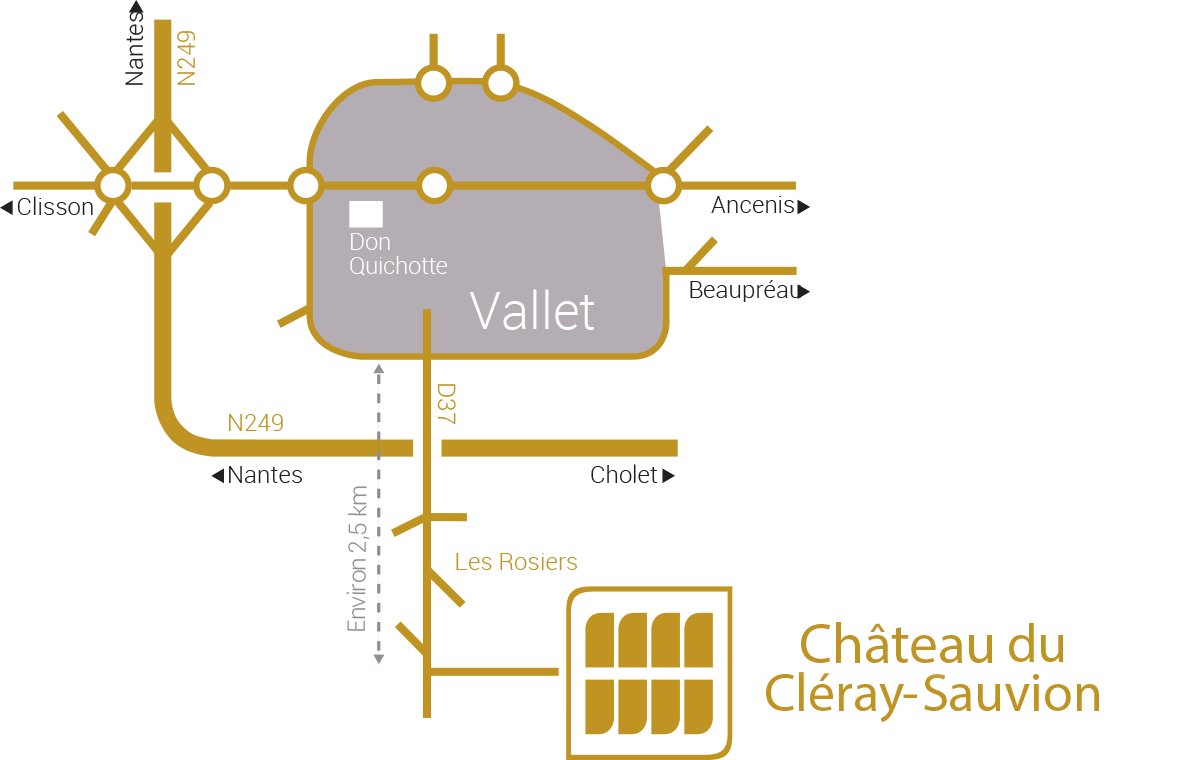
At a Glance
- Industrial
- Vineyard
- Loire Valley
Industrial-scale wine production facility rather than a traditional visitor-focused estate, located at Château du Cléray in Vallet within the Loire wine region.