
Tabelog 100 #24
Our verdict
Mito’s eel culture rewards restaurants that treat fish sourcing and grill discipline as the main event. Nuriya Izumichou oodoori sits in that serious unagi tier, with Tabelog 100 Unagi selections in 2018, 2019, 2022, and 2024, plus a room format suited to groups rather than counter-only dining.

Pearl is the En Primeur Club membership app, where members save venues, book tables and use the concierge.
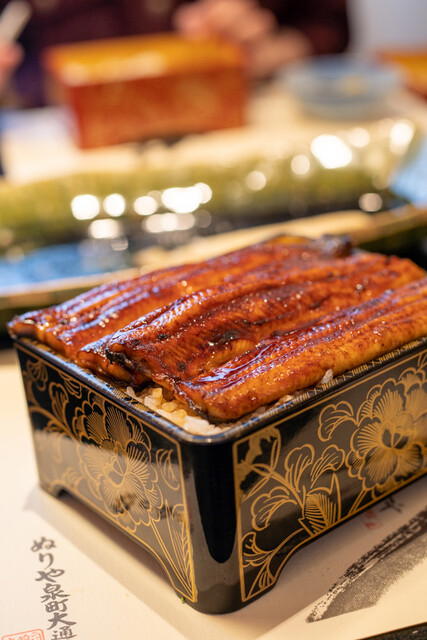
The menu
What to order
- Unaju (grilled eel over rice)
- Premium Unaju
- Special Unaju
- Shirayaki eel
Approach Mito and the rhythm is not Ginza theatre or Kyoto ceremony, but the quieter confidence of a regional Japanese dining room built around a focused ingredient tradition. In Mito, unagi is not a luxury import so much as the meal’s reason, and serious houses are judged by restraint: fish handling, timing over heat, tare that supports rather than masks, and rice that understands its role.
Nuriya Izumichou oodoori sits in the eel-restaurant category where sourcing language matters because the cuisine leaves little room for distraction. Its public category is direct: Unagi (Eel) and Dojo (Loach). Plain as that sounds, it carries weight here. Broader izakaya-style eel restaurants can blur the central promise; this signal is narrower, and its 2024 Tabelog Hyakumeiten recognition places it in a national conversation around specialist unagi rather than general-purpose Japanese dining.
Unagi in Mito is judged by fish, fire, and restraint
Unagi is one of Japan’s great format cuisines because its technical range is deliberately compressed. Diners are not comparing dozens of courses or watching a chef build narrative through rare ingredients. The frame is smaller: procurement, preparation, grilling, sauce, rice, pacing. Recognition in a list devoted specifically to unagi therefore matters more here than a broader popularity badge; it measures the restaurant against eel specialists, not every restaurant serving a pleasant lunch.
Mito’s dining scene has a practical regional cast. It supports family meals, neighborhood regulars, and visitors using the city as an Ibaraki base, rather than behaving like a destination only for tasting-menu pilgrims. In that setting, a focused eel house occupies useful middle ground: more ceremonial than a casual set-meal stop, less formal than high-spend reservation rooms built around scarcity. Compared with Shirakawa, this reads as another specialist reference point within the local conversation. Compared with casual Mito addresses such as Karma or Kimura Ya Honten, the decision is less everyday convenience than committing the meal to eel.
Dojo alongside eel also matters. Loach has deep roots in Japanese cooking but appears far less often on contemporary travel itineraries than sushi, ramen, tempura, or wagyu. Its listing places the restaurant inside an older freshwater tradition, one that suits a regional city more than a menu engineered for international shorthand. The meal need not be explained to be enjoyed; its identity comes from a narrower, more local grammar than the pan-Japanese menus visitors often meet first.
A house-style dining room, not a performance counter
The format is part of the appeal. This is not best understood as a tense, spectacle-first experience dominating much high-end Japan coverage. The appeal is quieter and more ingredient-led. That changes the tempo: the meal can be read through eel and loach rather than through a staged sequence, and visitors get a regional dining appointment rather than a performance encounter.
That distinction helps when sorting Mito restaurants. Other Mito dining rooms and broader city guides map a place where valuable meals are not always the loudest online. Nuriya Izumichou oodoori’s appeal is narrower: go when the meal should revolve around freshwater fish, not when a group wants maximum menu variety.
The award history is a clear trust signal, if read correctly. Tabelog’s Hyakumeiten selections are category-specific, and the 2024 Unagi selection places the restaurant among recognized eel specialists for that year. That is different from chasing luxury-dining spectacle. It is recognized in a craft where regularity matters: the same core ingredient, service after service, under conditions where small lapses are easy to notice.
For visitors eating widely across Japan, this stop adds regional texture. Major cities can supply polished counters, dense urban snacking, and codified seasonal formality. Mito’s contribution is quieter: specialist rooms with enough local utility to avoid feeling staged. Readers building a broader Japan itinerary can compare the format with other ingredient-led dining in Mito and beyond. The point is not equivalence, but clarity of format: this Mito address belongs to the ingredient-led side of the ledger.
How to read the meal
Approach the restaurant by treating eel as the anchor and letting the traditional structure work. Unagi (Eel) and Dojo (Loach) are its listed categories; it also has 2024 Tabelog Hyakumeiten recognition and a listed score of 3.75. The budget sits in the published range of Dinner: JPY 5,000 - JPY 5,999; Lunch: JPY 6,000 - JPY 7,999, which positions it as a focused specialist meal rather than an undefined splurge.
Choose this restaurant when the meal should teach something about regional unagi culture: sourcing discipline, freshwater tradition, and a dining room designed around a narrow culinary purpose. Skip it when the brief is a broad menu, late-night drinking, or a chef-led performance format. In Mito, that specificity is the point.
Frequently asked questions
Does Nuriya Izumichou oodoori work for a family meal?
Yes. Nuriya Izumichou oodoori can work for a focused group meal when everyone is happy to center the visit on eel and loach. The location is Mito, and the listed budget is Dinner: JPY 5,000 - JPY 5,999; Lunch: JPY 6,000 - JPY 7,999.
What should I expect atmosphere-wise at Nuriya Izumichou oodoori?
Expect a specialist restaurant in Mito rather than a broad, performance-led format. The clearest way to read the room is through its public categories: Unagi (Eel) and Dojo (Loach).
Is Nuriya Izumichou oodoori more mid-range or high-end?
Pricing at Nuriya Izumichou oodoori is listed as Dinner: JPY 5,000 - JPY 5,999; Lunch: JPY 6,000 - JPY 7,999.
What is Nuriya Izumichou oodoori known for?
Nuriya Izumichou oodoori is known for Unagi (Eel) and Dojo (Loach) in Mito, with 2024 Tabelog Hyakumeiten recognition and a listed score of 3.75.
Snapshot
Comparable venues by cuisine and price in the same metro.
| Venue | Cuisine | Price | Awards | Notes |
|---|---|---|---|---|
| Nuriya Izumichou oodooriThis venue (the venue you are viewing) | Traditional Unagi (Eel) Restaurant | $30–50 | Tabelog 100 #24 | Not listed |
| Shirakawa | Teppanyaki & Hitachi Beef Steakhouse | $100–150 | Tabelog 100 #91 | Minami-machi |
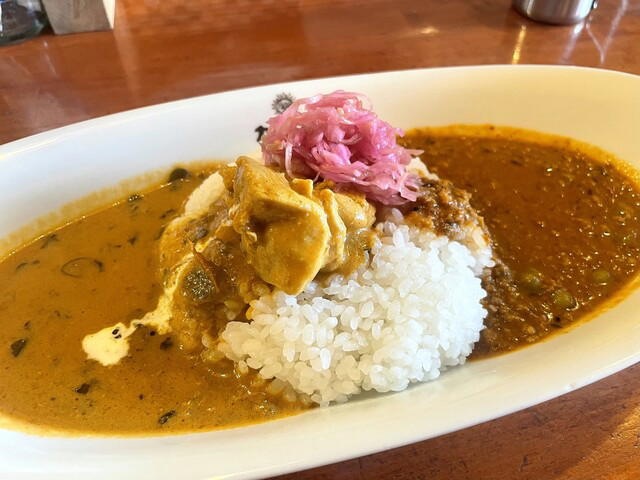
| Karma | Indian curry house | $10–20 | Tabelog 100 #33 | Mito |
| Agni | Sichuan & Chinese Dining Bar with Japanese-Western Influences | $10–20 | Tabelog 100 #74 | Mito |
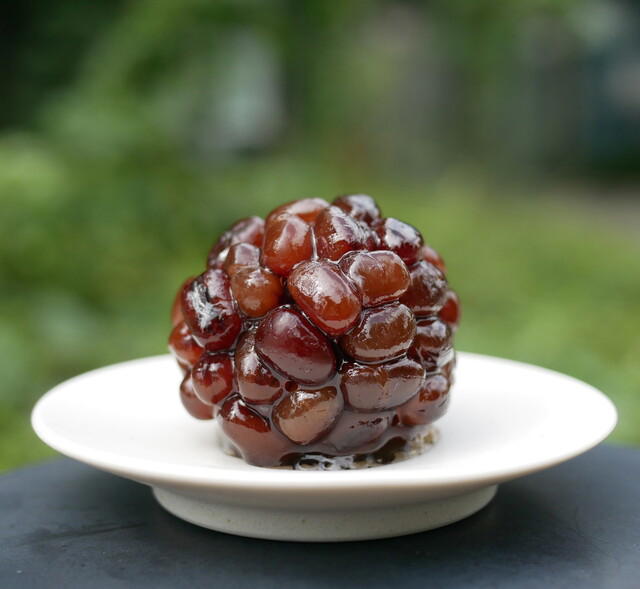
| Ogura Ya | Japanese Traditional Sweets | $1–10 | Tabelog 100 #85 | Mito |
| marcador | Casual Spanish Bar & Restaurant | $30–50 | Tabelog 100 #13 | Minamimachi |
Recognition history
Dated appearances from independent guides and award organizations, with the underlying list record or original source where available.
Tabelog 100 #24 · No. 24
Tabelog · Tabelog 100 - Unagi - 2024
Continue exploring
More in Mito
Details
- Classic
- Cozy
- Rustic
- Family
- Group Dining
- Casual Hangout
- Solo
- Special Occasion
- Private Dining
- Standalone
- Sake Program
- A La Carte
- Set Menu
- Sake
- Beer
- Pescatarian Friendly
Current opening hours
- Monday
- 11:30 AM–3 PM, 5–8 PM
- Tuesday
- Closed
- Wednesday
- 11:30 AM–3 PM, 5–8 PM
- Thursday
- 11:30 AM–3 PM, 5–8 PM
- Friday
- 11:30 AM–3 PM, 5–8 PM
- Saturday
- 11 AM–3 PM, 5–8 PM
- Sunday
- 11 AM–3 PM, 5–8 PM
Hours can change for holidays and private events. Last verified .
A classic house-style unagi restaurant with tatami rooms and spacious, relaxing seating; the atmosphere is calm and comfortable, suited to families and small groups rather than formal dining.