
Tabelog 100 #53
Our verdict
Hamada Shoten belongs to Hokkaido’s fish-first diner tradition rather than Sapporo’s polished restaurant circuit. The draw is a compact seafood and kaisen-don format in Rausu, backed by Tabelog 100 Diner selections in 2024 and 2026, with lunch pricing in the JPY 2,000 to JPY 2,999 bracket.

Pearl is the En Primeur Club membership app, where members save venues, book tables and use the concierge.
The menu
What to order
- Red salmon
- Boiled octopus sashimi
- Buri kama
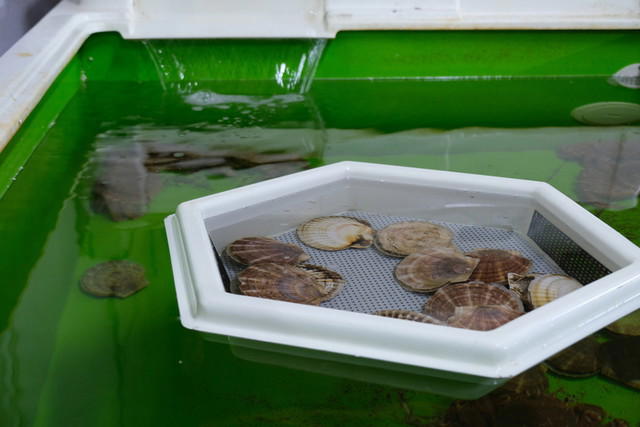
- Hotate scallops
- Rausu sea urchin
Approaching Hamada Shoten in Sapporo changes the terms of a meal. This is Hokkaido dining framed less around theatrical technique than around a plainspoken seafood format: how directly fish can move from a simple restaurant category to tray, bowl, and table. Hamada Shoten sits inside that practical register. Its listed frame is cafeteria, kaisen-don, and seafood, and that matters because the menu architecture is built around fish rather than around a chef’s performance or a long tasting sequence.
That format places it apart from the broader urban Sapporo circuit, where ramen counters, curry rooms, bakeries, and izakaya-style specialists compete on speed, personal style, or late-night utility. For a broader city read, our full Sapporo restaurants guide maps that larger spread across unnamed local dining rooms and casual specialists. Hamada Shoten belongs to a different rhythm within that map: seafood bowls, a cafeteria structure, and a dining culture that treats fish quality as the organizing principle.
Fish, rice, and the Hokkaido diner grammar
Japan’s shokudo tradition rewards clarity. A diner can be modest in format and serious in focus, especially where the menu does not need luxury signals to justify attention. Kaisen-don is central to that logic: rice as the base, seafood as the argument, and the rest of the meal kept functional. Hamada Shoten’s published categories make the point cleanly. It is not positioned as sushi, kappo, or omakase. It is a cafeteria and seafood bowl restaurant, which means the reader should expect the pleasure of a direct format rather than the choreography of a counter.
The recognition confirms that this is not merely a convenience stop. Hamada Shoten is listed through Tabelog Hyakumeiten recognition for 2026, with a Tabelog score of 3.59. In Japan’s dining culture, that kind of public-facing recognition carries a different kind of weight than a fine-dining accolade. It signals that the everyday form has been taken seriously: price, consistency, product focus, and public enthusiasm all matter in a category where the room itself is rarely the headline.
The menu structure also explains why the restaurant reads well for travelers who want Hokkaido seafood without converting lunch into ceremony. The average spend is listed at JPY 2,000 to JPY 2,999, a bracket that places it far from the luxury counter economy but above the casual snack tier. Compared with lighter comparison venues such as caffe kaiyodai, Cream Dowa, and Gelateria Rimo Abashiri honten, this is a meal built around fish as the main event, not a pause between stops.
Why Sapporo changes the value calculation
Sapporo is often compressed into an image of miso ramen, soup curry, beer halls, and winter markets, but the city’s dining identity is broader than those shorthand categories. Hamada Shoten gives seafood a direct, everyday frame within that larger context. The appeal is not polish for its own sake. It is the sense that a seafood bowl can be part of a practical food economy rather than a staged luxury performance.
That makes Hamada Shoten a useful fit for travelers already building a Sapporo itinerary around more than one style of eating. It does not need to replace the city’s other dining rooms; it gives the trip a fish-led counterpoint to noodles, curry, sweets, and drinks. The location should be understood simply as Sapporo, rather than as a landmark-driven stop or a nightlife address.
Seasonality and opening details should be checked before visiting, as with any focused local restaurant. What is stable in the public listing is the restaurant’s category and budget: cafeteria, kaisen-don, seafood, and a JPY 2,000 to JPY 2,999 spend range. That combination keeps the value calculation straightforward. The point is not an elaborate room or a long menu narrative, but a concise seafood meal at a practical price.
How to read it within a Sapporo-focused itinerary
For EP Club readers, the decision is not whether Hamada Shoten is a polished destination restaurant. It is whether a fish-led cafeteria and kaisen-don address belongs in the same trip as Sapporo’s denser food map. The answer depends on route. If the itinerary stays inside the city, Sapporo has enough depth across noodles, curry, sweets, and drinks to fill several days. Within that spread, this becomes a pointed way to understand the seafood culture behind the city’s restaurant reputation.
The restaurant’s practical format also matters. The public categories do not suggest a hushed special-occasion room or a chef-led tasting counter. They suggest a direct restaurant built around cafeteria ease and seafood bowls. That is exactly the kind of venue that can make sense in the middle of a travel day, when clarity, price, and a strong main idea matter more than ceremony.
Critically, the venue’s strength is architectural: the menu category tells the story before any individual dish needs to be named. Cafeteria, seafood, and kaisen-don together describe a restaurant where value is measured in fish focus, bowl composition, and directness. The 2026 Tabelog Hyakumeiten signal gives that plain format credible recognition. In a Sapporo itinerary, Hamada Shoten is strongest when treated as evidence of place, not as a substitute for the city’s full metropolitan dining scene.
For wider Japan and overseas dining context, compare how focused formats travel across regions through other unnamed dining rooms, bars, cafes, and casual specialists rather than reading Hamada Shoten as a one-size-fits-all model.
Frequently asked questions
Is Hamada Shoten open every day?
Current opening days and hours are not provided here. Check the venue's official channels before visiting Hamada Shoten.
What should I budget for a meal at Hamada Shoten?
Pricing at Hamada Shoten is listed as JPY 2,000 - JPY 2,999 View spending breakdown.
What part of town is Hamada Shoten in?
Sapporo.
What do critics highlight about Hamada Shoten?
Hamada Shoten is listed with Tabelog Hyakumeiten recognition for 2026, a useful signal for a place focused on cafeteria-style kaisen-don and seafood. The listed price range is JPY 2,000 - JPY 2,999, which keeps it firmly in practical territory rather than special-occasion dining.
Is Hamada Shoten good for vegetarians?
Hamada Shoten is listed as a cafeteria serving kaisen-don and seafood. Diners looking for vegetarian options should check the venue's official channels before visiting.
Is Hamada Shoten a family-friendly restaurant?
The provided listing identifies Hamada Shoten as a cafeteria, kaisen-don, and seafood restaurant. For family-specific policies, seating details, and the latest service information, check the venue's official channels before visiting.
City Peers
Comparable venues for orientation by cuisine and category.
| Venue | Cuisine | Price | Awards | Notes |
|---|---|---|---|---|
| Hamada ShotenThis venue (the venue you are viewing) | Shiretoko Rausu Seafood | $20–30 | Tabelog 100 #53 | Not listed |
| caffe kaiyodai | Not listed | Not listed | Not listed | JPY 999 - JPY 999 View spending breakdown |
| Fenêtre | French with Local Hokkaido Ingredients | $100–150 | Tabelog Bronze #69 | Not listed |
| Cream Dowa | Not listed | Not listed | Not listed | JPY 999 - JPY 999 View spending breakdown |
| Gelateria Rimo Abashiri honten | Not listed | Not listed | Not listed | JPY 999 |
Recognition history
Dated appearances from independent guides and award organizations, with the underlying list record or original source where available.
Tabelog 100 #53 · No. 53
Tabelog · Tabelog 100 - Diner - 2026
Continue exploring
More in Rausu
Restaurants in Rausu
All restaurants in Rausu →
Details
- Rustic
- Cozy
- Scenic
- Family
- Casual Hangout
- Group Dining
- Solo
- Standalone
- Beer Program
- Local Sourcing
- Sustainable Seafood
- Waterfront
- A La Carte
- Set Menu
- Beer
- Pescatarian Friendly
Current opening hours
- Monday
- 10:30 AM–3 PM
- Tuesday
- 10:30 AM–3 PM
- Wednesday
- 10:30 AM–3 PM
- Thursday
- Closed
- Friday
- 10:30 AM–3 PM
- Saturday
- 10:30 AM–3 PM
- Sunday
- 10:30 AM–3 PM
Hours can change for holidays and private events. Hours as of .
A casual, local seafood venue with a simple, practical atmosphere centered on fresh ingredients and a market-style retail component.