Bukka Restaurant sits in Maitama, a district where Abuja’s diplomatic, government and hotel dining circuits overlap. With little formal public detail around chef, pricing or awards, its useful reading is contextual: a city restaurant shaped by Nigerian ingredient culture, central-city access and the practical expectations of Abuja dining rather than by tasting-menu theatrics.
Pearl is the En Primeur Club membership app — saves, bookings, and concierge access live there. Same editors, same standards.
- Address
- 1 Aguiyi Ironsi St, Maitama, Abuja 900001, Federal Capital Territory, Nigeria
- Phone
- +234 803 901 3000
- Website
- hilton.com
- Directions
- Get directions
 Saves & bookings on Pearl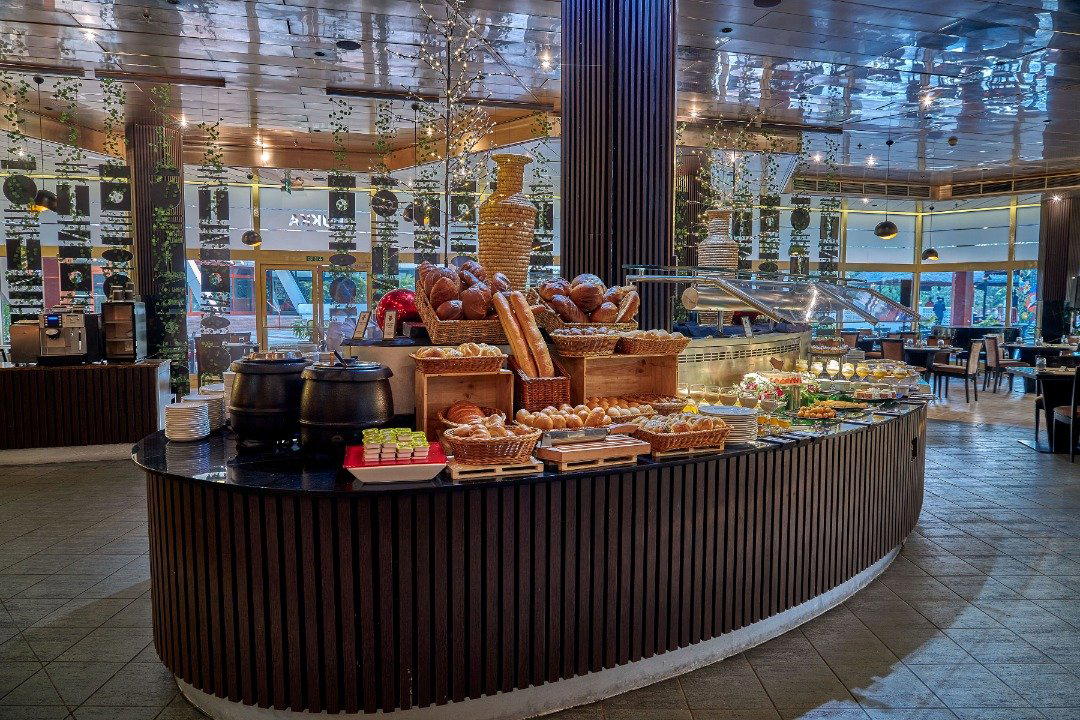
Approaching the Maitama dining corridor, Abuja feels less like a single restaurant district than a set of overlapping circuits: ministry traffic, hotel guests, embassy routines, family meals and late business dinners. In that context, Bukka Restaurant belongs to a practical Nigerian tradition where the value of a table is measured less by ceremony than by familiarity, sourcing and the kitchen’s relationship with everyday staples.
The word “bukka” carries its own signal in West African dining. It points toward casual, locally rooted eating, often built around soups, stews, grains, swallow, grilled proteins and market vegetables rather than imported luxury markers. In Abuja, that tradition changes shape. The capital’s central neighbourhoods bring a broader audience, a more mobile clientele and a higher expectation of polish, but the underlying logic remains ingredient-led: pepper, palm, stock, smoke, fermented notes, fresh herbs and regional produce do the heavy lifting.
Nigerian staples matter more than restaurant theatrics in Maitama
Abuja’s restaurant culture has a different rhythm from Lagos. Lagos dining often trades on speed, density and late-night improvisation; Abuja is more spaced out, more planned, and more tied to institutional geography. Maitama sits inside that pattern. Restaurants here serve a clientele that may move between offices, hotels and private homes in the same day, so consistency carries weight. A kitchen does not need a public chef mythology to make sense in this part of the city; it needs a clear command of staples and the confidence to let Nigerian ingredients read plainly.
That is the stronger editorial lens for Bukka Restaurant. No awards or chef-led tasting format define the public story, so the useful question is not whether it competes with formal fine dining. It is whether it fits the Abuja category of central, Nigerian-leaning restaurants where sourcing and execution matter more than performance. For readers comparing local options, Fulani Pool Bar & Restaurant and Zuma Grill Restaurant help frame the city’s range: Abuja dining moves from hotel-adjacent leisure formats to grill-led rooms and more direct local restaurants, often within a short central circuit.
Ingredient sourcing is the quiet test. Nigerian cooking depends on freshness and turnover: greens lose character quickly, pepper blends flatten when held too long, and soups need depth without muddiness. In a capital city supplied by regional farms, markets and intercity distribution, a restaurant’s strength often shows in how cleanly it handles those basics. The point is not novelty. It is whether familiar dishes retain definition after being scaled for a public dining room.
Where Bukka Restaurant fits in Abuja's dining map
The restaurant’s Maitama address places it in one of Abuja’s more useful dining zones for visitors who are already moving through the city centre. Maitama is not an old food quarter in the way some Nigerian cities have dense market-eating districts; it is a planned capital neighbourhood where restaurants often double as meeting points. That changes the dining brief. Accessibility, comfort and recognisable cooking become part of the experience, especially for groups mixing local residents, domestic travellers and international guests.
For a wider read on the city, Our full Abuja restaurants guide gives the restaurant context alongside the capital’s other dining formats, while Our full Abuja hotels guide is useful for travellers choosing where to base themselves. Abuja’s after-dark scene is a separate decision, better mapped through Our full Abuja bars guide, while category completists can scan Our full Abuja wineries guide and Our full Abuja experiences guide for the broader city picture.
Compared with Nigeria’s other casual dining references, Abuja’s version tends to be less chaotic and more appointment-driven. Lagos fast-casual names and street-food-adjacent rooms, from Best Shawarma in Lagos to Mega Chicken in Ikeja, operate in a different urban tempo. Coastal and smaller-city listings such as Mie Mie Taste in Badagry and Shawarma Heaven in Abeokuta show how Nigerian dining shifts with local traffic patterns. Within Abuja, Smith Bearly in Wuse adds another useful point of comparison for readers deciding between central neighbourhoods.
The reader decision: come for a local Abuja meal, not a trophy dinner
The absence of listed awards, chef name, seat count and published price range matters because it sets expectations. This is not a page to read as a luxury tasting-menu recommendation. It is better understood as a Maitama restaurant in the bukka tradition, where the draw is the role Nigerian cooking plays in daily capital-city dining. That makes it more relevant for travellers who want a grounded local meal than for diners chasing formal recognition.
Readers building a broader itinerary can use the contrast profitably. Abuja gives context for Nigerian staples and capital-city hospitality; other EP Club pages widen the frame internationally, from Jōdo Saké Bar in Los Angeles and Onigiri Time in Pasadena to -Grilled beef Sukiyaki- KAMAKURA TANUKIAN 鎌倉 たぬき庵 in Kamakura, ¡Salud! in Los Angeles, ¡Toma! in Liège and ¿CóMO? Taperia in Vancouver. Those comparisons are less about ranking than calibration: different cities reward different dining instincts. In Maitama, the intelligent move is to judge the table by ingredient clarity, local fit and how well the kitchen handles the Nigerian dishes that regulars already know by heart.
A Quick Peer Check
Comparable venues by cuisine and price in the same metro.
| Venue | Cuisine |
|---|---|
| Bukka Restaurant | This venue |
Continue exploring
More in Abuja
Restaurants in Abuja
Browse all →


At a Glance
- Modern
- Lively
- Elegant
- Business Dinner
- Group Dining
- Family
- Celebration
- After Work
- Hotel Restaurant
- Private Dining
- Beer Program