Kamsholo Bushveld Safaris operates in the lowveld terrain around Big Bend, Eswatini, where the Lubombo escarpment and the Usuthu River corridor define the landscape. The operation sits within a small tier of privately run bush experiences in southern Africa that prioritise access to genuinely remote terrain over resort-scale amenity. Visitor numbers remain limited by geography rather than policy.

Pearl is the En Primeur Club membership app, where members save venues, book tables and use the concierge.
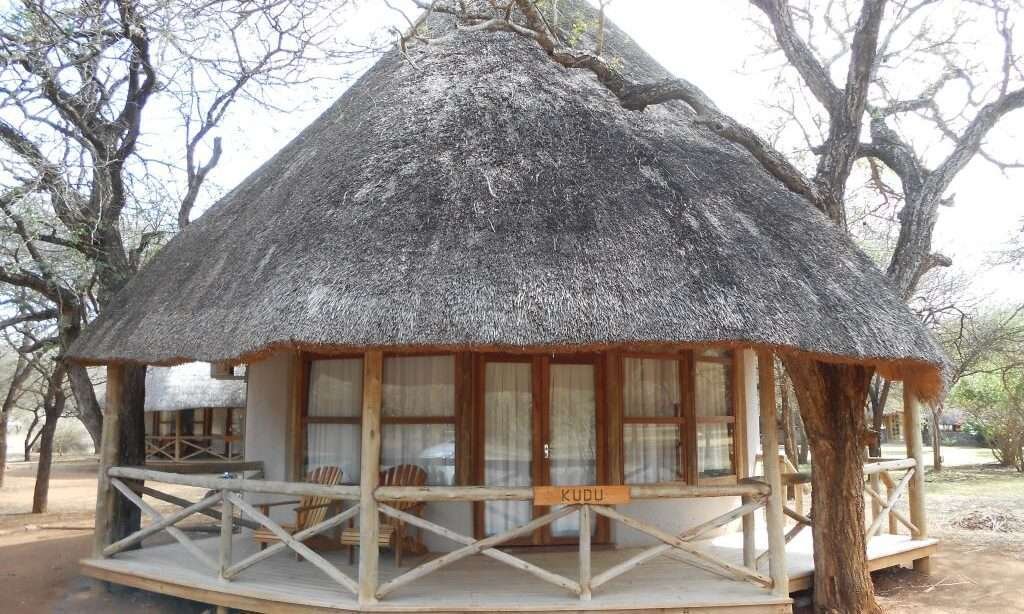
Where the Lowveld Begins
The road into Big Bend, Eswatini traces the Usuthu River south through sugarcane country before the terrain opens into the harder, drier character of lowveld bushveld. This is not highland Eswatini, the green and mist-prone country of the Ezulwini Valley. The southern lowveld sits at a different altitude and in a different ecological register: acacia thornveld, granite kopjes, and the kind of heat that accumulates by mid-morning and holds through the afternoon. It is the environment that defines Kamsholo Bushveld Safaris before any other consideration does.
Southern Africa's privately run bush operations have, over the past two decades, split into broadly two tiers. The first is the large, internationally marketed concession model, where lodge groups operate under major brand or conservation authority agreements and price against global luxury travel. The second is a smaller, more locally embedded tier of operations where geography and access, rather than room count or award tallies, determine the offer. Kamsholo occupies terrain in that second category, in a country that remains significantly outside the mainstream southern African safari circuit despite sharing ecosystems with Mozambique, South Africa, and Zimbabwe.
Eswatini's safari infrastructure is modest relative to its neighbours. The country's protected areas, including Hlane Royal National Park and Mkhaya Game Reserve, draw visitors who have usually already moved through the Kruger-adjacent market and are looking for something less trafficked. Big Bend, in the Lubombo region, sits close to the Mozambican border and offers a version of lowveld terrain that most visitors to southern Africa never reach. That geographic specificity is the primary context for understanding what Kamsholo represents within the region's bush experience market.
The Physical Character of Lowveld Bush
The architectural and spatial logic of a bushveld safari camp is inseparable from the environment it sits within. In the lowveld, camps that read the terrain correctly tend to work with elevation and shade rather than against them. Positioning relative to a drainage line, a rocky ridge, or a tree canopy determines the usable hours of outdoor space in a way that formal interior design rarely can. The best-placed lowveld camps feel like they were discovered rather than imposed, their sightlines falling naturally across open ground or toward water.
This design thinking, whether it operates consciously or through accumulated local knowledge, separates camps that work from those that feel arbitrary in their settings. The distinction matters more in the lowveld than in, say, the floodplain or delta environments of southern Africa, where water and wildlife density can compensate for design shortcomings. In drier, more austere terrain, the spatial relationship between structures and landscape carries the experience. A veranda facing the wrong direction, a fire pit in the wrong clearing, a walkway that misses the natural gathering point of game at dusk: these are the design decisions that determine whether a lowveld camp earns its location or merely occupies it.
Properties in other regions operate under similarly high environmental stakes. Amangiri in Canyon Point is the most cited example of a lodge that builds spatial logic from geological context. Hotel Esencia in Tulum applies similar thinking in a tropical format. The principle, that the architecture should read as a response to specific terrain rather than a template applied to it, holds across both extremes of climate.
Eswatini in the Southern African Safari Context
For travellers building a southern African itinerary, Eswatini typically appears as an add-on to longer South Africa or Mozambique routing rather than a primary destination. That position is partly a function of the country's size and partly a function of how the international safari market has been structured by the large operators who dominate consumer awareness. The result is that Eswatini's bush destinations attract a self-selecting visitor: someone who has moved beyond the well-documented circuits and is willing to accept less logistical certainty in exchange for access to terrain that genuinely few people visit.
The lowveld specifically, as opposed to the more frequently mentioned reserves further north, represents the least visited part of an already low-traffic country. That context is relevant to anyone assessing what Kamsholo Bushveld Safaris represents as a travel proposition. It is not operating in competition with the Sabi Sand or the Okavango; it occupies different coordinates, serves a different kind of traveller, and should be assessed on those terms.
For travellers who have experienced the structured luxury of properties like One&Only Mandarina in Riviera Nayarit or the design-led intensity of Castello di Reschio in Lisciano Niccone, a lowveld operation in Eswatini represents a shift in register rather than a step down. The comparative frame is not amenity count; it is access, specificity, and the degree to which the environment remains primary.
Planning Access to Big Bend
Big Bend is reached via the Eswatini road network, with the town sitting in the southern Lubombo region. The nearest major air hub is Matsapha International Airport near Manzini, which connects to Johannesburg. Overland access from the South African border posts in the Lubombo corridor is the more common approach for travellers combining Eswatini with a Kruger-area itinerary. The area is warm for most of the year, with summer months bringing higher rainfall and denser bush, and the dry winter period offering better visibility and cooler temperatures for outdoor activity. Our full Big Bend guide covers the broader area in more detail.
Details
- Rustic
- Scenic
- Quiet
- Cozy
- Family Vacation
- Weekend Escape
- Group Retreat
- Panoramic View
- Garden
- Terrace
- Pool
- Restaurant
- Wi Fi
- Mountain
- Garden
Relaxed rustic bushveld atmosphere with busy birdlife, climax vegetation, and serene mountain backdrop amid giant trees.