← Guides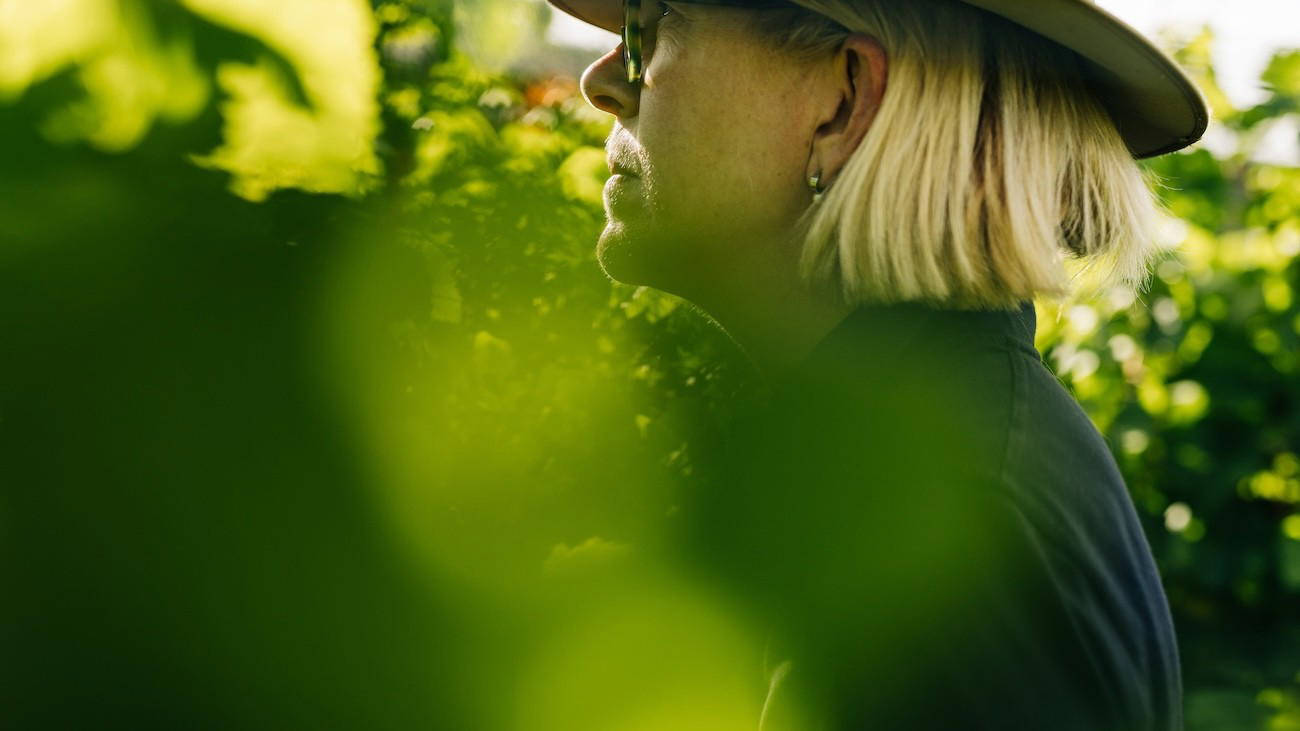
At Domaine Antonin Guyon, Hombeline Guyon brings a lighter cellar hand to 48ha of Côte d’Or inheritance and a UNESCO climats brief.
At Domaine Antonin Guyon, Hombeline Guyon brings a lighter cellar hand to 48ha of Côte d’Or inheritance and a UNESCO climats brief.
Hombeline Guyon winemaker at Domaine Antonin Guyon is the third generation to lead the Savigny-lès-Beaune domaine, taking charge of a family holding that Decanter reports spans 48 hectares across 25 Côte d'Or appellations.1 That scale alone would be rare enough in Burgundy; the more precise story is what she is choosing to do with it now, fewer pump-overs, less extraction, more rack-and-return, reduced new oak, and a public record in the defence of the climats de Bourgogne.
Her inheritance is not only vineyard land. Hombeline worked in Japan, China and the US before returning to Burgundy, then joined the domaine in 2014,1 according to Decanter. Between those years abroad and her role in the 2015 UNESCO inscription of Burgundy's climats, she arrived with something more useful than reverence: distance. Distance can sharpen the eye. In Burgundy, it can also make the old stones speak more clearly.
Antonin Guyon built his eponymous domaine in the 1960s, and the family holdings that followed read like a Côte d'Or itinerary assembled by someone who understood patience before fashion. Decanter reports that over 10 years Antonin amassed vineyards from Gevrey-Chambertin and Chambolle-Musigny down to Corton, Volnay, Meursault and Puligny-Montrachet. For a collector, those names are not decorative. They set up a question of interpretation: how does one family voice handle so many distinct appellations without smoothing them into a house style?
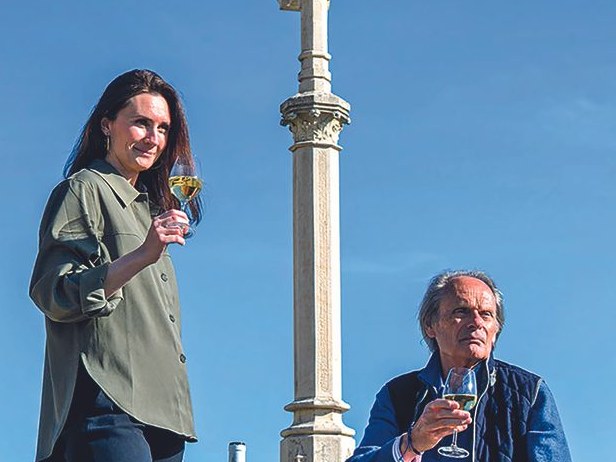
That question sits at the centre of Domaine Antonin Guyon. The domaine's 48 hectares across 25 appellations give Hombeline a breadth more often associated with a merchant house than a family-owned Burgundy domaine, yet the lineage remains familial, Antonin, then Dominique and Michel, now Hombeline. The holdings also place the domaine across both red and white Burgundy's most scrutinised villages, where small differences in extraction, élevage and picking philosophy can alter how a wine reads in youth and in the cellar.
It is tempting to turn 48 hectares into a single figure of scale. Burgundy refuses that simplification. A hectare in one appellation does not behave like a hectare in another; Gevrey-Chambertin does not ask the same question as Volnay, and Meursault is not Puligny-Montrachet with a different label. The family's range creates an internal tasting laboratory for terroir, provided the winemaking lets each site speak in its own register.
Hombeline Guyon winemaker and inheritor of this range now works within a map that her grandfather assembled before the current global hunger for Burgundy made such breadth almost impossible to recreate. The scarcity here is not a stated bottle count or a closed mailing list. It is land history. Antonin's acquisitions placed climats from across the Côte d'Or under one family roof, and Hombeline's task is to keep that roof from casting too broad a shadow over the parcels beneath it.
The second generation added its own imprint. When Dominique Guyon joined in the 1970s, Decanter reports that he bought 350 plots from 80 different owners to create a single 22-hectare block of vines on a south-facing hillside in the Hautes-Côtes de Nuits.1 The numbers matter because they show the work behind a Burgundy holding that appears tidy only after the deeds have been signed. Three hundred and fifty plots. Eighty owners. One hillside.
That purchase became the start of an additional domaine, Domaine Dominique Guyon, and Decanter describes it as an early pioneer in what was then an overlooked sub-region. The phrasing is careful and useful. The Hautes-Côtes de Nuits did not need a slogan; it needed growers willing to take it seriously enough to assemble land, plant, farm and wait. Dominique's project did exactly that, extending the Guyon family story beyond the better-known village names of the Côte.
For travellers, the Hautes-Côtes detail changes how one reads a visit to Savigny-lès-Beaune. Domaine Antonin Guyon is not only a base for tasting across classic Côte d'Or appellations; it is tied to a family decision to look uphill, beyond the villages collectors already had in their cellars. The south-facing hillside in the Hautes-Côtes de Nuits is not a footnote. It is the second generation's signature act.
For collectors, Dominique's move also supplies context for Hombeline's current role. She did not inherit a static museum of grands noms. She inherited a domaine shaped by acquisition, consolidation and regional advocacy across two generations before her. Antonin assembled a Côte d'Or portfolio in the 1960s; Dominique stitched together 350 separate plots in the 1970s. Hombeline's change is quieter, but no less consequential in the glass: she is altering the pressure of the hand.
Hombeline joined the domaine in 2014 after working across different areas of the wine business in Japan, China and the US, according to Decanter. Those markets would have shown her Burgundy from the other side of the table, poured, discussed, allocated, compared, sometimes misunderstood. Returning to Savigny-lès-Beaune meant stepping back into family cellars with a wider sense of how Burgundy travels once it leaves the Côte d'Or.
Her technical changes are specific. Decanter credits Hombeline with lightening the winemaking approach through less extraction, fewer pump-overs, more rack-and-return, and reduced use of new oak.1 That is not cosmetic language. Pump-overs and rack-and-return shape how fruit, tannin and structure are drawn from the cap; new oak leaves its own grain and seasoning. Reducing those inputs changes the architecture of the wine before any tasting note reaches for red cherry, violet or spice.
The phrase "lighter touch" can sound vague until the cellar verbs are named. Fewer pump-overs. More rack-and-return. Less new oak. Those choices point toward wines that are less about imposing volume and more about allowing site difference to remain legible. In a domaine with holdings across 25 appellations, that matters more than it would at an estate with a narrower range. A uniform hand would be convenient. Burgundy rewards inconvenience.
Hombeline Guyon winemaker is therefore a useful search phrase for more than biographical reasons. It marks a generational pivot in technique at Domaine Antonin Guyon, one anchored in identifiable cellar decisions rather than in polished talk about modernity. She has not erased Antonin's map or Dominique's hillside. She has adjusted the extraction and oak that mediate them.
There is also a collector's lesson here. When a domaine changes hands within a family, the label may remain the same while the wines slowly move under the surface. The first signs are often found not in public declarations but in the mechanics: how often the cap is worked, how much new oak enters the cellar, how the fruit is handled before élevage. In Hombeline's case, Decanter's profile gives enough detail to know where to look in the glass across recent and future vintages from Domaine Antonin Guyon.
Hombeline's role outside the cellar helps explain the clarity of her current approach inside it. Decanter reports that she was instrumental, alongside Aubert de Villaine of Domaine de la Romanée-Conti, in the successful bid to have Burgundy's climats inscribed as a UNESCO World Heritage site in 2015.1 Her work included heading up communications and engaging local stakeholders. That is not ceremonial labour. In Burgundy, the climats are the operating system.
The UNESCO inscription matters because it formally recognised the cultural value of Burgundy's long-defined vineyard parcels, but the bid itself required persuasion across people as much as parcels. Growers, civic actors and local voices had to see the land as shared inheritance rather than private inventory alone. Hombeline's communications role placed her at the point where terroir met public language, a rare training for someone who would later guide a domaine with 25 appellations under its name.
"Witnessing the collective effort to protect and recognise our land gave me a profound sense of purpose"
, Hombeline Guyon, third-generation winemaker at Domaine Antonin Guyon, Decanter1
Read beside her cellar choices, the UNESCO work becomes more than an admirable line in a biography. If one has spent years arguing that Burgundy's value lies in the specificity of its climats, heavy-handed winemaking becomes harder to justify. Less extraction and reduced new oak are not simply stylistic preferences; in this context, they align with a view of Burgundy in which the parcel carries the argument.
That does not mean Hombeline is making wines for a committee or for a heritage plaque. The better reading is more practical. She has lived through the process of explaining Burgundy's parcel culture to a broader audience, then returned to a family domaine whose own holdings require exactly that discipline. From Gevrey-Chambertin to Puligny-Montrachet, the estate's credibility rests on preserving difference.
The honest collector's view begins with the map rather than the market. Domaine Antonin Guyon's holdings include Gevrey-Chambertin, Chambolle-Musigny, Corton, Volnay, Meursault and Puligny-Montrachet, according to Decanter, within a wider family total of 48 hectares across 25 Côte d'Or appellations. That range allows a disciplined taster to follow Hombeline's lighter hand across village, appellation and colour.
Start with the reds in concept, not prescription. Gevrey-Chambertin and Chambolle-Musigny sit close enough geographically for collectors to compare them often, yet their reputations in the glass depend on different balances of structure, perfume and line. A reduced-extraction approach should be especially revealing across such contrasts, because it gives less room for cellar technique to blur village character. The same logic applies further south in Volnay and Corton, where tannin management and oak proportion can change how early a wine reveals itself.
For white Burgundy drinkers, Meursault and Puligny-Montrachet bring another test. The brief does not state Hombeline's detailed white-wine protocol, and no responsible profile should invent one. What we can say is that reduced new oak use, as reported by Decanter in the broader winemaking approach, gives collectors a concrete point to track across the domaine's bottlings where applicable. In white Burgundy, oak can frame texture, but it can also speak too loudly. Strong comparison is vertical and patient: same producer, same appellation, successive vintages.
There is an allocation dimension as well, though not one measured here in bottle numbers. Burgundy's scarcity is often discussed through tiny parcels and closed doors; the Guyon case is different. A 48-hectare family holding across 25 appellations offers breadth, yet each appellation still has its own limits. Collectors should resist treating the domaine as a single buying category. The sharper exercise is to identify which appellations best show the transition in extraction and oak, then follow those wines over several releases.
For travellers, the route is equally clear. Savigny-lès-Beaune sits just north of Beaune, making Domaine Antonin Guyon geographically easy to place within a Côte de Beaune itinerary, while the family holdings pull the conversation north into the Côte de Nuits and uphill into the Hautes-Côtes de Nuits. A visit framed around lineage rather than a single trophy bottle would move from Antonin's 1960s acquisitions to Dominique's 22-hectare hillside, then to Hombeline's current cellar decisions. That is a more useful tasting structure than chasing labels in isolation.
Lineage profiles often lean too heavily on continuity. The Guyon story is more interesting when the discontinuities are left visible. Antonin built the domaine in the 1960s by assembling holdings across the Côte d'Or. Dominique, joined by the second generation that also included Michel, expanded the family's seriousness in the Hautes-Côtes de Nuits through a 22-hectare block formed from 350 plots. Hombeline returned after Japan, China and the US, joined in 2014, and brought a lighter cellar hand to a domaine whose holdings could easily encourage a more forceful signature.
The inheritance has texture because each generation changed the family's relationship with Burgundy. Antonin gathered. Dominique consolidated. Hombeline interprets. Her UNESCO work adds another verb: she communicated. In a region where vineyard names can become shorthand for status, that ability to explain why parcels matter may prove as important as any single cellar adjustment.
There is also a personal architecture beneath the public one. Decanter describes Hombeline as an only child raised by her father Dominique, spending much of her youth with him at the domaine and in restaurants, listening and observing. The source makes clear that he wanted her eventually to join the domaine, but did not prescribe the path. That absence of prescription matters. It allowed her to leave, work abroad, return, and then join in 2014 with her own sense of purpose rather than merely fulfilling a family expectation.
For Burgundy enthusiasts, Hombeline Guyon is a name to place alongside the broader movement toward site readability in the Côte d'Or, but the Guyon version has its own coordinates: Savigny-lès-Beaune, 48 hectares, 25 appellations, a 2015 UNESCO campaign, and a second-generation Hautes-Côtes de Nuits hillside assembled from 350 plots. Together, those details show a domaine where family continuity does not mean stylistic inertia.
The next chapter at Domaine Antonin Guyon will be measured in the quietest cellar choices: whether extraction remains restrained, whether oak continues to step back, and whether the family's many appellations keep their edges under one label. In Burgundy, inheritance is never finished; it is tasted vintage by vintage.
Get the App
Take the shortlist into the En Primeur Club app for concierge access, saved places, and the next step after discovery.
Get Exclusive AccessMore from the editors