
Falstaff Winery - Listed
Vina Skaramuča is a Potomje winery rooted in Pelješac’s Dingač identity, with Plavac Mali at the center of the conversation. Expect a working Dalmatian wine-country format rather than polished resort hospitality: cellar, shop, vineyard setting, and wines shaped by the peninsula’s warm southern slopes.

Pearl is the En Primeur Club membership app — saves, bookings, and concierge access live there. Same editors, same standards.

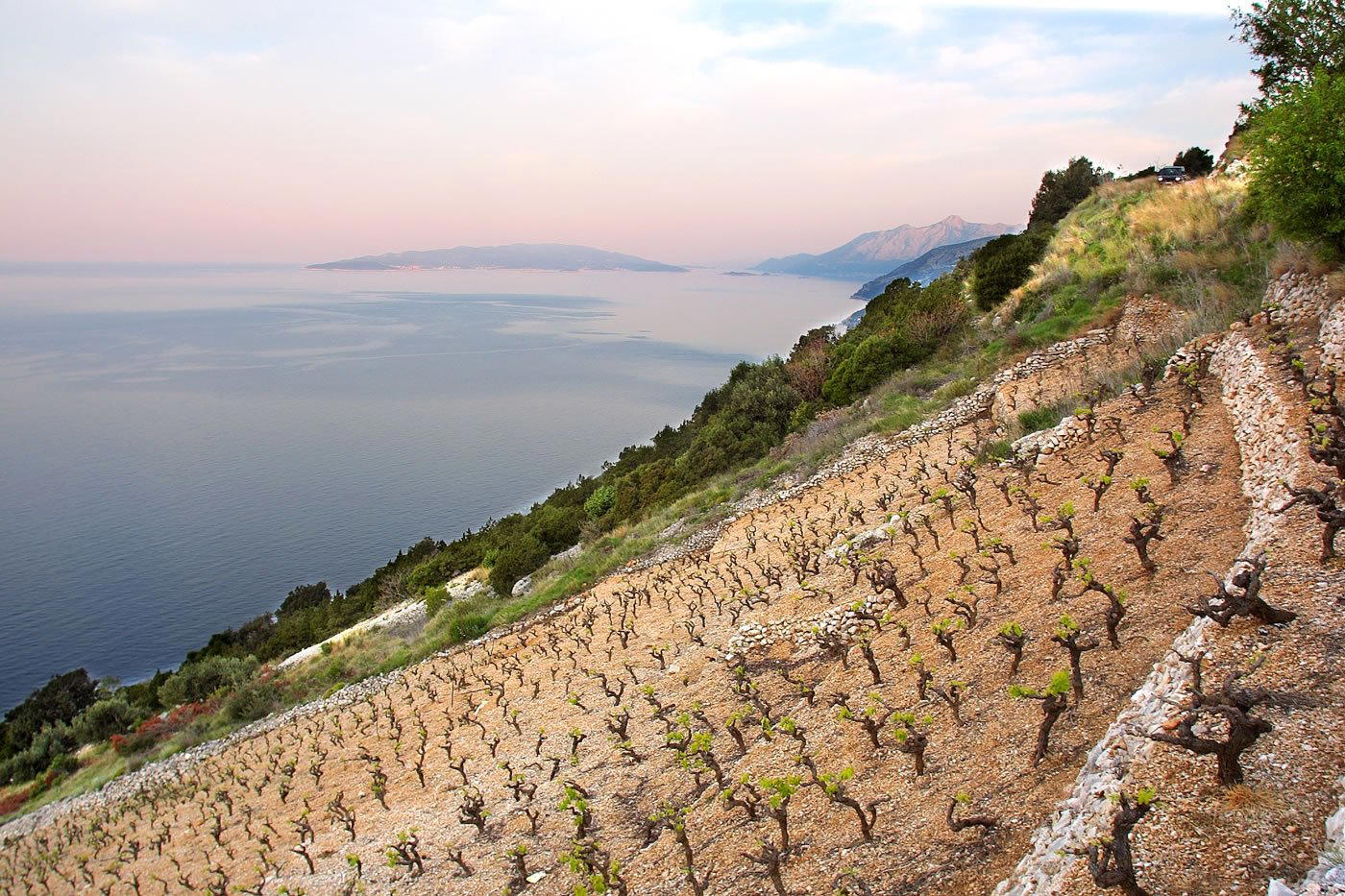
Approaching Potomje, the wine story is already visible before a glass appears: steep Pelješac slopes, dry Mediterranean light, and a red-grape culture built around Plavac Mali rather than international varieties. Vina Skaramuča belongs to that tradition, a working family winery with a modern cellar and wine shop in the Potomje and Pijavičino area, where the point is not theatrical hospitality but a direct encounter with Dingač country.
That distinction matters. Pelješac is not a generic Croatian wine stop; it is one of the country’s defining red-wine territories, and Dingač PDO carries a particular expectation of sun, slope, concentration, and coastal austerity. The stronger editorial case for this address is terroir expression: local grape, local designation, and a format that keeps the visitor close to the production setting rather than turning the winery into a lifestyle set.
Plavac Mali, Dingač and the Southern-Slope Argument
Dalmatian wine has many registers, but the Pelješac argument is anchored in Plavac Mali. Here the grape is not a novelty pour for tourists; it is the regional grammar. Vina Skaramuča works within that grammar through Dingač PDO and Postup PDO, with a focus that includes still red wine and still white wine, and varietals led by Plavac Mali alongside Pošip. The cellar’s identity is therefore less about range for its own sake and more about placing native Croatian grapes inside a recognizable peninsula context.
The clearest bottle-level signal is the producer’s dry red Plavac Mali profile, including a 0.75 L format and a 13% alcohol example associated with the Pelješac wine region. That figure is useful because it cuts through vague language: this is not being framed as a heavy international-style red by default, but as a structured, table-ready Dalmatian wine with enough warmth to speak of its origin. A listed service range of 17°C to 19°C also puts the wine in classic red-wine territory, closer to cellar-temperature discipline than casual beach-bar drinking.
Vina Skaramuča opened in 1992, which places it in the post-Yugoslav generation of Croatian producers that helped define how regional wines would be presented to domestic and international drinkers. The winemaker name attached to the estate is Ivo Skaramuča, but the more useful lens is not biography. It is the way a Potomje producer uses Dingač, Postup, Plavac Mali and Pošip as the vocabulary for a place that has long traded on difficult slopes and native varieties.
The production philosophy is conventional, and the production scale is large. In Pelješac terms, that gives the winery a different role from tiny garage producers: it helps make Dingač and Plavac Mali legible to a broader audience without stripping away the regional markers. Shipping availability and open allocation reinforce that accessibility. For travelers, the value is not scarcity theater; it is seeing a known Dalmatian red-wine style in the environment that gives it meaning.
A Working Cellar Rather Than a Polished Tasting Salon
The hospitality format is practical and wine-led: guided tasting, cellar tasting and shop tasting are the relevant modes, with vineyard-tour and estate-ground elements part of the experience profile. The setting is quiet, the dress code is casual, and the visit type is by reservation. This is important for expectation-setting. The tone is rustic and classic rather than urban-luxury; the modern cellar gives structure, while the surrounding vineyards do the atmospheric work.
There is no food-pairing program listed, and outdoor seating is not part of the format. That makes the tasting a sharper proposition for visitors who want wine education, a cellar context, and a grounded read on Pelješac production rather than a long lunch. Groups are a good fit, children are allowed, dogs are not, and on-site parking makes the address easier for travelers moving through the peninsula by car. The listed tour duration of 60 to 90 minutes is also a useful planning signal: substantial enough to understand the estate’s red-wine focus, compact enough to fit into a day built around Potomje and the southern slopes.
The price level sits at $$, which aligns with a producer where the experience is accessible rather than trophy-priced. Payment options include cash, credit card, debit card and contactless payment. In a region where cellar-door experiences can range from informal pours to more structured private tastings, this one reads as a dependable middle path: enough organization to plan around, enough working-winery texture to avoid feeling overproduced.
How to Place It in a Potomje Wine Day
Potomje rewards a narrower, more focused itinerary than a broad coastal crawl. The village is tied closely to Dingač and Plavac Mali, so the stronger day here is not about ticking off styles; it is about understanding how one grape and a few hillside designations can produce a regional identity. Vina Skaramuča is a strong anchor for that exercise because the experience combines a modern cellar, shop tasting, and a vineyard setting connected to the steep southern slopes.
Travelers mapping the wider area can use EP Club’s Potomje and regional rails for context rather than treating every stop as interchangeable. For winery reading in Potomje, see Bura Mrgdudic, Bura Mrgudić, Bura Winry, Kiridžija Winery and Matuško. Broader planning sits in Our full Potomje wineries guide, with adjacent city rails for Our full Potomje restaurants guide, Our full Potomje hotels guide, Our full Potomje bars guide and Our full Potomje experiences guide.
For a wider Croatian and European wine frame, compare the regional logic of Pelješac with producers such as Adzic in Kutjevo, Ante Sladić Vino in Skradin, Arman Marijan Winery in Vizinada, »der Steiner« Hans Steiner in Podersdorf am See and & Handwein in Mannheim. The useful contrast is not a ranking; it is how different regions turn native grapes, cellar formats and visitor expectations into a coherent wine-country experience.
Recognition history
Dated appearances from independent guides and award organizations, with the underlying list record or original source where available.
Falstaff Winery - Listed
Falstaff
Continue exploring
More in Potomje
Details
- Scenic
- Rustic
- Classic
- Solo Exploration
- Group Outing
- Celebration
- Special Occasion
- Private Tasting
- Estate Grounds
- Vineyard Tour
- Vineyard
- Plavac Mali
- Pošip
- Still Red
- Still White
- Guided Tasting
- Cellar Tasting
- Shop Tasting
A working family winery with a modern cellar and a tasting shop; the overall feel is traditional Dalmatian wine-country rather than a polished hospitality venue.