Lenswood Vineyard belongs to the high, cool end of Adelaide Hills viticulture: steep slopes, bushland edges, and a research-led Henschke imprint dating to 1981. The interest here is terroir rather than spectacle, with Chardonnay, Riesling, Grüner Veltliner, Pinot Noir, Merlot, and Cabernet Sauvignon shaped by altitude, slow ripening, and well-drained sandy loam over shale.

Pearl is the En Primeur Club membership app — saves, bookings, and concierge access live there. Same editors, same standards.
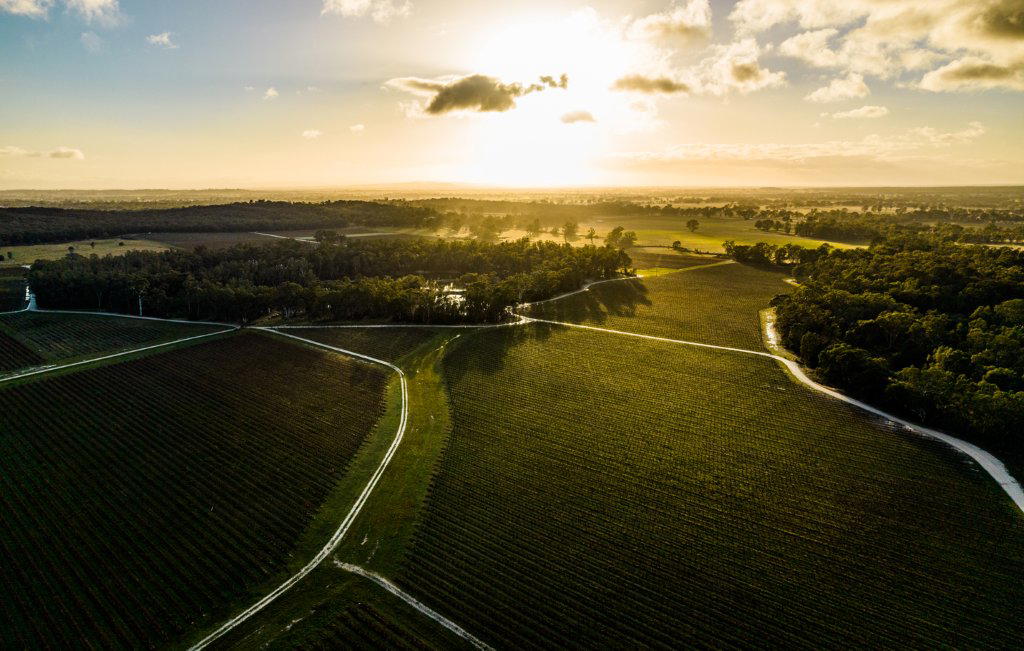
Approaching Lenswood, the Adelaide Hills shift from pastoral softness into something more exacting: cooler air, steeper ground, and vines set against bushland rather than broad valley drama. Lenswood Vineyard sits in that register. The appeal is quiet and technical, with hill views and a production story built around altitude, acidity, and site selection rather than cellar-door theatre.
Cold hills, slow ripening, and the Adelaide Hills argument for restraint
South Australia is often read through the power of warmer regions, but Lenswood argues from the opposite direction. The site sits at about 550 metres in the Adelaide Hills, an appellation where elevation pushes fruit toward slower ripening and higher natural acidity. That matters for the styles associated with the property: Chardonnay, Riesling, Grüner Veltliner, Pinot Gris, Pinot Noir, Merlot, and Cabernet Sauvignon. In a country where ripeness can dominate the conversation, this part of the hills is about tension, line, and the patience required to let fruit develop without losing freshness.
The soil gives the place a second layer of definition. Well-drained sandy loam over shale is not a romantic detail; it is a practical explanation for why steep-slope viticulture can work here. Drainage, exposure, and cool-climate conditions combine to make Lenswood a serious site for still whites and reds, especially where the producer wants purity and intensity without excessive weight. The vineyard’s style is research-driven and minimal-intervention in feel, but the stronger point is agricultural: this is a site where the land sets tight parameters, and the wines are judged by how clearly they work within them.
Henschke's research site and the orchard-to-vineyard shift
The Henschke association gives Lenswood its central trust signal. The family purchased the property in 1981, when the land was connected to orchard country, then developed it into a pioneering cool-climate vineyard. Stephen Henschke’s Geisenheim training gives the project a European technical backbone, while the late-1980s clonal work underlines how deliberately the site was studied. Pinot Noir clones including 115, 777, and 667, and Chardonnay Bernard clones including B95, B96, and B76, belong to that research story. They are not decorative credentials; they explain why Lenswood became a laboratory for matching grape material to marginal, high-altitude conditions.
Site also carries a history of regeneration. The 1983 Ash Wednesday bushfires burned through the fruit trees, after which vines were planted across the property. That sequence matters because it places the vineyard inside a broader Adelaide Hills pattern: agriculture here has often been adaptive, moving between orchard, vineyard, bushland, and fire recovery. In 2010, the Henschke family expanded the holding to 27 hectares with an adjacent early-1980s vineyard, strengthening the emphasis on Chardonnay and Pinot Noir while adding varieties such as Gewürztraminer, Semillon, Pinot Gris, and Grüner Veltliner.
Viticulture remains the sharper lens than hospitality. The production philosophy is sustainable, the scale is small, and the experience skews toward wine education rather than casual group tourism. A mid-row grass sward is part of the site’s soil-health logic, improving structure, biodiversity, moisture retention, and erosion control on sloping ground. Natural bushland around the vines reinforces the sense that this is a cultivated place held in check by its terrain, not a manicured resort vineyard.
What the visit is for: altitude, quiet, and single-site focus
A Lenswood visit makes sense for travellers who want to understand why Adelaide Hills wine is not a single style. The broader region can produce bright aromatics, polished Chardonnay, and delicate red-fruited Pinot Noir, but this site’s value is in seeing how elevation and slope drive the conversation. The setting is scenic in a restrained way: vineyard rows, mountain views, and a quiet pace that suits private tastings and vineyard tours rather than large, sociable tasting-room traffic.
The strongest way to read the portfolio is by category rather than by chasing trophy bottles. Chardonnay and Riesling show the white-wine case for acidity and cool ripening; Pinot Noir tests the site’s ability to hold fragrance and structure; Merlot and Cabernet Sauvignon show how Bordeaux varieties behave when grown outside the warmer Australian template. Lenswood Vineyard is therefore less about breadth for its own sake and more about a cool-climate argument repeated across several grapes.
For planning around Lenswood, keep the visit focused and pair it with the town’s wider travel context rather than treating it as a standalone detour. EP Club’s local coverage includes our full Lenswood wineries guide, plus dining, stays, drinks, and activities through our full Lenswood restaurants guide, our full Lenswood hotels guide, our full Lenswood bars guide, and our full Lenswood experiences guide. For a wider Australian wine map, see 19 Crimes in Southbank, Accolade Fine Wines in Melbourne, Adelina Wines in Clare Valley, Alice Springs Brewing Co in Alice Springs, Alkina Estate in Greenock, Alkina Wine Estate in Barossa Valley, All Saints Estate in Rutherglen, and Allegiance Wines in Alstonville. International readers can also compare broader wine-travel formats through »der Steiner« Hans Steiner in Podersdorf am See and & Handwein in Mannheim.
At a Glance
- Scenic
- Quiet
- Sophisticated
- Solo Exploration
- Special Occasion
- Wine Education
- Vineyard Tour
- Estate Grounds
- Panoramic View
- Private Tasting
- Sustainable
- Vineyard
- Mountain
- Adelaide Hills
- Chardonnay
- Riesling
- Grüner Veltliner
- Pinot Gris
- Pinot Noir
- Merlot
- Cabernet Sauvignon
- Still White
- Still Red
- Vineyard Tasting
- Private Tasting
Cool-climate, steep-slope vineyard setting with sweeping hill views, natural bushland, and a research-driven, minimal-intervention estate feel.